stensaxpapper
-
Posts
17 -
Joined
-
Last visited
stensaxpapper's Achievements

Berry Picker (2/9)
0
Reputation
-
This ends my second story taking place in the Vintage Story world. This time (compared to the more fun We Hear Them) I tried connecting it to the existing lore, the time being around the Diet of Kings and the activation of the Great Machine. English is not my native language so some things may have been lost in translation, but hopefully the story as a whole works. May you never view resin the same way.
-
Roots of Evil Folio VIII - The Account I am writing this from the eastern reading room. The western room is no longer part of the archive. Three nights ago a fire began in the adjoining quarter. There was insufficient water to contain it and insufficient men to form a proper line. The western roof survived. Nobody has examined the floor beneath it. It no longer matters. Selected records are being transferred to the Resonance Archive. I am told its chambers are secure and that what is placed there may survive what is coming. I do not know what selected means. I have therefore made two copies. The eastern works are near completion. Wagons pass the north road at all hours: iron, copper, glass, charcoal, lime, sulphur. Yesterday I saw church bells upon one of them. Nobody will tell us when the Machine will be used. Nobody now asks whether it will be. The city is full of people who have nowhere farther east to go. Sergeant Kranz did not return with me. Neither did Matthias Voss. What follows is the best account I can make of why. There was no light when we entered the house. Kranz searched it first. Voss and I followed. The room behind the window contained a table, two chairs and the remains of a stove. The floor above had partly collapsed. There was no lamp, candle or fireplace from which the light might have come. Nothing. We chose the church for shelter. Its roof remained mostly intact and the doors could still be barred. We brought the horses into the outer porch and ate without lighting more fire than necessary. Nobody spoke of the window. Sometime after midnight I awoke to a sound. Long. Low. Almost human. Voss was awake beside me. Kranz sat against the door with his musket across his knees. The sound came again. We found its source in the remains of the choir screen. A section had been repaired with darker timber, resin heavy along the joints. When Voss placed his hand upon it, the sound stopped. He withdrew his hand. Nothing followed. We did not sleep again. At dawn the church became a ruined church. Nothing more. Daylight made the village smaller. Houses collapsed, road overgrown, forest intrusive but comprehensible. Even the trees upon the northern hill appeared less unnatural than they had at dusk. We began with the Reiter property. The house had lost its eastern wall. A pine grew through what had been the kitchen. We found pottery, rusted tools, a child's shoe and fragments of paper too decayed to handle. Voss found the book beneath a floorboard. It had been wrapped in cloth and sealed inside a narrow wooden box with resin. The book belonged to Elisabeth Reiter. Most entries concern ordinary things. Bread. Weather. Arguments. Births. Her husband. Her sister. The four women appear frequently. Elisabeth writes of Greta, Katharina and another woman whose name is partly lost. They worked together, visited one another and complained about their husbands. Her sister carried meals to the mill. At first Elisabeth writes of this with amusement. Then irritation. She knows they watch her when she walks into the yard. Several pages later: Greta says her Johann speaks too often of my sister. I told her she is being foolish. Then: They told us not to bring the noon meal anymore. The next entries concern harvest, a leaking roof and a sick child. Then: I heard something at the mill today. Six days later: Katharina says it is only the saw. Nothing concerning her sister follows for more than two weeks. Then: She came home. Elisabeth describes no injuries. Only: I did not know her. And later: She says all five. The following pages are difficult to read. Not because of damage. Elisabeth begins sentences and abandons them. If what she says is true— Greta says Johann would never— Katharina says she has always wanted— Then: They will hang. The entry written the night before the younger Reiter woman was to testify is three lines. Greta came after dark. They say this must end tonight. I have been asked to bring the lantern. The next page is blank. The page after contains one sentence. I carried the lantern. Several lines below: I told myself I carried only the lantern. Voss stopped reading. Kranz had moved away from us. I continued. Elisabeth never says who tied the rope or placed it around her sister's neck. She records only that there were men upon the hill and women among them, and that her sister looked at her before they covered her face. Afterward Elisabeth returned home. Her husband returned later. They did not speak. Three days afterward Johann Vollmer became ill. Then the others. Elisabeth's later entries contain prayers. At first Christian ones. Then older things appear. She leaves milk at the stones. Ties thread to the old tree. Burns resin. Asks forgiveness from someone she never names. One entry reads: Mother said the roots carry what the mouth cannot. Her final legible entry says: I went below today. I know now where they kept her. God forgive us. It was the women's place. There is nothing after that. We took the diary. The northern hill was less than half a mile from the house. The trees there were older than anything surrounding them. That should not have been possible. Several had trunks wider than the reach of two men. Resin covered them in hardened sheets. Beneath the amber surface the bark twisted into shapes which became faces whenever I looked too long. The graves were still visible between the roots. Kranz found the stone. It lay almost flat beneath moss and needles, outside the old church boundary. No tree grew from the grave itself. The surrounding roots stopped at its edges. Voss and I cleared the stone. For the first time I read her name. MAGDALENA REITER I said it aloud. I am uncertain why. Beneath the name was a smaller inscription: Beloved daughter and sister. May God receive what we failed to keep. Elisabeth, I think. There were other marks beneath it. At first I thought them scratches made by roots. Voss cleaned the stone with water. They were not cut. Dark lines ran through the stone itself, following cracks filled with something like resin. They formed words. WHAT IS GIVEN TO THE ROOTS RETURNS THROUGH THE BRANCHES Kranz said nothing. Voss touched the letters. I told him not to. Beneath them, almost hidden by earth, were three more. SHE WAS GIVEN We left the hill. None of us suggested remaining there. The diary gave us one useful direction. The women's place. We found it behind the mill. Or what remained of it. The stones mentioned throughout the proceedings formed part of an older enclosure, swallowed by roots and later construction. The mill's rear foundation had been built directly across it. There were pieces of wood beneath the fallen masonry. Carvings. Most had rotted beyond recognition. One remained protected beneath a collapsed stone. The torso of a woman. Crude. Faceless. Older than the mill by centuries. Its surface was black beneath repeated layers of hardened resin. In several places those layers were dark red. Before it stood a shallow stone basin. Voss scraped material from its edge. Kranz told him to leave it. Voss did not. We found the entrance shortly afterward. Part of the mill floor had collapsed, exposing steps beneath. Not cellar steps. Older. The walls below were stone where the mill above was timber. Several had been incorporated directly into the foundation. The old sanctuary had not stood beside the mill. The mill had been built over it. At the bottom was a door. An iron bracket remained upon the outer wall where a bar could be placed across it. Inside was a room scarcely high enough for Kranz to stand upright. A bowl. A bottle. The remains of cloth. Marks upon one wall. Four groups of five. Then another. Then three. Twenty-eight. Voss found a woman's button beneath the dirt. I thought of the court papers. Asked where she had been held, she states that she can show the Bailiff. Magdalena had been telling them where to look. Nobody had listened long enough. The rear wall was wet with resin. Not coated. Wet. Voss touched it before Kranz could stop him. The resin entered through a crack between the stones. Behind it was darkness. We widened the opening. There was another space beyond, smaller and natural rather than built. Something lay inside. Voss thought it was a dog. It was not. The body had been preserved where resin covered it. Pale skin. Narrow limbs. Too many joints. The head had been crushed. Beside it lay a rusted hammer. There was another farther inside. Then another. I had seen drawings from the eastern districts. Rot. The word came with something approaching relief. I am ashamed of that now. There was an explanation. The creatures had been beneath the mill. Magdalena had been imprisoned beside them for twenty-eight days. She had injuries. The physicians had noted lesions they could not explain. Whatever afflicted the men afterward need not have been witchcraft. Whatever happened to the women need not have been revenge. The grave trees need not have remembered anything. Disease. Corruption. Rot. I remember explaining this to Kranz. He listened, then pointed behind me. The carved figure had another piece. A lower section lay partly buried inside the broken wall. We pulled it free. Figures had been carved around its base. The work was primitive but clear. Men stood beneath trees. Branches emerged from their bodies. Beside them were women. Lines ran from the women's mouths into a basin. The basin was filled with hardened resin. Voss said nothing for a long time. “How old?” I told him I did not know. “Older than Kaltenbrück?” “Yes.” “Older than the mill?” “Yes.” “Older than her?” I did not answer. Something moved deeper in the fissure. Kranz raised his musket. We waited. Nothing emerged. Then Voss said: “Someone's down there.” Kranz told him there was not. Voss was listening. I heard something as well. Very faint. Not words. I will not make words of it now merely because I know what followed. Voss took the lantern. Kranz caught his arm. Voss struck him. It happened so quickly that for several seconds none of us moved. Then Voss pulled free and entered the fissure. Kranz followed as far as the opening. “Matthias.” The light moved deeper. Voss said something I could not hear. Then he laughed. Once. The light disappeared. We waited longer than we should have. I do not know where Voss went. The fissure narrowed after perhaps twenty yards. Kranz could not pass. I could, but he would not allow it. He dragged me from the cellar. I left the diary behind. I remembered halfway across the mill yard and returned for it. That decision nearly killed me. By the time I climbed out again the sun had fallen behind the trees. The forest was moaning. Not loudly. That was worse. Everywhere resin touched wood came the same low sound we had heard in the church. From the mill. The ruined houses. The trees. The hill. Kranz had harnessed one horse. The other would not move. We left it. Something followed us through the village. We never saw it clearly. At the first houses Kranz fired once. At the church he fired again. I saw something pale cross the road behind us. Then another. We reached the old Crown road in darkness. The horse stumbled twice. At the boundary stone Kranz stopped. There were shapes among the trees ahead. He gave me the reins. I refused them. He struck me. It was the only time Sergeant Emil Kranz ever addressed me by my Christian name. “Ride.” I rode. The first shot came before I reached the bend. Then another. Then two close together. I continued. A long time passed. One final shot came from the forest. I did not go back. I reached Grünfeld shortly before dawn. The old man was dead. I took his horse. The remainder consisted principally of roads, hunger and people moving east. I arrived at the capital alone. The diary was still inside my coat. So was the rubbing I made of Magdalena Reiter's grave. The resin sample Voss collected was not. I do not know when I lost it. I have examined the diary again. The name Magdalena does not appear once. Elisabeth calls her only my sister. I have also examined the rubbing. It is clear. MAGDALENA REITER The stone permitted what paper would not. I no longer believe the damage to her name in the records was deliberate. I do not know what I believe instead. The Machine is nearly complete. Tonight the eastern horizon is bright enough that its light can be seen above the walls. Wagons continue toward it. People have begun gathering in the churches. Others gather outside the gates and demand admission. The bells ring less often now. There are fewer men to ring them. I am told the Resonance Archive will receive its final transfer within the week. These folios will be included if I can arrange it. Elisabeth's diary will remain with them. I will not send anything else from Kaltenbrück east. If this account survives, let it be understood that I found no single cause in the Woods of Moaning. I found cruelty. I found disease. I found the Rot. I found the remains of a belief older than the church which described what the Rot would do before the people of Kaltenbrück were born. And beneath all of them I found roots. I do not know which came first. I am no longer certain the question has meaning.
-
Roots of Evil Folio VII - The Road West We left before sunrise. The Crown provided two guards rather than the four I requested. Sergeant Emil Kranz is an older man who served in the northern districts and regards most dangers as inconveniences. Lukas Brenner is younger and has spent considerably more time asking where we intend to sleep. My assistant, Matthias Voss, carries the maps, copying materials and instruments. I carry the papers concerning Kaltenbrück. We have one wagon and two horses. This constitutes the expedition. The western gate was already crowded when we reached it. Wagons waited to enter the city, not leave it. Most carried families. A few carried possessions. Several carried neither. One family had come from Hohenfeld. Another from farther west. A woman beside three children said their village had been evacuated. When Kranz asked by whom, she said she did not know. Soldiers at the gate were collecting names. I watched a clerk fill a page and wondered who might someday receive it and attempt to understand what had happened. Then the gates opened and we went the other way. For the first day the country remained inhabited. Fields had been harvested, though poorly. Smoke rose from farmhouses. We passed carts carrying charcoal east and another loaded with copper vessels requisitioned from a monastery. At midday six military wagons overtook us, carrying iron eastward. Every wagon bore the mark I have seen upon the requisitions in the archive. EASTERN WORKS. Kranz asked one soldier what they were building. “Something that needs everything.” By afternoon we began passing empty farms. There was nothing dramatic about them. Doors stood open. Laundry remained upon one line. Chickens wandered a yard where nobody came to collect them. At one house a table had been laid beneath an apple tree. Four bowls. No people. We slept in a village called Eichen. The innkeeper charged twice the posted rate and apologized while doing so. His cellar was nearly empty. There had been no salt delivery for three weeks and no lamp oil for two. He asked where we were going. I told him the Woods of Moaning. He looked at me for some time, then asked whether we had already paid for the horses. The church bell rang while we ate the next morning. Nobody reacted. “Burial,” the innkeeper said. It rang again before we left. The road deteriorated west of Eichen. Milestones were missing. Bridges had been repaired with green timber. At several crossings Crown signs had been pulled down for firewood. We passed more people travelling east. Those who spoke wanted news. Was the capital safe? Were the eastern roads open? Was there food? Had the King ordered another levy? Had the priests said when the Rot would end? I could answer none of them. Near midday we found a wagon overturned in a ditch. One wheel had broken. A dead horse remained in the harness. There was dried blood upon the road. Kranz examined it and told us to continue. Brenner asked what had happened. “Something finished before we arrived.” That afternoon the sky changed. I had seen temporal storms from the city, always at a distance. From open country there is nowhere to pretend they are merely weather. The western horizon darkened although the sun remained above us. For several minutes the clouds seemed to move in opposite directions. Voss complained of pressure behind his eyes. Then came the colour. Violet is nearest, but violet belongs to flowers and cloth and things which ought to possess colour. This did not. Kranz ordered us beneath the wagon. The horses began screaming. For perhaps twenty minutes the world made sounds for which I have no useful vocabulary. When it ended, the sun was still above the same hill. Brenner vomited beside the road. Kranz checked the horses. Voss asked whether I intended to record what had happened. I told him I had just done so. We found shelter in an abandoned tollhouse. Someone had written upon the wall: DO NOT SLEEP BELOW GROUND. Brenner asked Kranz what it meant. “If he knew, he would probably have written that too.” Nobody suggested using the cellar. On the third morning we reached the Hohenfeld road. It was closed. A barricade had been built from wagons, felled trees and furniture. The Crown notice remained nailed to a post: ROAD CLOSED BY ORDER OF THE CROWN. No explanation. I had copied those words from a transport ledger several weeks ago. They looked different nailed to a dead man's wardrobe. Kranz found a track around the barricade. Beyond Hohenfeld we saw no cultivated field. The villages were not burned. That would have been easier to understand. They were simply empty. At one the church doors stood open and the altar had been stripped. At another every door was marked with white lime. A third had been barricaded from inside. There were graves beside the road. Then bodies without graves. After that Kranz stopped allowing us to leave the wagon unless necessary. That evening something moved across a distant field. Brenner raised his musket. Kranz pushed the barrel down. It moved low to the ground and stopped when we stopped. We continued. It did not follow. At least not where we could see it. The following morning we reached the last settlement marked before the Woods of Moaning. The map names it Grünfeld. There is no Grünfeld. Fourteen houses remain, a well and the ruins of a smithy. Every roof has fallen except one. We found a man inside. He was perhaps seventy. Perhaps fifty. He had been alone long enough to make age difficult to judge. When I showed him my commission he laughed. “Still stamping paper?” I asked when the village had been abandoned. “Which time?” He had heard of the Woods of Moaning. Everyone west of Hohenfeld had. He called them Morning Wood. Brenner laughed. The old man did not. He said a road once entered the forest, but trees had swallowed most of it. Hunters still used the northern track. “Not this year.” Kranz asked why. The old man looked toward the window. “Nothing comes out.” Brenner asked whether he meant people. “No.” We left Grünfeld shortly after noon. The forest appeared two hours later, first as a dark line upon the horizon. Then it remained there. Pines replaced the open country. Their trunks stood unusually straight and close together, with little beneath them. The old Crown road disappeared under needles and moss. We stopped at a weathered boundary stone. Most of its inscription had been lost. I could still read: KALTEN - Brenner dismounted. He stood looking into the trees and said he would go no farther. Kranz ordered him to mount. Brenner refused. There was no argument at first. That made it worse. He said he had fulfilled his orders by escorting us to the district. Kranz informed him otherwise. Brenner removed his ammunition pouch and placed it upon the wagon. Then his musket. “I'll take neither.” Kranz asked whether he understood what desertion meant. “Yes.” “And?” Brenner looked into the forest. “I understand this better.” He began walking east. Voss watched until the road bent and he disappeared. Kranz placed the musket beneath the driver's seat. There were three of us when we entered the Woods of Moaning. The silence was the first thing I noticed. Forests are not silent. Even in winter there are branches, birds, insects, wind. Here the wind moved above us. I could see the crowns shifting. Nothing moved below. The road survived only as a depression between the trees. Roots repeatedly forced us around them. Once we passed the remains of a wagon almost enclosed by a trunk. Resin marked many trees. At first ordinary beads upon wounds in the bark. Deeper in, amber sheets hardened down the trunks, some thick enough to distort what lay beneath them. The smell was stronger than the samples in the archive. Pine. Sweetness. Something beneath both which I could not identify. The light failed early. Dorn's survey placed Kaltenbrück less than two miles ahead. Kranz wanted to camp outside the settlement. I wanted walls. We continued. The trees grew larger. Stones appeared among them. First boundary markers. Then foundations. A wall ran beside the road and vanished beneath roots. Voss saw the first roof. A pine grew through the centre of a house, its upper floor collapsed around the trunk and still hanging several yards above the ground. Then another house. Then another. No birds. No smoke. No movement. The road widened. We entered Kaltenbrück at dusk. The church stood at the far end, its tower broken but visible above the trees. Houses leaned beneath roots and time. Somewhere lower in the valley I could hear water. Voss pointed toward the northern hill. There were trees upon it. Enormous ones. Their trunks stood darker than the surrounding forest, pale resin running down them even in the failing light. Kranz was not looking at the hill. He was looking toward the houses. “Archivist.” There was a light in one of the windows. We watched it for several seconds. Then it went out.
-
Roots of Evil Folio VI - The Abandonment The final records from Kaltenbrück are less orderly than the proceedings. Not because they are damaged. There was simply nobody left to keep them properly. Judge Heller departed nineteen days after the first death in custody. His last order forbade arrests based solely upon accusations of witchcraft, instructed that the sick be isolated, and prohibited removal of their bedding, clothing or eating vessels. One additional instruction appears at the bottom: The old place beyond the mill is not to be visited for any purpose. Someone has written beneath it: They go there regardless. There is no formal conclusion to the proceedings. They simply stop. What followed must be reconstructed from documents created for other purposes. Before the deaths, Kaltenbrück contained thirty-eight taxable households. The next assessment records twenty-three. Then seventeen. Then eleven. Beside some names is written deceased; beside others, departed. Several houses are simply crossed through. No final assessment was completed. The parish accounts show that the affliction continued through winter. Men suffered the hardening described in the court papers. In some it remained confined to the lower body for days. In others it advanced into the abdomen. One physician attempted an amputation. His report consists of four words: The saw would not pass. The women died differently. The substance in their mouths thickened until it could no longer be removed. Speech became difficult, then impossible. Several appear to have suffocated. The burial accounts become terse: No viewing. Bedding burned. Do not wash the mouth. Then even these instructions disappear. By midwinter the distinction between sickness and witchcraft had become meaningless. Thread appeared upon branches. Bowls of milk were left near the stones beyond the mill. Resin was burned there after dark. The priest removed the offerings. They returned. One letter describes women carrying lamps into the woods after midnight. The writer says they were praying but does not say to whom. The accusations continued. Katharina Eberhardt was detained after another man developed the hardening. She denied bewitching him. Asked whether she had ever met him privately, she refused to answer. Three weeks later her name appears in the burial accounts. Affliction of the mouth. Another examination preserves a single answer from an accused woman: You ask which woman cursed him because you are afraid to ask where he went. There is nothing beneath it. Whatever conclusion the Court might have reached, Kaltenbrück reached its own. The men had been cursed. The women had brought the curse. The dead girl had begun it. Then the graves changed. The first reference is mundane: payment to six labourers for reopening graves on the eastern side of the churchyard because of disturbance by roots. The graves were less than two months old. A later account describes young pines growing directly from three burial plots. They were cut down. New shoots appeared from the stumps. By spring several were taller than a man. They produced resin in unusual quantities. One barrel was collected for examination at the district seat. There is no record that it arrived. Soldiers later sent to Kaltenbrück gave the trees a name. Morning Wood. Its first surviving appearance is in a disciplinary complaint against two soldiers for “obscene references to the graves of the deceased.” I now understand Governor Dorn's irritation. The name was not merely vulgar. It was a joke about the dead. By spring the Western District had ceased trying to administer Kaltenbrück. The Crown became involved for a less mysterious reason. The village had stopped paying tax. Assessor Wilhelm Brandt arrived with six soldiers and a clerk to identify abandoned property and determine what might be forfeited to the Crown. First Report of Assessor Wilhelm Brandt Of thirty-eight registered households I find fourteen occupied. Four additional properties contain goods but no inhabitants. Livestock wanders freely in several fields. The mill is not operating. The inhabitants attribute their condition to witchcraft and refuse sensible explanation. I have warned them that abandonment of taxable property does not extinguish debt to the Crown. The trees growing within the burial ground are unusual but of no immediate administrative significance. Brandt remained six days. His second report is shorter. Second Report of Assessor Wilhelm Brandt I have suspended the enumeration. Two households counted upon arrival departed during the night. Another is dead. The soldiers refuse to lodge in the empty houses and have established camp upon the road. Several trees which I was assured were cut down three days previously have produced new growth from the stumps. Resin flows freely from the wounds. The men call the place Morning Wood. I have ordered them to cease. There should have been a third report. Instead there is a letter written by Brandt from an inn nearly thirty miles east of Kaltenbrück. Letter of Assessor Wilhelm Brandt I departed without completing the enumeration and acknowledge this as a failure of my office. The remaining inhabitants will not stay. Several left while we were present. I cannot compel them to return. Yesterday Sergeant Kohl and two men inspected the old mill in search of Crown property. They returned without completing the search. Kohl reports that part of the lower works has collapsed and that an older space exists beneath the present foundations. The entrance is obstructed. The inhabitants refused to assist in clearing it. One elderly woman became greatly distressed when the soldiers attempted to move stones behind the mill. She said they did not belong to the mill and should remain where they were. I instructed Kohl to discontinue the work. There is nothing in the building worth risking men over. During the night someone entered the mill. We found the door open in the morning. I will not return. Brandt's clerk added one line to the district account: Assessment impossible. Recommend abandonment of claim until district pacified. The Crown never formally abandoned Kaltenbrück. It simply stopped sending officials. Within a year the parish was empty. For decades the forest reclaimed the road, houses and churchyard. The trees continued growing. Resin accumulated upon their trunks. Then came the settlers described by Governor Dorn. They found an abandoned mill, an empty forest and resin of extraordinary quality. They inherited the name Morning Wood without knowing why it had been given. Neither, until today, did I. I had intended to end my investigation here and recommend that the Woods of Moaning remain abandoned. The Crown has other sources of timber and resin. Increasingly few. This morning the Mechanical Office sent another requisition. The eastern works require more resin than before. Purity is specified. The old samples from Woods of Morning are mentioned by name. I sent Brandt's reports and Governor Dorn's correspondence with my objections. The reply arrived this afternoon: Historical irregularities noted. Present suitability remains undetermined. Examine source directly. Priority. I cannot tell whether this constitutes an answer to anything I wrote. Perhaps it does not matter. The archive itself is changing. The western reading room has been closed for want of lamp oil. Two clerks have been called for levy. A third left yesterday after learning that his family had arrived among the refugees at the north gate. My request to the southern archive received no reply. I sent another. This morning I was informed that there is no longer a southern archive. The road beyond Hohenfeld has been closed. Three villages are reported evacuated. The notice does not say where their inhabitants have gone. The bells began shortly before midnight. They were still ringing when I arrived for work. I have spent weeks reading how Kaltenbrück disappeared: first names crossed from a roll, then empty houses, then officials deciding the journey was no longer worth making. It is becoming difficult not to notice the resemblance. There is another reason to go. Judge Heller's search report has not been found. Neither has any record explaining the space beneath the mill. The old place mentioned throughout the proceedings appears on no surviving survey. And the younger Reiter woman's name remains unreadable wherever I find it. None of these matters concerns the Mechanical Office. They concern me. I have therefore amended my recommendation. The resin must be examined at its source. If the forest can be worked safely, the Crown will want it. If it cannot, someone must provide a reason more substantial than Governor Dorn's moaning machinery and a century-old village panic. I have requested an escort and provisions for twelve days. I had intended to postpone the journey until spring. There is no longer any certainty that spring will improve matters. Tomorrow I leave the archive. For weeks I have had Kaltenbrück only as paper. I would like, while there is still a road to it, to see what remains.
-
Roots of Evil Folio V - The Proceedings The label upon the second box is misleading. There was no accusation of witchcraft when the Court first came to Kaltenbrück. The earliest papers concern a complaint made against five men employed at the sawmill. The complainant was the younger daughter of the Reiter household. Her name is again unreadable. Here the damage is more peculiar than in the parish books. These papers were prepared by the Western District Court and brought into Kaltenbrück from elsewhere. Nevertheless, a translucent brown blemish lies across the first line of the complaint. The surname remains perfectly legible. Reiter. Deposition of the Complainant, taken before Bailiff Konrad Weiss The complainant states that upon the morning of the 6th she travelled as was customary toward the sawmill carrying food. She did not return to her father's house. She states that she was prevented from returning and held against her will. Asked by whom, she identified Johann Vollmer, Matthias Eberhardt, Peter Bauer— The remainder of the line is damaged. Her account continues for four pages, much of it in shorthand or spoiled by damp. Enough survives to establish that she accused five mill workers of keeping her against her will and subjecting her to repeated violence. She could not say with certainty how long she had been absent. The parish calendar provides the answer. Twenty-eight days. Asked why she did not escape sooner, the complainant states that she was unable. Asked how she returned, she states that she found herself unwatched during the night and fled. Asked where she had been held, she states that she can show the Bailiff. There is no record that she did so. A midwife found injuries consistent with violence and prolonged confinement. Their nature is not described. One additional notation reads: Unusual lesions upon the left hip and lower abdomen. Cause uncertain. No importance appears to have been attached to this. The five men denied everything. They acknowledged knowing the younger Reiter woman and that she regularly brought food to the mill. None admitted seeing her on the day she disappeared. Vollmer said she never arrived. Eberhardt remembered seeing her upon the road. Bauer remembered nothing. The Bailiff did not release them. That decision divided Kaltenbrück. Several workers testified that the younger Reiter woman enjoyed visiting the mill and the company of the men there. One remembered her laughing with Vollmer. Another called her “too free in her manner for an unmarried girl.” None could explain where she had been for twenty-eight days. More damaging were the statements of the women. Katharina Eberhardt said the complainant enjoyed the attention of married men. Greta Vollmer said she had previously asked her husband not to encourage the girl's visits. Then there is the testimony of Elisabeth Reiter. Her elder sister. Deposition of Elisabeth Reiter Asked concerning the conduct of her sister before her disappearance, Elisabeth states that she frequently volunteered to carry meals to the sawmill. Asked whether this was unusual, she answers no. Asked whether her sister appeared to enjoy the company of the men there, she answers yes. Asked whether the accused men had previously threatened or mistreated her sister, she answers that she knows of no such event. Asked whether she believes her sister's present account, the witness does not answer. Question repeated. The witness states that her sister was greatly changed upon returning and that she cannot say what happened during her absence. The examination should have ended there. Instead, a representative of the accused asked whether her sister concerned herself with the old women's customs. The magistrate initially refused the question. It was permitted only after the defence claimed the complainant had visited an old place beyond the mill. Elisabeth acknowledged that she had. Asked what place is meant, the witness states that there are stones and an old tree which women sometimes visited when she was a child. Asked for what purpose, she states that she does not know. Asked whether offerings are made there, she answers that old women leave foolish things in many places. Asked whether blood is used, the witness refuses to answer. Judge Heller struck the final question from the examination. This is the first mention in the court papers of what later witnesses call the women's place. At this stage nobody accused the younger Reiter woman of witchcraft. The distinction is important. Judge Friedrich Heller arrived four days later. His preliminary memorandum survives. Memorandum of Judge Friedrich Heller The complaint is grave. The condition in which the complainant returned cannot reasonably be disputed. The statements of the accused differ concerning matters upon which agreement would ordinarily be expected. Much testimony has been offered concerning the complainant's character. Whether she is vain, foolish, flirtatious or otherwise does not determine whether she may lawfully be confined or injured. The Court will therefore hear her account in full tomorrow morning. That sentence changes the nature of everything which follows. The younger Reiter woman was not awaiting trial. She was preparing to testify. For her protection she was lodged overnight in a locked room adjoining the Bailiff's house. Two men were posted outside. Sometime after midnight masked persons entered the yard. One guard estimated eight; the other more. Both said the intruders knew precisely where the woman was held. Neither resisted after being threatened. The attackers possessed a key. At dawn the younger Reiter woman was found hanging from an oak upon the northern hill. No witness admitted knowing who had taken her there. Judge Heller's order that morning occupies less than half a page. All proceedings concerning the complaint are suspended pending investigation of the murder of the complainant. The accused are to remain in custody. No person is to leave Kaltenbrück without permission of the Court. This was not the act of strangers. The investigation produced no arrests. Several villagers claimed to have slept through the night. Others remembered horses. One woman reported lanterns moving toward the northern hill and withdrew her statement the following day. Elisabeth Reiter stated that she had remained at home. Katharina Eberhardt said the same. Greta Vollmer said the same. Three days later Johann Vollmer became ill. The gaoler believed at first that he was attempting to avoid examination. By evening he could no longer stand. Report of Physician Lukas Merz The patient presents a hardening beneath the skin beginning near the groin and extending toward the abdomen. The affected flesh is cold and resistant to pressure. Discoloration follows narrow branching lines. Upon incision there was less blood than expected. The blade encountered a hard substance beneath. Vollmer died the following morning. Matthias Eberhardt developed similar symptoms before sunset. Within five days three of the accused men were dead. It is here that the language of the proceedings changes. Before the hanging, there is no formal accusation of witchcraft against the younger Reiter woman. After the deaths, there are many. A mill worker's wife remembered seeing her near the old stones. Another claimed she had touched the ancient tree. Someone recalled dark material upon her clothing when she returned. Within days these recollections became more elaborate. She had spoken to the tree. She had left blood upon the stones. She had cursed the mill. One witness claimed she had said the men would “become what they had cut.” Judge Heller rejected the testimony. The deceased cannot answer these accusations. She was murdered while under protection of this Court. Misfortune following her death does not constitute evidence against her. The accusations nevertheless spread. Other men became ill. Not all had been named in the original complaint. The villagers found another explanation. The younger Reiter woman had not acted alone. Women associated with the old customs were accused first. Then wives of the dead, widows, healers and women against whom neighbours held ordinary grievances. One surviving examination concerns an elderly widow named Marta Weiss, accused of placing resin upon a sick man's door. She admitted leaving offerings at the old stones when she was young but denied harming anyone. Judge Heller asked why the place mattered. Because it belonged to the women before there was a church. Asked what had stood there, Marta answered: Wood. Asked whether she meant an idol, she answered: That is your word. Asked why women left offerings there, she said: So that what goes into the earth comes back kindly. The clerk records laughter from persons present. Marta apparently did not join them. Asked whether the old place has caused the affliction, the witness states that stones do not become angry. Asked what does, she answers: People. Asked whether the murdered woman had awakened something, Marta states: No. Asked whether something had awakened her, the witness does not answer. Judge Heller continued trying to prevent accusations from becoming prosecutions, but the Court was losing authority. Witnesses refused summonses. Families concealed the sick. Prisoners were released because nobody would guard them. Then the women began dying. Their symptoms were different. A physician describes swelling of the mouth and throat and a thick substance adhering to the tongue and teeth. Another compares it to tree gum. A third uses the word: Resinous. The coincidence was sufficient for Kaltenbrück. The old place lay beside a forest. The dead men seemed to become wood. The dying women produced something resembling resin. And all of it had begun after a young woman associated with the old customs was hanged upon a hill. By then nobody appears to have cared that she had never been accused of witchcraft while alive. The Court had lost control of the story. One examination contains a statement from a woman whose name has been torn from the page: You ask which woman cursed him because you are afraid to ask where he went. Judge Heller ordered the room cleared. No explanation is given. The final bundle contains no judgments, only accusations, petitions for release, requests for guards and increasingly urgent correspondence from Heller to the district seat. His last complete memorandum reads: There is sickness here, and there is fear. The latter now spreads more readily than the former. I cannot determine the cause of the sickness. I can determine that the present accusations will not cure it. Two days later the Court departed Kaltenbrück. The witch trials remembered in later accounts were therefore scarcely trials at all. They were accusations made while the institutions intended to judge them were collapsing. The records leave considerably less certainty than the label upon their box promised. I know that the younger Reiter woman disappeared for twenty-eight days. I know that she returned injured. I know that she accused men from the sawmill. I know that their wives and neighbours damaged her reputation. I know that someone murdered her before she could give her full testimony. And I know that some of the men she accused began dying shortly afterward. Beyond this, the documents become interpretation. Witchcraft. Disease. Divine punishment. The old religion. Fear. There is one piece of evidence which might have resolved at least part of the matter. Judge Heller ordered a search of the sawmill and surrounding land before his departure. The report is missing. Only its cover sheet survives. Across the bottom, in Heller's hand, is written: The woman's account concerning the mill must be examined again. Below that appears a second notation. There is something beneath it. I have found no accompanying report.
-
ROOTS OF EVIL Folio IV - The Parish of Kaltenbrück Finding the settlement which preceded the Woods of Morning proved considerably more difficult than finding the settlement which followed it. There is no Morning Wood in the provincial rolls. I searched the older land grants, tithe assessments and road surveys without result. Governor Dorn had assumed the name to be inherited from the former inhabitants, but if so they had never used it in correspondence with the Crown. The answer came from the survey I had nearly finished with. Dorn's draftsman had marked the ruined foundations beside the stream as Old Mill. Beside the burial ground, in smaller writing, he had copied a boundary stone: Kaltenbrück Parish - North Limit. The name occurs nowhere in Dorn's reports. I found Kaltenbrück two days later in the ecclesiastical registers of the western deanery. It had been a small parish, sufficiently unimportant that its surviving papers had never been transferred into the provincial archive. They remained bundled with the records of three extinct churches and had not, according to the clerk, been requested in more than sixty years. The bundle contained a baptismal book, a marriage register, accounts of tithes and repairs, and two volumes of burials. There was also a list of households prepared for an episcopal visitation. From these I could reconstruct a settlement of perhaps one hundred and forty souls clustered along the road and stream. A sawmill stood some distance beyond the last houses. The names repeat frequently. Reiter. Vollmer. Eberhardt. Fischer. Bauer. Several of these families had occupied the district for generations. Nothing in the earlier books suggests an unhappy place. Children were baptized. Couples married. Roof tiles were purchased for the church. Someone was fined for allowing goats into the churchyard. The mill contributed timber for repairs to the parsonage. There are complaints about flooding, drunkenness after the harvest feast and one dispute concerning the ownership of a pear tree. Then, within the space of several weeks, the burial register changes. From the Burial Book of Kaltenbrück Parish Johann Vollmer, mill labourer, aged forty-one years. Buried the 14th day of Frostfall. No viewing. Matthias Eberhardt, sawyer, aged thirty-seven years. Buried the 19th day of Frostfall. By order of the Bailiff, the body was not brought into the church. Peter Bauer, mill labourer, aged approximately forty years. Buried the 21st day of Frostfall. Grave to be filled immediately. Konrad Fischer, carpenter. Buried the 23rd day of Frostfall. Body unsuitable for customary preparation. There are nine such deaths within twelve days. The entries are remarkable not merely for their number but for what the priest omits. Earlier deaths usually include a cause where one was known: fever, accident, childbirth, winter sickness, drowning. Here there is none. Instead there are instructions concerning the bodies. One entry has been crossed through so heavily that the paper has torn. Beside another the priest wrote: The widow requested that his lower body remain covered. This was permitted. The next page records the first women. Their entries are different. Anna Fischer, wife of Konrad Fischer. Died following an affliction of the mouth and throat. Burial without viewing. Margarethe Bauer, widow. The mouth was sealed before removal from the house according to instruction. Sabine Vollmer. No bell rung. Bedding and clothing burned. Thereafter the handwriting deteriorates. Deaths appear every few days. Some were buried in the churchyard, others outside it. Several entries bear the words under examination. Twice the priest records that burial was delayed by order of the district magistrate. There are also references to witchcraft. They are fewer than I expected. The first is written in the margin beside the burial of a woman named Dorothea Keller: Accused by three households of maleficium. No judgment rendered before death. Another woman is described simply as: Held upon suspicion. A third was buried beyond the church wall. The register does not say what she was suspected of doing. At first I assumed that these accusations explained the deaths. Kaltenbrück appeared to have suffered the familiar progression of sickness, fear and persecution which has destroyed smaller communities before. Then I reached an entry dated eleven days before Johann Vollmer's death. It is unlike the others. The paper at this point is stained by something translucent and brown. The stain has penetrated several leaves, though curiously most of the writing remains legible. Only the name cannot be read. The body of ________, unmarried, younger daughter of the Reiter household, was found upon the northern hill following unlawful hanging. Burial within consecrated ground disputed. Matter referred to the district magistrate. I examined the page under stronger light. The ink has not faded. It appears instead to have spread into the fibres of the paper, producing a dark blur precisely where the Christian name had been written. The surname remains clear. Reiter. A later hand has added: No sentence had been passed against her. That interested me. If the woman had been executed as a witch, there should have been a judgment. If she had been murdered, there should have been an inquest. Yet the parish register provides neither. I continued through the remaining papers. The Reiter household appears frequently before this date. Elisabeth Reiter married a local mill worker several years earlier. Her younger sister appears to have remained unmarried and in the family home. In the baptismal register she served as sponsor to two children. In a tithe account she delivered eggs on behalf of her father. There is nothing remarkable about her. Her name, however, is absent. Not merely from the burial entry. In the household list, the younger daughter's given name lies beneath an old brown mark. In the baptismal register, where she served as sponsor, a patch of the page has adhered to the opposite leaf and torn away. A notation in the parish accounts refers to payment received from the younger Reiter daughter, though here the clerk did not record her name at all. I initially suspected deliberate damage. It would not be difficult to imagine a family wishing to erase the memory of a disgraced relative, particularly if accusations of witchcraft had followed her death. But the damaged documents were prepared by different hands over a period of years, and some had never belonged to the Reiter family. More importantly, the burial entry says nothing about witchcraft. It says she was hanged unlawfully. I returned to the death register. Johann Vollmer died the following morning. Matthias Eberhardt five days later. By the end of the month, seven men associated with the sawmill were dead. The priest must eventually have understood that something connected these events, because beneath the final burial for that month he abandoned the customary Latin and wrote a single sentence in the common tongue: God preserve us from what was done upon that hill. The next pages are worse. By midwinter the church bell had ceased to mark individual deaths. There were too many. Burials were conducted at dawn and dusk. Several graves were placed beyond the old wall. The priest records disputes over whether certain bodies should be burned, though it is unclear whether this was for fear of disease or witchcraft. Then the entries stop. Not gradually. They stop in the middle of a page. The final line reads: Three graves opened this morning on the eastern side. Trees found growing— Nothing follows. The remainder of the volume is blank. I found one further document folded inside its rear cover. It is a letter from the priest of Kaltenbrück to the deanery, apparently written shortly before the parish was abandoned. Much of the lower half is damaged by damp, but one passage survives: I beg that another priest not be sent. There is no congregation left to receive him. Those who are able have gone, and those who remain accuse one another. The Court has departed. The Bailiff will not enter the lower houses after sunset. I have performed what burials I can. I will perform no more. There is no record of Kaltenbrück after that winter. The parish was formally dissolved some years later and its lands returned to the Crown. By then the road had apparently ceased to be maintained. The sawmill disappears from the accounts. No explanation accompanies the forfeiture. But the church papers provided something more valuable than an explanation. They provided a jurisdiction. Kaltenbrück had belonged to the circuit of the Western District Court. This afternoon I requested its surviving records for the year in which the younger Reiter woman died. The clerk returned with two boxes. The first contains proceedings concerning property, debts and assaults. The second is marked: KALTENBRÜCK - EXAMINATIONS, DEATHS & WITCHCRAFT There are considerably more papers than I expected. And the earliest of them predates the first accusation of witchcraft.
-
ROOTS OF EVIL Folio III - The Moaning The document written eleven days later is not a report but a request for replacement bearings. Governor Dorn states that an intermittent vibration has developed in the southern workshop and that the resulting resonance is disturbing the labourers. Two bearings are to be replaced, the main shaft realigned and the waterwheel inspected for damage. Nothing about this would merit preservation except that the requisition was denied. Someone in the Mechanical Office had added a note beneath it: Bearings supplied last season. Inspect resin mountings before replacement. Thereafter, references to the sound become increasingly difficult to avoid. From the Tenth Report of Governor Albrecht Dorn The irregularity previously reported in the southern workshop remains unresolved. Master Artificer Keller has dismantled the principal drive assembly twice and can find neither deformation nor excessive wear. Nevertheless, when operated above half speed, a low resonance develops somewhere within the machinery. The men have taken to calling it the groaning wheel. I have forbidden the expression. There is nothing remarkable in machinery producing unpleasant sounds, and I will not permit superstition to interfere with production. Of greater interest is Keller's observation that the vibration appears strongest in components bedded with local resin. He believes the material may contract differently under repeated heating. Samples have been dispatched for examination. Production continues. A. Dorn The samples were found faultless. A surviving workshop ledger shows that the offending machine was nevertheless dismantled. Its gears were recut, the shaft replaced and the waterwheel disconnected. The sound returned three nights later. The machine was not running. At this point the records change noticeably. Routine accounts continue, but correspondence between the governor and the Mechanical Office becomes frequent. Several letters request artificers with experience in resonance, hydraulic machinery and what one writer calls “unusual material behaviour.” Then the sounds spread. A polishing drum began producing them first, then two pumps, then a small gear assembly awaiting shipment east. Every affected mechanism contained resin harvested within the Woods of Morning. The workers refused to remain in the southern workshop after dark. Dorn fined them. From the Twelfth Report of Governor Albrecht Dorn I regret that production has fallen by nearly one fifth, owing principally to foolishness. The sounds reported previously have now been observed in several workshops. I have heard them myself and concede that they are unusual. They resemble the vibration of timber under great strain, though no corresponding strain can be demonstrated. There is no justification for the claims presently circulating among the labourers. No voices have been heard. No words have been spoken. No mechanism has called any man by name. Three workers have been dismissed for spreading such claims. Master Keller proposes that certain qualities of the resin permit it to retain minute stresses which are later released as audible vibration. I consider this explanation substantially more credible than the alternatives offered in the taverns. As a precaution, I have ordered resin from the old burial ground separated from other stocks. This measure is practical, not superstitious. A. Dorn I searched the production accounts for this separation. It lasted nine days. Nobody could reliably determine which resin had come from the burial ground. Barrels had been mixed at the refinery for years. Resin had been melted together, graded, redistributed and incorporated into almost every workshop in the settlement. It had also been shipped elsewhere. One letter from the Mechanical Office asks whether a consignment sent to Caydehill might be recalled. The answer is missing. The next surviving account concerns the death of Master Keller. No cause is recorded. His workshop was sealed and production fell again. From the Fourteenth Report of Governor Albrecht Dorn I have ordered the southern works closed. This decision was made following disturbances during the night of the 8th. I will not record the rumours surrounding those events, except to state that six labourers abandoned their posts and two suffered injuries attempting to leave the workshop simultaneously. I entered the building myself shortly before dawn. The main drive was stationary. The waterwheel had been disconnected three days previously. Nevertheless, the sound was present. We removed each mechanism from the room in turn. The sound remained. Finally there remained only a workbench upon which several blocks of prepared resin had been placed. I heard it then. I withdraw my earlier description of the phenomenon as resonance. A. Dorn There is no explanation following that sentence. For seventeen days there are no reports at all. The payroll shows that nearly a quarter of the inhabitants departed during this interval, several leaving houses with possessions still inside. The Crown responded by threatening forfeiture of wages and land rights. Then came an order requiring production to resume. The need for resin elsewhere had apparently become too great to tolerate interruption. The workshops reopened. What happened afterward survives principally in private correspondence. A foreman writes to his brother that the noises were worst during heating. Another describes workers stuffing wool into their ears. A woman petitions the governor to release her husband from his labour obligation because he no longer sleeps and has begun hearing the workshops from inside their house. One letter contains a sentence I initially assumed was metaphorical: It knows whether you are hurting it. That is not the worst of it. Sometimes it likes what you are doing. I found three other accounts making essentially the same distinction. By then the inhabitants no longer called the sounds groaning. They called them MOANING. From the Final Report of Governor Albrecht Dorn To the Office of Western Lands. I hereby suspend all Crown works within the Woods of Morning. This order is issued upon my authority and contrary to the instructions received on the 3rd. I accept whatever judgment His Majesty considers appropriate. There are presently fewer than forty households remaining. I cannot compel men to work when guards assigned to compel them refuse to enter the workshops themselves. The sounds are no longer confined to machinery. They have been heard from sealed barrels, from finished varnish and from the walls of the refinery. Yesterday I ordered every mechanism in the southern works stopped. After the last wheel ceased turning, we waited. The moaning continued for nearly an hour. There was another sound beneath it. I will not describe it. The settlement is to be evacuated before nightfall. No resin is to be removed. No timber is to be removed. Nothing manufactured here is to leave with us. Burn what can be burned. Albrecht Dorn, Governor The order was obeyed only in part. The inhabitants left. The forest did not burn. A military survey made the following year refers to the district as the former Woods of Morning. Another, six years later, marks the road but gives no settlement at all. The present name first appears on a soldiers' map some years afterward. Someone had crossed out Morning. Above it, in charcoal, another hand had written: MOANING The correction was eventually copied into the official maps. Thus the Woods of Moaning acquired their name. I had expected this discovery to conclude the matter. Governor Dorn's reports provide ample reason why labourers might refuse to return, and the phenomenon itself could perhaps be attributed to some unusual property of the resin. There remained, however, the problem of Morning Wood. Dorn stated explicitly that the name existed before his arrival. More troubling still was something I found while examining his first survey. The old burial ground is drawn there. According to Dorn's measurements, several of its trees were already mature when the settlers arrived. Yet the settlement which buried its dead there does not appear in any provincial roll I have examined. Tomorrow I will begin searching the records that predate Governor Dorn. I want to know who planted those trees.
-
ROOTS OF EVIL Folio II - Woods of Morning My first difficulty was discovering that the Woods of Moaning scarcely exist. The name occurs in recent military maps and in two reports concerning banditry upon the western road, but nowhere in the older rolls. One patrol captain remarks that the ruins provide convenient shelter for thieves and recommends burning what remains. Another reports that his men refused to camp beneath the trees, though he neglects to explain why. I therefore searched backward. Twenty-seven years ago the same tract appears repeatedly under another name: WOODS OF MORNING. Under that heading the provincial archive contains rather more than I expected: production accounts, surveys, petitions for labour, correspondence concerning roads and, most usefully, several reports written by Governor Albrecht Dorn, who administered the district during its resettlement. Three of his papers appear sufficient to describe its rise. From the First Report of Governor Albrecht Dorn To the Office of Western Lands, concerning the newly claimed settlement in the forest district. I arrived on the 17th of Harvestmonth and found thirty-two households established along the old mill road. These people are principally charcoal burners, hunters and landless families from the eastern valleys. They have cleared the forest in the customary manner, burning such undergrowth as cannot be cut and planting rye and turnip directly into the ash. Of the former inhabitants there remains little. Foundations are visible beneath the bracken, and a stone chimney stands near the stream where an older sawmill is believed to have operated. The settlers make no use of the old burial ground. The forest itself is remarkable. Resin may be gathered here in quantities I have never witnessed elsewhere. Many mature trees bleed freely from old wounds without tapping, and hardened deposits may be taken directly from fallen timber. The settlers have already begun trading it by the barrel. I have sent samples east for examination. There is, however, one matter of nomenclature which should be corrected before the district enters His Majesty's rolls. The settlers employ an old vulgar name for the place: Morning Wood. I am told the expression predates their arrival. Whatever its origin, I will not have Crown correspondence bearing the name of a tavern jest. Henceforth the district shall be entered as the Woods of Morning. A. Dorn I confess that this answered one question while creating another. Why an abandoned forest should already possess such a name before its resettlement is not explained. Dorn evidently considered the matter beneath his attention, and subsequent clerks faithfully adopted his correction. More interesting were the results of the samples he sent east. The resin was judged unusually clean, strong in adhesion and resistant to both damp and heat. Within two years the Crown purchased the principal gathering rights. Families who had arrived intending to farm found more money in bleeding trees than clearing them. The little settlement changed accordingly. From the Fourth Report of Governor Albrecht Dorn The Woods prosper beyond expectation. The new resin house is complete, as are the northern storehouse and saw works. Eighty-six households are presently entered upon the roll, with additional labour expected before winter. By instruction of the Mechanical Office, the best grades are no longer to be sold privately. They are reserved for fine work: sealing of housings, preservation of cordage, preparation of varnishes and the binding and insulation of mechanical components. Two artificers sent from Caydehill have established workshops beside the saw works. Their experiments have attracted several apprentices, and I have granted them the abandoned mill foundation for enlargement. It amuses me that a settlement founded by men burning woodland for turnips may shortly become better known for machinery than timber. There remain occasional superstitions among the older settlers. Certain trees near the former burial ground are avoided, despite producing resin of exceptional quality. One labourer claims to have observed forms resembling human features within the hardened flows. I inspected one myself. With sufficient imagination, a man may find a face in any knot of wood. Production from those trees is to continue. A. Dorn That final instruction appears to have been obeyed enthusiastically. Within another six years the Woods of Morning had become one of the western provinces' principal suppliers of prepared resin. The original resin house expanded into a refinery. The sawmill was rebuilt. Workshops produced pulleys, pumps, gear housings and smaller mechanisms whose purposes are inconsistently recorded. Craftsmen came from outside the district specifically to work with what the accounts begin calling Morning resin. I found samples attached to an artificer's report. Even after twenty years the material remains strangely clear. When warmed between the fingers it gives off a strong smell of pine. For reasons I cannot adequately explain, I found the smell unpleasant. The most curious papers concern experiments in which the resin was used not merely as adhesive or varnish, but incorporated directly into moving mechanisms. A memorandum from the Mechanical Office praises its ability to reduce vibration in delicate assemblies. Another recommends it for devices in which metal components must remain isolated from one another. Governor Dorn was understandably proud. His final report from this period is almost celebratory. From the Ninth Report of Governor Albrecht Dorn Production has exceeded the Crown estimate for the third consecutive year. The southern workshops are complete, the new waterwheel turns six lineshafts, and our artificers assure me that several mechanisms previously possible only in the great eastern workshops may now be manufactured here. His Majesty's decision to secure the forest has therefore been vindicated beyond dispute. I have authorized further tapping within the old burial ground. Objections have diminished as wages have increased. The Woods of Morning are no longer an experiment. They are an industry. A. Dorn There is a note upon the reverse of this report, written in another hand. It is undated and consists of a single sentence: Governor requests an artificer be sent to inspect an irregular sound in the southern workshop. The next document in the bundle was written eleven days later.
-
ROOTS OF EVIL Folio I - The Commission In the third year following the Diet of Kings, I received instruction from the Crown to prepare an account of those lands, works and resources which had fallen from regular use but might yet be recovered. The order was broader than any commission I had previously received. Iron was being counted by the ingot. Copper had been stripped from church roofs and sent east. Charcoal burners were exempted from levy because their work was judged more valuable than their service with spear or bow. Ship timber had been diverted from the western yards, and several royal storehouses which appeared full in the accounts were, upon inspection, nearly empty. One wagon train expected from the south had not arrived. In the ledger, beside its route, a clerk had written only: Road closed. No reason was given. The eastern works demanded glass, pure metals, lime, pitch, wax, sulphur, resin and several substances which the requisitions did not name. Each month the quantities increased. In several cases the men who had once supplied them were dead, had fled, or could no longer be found. For this reason His Majesty commanded that nothing useful be forgotten. I was to examine tax rolls, parish books, grants, forfeitures, mining claims, mill accounts and such private papers as could be obtained. Particular attention was to be given to settlements abandoned before the present calamity, for it was believed that some had been deserted for reasons no longer relevant and might therefore be reclaimed. It was during this work that I first encountered the same name in three unrelated inventories: WOODS OF MOANING The most useful entry was an old provincial inventory describing a tract of mature pine and unusually rich resin deposits. The material was noted for exceptional purity and adhesion. Production had once been substantial, then ceased abruptly. Beside the final recorded quantity, someone had written: Work suspended. Men will not remain. No explanation followed. Under ordinary circumstances I might have placed the entry among the many failed enterprises of the western provinces. But resin had recently been placed among the highest-priority materials requested by the eastern works. I therefore opened a file on the Woods of Moaning. My instructions are to determine whether production may be restored. If it cannot, I am to establish why. Should recovery prove impossible, I am to leave a sufficient account that the place and its resources may be understood by those who come after us. It is a peculiar phrase to find in a royal commission. Those who come after us.
-
I hope you liked my little Halloween fanfic. / Sten
-
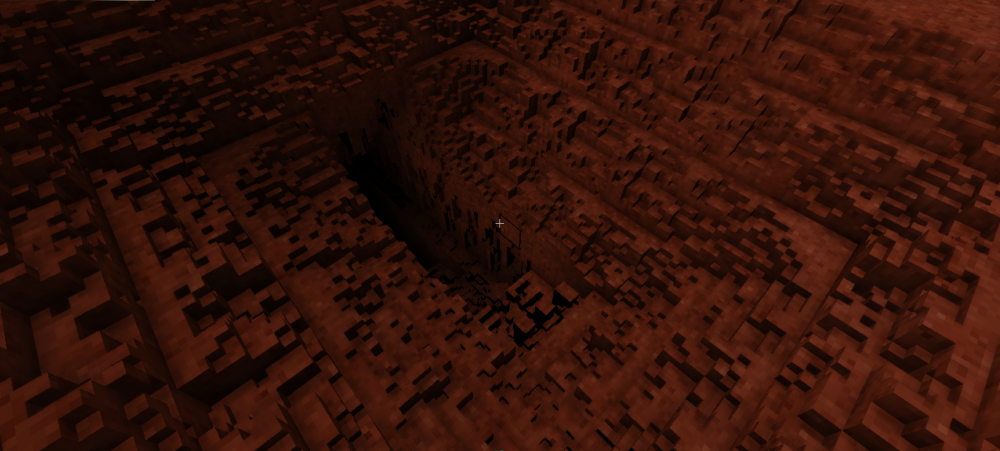
Day 44 There is a mouth in the earth. Not a cave. Not a mine. A mouth. I know the difference now. The buzzing is everywhere here. In the stone. In my teeth. Behind my eyes. Sometimes there are words inside it, spoken by too many voices to understand, but I know what they mean. down down down down My hands have changed. The wound opened yesterday and the little red pearls have grown through the skin. I tried to cut one out. There was another beneath it. And another beneath that. I think they are beautiful. No. No, they are not. There are stairs beside the maw. I saw them clearly for a moment. Old stairs, cut by hands. Iron fittings in the walls. Rotten beams. Bones. So many bones. And marks scratched into the stone. Names. Dates. People lived here before us. tk tk tk tk tk tk For one moment the buzzing stopped and I saw it below. God. It looked up at me. Or I looked up at myself. I cannot remember which. There are legs where there should not be legs. Hands among them. Faces perhaps. Petru was there. Anica too. Dumitru opened his eyes when I called his name, though I do not think the thing that looked through them was Dumitru anymore. They opened their mouths together. I heard my own voice come out. The stairs go deeper. The answer is below. It has always been below. Every wall we built, every gate we barred, every fire we lit -- we built them over it. bzzzzzzzzzz My feet hurt. Too many joints. It does not hurt anymore. We remember this fort. We remember other walls here. Other gates. Other names for the place. They always build above us eventually. They always hear us eventually. And when the stones grow red they always think something has come. Nothing came. We were already here. I am going down now. I am we are tk-tk-tk-tk-tk-tk quiet There are people above. We can hear them walking.
-
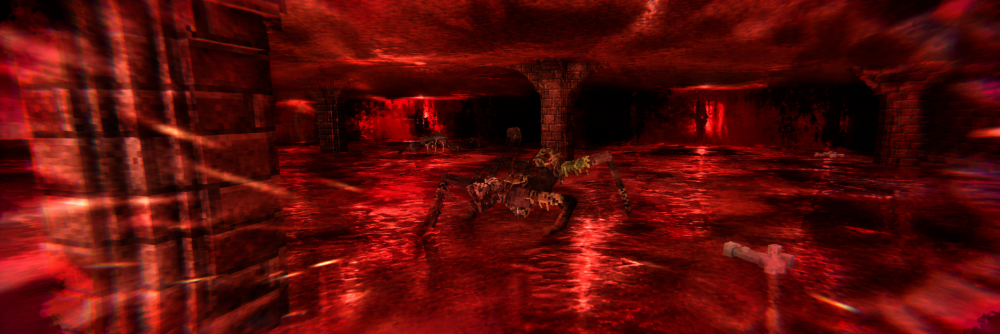
Day 42 There is something wrong with the people here. They whisper when I pass. They stop speaking when I enter a room. Three more disappeared during the night, and still everyone pretends not to understand. They say the creatures took them. They say we must stay inside the walls. There are no creatures. I understand that now. The others have found another way out. They know where the missing people went and they are keeping it from me. Perhaps Dumitru knew too. Perhaps that is why he left. The answer is behind the gate. tk-tk-tk-tk I packed food, a lantern, a pick and enough weapons for several days. I waited until the north watch changed and went through while no one was looking. There is a great space beneath the gate. Far greater than should fit beneath the fort. Brick pillars hold a ceiling I cannot see the end of, though I do not think the pillars are holding anything. There are bones everywhere. Things came for me in the dark. Long things. Dead things. Ghosts wearing bones. I killed them. They are not real. They are not real. There is something else down here. I cannot see it, but the emptiness speaks around it. Sometimes it sounds very far away and sometimes it whispers from immediately behind me. It is one voice, then many, then one again. bzzzzzz - tk tk tk tk - bzzzzzz The buzzing is back. I know now it was never beneath the fort. It was showing me the way. I can hear it farther down. It wants me to come. tk-tk-tk-tk-tk-tk-tk
-
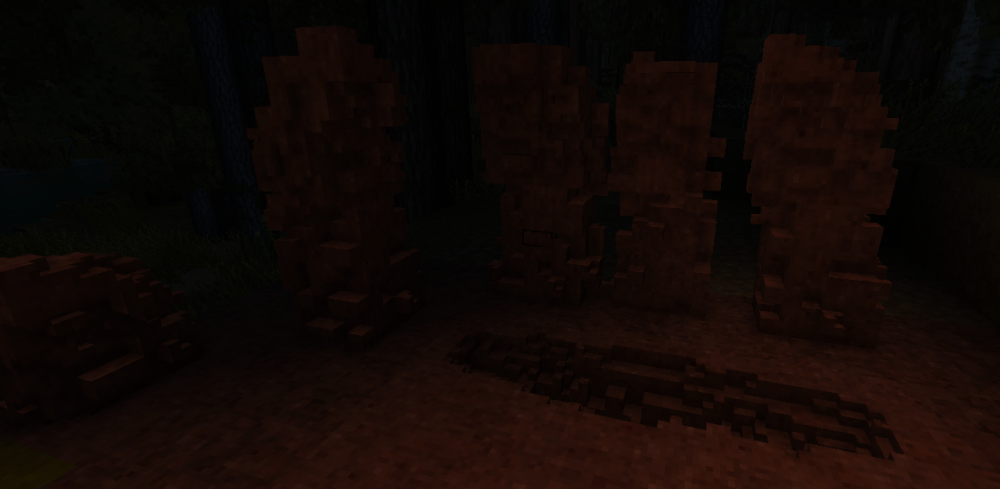
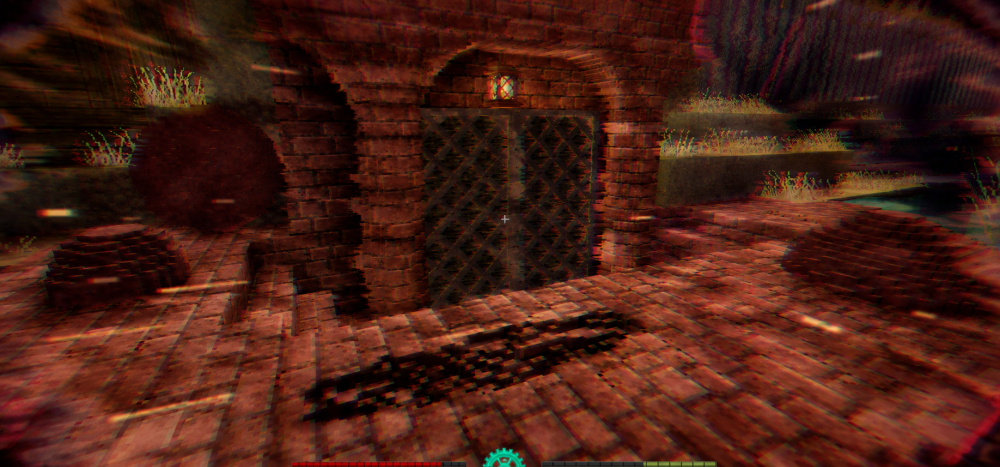
Day 41 The temporal storm last night was the worst we have seen. For hours the fort seemed to move around us. The walls groaned, lamps burned strange colours, and once the north tower appeared much farther away than it could possibly be. Dumitru, the old keeper of the gates, was on watch at the north gate. Shortly before midnight he told the other guards that he could hear something beneath the stones. They thought he meant the buzzing, but Dumitru said that was only what you heard first. Beneath it was a clicking, moving back and forth under the gate, like claws feeling along the underside of the floor. Then he said, “There is a way down now.” Before anyone could stop him, Dumitru took his lantern and iron bar and went outside. He never returned. When the storm weakened near dawn, four guards went looking for him. They found no trace of Dumitru. Instead, just beyond the north gate, they found another gate; an iron lattice set into old brickwork where nothing had stood the day before. The ground around it was split open. Blood seeped from the little red pearls and disappeared into the cracks, while several of the larger growths had opened into wet, bleeding wounds. There were no footprints leading through the gate, nor any leading away from it. We barred the north gate before sunset. Tonight, if the wind is still, we can hear something beyond the new gate. At first it sounds like someone moaning very far below us. Then comes the buzzing, and beneath that the clicking of many hard little limbs. Sometimes they stop separately. Sometimes they all stop at once.
-
Day 36 Nothing happened for six days. No new growths, no creatures at the walls, and no buzzing beneath the floors. Even the red hand beyond the north gate seemed to have gone quiet. Some had begun to say that whatever had come upon us was passing. This morning, Anica killed the bees. Anica has always tended them. She is a gentle girl, though sometimes a little slow to understand what is asked of her. The bees never troubled her. She would sit among the hives without gloves and speak to them while she worked, and somehow they seemed calmer around her than around any of us. Today she began screaming at them. At first we thought she had been stung, but then she took a spade to the first hive. When we tried to stop her she fought us with a strength none of us expected. She kept shouting that they had to be quiet, that they were too loud. “They are inside my ears. They are making my ears bleed.” She smashed the first hive, then the second, and then the bees came upon her all at once. By the time we reached her there was nothing we could do. Something else happened which none of us can explain. Every broken comb was heavy with honey, yet almost none remained upon the ground. We watched it pour from the shattered hives in thick golden streams, seep between the stones and disappear into the earth as though the soil itself were drinking it. We buried Anica before sunset. Tonight the fort is utterly silent. There are no bees anymore, only the occasional sound of someone crying behind a closed door. But near the place where the hives stood, some of us can still hear something. Very faintly, there is buzzing beneath the soil. It is not quite the sound the bees made. It is slower somehow, deeper, and sometimes it seems to come from several places at once. And beneath it there is something else. A dry little scratching, like hundreds of hard legs feeling their way along the underside of the earth.
-
Day 29 Petru is gone. Yesterday morning he woke with a wound in the palm of his right hand. A small thing, he said. Perhaps a splinter from the slaughter shed. But it would not stop bleeding. By afternoon he had wrapped the hand twice. He complained of hard little lumps beneath the skin. When Ileana offered to cut the wound open and look, he became angry and would not let her touch him. Last night the pain became worse. Petru said he needed air. Then he said he was going out to the old mine pits, beyond the north gate. When we asked why, he looked confused. He said he did not know. He took a lantern and left. He never returned. We searched until dawn and again throughout the day. There were no tracks beyond the muddy ground near the gate. No torn clothing. No blood. Nothing. Tonight the search party stumbled upon something ominous. Four great shapes have risen from the earth north of the fort. They are made of the same blood-red stone as the growths, but these are taller than a man. They look like fingers. I wish someone had not said that. Because once you see the fingers, you see the hand. And in the centre of its palm is something that is not stone. It looks like an open wound. We did not touch it. Petru is nowhere nearby. But when everything is quiet, if you put your ear close to the red stone, you can hear the buzzing again. It is louder here. Almost like a hundred flies trapped behind a wall. Except sometimes it stops. And in the silence between the buzzing, something far beneath the ground can be heard moving. Not footsteps. Too many of them. And much too fast.