Seyko
-
Posts
35 -
Joined
-
Last visited
Content Type
Profiles
Forums
Blogs
News
Store
Everything posted by Seyko
-
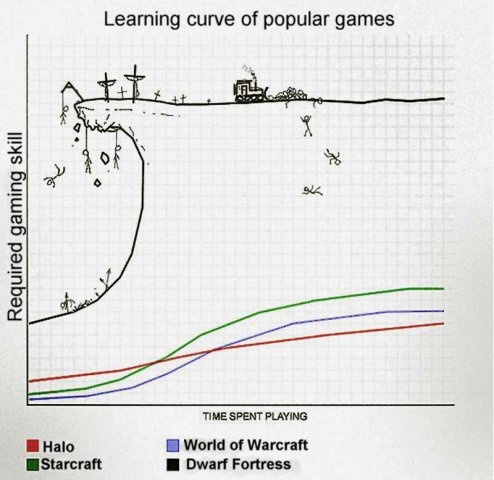
Yes, unfortunately it's not as easy as they write in the wiki. And the information there seemed outdated and abandoned to me. I tried to implement the transfer of bodies of dead chickens in the hotbar cell for the backpack through assets. Well, I got a backpack in the form of a stuffed chicken that is not connected to the bodies in any way... Surreal. Definitely yes, if you have a lot of free time. The entry threshold into the game is high (there are memes about this on the Internet), the game mechanics are many. I have the impression that VS was initially largely inspired by DF. I tried to put together all my thoughts about the behavior of advanced water yesterday and ran into a lot of problems. I will work on it some more. For now, here are some changes: New additional block parameters. VOLUME (V) - the amount of water that a block can hold. For impermeable blocks (stone, clay) V = 0 For air V = 1 (when air is filled with water, an "advanced water" block appears in place of the air) For sand and gravel V = ... maybe 10 For all types of soil V = 8 For different building blocks, you need to think. For example, 4 or less. It does not matter now. For "advanced water" V = 16. Exactly 16, because this is the height of the block in pixels. I think by scooping up water with a bucket we take 1 pixel of the height of "advanced water". By the way, from here I got that the height of Seraphim is about 1 meter! If 1 block of water is 16 buckets of 10 liters, that's 160 liters. 160 liters = 0.16 m3 -> the side of the block is about 0.543 m. If Seraphim is 2 blocks high, that's a little over 1 meter! I'm probably delirious... But, take a ruler and measure the width and height of the door in your room. Divide the height by the width. Is that close to 2? In VS it's 2! The wolf takes up 2 blocks. A real wolf is about 1 meter long. I didn't go into it any further. POROSITY (P) - it's probably more correct to call it a priority. This characteristic shows what place the material has in the queue for absorbing neighboring excess water. For impermeable blocks (stone, clay) P = 0 For air P = 1 (if you bring a napkin to water spilled on a table, the napkin will pull the water towards itself. This is surface tension due to porosity. Therefore, for water, P is low) For sand and gravel P = ... maybe 6 For all types of soil P = 9 - maximum For different building blocks I haven't thought about it, you can decide later. For "advanced water" P = 1. MOISTURE (M) - how much water is in the block at the moment. If the M block has more than 75% V, then P = 1. This way, the soil will not try to become wet mud (a figure of speech, this is the same earth), unsuitable for agriculture. This will only happen if the excess water has nowhere to go. Speaking about the byte variable type, which stores 256 values, I just want to say that this is an economical data type, but even it holds a lot. You can use these 0-255 values in different ways. In fact, at that time I was thinking about writing all the block parameters in turn through a separator, but this is no longer a byte, it's a string. But maybe something similar will work in binary notation... First, it is more important to describe the water drainage algorithm. I stopped at this point and do not see a solution yet. So I came across the fact that everything is not so simple! Who would have thought! In general, this takes time.
-
I guess I'm not expressing myself very correctly. But in my previous post I actually suggest how to make "advanced hydrodynamics" (let's call it that for now) as an option when creating a world. Similar to the existing "cave-in" system. In general, I will think about describing all the thoughts consistently and clearly. So that everyone can read and have an idea. Here need to understand that the developers have spent a lot of effort to provide an accessible tool for modding (I haven't delved into it, there's a lot written about it all over the site), so to the request "I want a well" the developer can answer "make yourself a well". It's just a new structure like a cellar or a furnace. It's probably rude, but this thought doesn't leave me. Therefore, our wishes must be global and accessible, or intersect with the roadmap or vision of Tyron. Or if everyone unanimously says - we need it! Yes, I also see many topics related to water. I also want all this and faster! Maybe it's worth throwing a link to this one in other topics?
-
Not only olive, sunflower too! First grind on millstones, then press on a screw press. Make an alternative use of olive and sunflower oil in recipes for an oil lamp and oiled leather. In the future, oil is the basis for paints (we want to paint pixel by pixel with paint and a brush) and polishing paste (polishing jewelry, we are go!). Maybe a lubricant for shafts and gears.
-
Regarding rewriting the code. At first glance, it seems to me no: Of course, not everyone will be delighted with such serious changes. Therefore, as with the cave-ins system, advanced hydrodynamics should be an option. The existing system will be supplemented with mechanics and water dynamics, which I wrote about earlier. I will immediately move on to the question of data generation and storage: advanced hydrodynamics will not be stored in the standard world. If we enable this option, a three-dimensional data array is additionally created for the world. This array will store the new block parameters that I wrote about earlier. Perhaps multi-threading will allow this to work painlessly. Let the experts think about this. Regarding data storage. Variables of the byte type each occupy 1 byte, but store up to 256 values. For a world column of 8 chunks (32x32x32 with a height of 256 blocks), this is 262400 blocks of 1 byte each, which will be approximately equal to 256 KB. Not much for me. Air blocks will take up memory so that the engine understands that there is air there, and not a quantum hole. And water below sea level needs to be thought about... I understood @JYAR about layers of water like charcoal. Yes! This is the most logical! And I suppose this will be another water block, optional. About rivers. I like the theme of sources. If rivers are filled with ground and rainwater, then it will quickly run out. Here, a source as a constant influx of water will not allow it to dry up. In general, in this way, river generation comes down to generating a landscape and setting a source. And if the player does not enable the advanced hydrodynamics option, then the "river" (a strip in the ground) is filled with ordinary water. About evaporation, yes. The farmland blocks are already drying out. It is not clear how, maybe it is already ready. Well, the fact that water flows in and out of the "ocean", the "ocean" is abstractly constant. It is not replenished and does not dry up. I think this logic will help fill empty blocks and flow blocks underwater. Channels will not need to be filled, it will happen by itself, if not above sea level. But I did not think about griefing... I have never played on the server. On the other hand, griefing is an integral part of the game. After all, the game has padlocks and a system of strengthening blocks. Now we will need to think through the drainage system properly )
-
I remembered. Everything I'm trying to describe already works in Dwarf Fortress. My vision is not to add bits like a well, a river, etc. We need to completely rework the water mechanics so that all the missing aspects of the game become available automatically. As if from the general to the specific, and not vice versa. In the meantime, everything that is written on the forum related to water looks more like a topic for mods. Do I understand correctly that we write on this forum in the hope of being heard by Tyron and the development team? Then we should offer an idea that the developer will want to add to the game! By the way, how does it work? We, the users, should create a stir around the topic, then the team will start reviewing? Or do they look once a month? ...
-
Rift attenuation and charms, a way to prospect rift density.
Seyko replied to WalrusJones's topic in Suggestions
Effigy burning rituals, altars and offerings -
I see it differently. So that every conditional period of time the block is filled with water. And only in case of block overflow the excess water goes further. Thus a short rain can pass unnoticed, but a long storm will flood caves, lowlands, fields (there are interesting discussions on agriculture on the forum). What you are saying can really simplify the calculations. If at the beginning of a thunderstorm the VS engine already knows how much precipitation will fall within an hour, what the result should be and will simply draw water blocks of the required height. If I understood you correctly, I have to use a translator.
-
In general, I would like to have water physics close to real - so that rain fills ravines, pits, wells, floods basements if they are from the soil. So that water gradually penetrates through porous blocks (earth, sand, gravel) and goes to sea level. Retained by impermeable blocks (stone, clay). Then some caves will be flooded (or only after rain). It will be very cool to get trapped underground because of rain. In general, from this you can go further in different directions: aqueducts, field irrigation, wells, storm drains, drains, dams, canals, locks, water wheels. The player will be forced to carefully choose a place for construction and building materials so as not to have a headache later. Life in a dugout will sparkle with new colors. I understand that this is very difficult. I can only offer an idea: 1. Atmospheric precipitation has a characteristic of X mm, similar to wind force. 2. Blocks have the parameter VOLUME (how much water it can absorb), HUMIDITY (the amount of water absorbed by the block) and POROSITY (how fast the water goes further down). 3. A block filled with water throws water to the side where there is less water (air, more porous blocks). Thus, water will flow through the ravines. Like a river! If my PC does not explode at this moment . Prepared channels, carved out of stone, will direct water to reservoirs! 4. Depending on the biome, its dryness, it will be decided how much moisture the block loses per hour (probably too many calculations), per day. 5. Water goes down to sea level. 6. Rule - voids adjacent to the sea (ocean) are completely filled. Making channels for a sailboat will become more realistic! Perhaps this will require a lot of computing power. But maybe we can run a series of simulations and get simplified rules for water processing. In any case, this is an unprecedented gaming experience and a worthy challenge for the VS engine and the team!
-
Make water fill air blocks under itself PLEASE, I BEG YOU
Seyko replied to NastyFlytrap's topic in Suggestions
Yes! Especially now that they've added sailboats, I want to dig a canal for it.