Indeed, it appears that all you have to do is remove ALL access to sunlight while providing access to open air. Here is a quick guide:
====================== VINTAGE STORY STEP-BY-STEP GUIDE TO RIPEN BLEU CHEESE =========================
0. Only attempt to craft bleu cheese in cold environments or winter when there are at least 2 months of sub-freezing temperatures left. (Bleu cheese has to ripen in an unsealed environment, i.e., outside of a cellar. Unless the air temperature is cold enough, raw cheese wheels may spoil before they fully ripen.)
1. Dig or secure a cave, and leave the entrance open. You can block off the entrance with "open" blocks like fences or fence gates
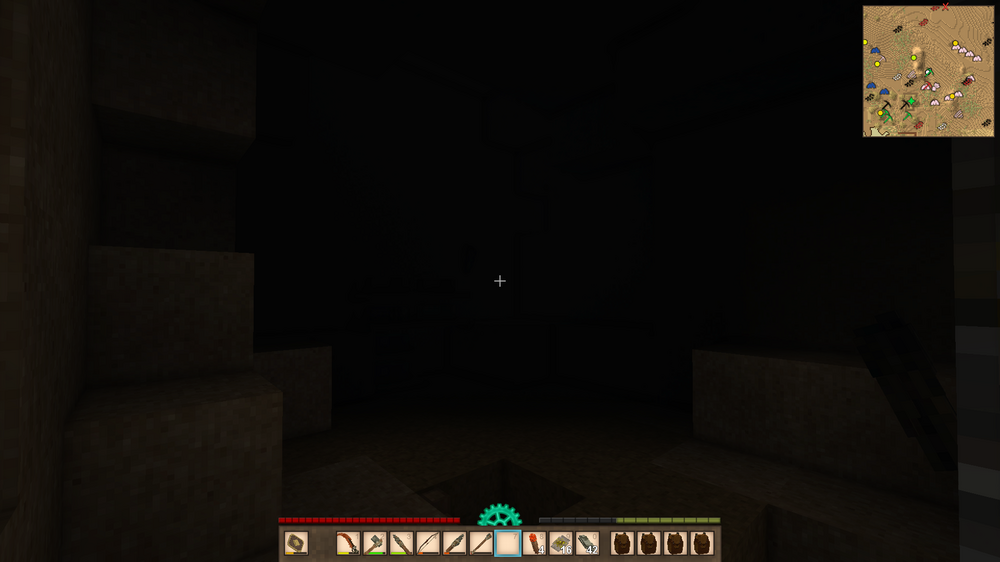
2. Build enough walls in the cave to create twists and turns that reduce the DAYLIGHT at the back of the cave to 0. Check this by removing any artificial lights during the middle of the day and ensure that there is a spot where the cave is almost pitch black. Note: this part is best to do when temporal rift activity is CALM. (See Figure 1, below.)
3. Build a few wooden shelves in the dark spot. Now you can replace any artificial lights.
4. Craft some raw cheese wheels and place them on the shelves. Note: They don't have to be crafted in an area without sunlight, but they have to ripen in an area without sunlight and with open air access.
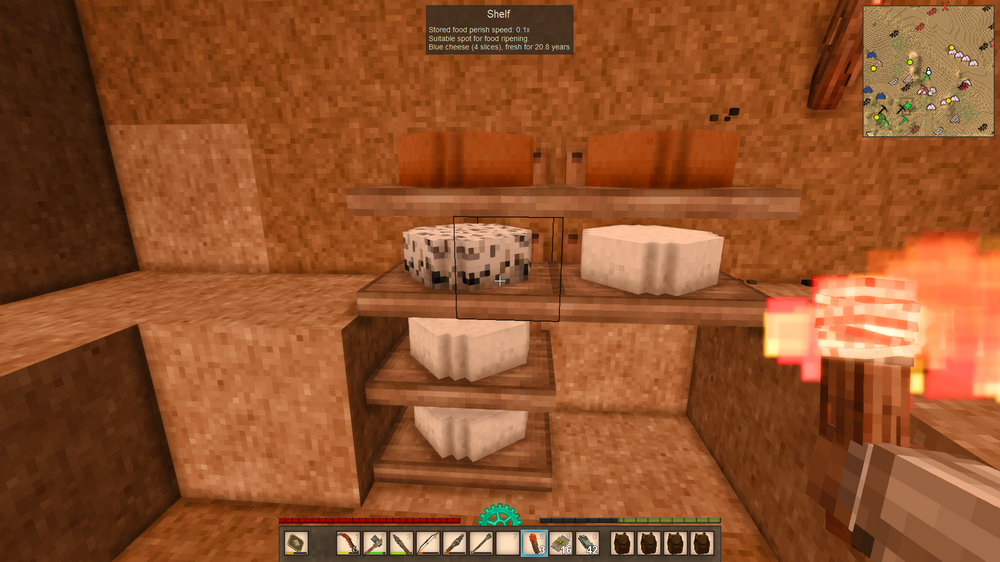
5. Wait until the raw cheese wheels ripen (a little more than 14 days depending on the temperature) and you will have fresh wheels of bleu cheese! (See Figure 2, below.)
Figure 1: Cave with light level 0 in the DAYTIME. This is the spot to ripen bleu cheese.
Figure 2: Bleu cheese ripening success!
Hmm... I wonder if raw cheese can be ripened partially indoors, but either finish or start the process outdoors, and still produce bleu cheese. This would allow bleu cheese to be produced in warmer conditions.