MKMoose
-
Posts
686 -
Joined
-
Last visited
-
Days Won
2
Content Type
Profiles
Forums
Blogs
News
Store
Everything posted by MKMoose
-
Yeah, that's been probably the most common complaint regarding new bush models, though in terms of aesthetics alone the feedback has been very positive from what I've seen. I'm definitely not noticing them from as far as I used to, especially because the color of the ripe fruit alone is not an immediate giveaway anymore, though the bushes are now a bit more distinct from the everpresent birch leaves. I don't personally mind this change, as I think the old bushes were pretty ugly, used to really stick out and were kind of difficult not to notice once I knew what to look for. Slight texture tweaks could help, but it's also probably not too difficult to get used to their new appearance. New player perspective would be very useful to get on this, though I've also argued that berry bushes should be much more plentiful in the wild, which would likely largely alleviate the issue of the currently very sparse bushes being somewhat difficult to spot. Well, the bowtorn firing squads were a bug, and that got fixed. At least they were a bug after storms - I don't recall it affecting high-activity nights as well, but I could be wrong. Bowtorn themselves are somewhat divisive to this day, but personally I don't really have significant issues with them besides simplistic AI, which basically applies to all entities in the game. Also, they belong to the more fantasy, eldritch lore-related part of VS, so they get more allowance to be implemented however the devs see fit within reason, they aren't restricted by realism, and they've been used to address clear design flaws that were present when there were only drifters. But the berries? Apologies if I'm repeating myself too much, but I'm really just baffled and disappointed with several of these changes (same as the heat treatment mechanics, by the way), especially because most of them seem fully intentional: Several of the new bush mechanics are completely unrealistic (the fertilization requirement, minimum fertility requirement and soil degradation). Several of the changes are solving very few if any issues while also creating new ones, which makes them arguably just a net detriment to the game (if there's one good change, it's the cuttings, which solve obvious problems and cause very few if any). Virtually all of the changes are inconsistent with the rest of the game, at least as long as other food sources aren't reworked to match (even the cuttings are in multiple ways different from fruit tree cuttings for no clear reason). The total effect of the changes arguably makes the berry bushes unfittingly complex for the earliest food source that the player is likely to rely on, to which I actually got the response that gathering is unaffected, which is kind of fair enough, but still 1) health states and traits are extra clutter which is almost entirely irrelevant for a beginner and 2) trying to replant berry bushes which are inconvenient to collect regularly is a very intuitive thing for new players to do as far as I can tell. Like, those aren't just the devs' interpretation of what they want the game to be, as could be argued with the bowtorn. To me, most of those are kind of fundamental mistakes. And you know what I honestly kind of hate? Almost nobody has given any pushback to these complaints - because there's almost no pushback to give. I welcome any attempts, though, or at least corrections. I'm not really expecting the berry bushes to be exactly what I would want them to be - that would be disregarding other people and making a game just for myself, and that's why I'm pointing out issues more than I'm proposing any larger changes - but I genuinely think that the fertilization requirement, minimum fertility requirement and soil degradation would be better off just rolled back, because I see no reasonable justification for them to be added in the first place. Or at least no justification that trumps these specific changes being unrealistic. There's a lot of functionally similar mechanics that I could easily appreciate, like soil preparation, water balance or pruning, because those could at least be realistic. Traits are better, but the unstackability issue is still very significant.
-
As the #2 berry bush rework hater, I do actually agree that some of the changes are definitely beneficial in the long term. Taking cuttings instead of full bushes is an obvious good change, though after that it kind of goes downhill for me for the most part. I don't personally think the rework even achieves what you're saying that you like about it, and I'd argue that many of the changes are largely misdirected, they are at odds with the gameplay role of berries for the average player, and are also unrealistic. Even if they were to stay roughly as they are, there's still a couple significant issues to fix, most notably that cuttings with different traits don't stack with each other, which is a sacrilege towards player inventory space and has no simple solution besides nuking the trait system back out of the game. The dominant community sentiment, as seen for example on this Discord thread requesting to remove the fertilizer requirement, which got 11k messages in 5 days and ~80% reactions in favor, I would summarize as "yes, but not like that". The 1.21 berries clearly needed a rework, but the changes are the most controversial part of the update by far. Some of the changes are good, but most can be easily argued to be arbitrary, pointless, purely detrimental to the player, unrealistic, or a combination of those, while some of the biggest issues with berries remain mostly unaddressed. They're still available almost all the way through the year, spawn in pathetic tiny patches which are unrealistically scattered and annoying to collect (which is the main reason why aggregating them from a large area has been such a common strategy - they're just really inconvenient otherwise), and they remain easy to replant in large quantities even if it requires to wait a couple months longer and fertilize a bit for full yields. I've made a whole list of what I don't like about the changes here, and I really hope that at least the seemingly unintended issues will be addressed. Now, it's also worth mentioning that a part of the negative reactions could have been prevented with more intentional design or better communication, because when people initially saw that "berry bushes require fertilization or they will stop bearing fruit", many people quite naturally started freaking out, because it was easy to assume that it would actually require regular fertilization and render berry bushes effectively worthless. In reality, the average player will never need to use more than 4 bone meal, or 3 compost or saltpeter, or 2 potash, which gets your bushes into the healthy state for something like 4-5 years in the current balance, which is a pretty moderate upfront cost more than it is maintenance. Not saying that appreciating those changes is in any way wrong or whatnot - you are free to enjoy the game however you see fit - but I just personally really don't like them for a whole host of reasons, and the community at large is clearly dissatisfied. Just for a bit of context, the devs have said they won't be implementing detailed butchering and skinning due to gore concerns. A lot of people have been suggesting ways to simplify the system and minimize gore (myself included), though I'm not aware of any dev statements suggesting that anything is planned for anytime soon. There are some plans for animals, apparently, but it's very vague and I don't know when any of it might come and whether it will involve anything related to butchering.
-
It's only when the bush initially matures, not when the fruit ripen, just to be clear. And it doesn't really go to barren, because for some reason they've decided that the cuttings can only be planted on medium fertility or higher. Otherwise correct. It should be on average 5.5 months [it's more, I forgot one stage] between initial planting of a cutting and first berries ripening. The changelog is wonky on this. Granted, it may still be too long to see any berries before the first winter, depending on when exactly you plant them.
-
My thought has been that the tailor should focus a lot more on trading, and all clothing outside of certain basics should be tailor-exclusive in crafting but usually purchasable from the clothing trader and perhaps other traders like luxuries and survival in certain cases (ideally alongside a change to make them sell all items from several clothing sets at once instead of completely random items). Requiring a purchased sewing kit for some clothing and making sure that they require some rarer resources also seems like a pretty reasonable idea, though I don't think there should be two different-cost recipes for the same clothes, unless it's only implemented through some sort of intermediate item that the tailor could craft more efficiently (which may also help with every other recipe that uses hides being craftable with hundreds of possible item combinations that make it kinda annoying to look them up). Then maybe add a special system where different NPCs (primarily traders, but maybe Nadiyans as well) would "request" some clothes (frequently tailor-exclusive) and pay handsomely for them (they currently do buy some clothes, but it's inconsistent, has little variety and is mostly limited to lootable clothes), so that a tailor would effectively switch the balance around by being a trader themselves. Other classes would buy clothing from a merchant, whereas the tailor could actively go around and sell clothing for a hefty profit. A similar system could be extended to other materials to go in line with Tyron's idea that he shared a while back to make a merchant an actually gameplay-viable player job of sorts. There's also a whole number of clothes for which the tailor kind of provides no advantage besides being potentially cheaper (e.g. all items except shoes in the arctic fisher and embroidered fur sets compared to the arctic hunter set), which further begs the question of "what's the point of the tailor?". Also, the reindeer herder clothes have some of the most arbitrary warmth values in the game, it feels like, and I think different sets should be unified to make them mostly equivalent to each other instead of making a patchwork from different sets the technically optimal set for warmth. With the new buff system, I think it may be really good to allow the tailor to add lining to most clothes, making them ~0.5 C warmer and reducing the need to specifically balance the tailor's clothes against other sets. This would make the tailor's advantage independent of the specific clothes that they can craft, and allow to keep different sets consistent with each other, leaving the choice of clothing more to the matter of taste.
-
You can, but the berry bushes currently downgrade the soil when they mature, meaning that the soil you dig up will be lower fertility than the one you planted on. Water is currently wholly irrelevant for berries. Breaking a bush now drops a couple pieces of plant debris - replanting can only be done through cuttings. Keep in mind that the current system is a rather controversial one and some changes or at least fixes and balance adjustments are likely to come before 1.22 stable.
-
They've been adjusted again in rc.1. Machine gun I think is still viable at short range. Full accuracy is reached after holding for ~1.1 s if I recall correctly, though I'm not sure at this point. Damage below. Copper and bronze are neatly balanced between each other. Iron is in a limbo now because ranged damage seems to be unaffected by quenching due to a bug - if that's fixed, then iron spears will be in certain contexts better than bronze pre-update. They would be just fine if quenching was removed. "*-flint": 4.0, "*-obsidian": 4.5, "*-scrap": 5, "*-copper": 5, "*-hacking": 5.5, "*-bismuthbronze": 5.75, "*-tinbronze": 6.0, "*-blackbronze": 6.5, "*-ruined": 6.5, "*-iron": 6.8, "*-meteoriciron": 6.9, "*-steel": 7.0, "*-ornatesilver": 7.0, "*-ornategold": 7.25, "*": 3.0 If quenching gets fixed to affect ranged damage as well, then an iron spear quenched twice (or potentially a meteoric iron or steel spear quenched once), relative to a 1.21 tin bronze spear, will have: higher damage with better breakpoints (roughly the same damage and breakpoints as 1.21 black bronze), longer accuracy windup time (not as significant for close-range spam, impactful for longer-range combat), much higher melee damage (~4.75-5, whereas tin bronze has 3.75).
-
Very cool, a lot of these changes are genuinely great. However, there's a lot of issues I have with berry bushes: berry bushes' nutrient consumption mechanics, fertilization requirement, minimum fertility requirement and soil degradation is completely inconsistent with everything else in the game and unfitting for the simplest, most basic food source that a new player is likely to encounter and rely on; I know there are supposedly planned changes for crops and fruit trees, but even if other features are brought in line with the precedent set by berry bushes, I still take issue with them being this complex this early into the game, berry bushes' nutrient consumption beyond initial fertilization after planting is so irrelevant that I genuinely kind of don't know why it's even a thing - it would be much more intuitive to implement it as an up-front cost to establishing a cutting (potentially only softly), or as an optional way to increase yields, which would also avoid the inconsistency with wild bushes, berry bushes' fertilization requirement, minimum fertility requirement and soil degradation are simply unrealistic, and personally I see no reasonable design justification to introducing them in spite of being unrealistic - if increasing complexity is the goal, then it would be better to do it in a way that actually makes sense realistically, through soil preparation before transplantation, maintaining a suitable water balance after planting, and pruning as the single most important way to boost yields; fertilizer can remain simply as an option to increase growth rate of young bushes (keeping in mind that it should only be used after growth starts naturally) and maybe afterwards to increase yields, little has changed about the overall balance of berry bushes - they're still available almost all the way through the year, spawn in pathetic tiny patches which are unrealistically scattered and more annoying than labor-intensive to collect (which is the main reason why aggregating them from a large area has been such a common strategy - they're just really inconvenient otherwise), and they remain easy to replant in large quantities even if it requires to wait a couple months longer and fertilize a bit for full yields, berry bushes can currently be sustained in the healthy state on just one nutrient and not all three, and arguably it's even more optimal than bountiful bushes on all three nutrients, berry bush cuttings with different traits don't stack, so it feels genuinely really annoying to collect them; it doesn't help that the traits don't currently show up in the tooltips and that even the positive effects of traits are very minimal, soil degradation allows to effectively halve the cost of terra preta. And there are similarly major issues with heat treatment: quenching and tempering is tedious, repetitive and lacks any sort of skill expression, which is especially annoying considering that realistically, quenching should only be done once per workpiece, except as a way of retrying after a failed or unsatisfactory attempt, quenching is unbalanced and produces a borderline absurd jump over bronze, tempering is practically a waste of time with the current numbers, and even if it gets adjusted then without major changes choosing whether to temper or not will always be either an obvious choice or purely a matter of hyperoptimization, quenching for durability (covered in clay) doesn't make sense with the current mechanics, because if the shatter chance is greater than the relative durability increase, then it's fundamentally an expected loss. I made a long post on heat treatments as well, so I'll spare the detailed explanations. Love the update overall, but these two features have felt frustratingly half-baked and misdirected. Also, spears can still be thrown at a rate of over two per second, I think.
- 72 replies
-
- 16
-

-
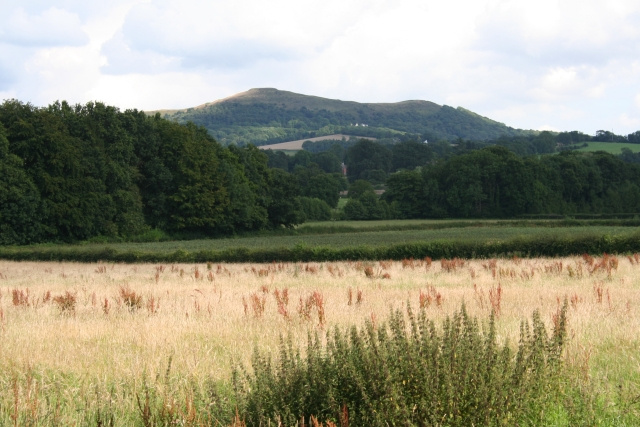
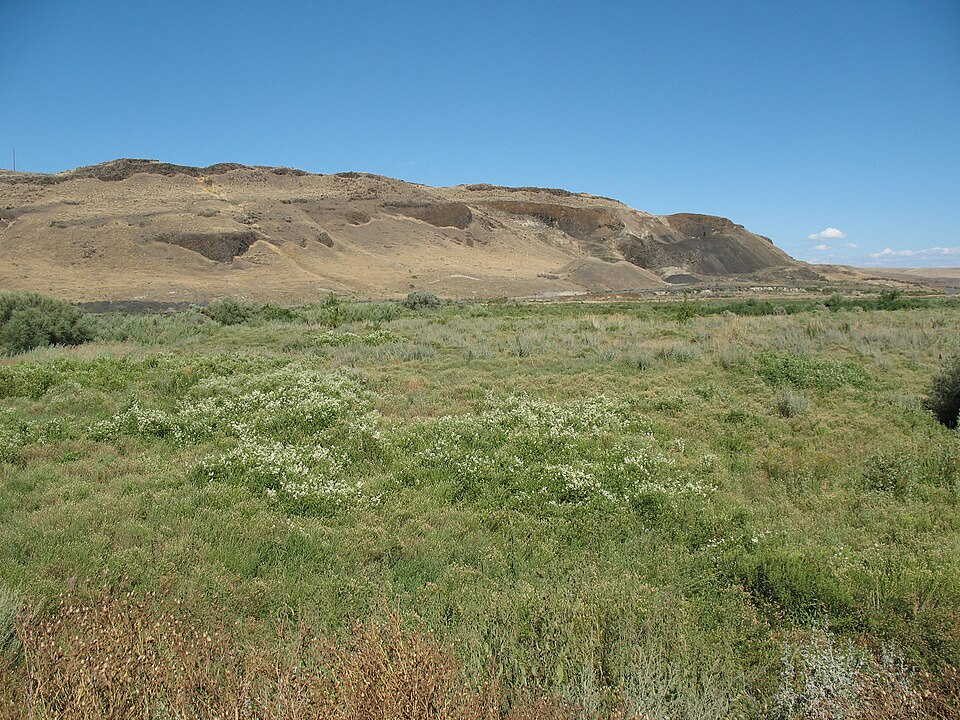
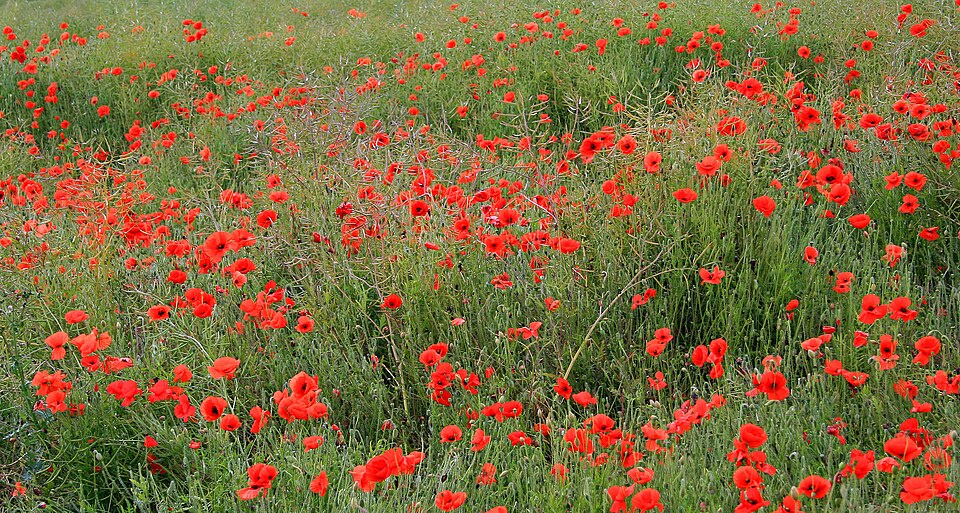
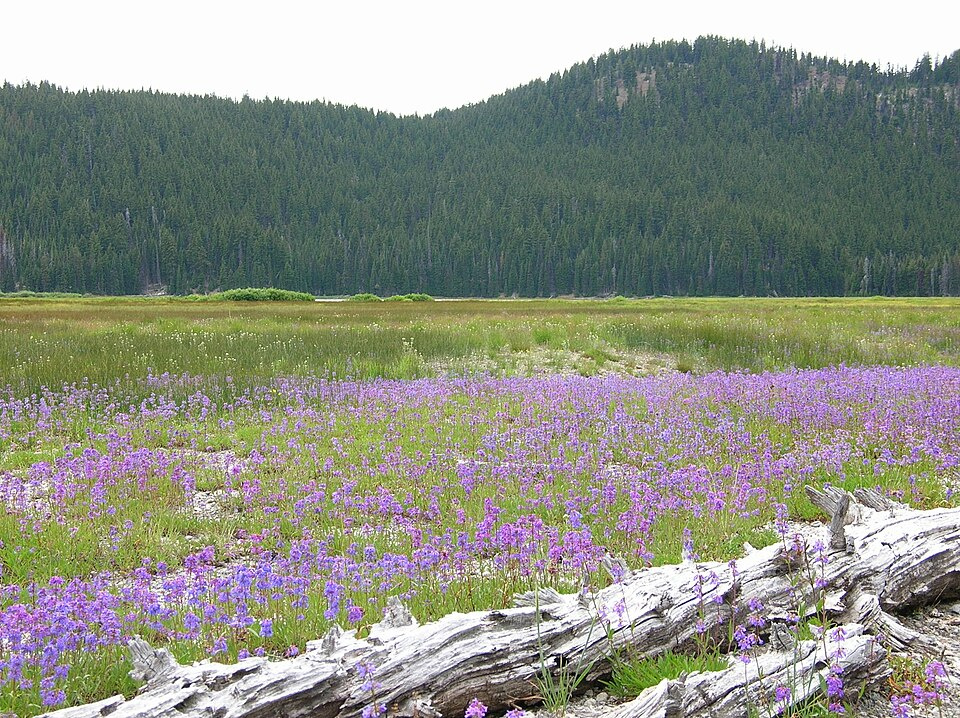
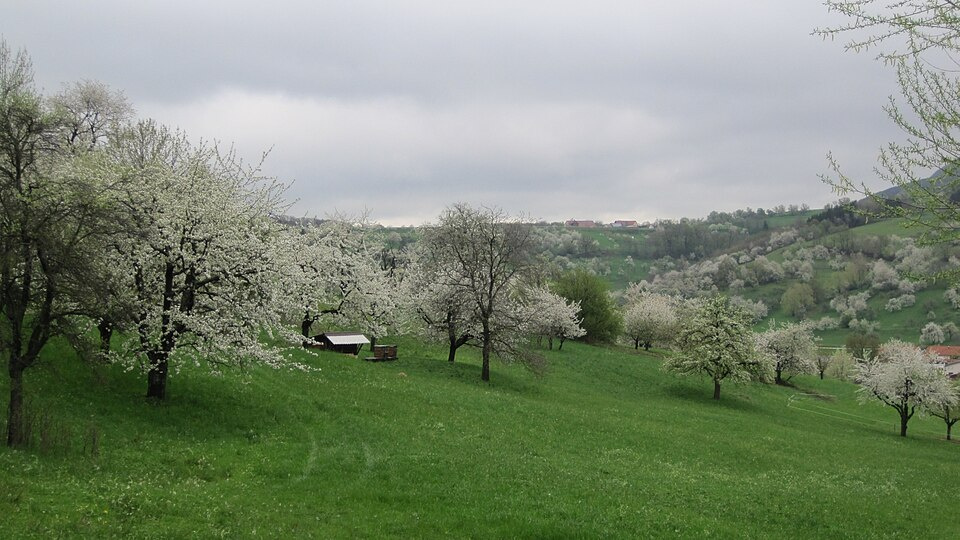
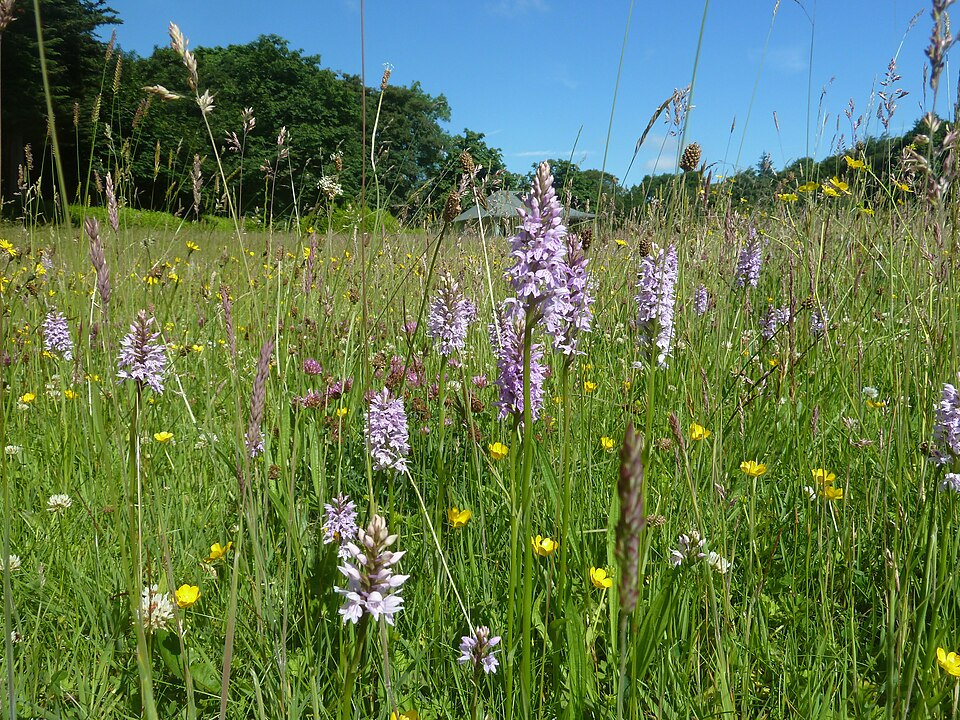
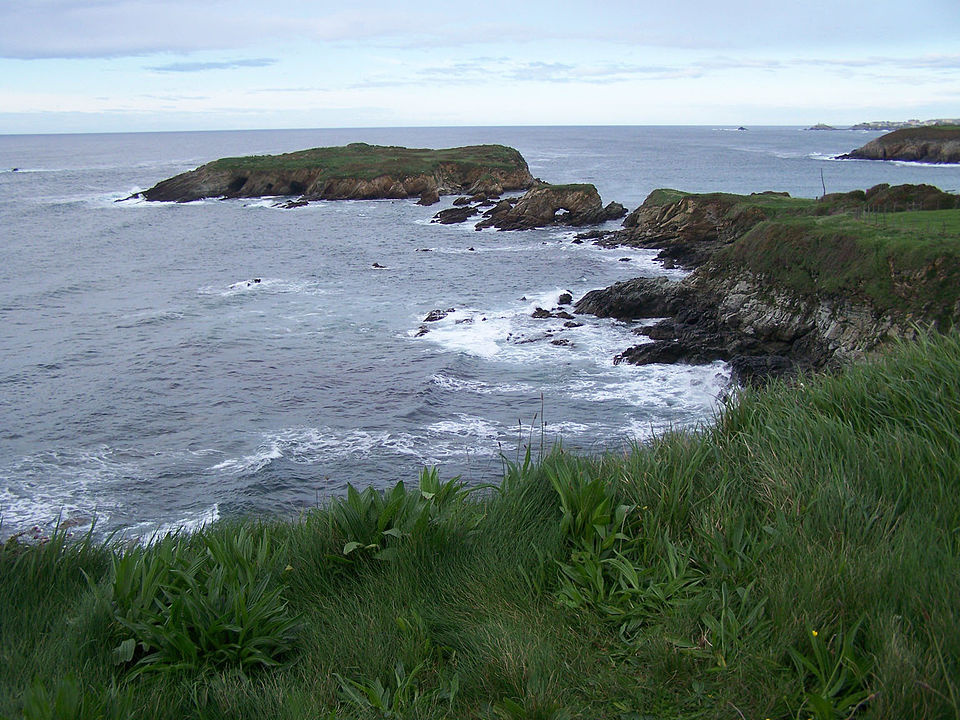
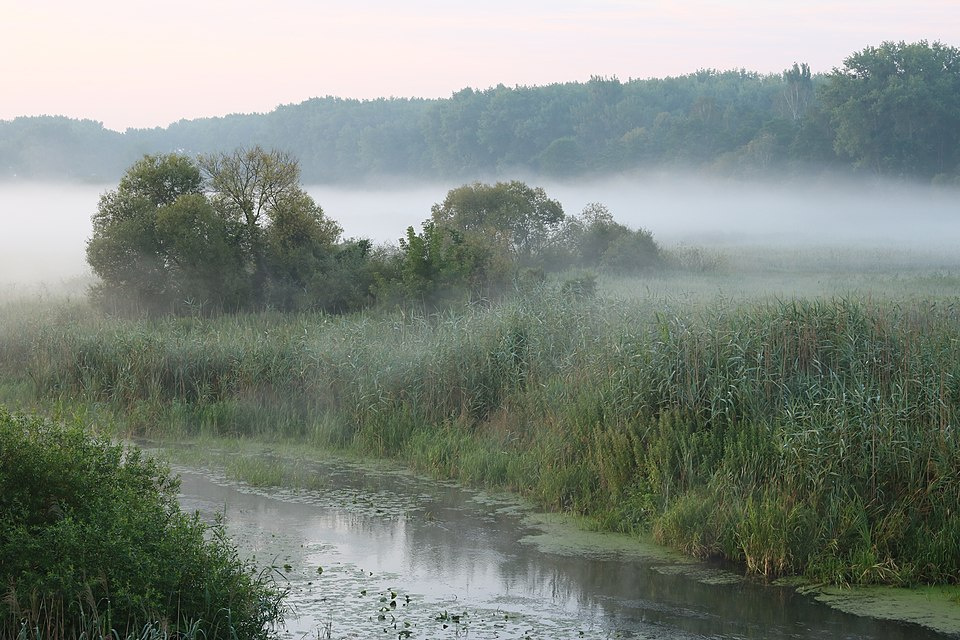
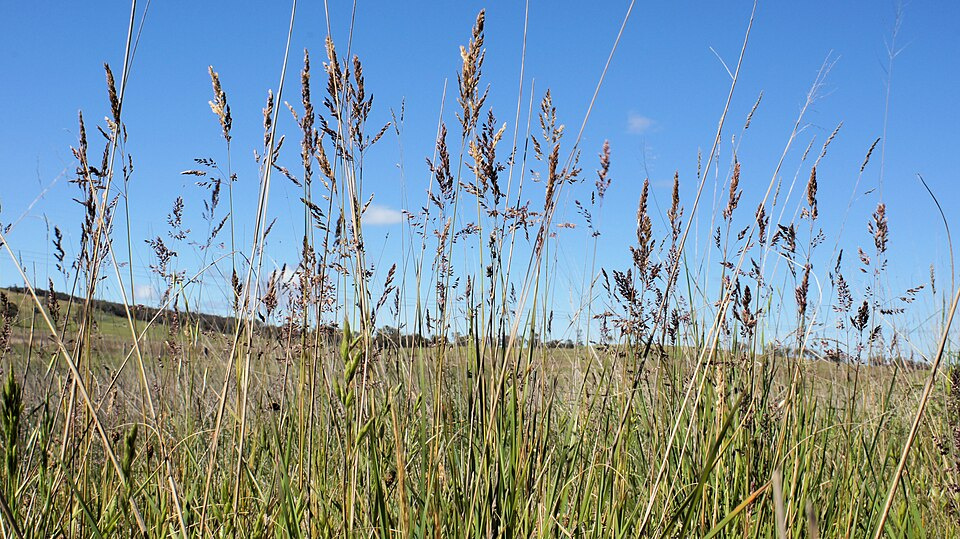
 Motivation In the current state of the game, it's very difficult to create good-looking pastures, farms, and similar builds, and using crops on farmland requires constant maintenance. This is a group of tightly related ideas aimed at increasing environment variety and adding farming-adjacent methods for land use. It would also provide a distinct method of acquiring certain plants, especially hay and other fodder for animals as well as some herbs or flowers. Additionally, this would allow to quickly and easily create highly immersive and maintenance-free large-scale landscapes that would add visual flavor for farms, orchards and similar builds. New plants Before anything like meadows gets added, it would be ideal to consider the plants that would have to be added to grow in them: Grasses. The current grass is functional, but rather uninteresting, and it would be great to introduce more variety in this area in different climates and ecological biomes - not just in terms of height, but actually inspired by different species. This can also include different density and models rather than just textures, since the current grass only uses a cross shape, and something denser in a triangle, square or other shape would be ideal for thick grasses in steppes or savannas especially. Clovers. In some contexts, it's the meadow and pasture plant, frequently used as fodder for animals. For game purposes, it's fine if it remains very similar to grass in function, just with different aesthetics. That said, it could also have an important use in farming, since crop rotation utilizing clover is very effective due to its nitrogen-fixing capacity as a legume. Wildflowers, herbs and other. The purpose of those can be very varied in herbalism, decoration, beekeeping and various miscellaneous uses. Example plants in this category include dandelion, milkweed, poppy, knapweed, but some of the existing flowers could also be used. Left - grass (Poa pratensis, common meadow-grass); middle - clovers; right - wild poppies. Natural (perpetual) meadows Perpetual meadows are pretty simple - it's largely just a matter of improving world generation and adding new plants into it - so I don't think there's much to discuss. They should mostly appear in wetlands (low elevation, near water), near deserts, near oceans, and at very high elevations (and the different types should of course have differences between each other). They could be more localized and in some way distinguished from grasslands, but it's not really necessary. It would also be cool to sometimes generate openings in forests with meadow-like vegetation and elevated quantity of certain mushroom species. It would be quite reasonable to significantly increase the spawn frequency of various plants like mushrooms and crops in meadows, though it's not necessary. From left to right: riverside meadow, desert meadow, coastal meadow, wildflower meadow. Artificial (agricultural) meadows Since agricultural meadows are obviously man-made, there would have to be a way to create them in some simple and intuitive way. Here's what I would propose: Make generic grass convert into different plants when cut using a scythe. If it's just cropped, it would grow into special tall/dense grass, which would drop 2x or even 3-4x dry grass. If it's cut to remove it entirely, clovers and/or shorter grasses would replace it. If the climate conditions are right, allow certain other plants to grow in place of grass after it's cut with a scythe. When only cropped for grass/hay, this effect would be rather limited (though it could allow to grow 3-4x grass in favorable conditions instead of 1-2x grass in less favorable conditions), but when grass is removed entirely to grow clover and shorter species, then a variety of flowers, herbs, and other plants could spawn with it, as well as potentially certain mushroom species. Now, having a couple different types of grass and a dozen flowers is cool, but inventory management is bound to be an issue. I think that the best way to solve this is to allow the plants to have different drops when collected in different ways. If collected with a scythe, all plants would only drop grass, or a simple new item like hay or fodder (where by fodder I mean a generic item only used for feeding animals as well as making compost and maybe as cheap fuel). If collected with a knife, they would have more varied drops where relevant. I'm not entirely sure about collecting flowers and similar plants by hand, because removing plants by hand is often done e.g. when building, when inventory clutter is extremely undesirable. The natural question which comes up is "how do you cultivate a specific plant?", to which I don't have a concrete answer, as a lot depends on the exact mechanics regarding what different plants can regrow into when cut. That said, I would strongly oppose most of the plants dropping seeds that could be planted on farmland - farming shouldn't be the ultimate answer for everything, so as to not relegate artificial meadows to one-time seed collection. They're intended as a unique way of land use land and acquiring certain resources, and they should ideally remain relevant all the way through the game's progression. A lot can be done with additional tool modes for the scythe, but I would be careful with it to avoid excess complexity. Similarly, "how do you revert back to regular grass?" is a question worth considering, and again it largely depends on the exact scythe and regrowth mechanics. I don't think making it passively revert over time is a good idea, simply because these mechanics are in large part intended as a way of easy landscaping and decorating, especially for large-scale farm-like hay meadows that wouldn't require any maintenance, so it shouldn't be necessary to redo it every so often. If nothing else, reverting might be done by destroying the plants by hand, or more quickly with some other tool like axe, machete, shovel or hoe. Left - uncut hay meadow; middle - hay meadow up-close; right - orchard meadow. Related possibilities Introduce more involved, interesting and realistic composting, potentially using mechanics similar in certain regards to charcoal pits. While I'm not certain about the details yet as it's not the main topic of this suggestion, this would ideally allow using a variety of plant matter and other organic material besides rot in an intuitive way in the composting process. Allow grazing animals to create pastures using the same mechanic of converting cut grass to different plants (requires them to actually graze on grass), which could be similar or identical to the clover meadows I described. This should probably only apply to domesticated animals, or otherwise wild animals would be affecting the landscape in likely undesirable ways. Courtesy of this suggestion, it may be a cool idea to add stone and metal sickles. They would work largely the same as the scythe, but allow for more precision by only acting on a single block (and the stone sickle would also allow to less efficiently create artificial meadow creation in the Stone Age, without having to collect copper for something so basic). They may or may not have full plant-specific drops instead of just generic grass/hay/fodder, to serve as the dedicated plant harvesting tool over the knife.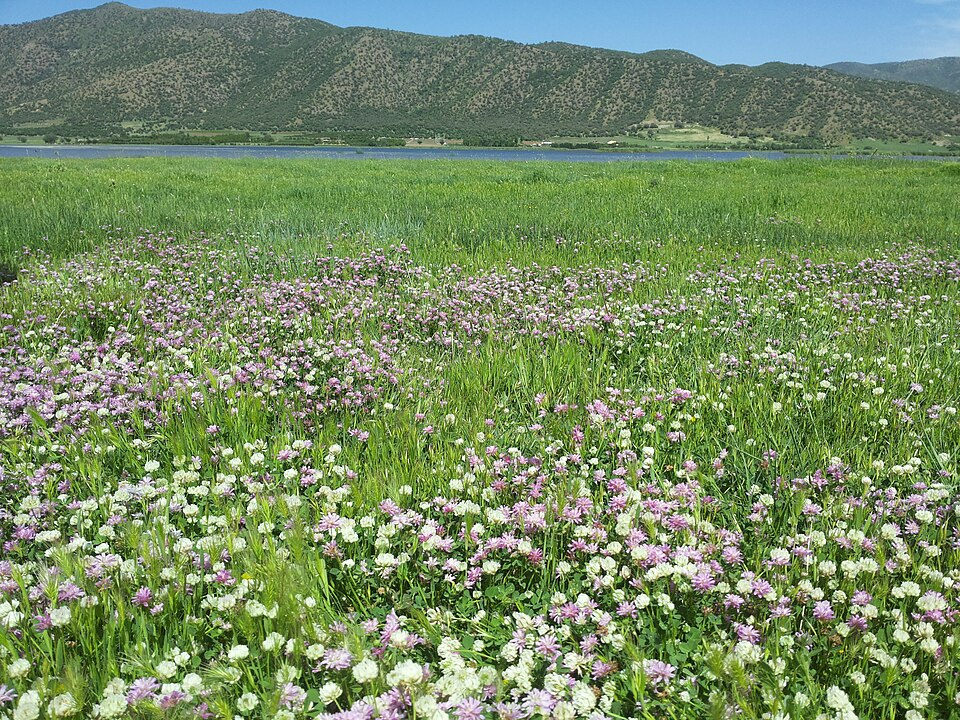
- 5 replies
-
- 10
-
-

-
My overall impression is that it's a very good update soured by two extremely poorly thought-out features - heat treatment and certain parts of the berry bush rework. Arguably the root problem here is that realistically, quenching should never be done more than once, except as a way of retrying after a failed or unsatisfactory attempt (at least in the context of a regular forge, not precisely-controlled industrial or laboratory contexts). And that's only the first issue. Made a whole detailed post on it, so I'm not gonna repeat myself too much here. The dominant community sentiment as far as I can find is that several changes were perfectly justified and are welcome, but other changes take it too far. It's also a bit of a communication disaster in regards to the fertilizer requirement (also preventable with more intentional design), because people are freaked out about excessive maintenance, yet if you actually look at the nutrient consumption then you might notice that most people literally won't need to fertilize at all after the initial cost of ~2-4 bone meal. You, for example, if you rarely play more than one year, will be largely unaffected by it, because a bush planted on medium fertility soil and fertilized with two portions of bone meal will be able to bear fruit three times at full yield in the current balance. The trait system is detrimental to the game in my eyes, if only because cuttings with different traits don't stack. At the same time, the traits aren't even good, and pretty much none of them really make a meaningful difference. That said, to some extent it also renders the fertilizer requirement even more irrelevant than it already is, by incentivizing to propagate new bushes with good traits instead of maintaining older ones. My personal thought is that berries should spawn in massive patches (almost like grass or shrubs), and be seasonally bountiful, but limited by a relatively short availability window. Incentivizing food preservation and variety. Promoting a gathering gameplay style and making berries into a plentiful but inefficient food source, perfect for the early game. Planting a garden at home should still be viable at some upfront cost, but no arbitrary and unrealistic maintenance - if anything, it should be possible to prune and fertilize the bushes as an optional boost to yields. Pizza has said in the Discord recently that she doesn't know why fruit trees are unavailable in the first year, and she agreed that they should be changed.
-
Temporal storms are a bad implementation of a good idea.
MKMoose replied to Tabulius's topic in Discussion
What I mean is that the long-lasting global phenomenon that is the temporal storm would remain with massively toned down enemy frequency, and within that storm there would be intermittent localized events. Anomalies, discharges, fissures, rifts, rust blossoms, dislocations, time shifts, ghosts. No matter how exactly it's painted, the main point is that the thought process regarding what to do during a storm should be a lot more involved than "hide immediately, unless you're prepared and willing to fight". You could potentially stay outside for a while, look at the cool gears turning, say hi to Dave, notice an anomaly, check what it did, maybe collect a funny-looking flower, then hear a loud bell nearby, get freaked out at the massive beast that made the sound and run back home, then look outside as it walks by unbothered, finally watch as your home gets torn apart for a few seconds by a massive fissure, take a peek into the rust world, and only then get jumped by a shiver that entered your world through that fissure. -
Temporal storms are a bad implementation of a good idea.
MKMoose replied to Tabulius's topic in Discussion
Backreading this thread now, a lot of this discussion is really just silly in my eyes. Bad implementation of a good idea, good implementation of a good idea, bad implementation of a bad idea, tolerable implementation of a good idea, tolerable implementation of a bad idea, what does it matter? Fact is, the mechanic is in a half-baked and controversial state in which the ability to disable it at near-zero opportunity cost is the only reason why the community ends up largely indifferent at the end of the day. The very moment that a person finds themselves dissatisfied with storms they can just nuke the whole thing without missing out on almost anything. Simply forcing the player interact with it is only a recipe for disaster, because it offers practically no reward for the player. If no significant changes are made, the mechanic will be stuck in a limbo similar to options like soil instability, cave-ins or fire from lightning - cool for those who like it, but unsuitable to be introduced as part of the core feature set (granted, temporal storms don't have as many and as drastic problems, but they share several of the same high-level issues). My personal thought is that any changes to storms should focus on the immersive, tense, eldritch atmoshpere of them, and not focus on combat. Both danger and reward should be centered around localized temporal events or slow-roaming threats, not everpresent random spawning. The current state of the mechanic is extremely conflicted with itself in certain regards, by making the player often hide at all times due to five or ten rotbeasts chilling outside. Storms shouldn't be something immediately threatening that makes the player hide at all times - they should keep the player on their toes, sure, and make them hide if they see a beast prowling the area or a temporal anomaly distorting the nearby space, or something of the sort. It should be a high-risk situation at all or almost all stages of the game, requiring the player to avoid extremely dangerous monsters or anomalies and potentially fight weaker ones. Right now it's an extremely predictable, initially certain-death situation that actually turns out to be quite easy to survive with experience and decent gear, and ends up mostly just tedious and not challenging with the current combat system. The worst part of the storm for me is that it's entirely binary, and that's largely what makes it extremely boring. Either it's on, or it's off. You can keep chilling as long as the storm is "imminent", then you have to bolt once the visuals start getting funky at risk of getting one-tapped. Then it ends as if nothing happened, and you just have to watch out for a few stragglers. If you want to see what it should look like, simply look no further than real storms. Temporal Symphony does make some improvements, but they're only audiovisual and not functional. Putting aside whether the lore argument is sufficient, I would argue (seemingly echoing a lot of other people's views) that the problem with storms is that they already are optional, but largely pointless and disruptive as well. The player is given free choice of whether to interact with the storm, but very little reason to ever do so. Combined with very high risks, the player is just disincentivized from interacting with a massive part of the game for the storm's duration to avoid death, and given no compensation or unique activities to do instead. While you can argue that limiting player agency is to an extent exactly the point, it is unavoidable that excessively limiting player agency (and storms do cross that threshold for many people) is objectively detrimental from a design perspective and rarely works outside of specific story-driven circumstances. -
Temporal storms are a bad implementation of a good idea.
MKMoose replied to Tabulius's topic in Discussion
The only explicit use of the word "rotbeast" in the game is in the name of one of the tapestries (the "Rotbeast" tapestry, unobtainable in survival unless I've missed something). "Rotbeast", as far as I can tell, is a purely or mostly community-given name meant to aggregate drifters, bowtorn and shivers into a more explicit package than "monsters". When asked in an interview a few months ago, Tyron said that they don't really have any internal name for them besides just "monsters". -
Temporal storms are a bad implementation of a good idea.
MKMoose replied to Tabulius's topic in Discussion
Honestly, this is the main thing that frustrates me about the temporal mechanics. Rifts have been added very early in the history of the game, <= 1.2 if I recall correctly but I could be misremembering. Temporal storms and stability have been added in 1.12. Since then they've received little to no meaningful change, especially storms and stability, besides the addition of bowtorn and shivers. They're supposedly so crucial to the game and story, yet the devs exhibit very little apparent interest in improving them in any way. They're not even on the roadmap, unless you count broad and mostly meaningless categories like "polishing and reworking of existing mechanics". -
It's created through clayforming like pots, bowls and the like, but only using fire clay. Fire clay can be crafted using calcined flint with other types of clay, or found in a couple ways - surface patches in bauxite, underlying coal depsits, or sometimes from cracked vessels.
-
I actually did the clever thing to calculate the fertilizer requirement (partially following what you've mentioned in another thread). It's so low that it's practically irrelevant. I genuinely don't know why it's even implemented as a requirement and not as an optional temporary yield increase or an upfront cost, both of which actually got a lot of support where I've seen them mentioned. Almost the entire reaction of the community would have been prevented with more intentional design, or at least better communication. A lot of community criticisms are actually still relevant, though, only the most controversial part is a dud. If I didn't get something wrong (I did initially, I was using a number from Pizza who was talking about a bush with traits), you'll get 3 bountiful harvests (1.5x yield) starting from 100% fertility, then 6 regular harvests in the 30-80% nutrient range, then 5 half-yield harvests in the 10-30% range, but those numbers will also reduce with time. Planted berries will naturally start at the appropriate level partway through. There's also bugs, though I'm gonna ignore them. I don't think I can stress enough how irrelevant that fertilizer requirement actually is except as an nagging psychological factor. Most people can feasibly plant berries, maybe fertilize them just a little, then harvest them ~10 times or more if fertilized (a couple of them on half yield, but it really doesn't matter much), then move on to a new world or drop the game altogether. There's almost no need to refertilize for most players. Berry spam is arguably even worse than it used to be in certain regards, because it's much cheaper to plant new berries instead of refertilizing old ones. Honestly, I need to cool off. This is frustrating me in brand new ways I didn't know were possible. Also, quoting Red Ram from Discord: It's kind of expected, but man. Couldn't have said so earlier, instead of introducing the berry bush rework like a big standalone feature?
-
I really feel like you could instead just force the berries to be planted at a minimum distance between each other instead of implementing such a complex system. Given the option to avoid maintenance, people will choose it every single time.
-
From Discord #devlog:
-
See, this is the one part of the discussion about berry bushes that I don't get. Several of the changes (mainly requirement to fertilize, as well as soil degradation on maturation) are clearly not aimed at just curbing replanting. As of now, we simply don't have any confirmation on the reasoning behind any of these changes. The vast majority of complaints that I've seen (and that I've personally made) is literally some variation of "some changes were expected and are welcome, but other changes go too far". They require all three nutrients in the same quantity for maximum yield, but you can sustain them at decent health with only one nutrient.
-
Motivation Being even roughly familiar with heat treatment methods, I’ve been quite disappointed with how the current implementation of quenching and tempering seems to be shaping up. I can agree with simplifying mechanics for the sake of fun gameplay, but to me this feels arbitrarily gamified, not simplified, and not even in a fun way. TLDR Make it both more fun and more realistic: quenching should only be done once, except as a way of retrying. tempering should always be done after quenching, and should only be done after quenching, annealing should be done before quenching, or on its own when power isn't desired, the mechanic should be more skill-dependent. Problems It's just tedious. Risks are completely insignificant at first, but after a couple iterations the player is basically asked how much they are willing to slog through for diminishing returns. Getting a high-power weapon, even without going into wildly impractical extremes, easily requires quenching 10+ times in total and making at least one or two extra tool heads. It's described as a risk-reward tool improvement system, but in practice it easily becomes a matter of min-maxing against tolerance for tedium and randomness. An important element of risk-reward mechanics like this is that failure has to take away some options, so that a lost opportunity doesn't appear until at some later point. But in the current implementation it often ends up no longer having a significant risk-reward element, and instead it's random-cost. There is practically no skill expression - while for most mechanics that would be fine if not better, I would very much expect skill to be a factor in a risk-based tool improvement mechanic. Choosing whether to temper or not mostly boils down to hyperoptimization in the best case scenario, while for high-power tools tempering is strictly harmful. Uncontrolled randomness is fundamentally unfitting for a delicate heat treatment process and tool improvement, especially combined with incremental gains rewarded for repetition. Whatever you do, you can go further, at the risk of having to do it all over again. If the workpiece shatters, it's just bad luck, and you couldn't do anything about it. I don't personally find fun in it, and I think that it just doesn't work well at all. Quenching for durability makes no sense, because durability buffs and shatter chance go against each other - if the shatter chance is higher than the relative durability increase, then quenching again is fundamentally an expected loss, and that threshold currently ends up being crossed very quickly, especially once you also consider time, effort, fuel and clay costs (not just raw metal). Consequently, increasing power is the only real use of quenching besides a cheap but small improvement to durability when power isn’t desired. Repeatedly quenched weapons are now by all reasonable metrics outright overpowered, and up to a certain point the added time and resource expenditure isn’t even so high as to be impractical. This also creates a massive jump over bronze and other early-game options - it's fairly easy despite the shatter chance (though quite tedious) to get an iron spear or falx with some 40-50% higher damage than a bronze equivalent. Whether that's intentional or not, it is a drastic change relative to the 1.21 balance. Last but not least, the current implementation is highly unrealistic. It's kind of inspired by reality, but it has several problems, most notably that heating up the metal sufficiently doesn't just destroy the effects of prior quenching and tempering as it should realistically. While I can understand a lot of simplifications for the sake of realism, in this case making the mechanic more realistic would arguably make it much simpler as well. Note: the numbers in different lists don't correspond to each other, they're just numbered for convenience. Primary goals Reduce the needless repetition. Even putting realism aside, where’s the fun in maximizing a single stat against tolerance for resource loss and tedium? This could be pretty much entirely addressed with the next point, and it's probably the most important goal here. Reverse all or most previously applied effects after heating above the lower critical temperature (~727C), as would happen realistically. This effect (austenitization) is why as a general rule quenching is only done once (except as a way of retrying after failed or unsatisfactory quenching). This also means that tempering is only done after quenching, because otherwise its effects (which are minimal on unquenched metal anyways) just get destroyed when heated up again. Make the effects of heat treatment less one-dimensional. The easiest way to amend this would be to just make tempering more realistic by giving it an increase to durability at the cost of power, and make quenching apply a reduction to durability, to create a push-pull dynamic of sorts. At the same time, throw the idea of quenching for durability out the window - quenching an item covered in clay is usually done while only covering part of it, especially the spine of blades, to harden the exposed edge while protecting the spine from becoming brittle, which has almost identical effect on the edge but reduces risk of cracking during quenching as well as preserves durability and flexibility of the spine. Make the effects of heat treatment (especially risk of shattering) more dependent on player skill, knowledge and preparation, and ideally extend that to the beneficial effects of quenching as well. Historically, it was critical to know how to quench to achieve optimal grain structure and maximum hardness while minimizing risk of cracking or warping (not outright shattering, though still in many cases rendering the workpiece largely unusable). This may include variable effects depending on closeness to "ideal" treatment, serving as a way to add space for skill expression and mastery of the exact parameters required to achieve the maximum benefits, as well as a level of uncertainty beyond pure randomness. Whatever is easy enough to implement and fits the game, as long as there are ways to control the effects in some capacity, ideally in a dynamic and engaging way and not just through increased complexity of the initial setup. Main suggestion While realism is not my main goal here, I think that staying close to reality could benefit a mechanic like this. The process that I'm aiming for would be very simple at a basic level, while retaining ample space for skill expression and risk-reward mechanics: for tools which benefit from damage or mining speed: anneal to reduce risk of quenching (optionally repeated for diminishing returns), then quench for a power buff at the cost of durability (retry if unsatisfactory), then temper (once or more) to mitigate the lost durability and balance out the desired proportion of durability to power, for tools which primarily benefit from durability: anneal to increase durability (optionally repeated for diminishing returns). Below is a handbook guide mock-up for this system (originally posted in a reply here), put in a spoiler box for clarity. Note that this is only an example, and the mechanics can be adjusted in many ways. Detailed mechanics A more specific description of the suggested heat treatment mechanics: Quenching - occurs when cooling quickly (in quenching medium) down from ~770 C or higher => greatly reduces durability but significantly increases power. Has a chance to shatter the workpiece (destroy it). Ideally, there could also be a chance to warp or crack the workpiece, as a middle-ground between no risks and outright shattering (would apply some debuffs and require requenching, welding or grinding to fix, though I'll save a more detailed description for later). May apply a chance to shatter or crack during usage to require at least one tempering, since quenched but untempered metal is brittle, and that's where shattering actually happens most easily. Effects and risks may vary depending on a lot of factors, potentially including (non-exhaustive): workpiece material - steel may have slightly different temperature thresholds and may be safer than iron, quenching speed (mostly dependent on quenching medium) - brine cools the metal faster so gives better hardness but is more risky, oil cools slower so doesn't give as much hardness but is safer, soak time (time between reaching quenching temperature and transfer to quenching medium) - quenching too fast without soaking for some time wouldn't apply the full effects and may increase risks, optimal temperature reached before quenching (~780-810 C) - the appropriate temperature range would have good results while retaining low risks; slightly higher temperature (close to overheating, probably ~850 C) could apply a greater power buff at a significantly greater risk of shattering or damaging the workpiece, differential quenching (covering the workpiece in clay) - reduces quenching risks and applies less severe durability reduction, but also applies a slightly lower power increase, interrupted quenching (removing the workpiece from the quenching medium partway through the process and allowing it to air cool the rest of the way; roughly what is nowadays known as martempering) - applies similar or slightly lower benefits, but is has reduced risk of cracking, normalization - described right below. Annealing (specifically normalization) - occurs when cooling slowly (in air) after heating to ~750-780 C (or just 750 C and higher) => increases durability and reduces quenching risks after each repetition. Only doing annealing is sufficient for tools which don't benefit from mining speed or damage bonuses (which roughly corresponds to tools which sustain repeated impact so shouldn't be quenched to avoid brittleness, like hammer or chisel). Effects could vary depending on the exact maximum temperature reached and on soak time, which is arguably especially important due to this mechanic being arguably the single most repetitive part of the system - the easiest way to do it would be to make the durability carry-over from previous iterations dependent on how well the player maintains the appropriate annealing temperature during soaking. Note: "normalization" is a relatively modern term, while "annealing" is a broader term which often also takes on a slightly different meaning from normalization. In the past normalization used to be referred to in a bunch of different ways like softening, thermal cycling, air-cooling, annealing - I think that just using the broad "annealing" term would be suitable. Tempering - occurs when cooling slowly (in air) after heating to ~150-650 C (~300-650 C would be suitable for gameplay purposes) => removes or heavily reduces durability debuffs and optionally slightly increases durability on top, as well as reduces power. If quenching applies a chance to shatter or crack during usage, then tempering removes it. Repeated tempering could be repeated to balance out power with durability to a favorable ratio, though diminishing quickly to the point of being mostly pointless after two or three repetitions. Effects may vary depending on the exact peak temperature that was reached. Mostly or entirely ineffective on tools that haven't been quenched yet or have been austenitized. Austenitization - occurs automatically when reaching ~720-750 C (after exceeding the lower critical temperature, often cited as 723 C or 727 C, but it's not consistent) => removes the power buff, greatly reduces or removes any effects on durability. Should likely occur over time or in multiple stages to make it less sudden, but ideally shouldn't overlap with the quenching temperature range for simplicity's sake. On a more technical level, durability loss or both effects may be extended up to ~780 C as a way of implementing diminishing annealing stackability and adding a layer of skill expression to soaking the tool near the lower bound of the annealing range. Note: this is again a modern term, and historically it wasn't really known as much of anything - just something like "heating to full red heat", a lot of the time. Overheating - occurs automatically when reaching ~850-900 C => removes all existing effects, both buffs and debuffs, and resets quenching risks. May apply additional penalties, since going above ~900 C is realistically very risky, though wasted prior effort could be considered enough of a penalty already, so it might be best to just let the player try again without additional problems. Should ideally be applied over time or in multiple stages at different temperature thresholds, so that the effects are not too sudden. Note on the power ceiling: after quenching, the metal has the highest hardness (roughly translating to power) that it can have, but is brittle. Different peak hardness could be achieved depending on a variety of factors during quenching. Technically, you could use the tool right away after quenching without tempering, but it will easily break on strong impact, so tempering is used to achieve a suitable balance between power and durability. Note on gameplay complexity: many of the mechanics can be quite easily adjusted if they are deemed too complicated. What I describe is roughly what I would consider to be a suitable implementation which takes into account a bunch of the most important realistic factors that I consider to be beneficial for gameplay, or at least not harmful. From this point, whatever is deemed unnecessary could be stripped out or simplified. Note on stacking: stackable effects should arguably follow a quickly diminishing geometric sequence or geometric series, to ensure that the effectiveness decreases quickly to disincentivize excessive repetition. This also doesn't require tracking the number of times that a workpiece has been treated. In some cases, adding an additional constant component would allow to further tailor the exact behavior (for example, making annealing affect shatter chance using a formula like after = 0.3 * before + 0.1 would mean that subsequent iterations make the shatter chance quickly drop with each iteration, but not all the way down to zero and instead to 0.1, so that some level of risk is always retained). Note on temperature thresholds: if temperatures are only decided by strict minimum and maximum thresholds, then the process becomes less reliant on skill and more on timing, and loses almost all uncertainty in favor of robotic precision. Adding some level of uncertainty or randomness, as well as soaking implemented through temperature averaging or whatnot, would incentivize the player to aim closer to the center of temperature bands and require more careful judgement instead of simply waiting until the temperature crosses a specific threshold. Skill expression Tyron has expressed concerns that these mechanics wouldn't be as interesting as the current system and wouldn't offer interesting choices to the player, as well as thought that it seems to "sacrifice gameplay for realism". While I find that debatable and somewhat reductive - I think that just reduced repetition and improved verisimilitude would make it more enjoyable for many people - I want to explicitly point out various additional factors which could make a more realistic system interesting, mainly through making heat treatment into a largely skill-dependent process, requiring experience and knowledge for optimal results: Temperature management. Requiring or incentivizing the player to soak the workpiece at the target temperature would take much more skill than just reaching that temperature. Combined with some manner of punishment for exceeding certain temperature thresholds, this creates a mini-game of sorts where the player has to carefully monitor the temperature and keep it near a suitable target level for at least a couple seconds, instead of just making a single, robotic comparison. Especially useful to make annealing more interesting. Variable annealing effects based on temperature. Requiring the player to maintain the correct temperature for a period of time (and rewarding it with greater durability) could be especially useful as a way of adding more interest to what is otherwise the most repetitive part of the system. Exceeding the optimal temperature range would only involve some wasted time and fuel, not material, and still add a lot of interest. Variable quenching effects based on several factors. Several components like soak time would be purely beneficial to the player, rewarding them for doing the process more optimally. Toeing closer to the upper edge of the quenching temperature range but before overheating could be a proper risk-reward mechanic - greater chance of shattering and risk of accidentally overheating, but higher power ceiling. Other components like quenching medium and differential quenching would have various kinds of tradeoffs - greater risk but greater power, lower risk but lower power, higher durability but lower power, additional cost but lower risk, this kind of stuff. The factors are also listed out in the "detailed mechanics" section. Variable tempering effects based on temperature. At low temperatures the reduction to hardness is not as great but the metal remains fairly brittle, and that transitions quite smoothly through the temperature range up to the upper bound where the metal becomes significantly softened, which could add a lot of additional depth to tempering after quenching. Concerns and questions Some potential issues that have been brought up by Tyron and others. Wouldn't the system have just one optimal path? => Not really, or at least not one universally optimal path. The point of optional factors which influence the results of heat treatment, frequently in the form of tradeoffs or push-pull relationships, is precisely to have multiple optimal paths (the tools which don't benefit from power may have just one optimal path, but it's not like the current system doesn't do the same). If a certain process is always optimal for a specific purpose, that seems more tedious than fun. => To some extent I see it like steel, a way of improving your iron tools at some sort of cost - no risks or choices necessary to make it interesting. Achieving additional benefits for voluntarily putting in additional effort is inherently quite rewarding. But at the same time, I aimed with this suggestion to provide a variety of options which require varied amount of time and effort to achieve different end results, which seems like a good way to avoid excessive tedium of always repeating the same process. Certain tools don't benefit from power, making quenching irrelevant for them. => This is almost the same as quenching without the use of clay right now. And arguably better for a number of reasons. I honestly just don't see any problem here, in large part for the reasons described in the two below points. Durability at no risk would be a must-have for tools that don't need power. => That's intentional, but limited with quickly diminishing returns. With that said, adding some risk to it is quite easy by making the durability carry-over from previous iterations dependent on how well the player maintains the appropriate annealing temperature during soaking (primarily by reducing the carry-over when too close to the upper end of that range). Exceeding the optimal temperature range would only involve some wasted time and fuel, not material, and still add a lot of interest. Durability at no risk would be uninteresting for tools that don't need power. => It's basically the same as the current mechanics, except it's actually worthwhile, doesn't have a random shatter chance, and matches reality very naturally. It's arguably also much more suitable for expendable tools like hammers and chisels which the player is expected to craft in high quantity anyways. And finally, a newer player can stick to annealing and get a neat buff for a bit of extra effort, without having to learn the ins and outs of quenching right out of the gate, whereas in the current system it's easier and more convenient to quench for power - kind of backwards if you ask me. Isn't this just a binary choice between power and durability? => No. It's a complex system of tradeoffs between power, durability, risk, resources and time. Depending on desired balance, some more complex processes may allow to get both significantly higher power and an effective durability increase (even accounting for material losses). The current system is arguably much worse in this regard - almost entirely a binary choice, because it's almost never worthwhile to quench one tool for both durability and power. This solution seems to sacrifice gameplay for the sake of realism. => My express intent was to make the system both more enjoyable and more realistic, so I'd need a clearer pointer to how it goes over the line. I think the current system achieves neither for the most part, and arguably doesn't even achieve its stated goal of "a high risk, high reward mechanic". I believe my suggestion achieves all three fairly well (or at least somewhat better), but if there are any specific ways in which it may be harmful to gameplay, I'm more than willing to hear and perhaps amend them. Keep in mind the above "skill expression and interest" section as well, which points to the ways in which I think that a more complex, realistic system could be much more fun as well. This system seems too complex for many players to enjoy. => The exact level of complexity could be tweaked, but I think that the process should be ultimately quite easy to understand - while the under-the-hood mechanics may be very complex, it's not nearly critical for the player to understand the real physical processes and minute details of all the different heat treatments. A newer player can be eased into the system with annealing giving an easy durability buff, without having to bother with quenching, while those seeking a more complex challenge would be rewarded appropriately. A well-written handbook guide (you can see my mock-up in the "main suggestion" section) and descriptive tooltips at every stage of the process can also go a long way. Possible additional features Judging temperature by color. A really cool change which I would love to see would be to remove the exact temperature readouts in the tooltips and require the player to judge the temperature of the workpiece by color as it has been done historically and still is done often, though that would likely be optional and probably easily circumvented with commands. It would be one of the more interesting ways to introduce more proper skill expression and mastery to heat treatment in place of robotic precision and plain mathematical comparisons, which would also make a skilled blacksmith a highly valuable member of any multiplayer server that decides to play this way. It might be fun, as an extra factor, to allow using a piece of magnetic metal to test whether the workpiece is magnetic, as this is also an indicator that the metal has exceeded a certain temperature threshold. Case-hardening of iron. If we were to aim for realism, it would be necessary to require case-hardening before quenching iron, since quenching is generally ineffective for wrought iron due to insufficient carbon content. Case-hardening would be done by placing the workpiece in a clay box packed with a carbon source, and heating up that box for an extended time to high temperatures. Wrought iron could still be annealed without case-hardening. Work hardening and annealing for bronze. It would be a simpler early-game heat treatment process to ease players into forging more gradually, and to avoid a too steep jump in terms of required and possible investment into a single tool between the metal tiers.
-
It might end up even more infuriating, because when I was checking out pre.4 animal behavior changes I found that rams will now chase you the same way that something like wolves or agitated boars would (at least that's what happened in that specific case, not sure whether that will be consistent or if it's even intentional), which may mean that it will be necessary to fence off rams and ewes separately. Animal behavior is honestly one of the rare aspects of the game that feels worse and worse every single time I interact with it. Even stuff like combat I can get used to, but having just chased three goats individually from almost a kilometer away into a pen (would be four if not for a sinkhole in the middle of shubbery), the animal behavior really gets on my nerves sometimes. Where are you getting reduced yields, though? I didn't mention that at all. Or maybe as part of "less efficient", but that's more about the general impression of the mechanic relative to other food sources, and doesn't have to translate to specific gameplay changes. The main point is that making the ripe time window much narrower (but different for different types of berries) would allow to significantly change up the balance in several ways. Even massive shrublands filled with thousands of berry bushes could stay balanced if the availability window is not too long, food preservation is not too easy, and a couple other miscellaneous conditions are met. As for fruit trees, I don't feel like there is a good way to truly prevent people from ignoring them as long as their benefits aren't in any fundamental way different from berries. Some differences like spoil time are already in the game, some differences like more varied satiety or different ratios of nutrition to satiety could be added at more or less dev effort, but ultimately one fruit isn't generally gonna be that much different from another fruit. Animal husbandry provides quite notable benefits in the form of convenient access to protein at home as well as a whole exclusive nutrition type, and yet many people don't bother largely because the upfront investment is much higher than farming soybeans, hunting or fishing.
-
As far as I can tell, they currently use all nutrients simultaneously in the same quantity, and their health seems to be based on the average between the nutrient levels.
-
Honestly, I don't see this almost at all. Some points on contrasting berries and fruit trees are quite valuable, but I cannot stress enough that investment, maintenance and reward should all be low for berries. Balancing berries as a high-maintenance source of food just seems antithetical to their actual role both in real life and in the game. The main reason why trees are often seen as not worthwhile is that berries have almost no practical downsides - even the short spoil time is largely circumvented by the ability to harvest a single bush multiple times in a year. This can be most simply adjusted just with a seasonal growth cycle, and at no point does it call for regular maintenance. The kind of fantasy that I would personally love to see for berries is to have them be very plentiful in nature, even covering certain areas almost like grass, but be less efficient and only available in a narrow time window dictated by a seasonal growth cycle (the realistic window is often about 2-4 weeks, though individual bushes can be staggered between each other, and they ripen gradually instead of all berries on a bush at once). This could create a neat dynamic where the player would be able to mark rare but rich berrying spots where berries can be easily and reliably gathered in quantity, and visit those spots with a couple baskets at an appropriate time of year depending on species. The main advantage of this approach is that this would: incentivize food diversity - it would be naturally beneficial to find patches of different species that produce fruit at different times of year, incentivize food preservation - if the time window for ripe fruit is very limited, then preserving it becomes crucial (and fruit trees which last longer would naturally gain value), promote a gathering gameplay style that doesn't necessarily favor replanting - a berrying spot or two within walking distance in the area would be a valuable resource worth marking on the map and returning to, arguably creating an incomparably better gameplay dynamic than having to collect scattered bushes from a large area and replant them close to home so that harvesting large numbers of them next time is remotely convenient.
-
I've seen plenty of people share this sentiment. I'd say that these kinds of mechanics is what VS is built on and modding thrives on. The problem with berries for me is that I see no reasonable argument for them to be relatively more complex than fruit trees and farming. They're the first food source that the player is likely to encounter and rely on, and that alone makes it borderline necessary from a game design perspective to keep them simple and intuitive. I'd argue that berries and perhaps a couple other gatherable sources of food (roots, tubers, bird eggs, flowers etc.) should be plentiful enough to feed the player easily as long as they locate and frequent a few locations with regenerating resources as long as they are available, and the primary advantage of farming and animal husbandry should lie in food security for winter and maximizing miscellaneous benefits like nutrition. The current balance kind of already does that, but only because berries are nearly the only gatherable food source, not because of clear balancing between farming and gathering. Most useful fruit take 20x longer to spoil than berries. Some of the Mediterranean and tropical ones take 7.5x as long as berries, and the rest is exactly as long as berries.
-
I have no problem with berry bushes operating like fruit trees, and I expected that change to happen eventually, but that's irrelevant to all the other changes. If they want to keep things balanced, then reduced nutrition is the primary lever, and there's no need for anything else. Additionally, a more intricate seasonal growth cycle would allow to better tailor fruit availability to different climates and limit them to specific windows at specific times of year, incentivizing fruit variety. But health and trait systems have no business in the most basic food source in the game. It literally seems like it's gonna be the most complex food source now.
-
Not gonna lie, I really don't like the new berry bushes. I think they're too complex for their own good. It's pretty much all the complexity of fruit trees, plus the nutrient and trait systems slapped on top. On the earliest food source that the player is likely to encounter and rely on in the early game. It's just inconsistent with everything else, and introduces excessive complexity too early. It's not a bad change, but it's a bad standalone change. I'd argue that fruit should be simple and low-maintenance but inefficient, ergo, they shouldn't use the fertility system at all unless only as a static modifier to yield based on the type of soil they're planted on which could maybe also be boosted with fertilizer. If they're unbalanced, then make them less efficient or make them spoil faster or something in that vein, but don't impose maintenance. At the same time, farming, animal husbandry and hunting would be much more suitable for more labor-intensive processes, creating more meaningful distinctions between nutritional categories. Fruit would be early-game, easy to max out, ineffective in meals. Vegetable and grain more labor-intensive but highly efficient and much easier to store for winter. Protein would be a short-term luxury, but difficult to preserve. Not that the current balance doesn't do that at all, but it could very feasibly lean even further into it.