Nicola Belotti
-
Posts
13 -
Joined
-
Last visited
Nicola Belotti's Achievements

Berry Picker (2/9)
27
Reputation
-
 These would be AMAZING
 -
Geologically accurate caves, karst regions and more geology
Nicola Belotti replied to Nicola Belotti's topic in Suggestions
Yes that would be very nice, maybe with some glitches and repetitions as the ones we find in The Archives with metal beams and stuff like that. That would be crazy -
Geologically accurate caves, karst regions and more geology
Nicola Belotti replied to Nicola Belotti's topic in Suggestions
Well these landforms look like karst for sure, but they are not tied to a particular rock, in fact you find them in a lot of different rock types. For example in our current world we got this biome in andesite rock. You cannot find, in real life, karst landforms in non soluble rocks. My point is that making landforms and caves geologically accurate would be beautiful since you could read the landscape and act accordingly. For sure lore-wise we could also find an explanation for landforms in wrong geological setting, but since natural features work as they should (tree type distribution, biomes and latitude) geology should be kinda realistic too. -
Geologically accurate caves, karst regions and more geology
Nicola Belotti replied to Nicola Belotti's topic in Suggestions
Yes you're right, my bad, basalt is igneous too, I was talking about INTRUSIVE igneous in the post, I should have specified, in fact in the same post I also mentioned lava tubes as you did -
Geologically accurate caves, karst regions and more geology
Nicola Belotti replied to Nicola Belotti's topic in Suggestions
Yes! That would be awesome and would make exploration more diverse and region-specific. Plus and increased chance of spawning ruins or structure-specific artificial areas with loot would encourage exploration more. Maybe you could also reutilize an old mine for, you guessed it, mining in a more realistic way. Of this game I love the fact that you're supposed to create a somewhat realistic structure in space and a functional environment to accomplish a task. For example tanning requires building a place dedicated to it, a tannery. Firing clay stuff pushes you to build a kiln or a place in which you could fire stuff and for steelmaking you have to phisically build a cementation furnace. I find this to be extremely immersive and it makes me want to indulge in building something realistic every time even if the game mechanic doesn't need it. I find that mining sometimes lacks this component and for good reasons. First of all you cannot be super realistic when the voxel size is 1 cubic meter or so and making it too realistic would make the process of mining super tedious and difficult to accomplish, hindering the entrance in the later game phases. Of course you could turn on cave ins and still build a somewhat realistic mine, but you'd always end up building phisically bizarre mines. Adding procedural abandoned mines could help towards a more immersive game experience. Just a thought. Or maybe reworking the mining rocks mechanic, maybe by making it so that when you mine a block you chip away portions of it gradually leaving behind a partially mined block (as if it was chiseled) if you do not mine it entirely . This is an off topic I know but wanted to mention it anyways. That's horrifying. I LOVE IT. All the ideas you mentioned in the second reply are amazing and I'd love to see those added to the game. I could see that defining an "underground cave environment" could be difficult for the game, but maybe there are some workarounds that I ignore. To me the room system already looks like magic sometimes haha. All the ideas expressed in this topic would make cave explorations sooooo much interesting, and I think that's also on the devs roadmap too, so I hope that one day they would read this post and maybe take one or two suggestions or find in here their same ideas. Would be great. -
Mining a vein or certain types of rock could rarely drop a beautiful crystallized chunk (which shape would be taken from a pool of different models or from a procedural generation algorithm). Then you would be able to inspect the 3D model by using a magnifying lens, build your collection and showcase it on shelves and display cases. Minerals would be tradeable for gears to luxuries traders.
-
Geologically accurate caves, karst regions and more geology
Nicola Belotti replied to Nicola Belotti's topic in Suggestions
I also think that rock-specific caves might be able to generate strange shapes along the contact surfaces between different rocks like extended flat surfaces or interrupted cavities. That would be amazing to see too, and would be realistic aswell. There are caves in Sardinia that extend vertically in limestone and when they reach the underlying granite layer start branching towards the sea on horizontal paths above the granite surfaces, and that looks kinda strange to see, but perfectly explainable. -
Geologically accurate caves, karst regions and more geology
Nicola Belotti replied to Nicola Belotti's topic in Suggestions
Cavities in other types of rocks (even harder rocks as granite, peridotite, gabbro, rhyolite or any kind of rock, for that matter) are possible but extremely rare. They are called "corrasional caves" or "erosional caves" and they originate, as the name says, by progressive physical erosion of weakness points (faults, fractures). They are typically not very large or long and are very rare in normal settings. Common types of erosional caves are the ones you can find on coastline cliffs (carved by the ocean) and in deserts ("eolian caves" which are carved by the sand carried by wind), these types of caves are typically very big but they do not extend for more than a few meters inside the mountain or the cliff face. There are some strange cave phenomena in claystone too but even those are rare and not very extensive in length or width, plus they happen just in very particular situations in the presence of unconsolidated rock. Caves can also form between big fallen blocks and detritus, but of course they are small and do not extend in bedrock. Other types of caves are ice caves in big glaciers and those would be great if added to the game too. At this page you can find some photos: http://www.goodearthgraphics.com/virtcave/erosional_caves/erosional.html Translating this in VS world generation I'd suggest: - Every rock must be able to generate deep ravines and cracks in every circumstance; - Limestone must be able to generate extensive caves of different shapes and forms (similar to the ones we have in-game now) with lots of speleothems and, on the surface, generate sinkholes. The lower the latitute, the bigger the cave diameter. Length of cave systems should be randomized. - Claystone should sometimes present small, medium-lenghth caves especially in lower latitudes and deserts; - Basalt must be able to generate long and straight tubes with lava more likely to spawn in them; - In deserts and coastline cliffs there should be the possibility for medium to big cavities to generate, but they must not be extensive in length -
Geologically accurate caves, karst regions and more geology
Nicola Belotti replied to Nicola Belotti's topic in Suggestions
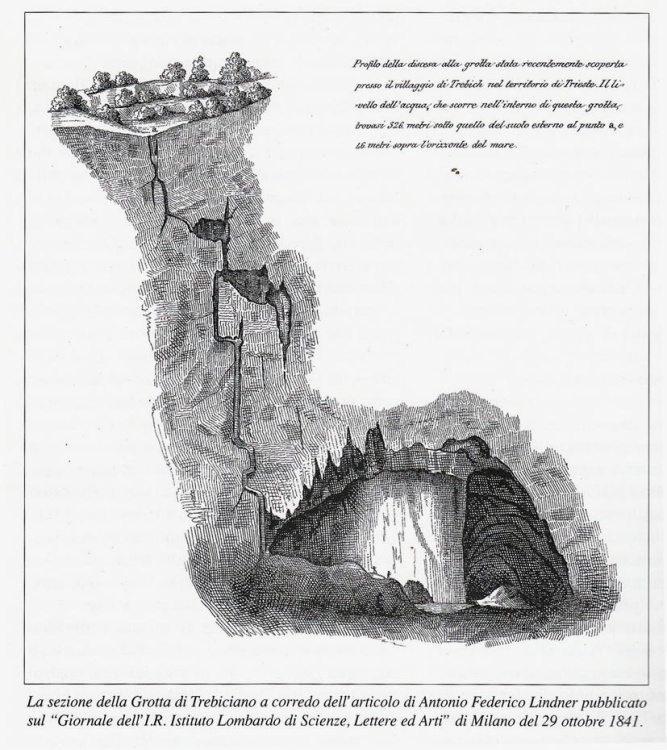
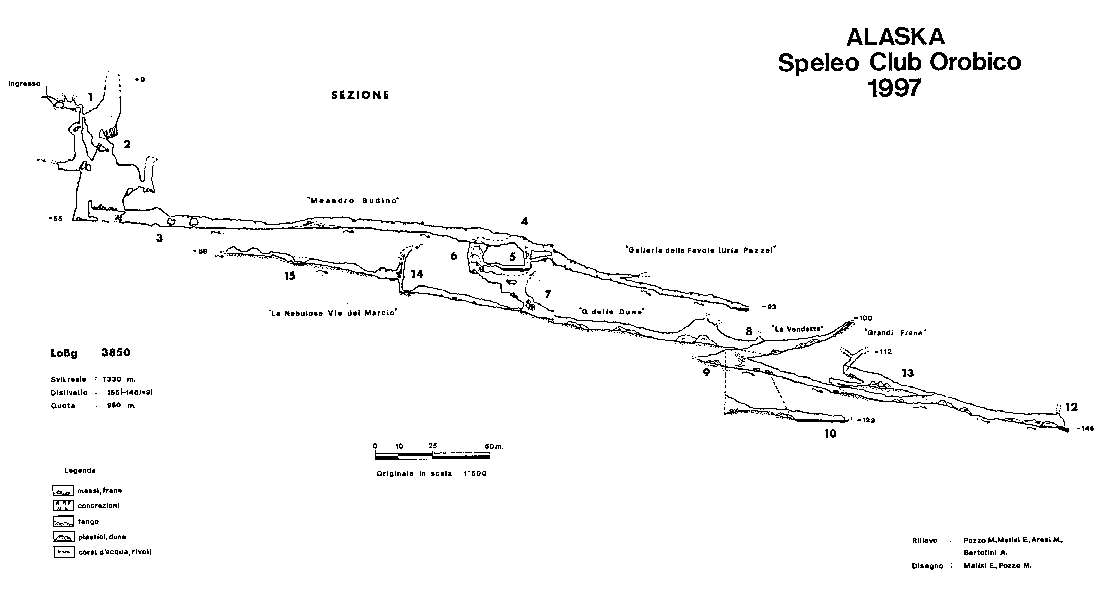
They can also be smaller, depends on the extension of the voids below the surface responsible of the collapse and the material in which they happen. They can also be small and very deep like the holes we already see in game. Karst sinkholes have a variety of shapes, dimensions and explanations. Some of them also form as the dirt atop of a chemical erosion area starts filling the voids left by the dissolution happening below, so no caves there. In addition to what I said last time I leave the horizontal maps of two caves showing different types of karst shapes. Adding cenotes too would be crazy and imagine the amazing explorations you could do in underground systems like those. Reading the surface shapes to deduce the presence of certain rocks underground would go hard and bring the geology part of the whole game to a level no game has ever reached imho.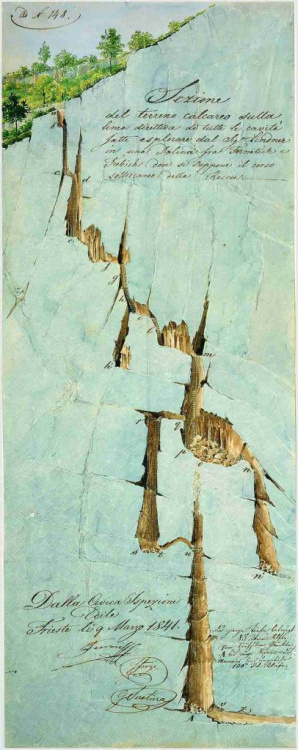
-
Geologically accurate caves, karst regions and more geology
Nicola Belotti replied to Nicola Belotti's topic in Suggestions
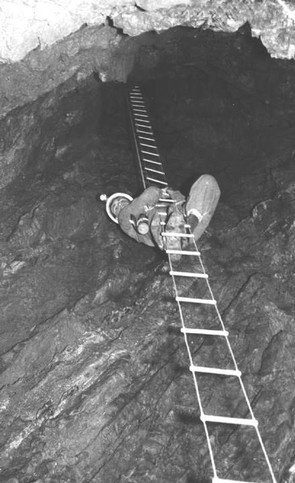
Sometimes they do actually, not this often tho hahaha. They are called sinkholes and they form when the ceiling of a cave collapses or something creates a void below the surface. Some other sorts of deep vertical shafts as the one we see in game occur in real life too, but they are the result of erosion of small cracks and tectonic forms so they look more elongated than the ones we see in-game, that look more like sinkholes. Here's a photo I took of a vertical shaft in Presolana (a mountain in Italy). This shaft goes down a long way (about 200 m) and then starts extending horizontally forming walkable tunnels along an old surface discontinuity in the rock. Caves in real life do not pop into existence randomly, but instead they form slowly along pre-existing weakness surfaces (cracks from tectonics, strata, chemically weak rocks, geologic contacts) and then collapses so the shapes are often times elongated and narrow instead of wide and chunky. Of course making extremely realistic caves would not be ideal since the results would be a pain to walk into, but I think taking inspiration from some realistic shapes would make explorations a lot more interesting. -
Geologically accurate caves, karst regions and more geology
Nicola Belotti replied to Nicola Belotti's topic in Suggestions
Yes but actually "rope ladders" have historically been used a lot (in cave exploration especially) since they are more walkable without complicated gear such as ascenders and descenders, so that's kinda realistic, in its way. Of course no-one ever saw a climber pillar up with a lot of cubic meters of dirt haha, but rope ladders are fine to me. The possibility to deploy ropes and use them to climb or descend would be an interesting thing nontheless. This would be an amazing effect I didn't think about, and also makes me think of different types of cave generation also in relation with latitude with smaller caves in high latitudes and bigger wider caves in the tropics. Indeed, that would be amazing too, and very very beautiful. Dreaming of accuracy it would be crazy to design stratification in certain limestone types and make the caves develop along strata weakness points, but that migt result in bad cave generation, so sticking to rock-specific cave generation might be the way.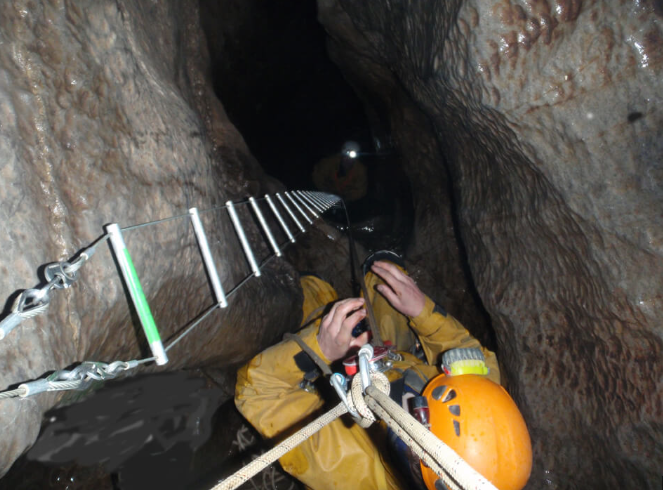
-
Geologically accurate caves, karst regions and more geology
Nicola Belotti replied to Nicola Belotti's topic in Suggestions
Thanks, I've been playing VS for like 300 hours now (which I know it's not a lot but I see myself playing this for years to come) and man I love it soo much, and already love this community too. Developers looking for suggestions and trying to take inspiration from nature is what I love to see. Geology in this game is already amazing and for me (a geologist and IRL caver) is always pleasurable to deal with. But yes, realistic caves would make me go caving a lot more than now. Now it's fine and caves are kinda nice to explore to find ruins and collectibles, but caves structured as I mentioned in the post (if feasible) would make the exploration mighty interesting and always unique. Of course I'm dreaming and this probably in terms of coding might be undoable, but I took a shot anyways. -
Caves in real life generate in soluble rock such as limestone (and trevertine), dolomite, marble, gypsum and quartzite (kinda rarely tho). Extensive cavities and tunnels can also be found in lava fields and volcanic regions (which are often old lava channels below the surface). Cavities in insoluble or igneous rocks (andesite, granite, peridotite, shale and so on) in real life are limited to tectonics thus forming more or less deep gashes and vertical cracks that don't tend to extend horizontally. Adding rock-specific cave formation would be amazing and would make cave exploration more interesting. Dreaming of a more geologically accurate game I'd also suggest with the objective of developing accurate caves, to add a few more rocks (limestone conglomerate, dolomite, dolomite conglomerate, pure limestone, gypsum, quartzite, calcite). Adding more soluble rock types would also mean the possibility of big **karst regions**, highlands or mountain ranges that present the possibility of greater cave explorations than other regions. I'm going to list some other related ideas below: - Long complex caves (vertical and subhorizontal) would spawn just in limestone, travertine, limestone conglomerates, dolomite, dolomite conglomerate, gypsum, marble and quartzite. - Big vast caves would spawn just in karst regions (similar to the ones found in Slovenia IRL) - Long but subhorizontal caves would spawn in basalt and volcanic regions - Vertical ravines would spawn in every rock, possibly being also a connection between different cave generation areas (e.g. a vertical ravine in granite leads to a deeper marble extended cave system) - Speleothems would just be made of calcite and spawn with more or less frequency based on the rock the cave is in - To compensate the now more accessible lime, this substance would generate in a variation of limestone and dolomite (pure limestone, pure dolomite) that, when broken, drops limestone and dolomite rocks and **calcite** that, when cooked, gives lime.
- 23 replies
-
- 13
-