DeanF
-
Posts
162 -
Joined
-
Last visited
-
Days Won
2
Content Type
Profiles
Forums
Blogs
News
Store
Everything posted by DeanF
-
Should a melee spear really do less damage than a thrown spear?
DeanF replied to DeanF's topic in Suggestions
Well, one of us needs to pay better attention in class. Ultimately, it's the same sort of muscles that are imparting the force. A spear does not magically accelerate after it leaves your hand (unless you're throwing it off a cliff). You can thrust it with at least the same force that you can throw it with. And unlike when thrown, if you jab someone with it you can keep shoving with it momentarily to drive it deeper. You can put your body weight behind the strike- not just the weight of the spear. Heck, just ask ChatGPT- "Would a thrown spear have more force than one used in the hand?" (I already checked it, so that I could cite it, so I know how it answered.) You can make thrown spears more powerful with things like an atlatl, since it is a lever, but that isn't what we are talking about. And I never said that javelins are a thing in the game, did I? I said that I had seen them suggested. But, wow, now that you bring it up, javelins with an atlatl would be pretty awesome for the game. Then you could easily justify more thrown damage than thrust damage, and maybe reduce the thrown spear's damage to be closer to it's thrust damage. That sounds like something a Hunter might like to use. You still shouldn't be able to stack javelins like you can arrows, though, or the bow loses it's niche. You should need each in an individual inventory space, like the spears. This is a more lucid argument. But note that I did say "so much less". Two damage versus five seems excessive. Also, I typically argue that reality is already balanced. So games should model it when able and appropriate. VS might be too "simple" of a game to get into weeds like that, though. Heck it doesn't even model inventory weight, let alone how awkward it is to carry a spear through brush. But the reach doesn't strike me as much of a practical advantage in the game. For example I cannot seem to hold off a shiver at a distance with it. I hit them with it, then they move up and hit me before I can attack with it again. If the spear actually held them off, I'd accept this all it easily. Does it need more knockback, then? I suppose that I might just need to git gud, if I'm missing something. -
These are used to make gin, nowadays. But the interesting thing about them is that you can still find them on the branch in mid-winter. In fact, it tastes horrible and astringent until after the first frost.
-
Yes, I generally agree. Boar can certainly be aggressive, but their pursuit distance should be limited since it is defensive. This is unlike wolves whose entire strategy is to harass and run prey into the ground. Not to mention that they are, y'know, actually predators, unlike boar. Heck, for that matter bears aren't endurance hunters, either. Their pursuit distance should be somewhere in-between, but certainly closer to wolves than to boar.
-
At the very least they could slow you down, in the way that berry bushes do since 1.22.
-
A point that came up in another thread is that firepits are locked behind stone axes and knives, which does seem wrong. Toolmaking does pre-date the controlled use of fire historically- at least at the hand ax stage- but we're not talking about history, here. We're talking about a survival situation, and you sure as hell can make fire without an axe and a knife. I propose that we should only need sticks to make a firepit, though of course firewood should still work as well. If sticks cannot already be used as fuel, well, they should. And we should probably be able to gather grass by hand, too, although much more slowly. Then firepits are no longer locked behind stone tools, and we could, for example, have things like fire-hardened wood-only javelins. No, none of this is essential. I'm not saying that it is. But sort of like the antler picks that I proposed elsewhere, this would all be very useful for players who want to try challenges, like the folks who do stone-age only games, etc. I could easily see someone wanting to try a jungle start challenge in a flint- and stone-constrained setting, for example.
-
I have to agree. We should maybe only need sticks to make a firepit. (Can sticks be used as fuel? They should.) And we should probably be able to gather grass by hand, too, although much more slowly. Toolmaking does pre-date the controlled use of fire historically, but we aren't talking about history, here. This is a survival situation, and you sure as hell can make a fire without an axe and a knife!
-
I really don't think so. Or at least not so much less. It's very counter-intuitive. But on the other hand I saw a javelin suggested as a lower-tier spear, and that might be more justifiable. Specifically, I saw fire-hardened wood-only javelins suggested. These might have better range than a spear, while doing less damage. The only problem with them that I see is that without any sort of weight mechanic in the game, what would be the advantage to a javelin? There would be no point in progressing them to stone, copper, bronze heads, etc. You would just want a spear. So maybe as a very early niche stone-age alternative? EDIT>> So that folks know where I have settled after this long discussion: I suppose that my proposal has solidified to this: Make knockback the spear thrust's niche, and add a Tier to spears when thrown so that they perform better against armor. I'm perfectly ok with the lower damage for spear thrusts if it is truly needed for game balance, but give it something. That something could be a bit of knockback.
-
Sounds like yet another great argument for letting us mantle up 2 blocks with a jump, as I have advocated elsewhere. (I think that StepUp should be in vanilla as a switch, for 1 block movement.) It would really help with mountaineering, too. My daughter wants to climb some of those huge massifs but she just can't, not without breaking blocks.
-
I have never seen one. But then, I'm new, and I have never even reached winter yet. Should the game start a little earlier, then, so that there are sheds around?
-
I don't think that this game needs a huge selection of melee weapons, like some of the weapon mods add. But... My understanding is that the Blackguard Shortsword is an iron age weapon. I'm not sure that it is special enough for a class-locked weapon, though. I would propose that it be open to being made by all classes (and maybe remove the blackening charcoal ingredient). And instead give the Blackguard a class-locked steel-age Longsword. One special thing about a longsword would, of course, be slightly more reach. But more importantly, if you have nothing in your off hand it should do a little more damage too, because you are wielding it with both hands. And if the game is supposed to have a pseudo-European flavor, well, the longsword is the iconic European melee weapon. It is, for instance, the center around which all weapons training revolves in modern HEMA sports.
-
So what I'm hearing is that antler sheds need to be in the game?
-
Using vines to make coils of rope is a bit... contrived? We can certainly come up with better ways. So, just limiting myself to sources used in great quantity: How about hemp? Yes, there will be jokes, but it's a great fiber for making rope and cloth. And you can press oil from the seeds, so now that we have linseed and olive oil this could be added. (This is not the same as hash oil, which is made from the flowers.) Add abaca for warmer regions. This is actually a species of banana plant, which is broken for it's fibers. It is often called Manila hemp. It can also be used to make lustrous textiles. Finally jute, also for warm regions. This is a plant from South Asia- principally Bangladesh- that needs a lot of water, and makes great rope. Clothing has been made from it, but was always considered very crude. As an option for early stone-age gameplay, nettle has long been used for it's fibers, and makes excellent cordage. I don't think that it was ever mass manufactured, though.
-
I see in the release notes that flax/linseed oil and olive oil have been added to the game. Excellent! Presumably, you put these precursors into some sort of press. So how about sun flower oil? Sunflowers are also in the game, and were used to produce oil. Any time that oil is pressed it should also leave cakes, which can be used as animal fodder. Other potential sources to consider adding are sesame oil or canola oil. Canola (also unfortunately called rapeseed) is one of the oldest known vegetable oils. And, ok I'm going to say it- hemp. Yes, there will be jokes, but it's a very useful plant for stone age cultures. Firstly, it is good for making oils. Secondly, it is a great fiber for making rope, and frankly makes a lot more sense than using vines. Hmm... I should start a rope discussion.
-
- 1
-

-
Personally I would be fine with four ingredients if the first two didn't have to be the exact same... and in the same amount. You should just be able to plop in four ingredients, and whichever is the largest number becomes the primary one driving what the recipe is called. So if I have 4 fish, 6 turnips, 4 cranberries, and two chanterelles, that's Turnip Stew with Fish and Cranberries, and chanterelle garnish. Etc.
-
Shouldn't tier 1 shovels be wood instead of stone or flint?
DeanF replied to DeanF's topic in Suggestions
I really like the wood pan idea, though. It is an easy lead-in to a new player learning the game. Because let's face it, Vintage Story is going to attract Minecraft players, and one of the first things they will want is a shovel. So they open the handbook and see the recipe for a shovel- a wooden pan and a stick. Ok, so they follow the link to find out how to make a wooden pan and see that- holy cow, we can pan for minerals? There, they just learned something obscure about the game that would have taken them much longer to stumble upon otherwise. -
Kind of an off-the-wall idea: Picks did exist in the stone age, but they were usually made of antler, and were used more like a crowbar than like a swung pick. We could certainly have these. Antler isn't exactly easy to find, so it would not be overpowered. I would propose that they work excruciatingly slowly, and perhaps only on the soft sedimentary rocks. Shale, sandstone, chalk, claystone. Maybe conglomerate or limestone. The goal definitely would not be to make them actually practical- it's more just for the sake of completeness. And at some point someone will find a fringe use for one sometime, and they will think that it is awesome that these were included. This is all sort of a follow-on to my discussion about wooden shovels:
-
That sounds perfect. Just a couple of days ago I was complaining that turning on Dirt Instability made dirt act too much like sand and gravel, and that it should be stabilized by plants somewhat. I guess that I don't understand how this differs from what is already in the vanilla game? That sounds like something that I would love. Yes, this seems like it should be an available switch. The U.S. is such a huge market. I have heard that the devs want to eventually do away with the crafting grid in favor of more physical interactions, sort of like how we make pit kilns, etc. So this might actually come. Yeah, I thought that Tule was under-utilized. And grass makes a poor roof, though it has of course been done, historically. Perhaps we could keep the grass roofs, but have them degrade? Yes! This is exactly what I was asking for. Smoking hives dates back to at least the Egyptian 5th Dynasty, 2400 BCE.
-
Aha! You can already stack stones in the vanilla game! Use ctrl-shift-rightclick, just like you are placing a tool against a wall, and they stack. I guess that I can uninstall Cairns, now. One less mod to potentially conflict some day.
-
Thanks for replying! Well, I was really asking for things that seem like they should be core mechanics, I guess, not aesthetics. I love all of the Stone Age Fauna stuff, but I wouldn't want it in the vanilla game. Indeed, that is why I said that it should be switchable. But I have an ultrawide monitor, so I barely notice it- I literally forget to check it. No screen real estate issues with it at all. (In fact a lot of the windows for containers pop up inconveniently near the right edge of my screen, and I have to drag them back to the center.) But it's nice to just glance over instead of pressing C. So why not have this as a selectable option? I could see players intentionally dying to farm containers, there... Unless I misunderstand what you're saying. Where do I find this lore? I'm trying real hard not to spoiler myself, though. But, anyway, I don't think that reincarnation is inconsistent with leaving remains. Not everything needs to have a Judeo-Christian flavor. There are many belief systems that involve being reborn in a new body. I would say that I agree. I put it sort of in the same category as Catch Ledge- I wouldn't want it all implemented. But clearly we need better apiculture, and I couldn't find a more suitable mod to propose. I understand where the devs' heads are at with skeps, but there are ancient Egyptian depictions that show hives being smoked as far back as 2400 BCE- no distracting dummies involved. And historically some skeps were made with a sort of a smaller skep on top, accessible through a hole too small for the queen to pass, so that it acted just like a modern super, and the hive didn't need to be destroyed to harvest at least some of the comb. Well, then so be it, I say. Rework it. The game isn't released yet. It seems nuts that I can't hop a 5-foot ledge. At least two blocks, if you can't stand the idea of three. Oh, I didn't know that it changed lore. But it looks awesome! That's what I mean. The great visuals are what attracted me to this game. Well, that and I love survival games. I had thought that BetterRuins was procedural, and it caught my eye. I have played a few learning games of Vintage Story thus far while fiddling with settings to find out what I like, because at this point I'm waiting for the 1.22 release before committing a huge chunk of time to it, and I have yet to reach the bronze age. So I feel like this is a game that might take a year for most casual players to finish. (My gaming friends and I just got a server, though.) So having some epic procedural content along the way seems like it would be received well. This game is supposed to have eight chapters, but only two are done, right? I think something could probably be worked out with the BetterRuins devs, to be sure that it follows lore, and then insert those beautiful visuals into the game as optional side-quests, or something. More content is better.
-
I don't like them in Minecraft, but they sort of add to the spookiness for Vintage Story. They also look much better than in Minecraft, and that helps.
-
There is a mod for that, if it were true. But it isn't.
-
I'm sure that this has been done before. Give your thoughts on what mods really should be in the vanilla game. I'm a new player, so my experience is limited. Try to provide a short justification. Mine: Step Up This resets the step height from 0.6 to 1.2 blocks, so that you don't have to get carpal tunnel from jumping with the spacebar all the time just to move around. I have found this to be game-changing. This should be switchable, though, since I know that some players hate it. Carry On Lets you carry some containers in your hands while they are still full, to make it easier to move them around without having to transfer everything into your inventory. The function to carry them on your back is not crucial, but you should be able to pick up a full reed chest or pottery storage container in your hands and move it. Simple HUD Clock Displays some data in the corner of the screen: date, time, weather. I don't think that the rift activity needs to be included, though? It seems like that might give things away, and take away some of the mystery. This should be switchable, too. More Piles Originally I was going to list Cairns, but this is a better solution- just let us make piles of other things like stones in the same way that we can make piles of firewood or sticks. We can just leave piles of stones as cairns. Blood Trail Leaves a trail of blood drops on the ground as a wounded animal moves. It should be a lot more subtle than the mod, though. Perhaps the size of the drops could scale with both the size of the animal and how badly injured it is? Player Corpse Just leaving piles of gear behind when you die isn't very immersive. Leaving a skeletal corpse that you have to loot is better, as well as more in keeping the with eldrich horror theme. Stone Quarry A better way to get stone blocks. I don't think that everything in Stone Quarry needs to be implemented, but getting stone blocks should be easier- chopping out the six blocks just to get one block of stone is onerous. And this is a nice, immersive way to do it. From Golden Combs I haven't tried apiculture yet, but from what I have read in this game it seems to be implemented in a very rudimentary manner. So much so that I suspect that more is planned. Needing a dummy target to "distract" bees? Really? Why can't we smoke hives to harvest them in a non-destructive manner? Catch Ledge I actually don't think that all of this should be implemented- this game does not need a full parkour mechanic. But I do think that we should be able to mantle up two or three blocks with a jump. Mantling two blocks up should be pretty quick, but mantling up three blocks should take longer. BetterRuins This just looks awesome.
-
I'd argue that's sort of why the sling does fit the Malefactor. They're easy to improvise, and use easily scavenged ammunition. I just argue that the sling shouldn't be completely class-locked. It's such a cool weapon. My problem with the Malefactor is that their signature weapon is ranged... but they have a ranged weapon debuff!
-
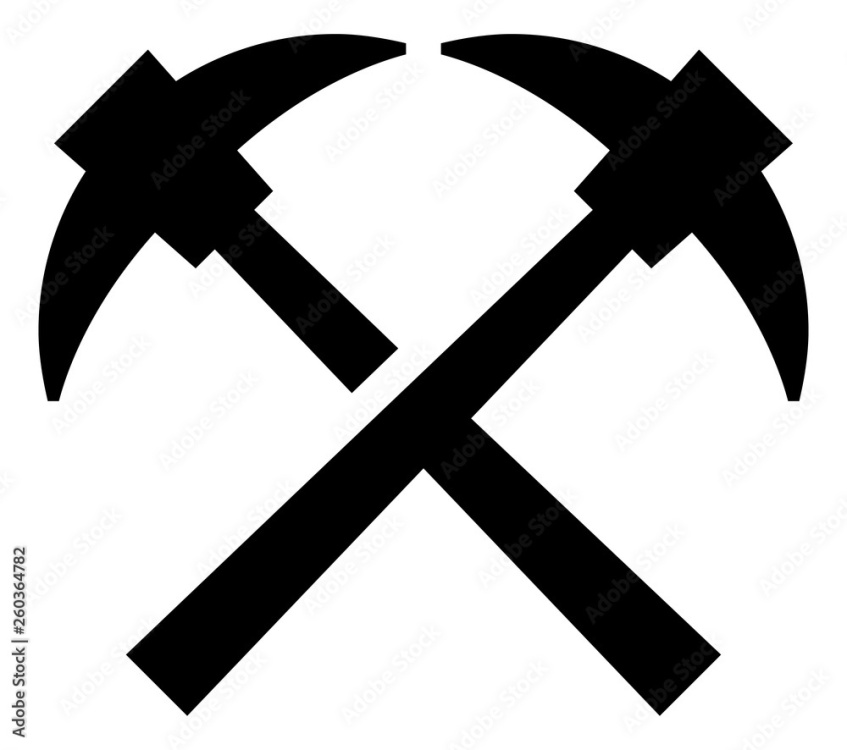
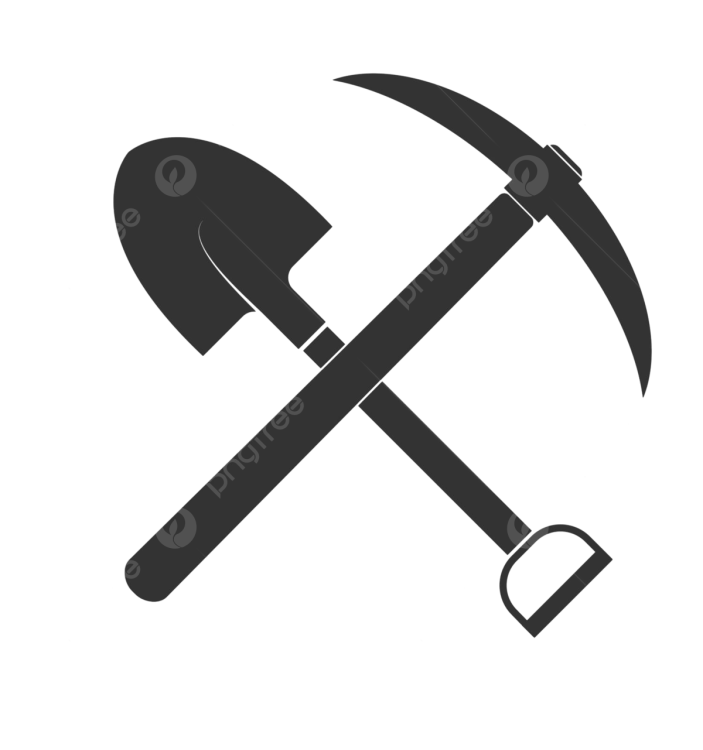
The single pickaxe icon on the map is thin and hard to see, particularly to differentiate some of the colors. Changing it to crossed pickaxes- or a crossed pick and shovel- might help.
-
The Animal Unit Month (AUM) is used in North America to represent the carrying capacity of grazing livestock on pastureland. It is roughly equivalent to what is needed to support one 1000-pound (454kg) cow and her calf for one month. A larger animal might rate 1.2 AUs, and smaller ones a fraction of an AU. For instance a nanny goat is rated at about 0.16 AU, so they only need 1.92 AUMs for a whole year. A similar system could be used in the game. Give each animal a rating on how much pasturage it needs, and give each type of ground-cover block a pasturage rating. This need not reflect reality. For instance, say an animal has a pasturage need of 100 blocks of tall grass. Well, that's only 10x10 blocks. Make medium-high grass only count as 0.75 blocks, short grass as 0.5 blocks, and grassy block as 0.25 blocks. Or somesuch. Then have the game recognize pasturage when it is enclosed in a fence, much like how it recognizes "rooms". Animals with inadequate pasture wouldn't be as well-fed (which the game tracks, apparently, since fat drops depend upon how well fed an animal is). Then if you don't have enough pasture, you need to give supplemental feed with a trough.