Jacsmac
-
Posts
58 -
Joined
-
Last visited
Content Type
Profiles
Forums
Blogs
News
Store
Everything posted by Jacsmac
-
What's up with the ridiculous rarity of Jonas parts? I know that something like a terminus teleporter should be hard to achieve, but goodness! It's almost impossible to craft any of these! I haven't even made a Jonas device without mods yet because there's some mysterious force ensuring that mobs always drop the parts you already have. You'd think the chances of getting a single part out of about 12 would be pretty fair. And base return teleporters still burn out, right? Would make sense if people could get parts to spare, but usually just one of the parts is too rare to sacrifice.
-
 Maybe something like "Chapter 2 boss location" or "Chapter 2 fall damage zone" would work to obfuscate the name of the location but not the critical details.
 -
I really like the past-present puzzle, and the music is superb. There is also plenty of good loot to gather. However, the parkour is not as straightforward as it should be. A clear route to the top is not always visible, and the player may recognize the time-jump part of the parkour but still struggle to get the timing correct. ALSO, please consider editing the title of this post in case the name of the story location was a spoiler to anyone.
-
*Story spoilers* Why is it so messed up (and not in the typical way)
Jacsmac replied to Jacsmac's topic in Discussion
I'm using Farseer mod and the terrain sampler that makes it faster. I currently do not have any other mods enabled. Something similar has happened before on a previous world with zero mods, but nothing this crazy. And, my months are 12 days long instead of 9 and I made it to the village relatively early in the playthrough. Maybe it started at 800 or something. -
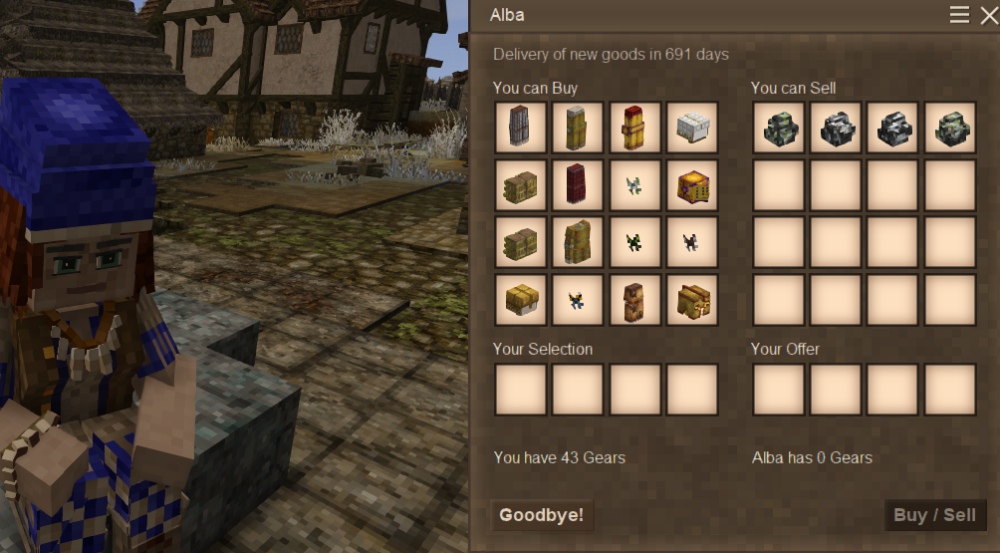
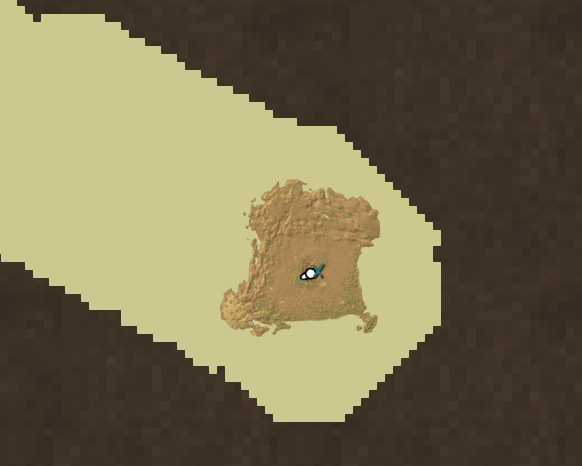
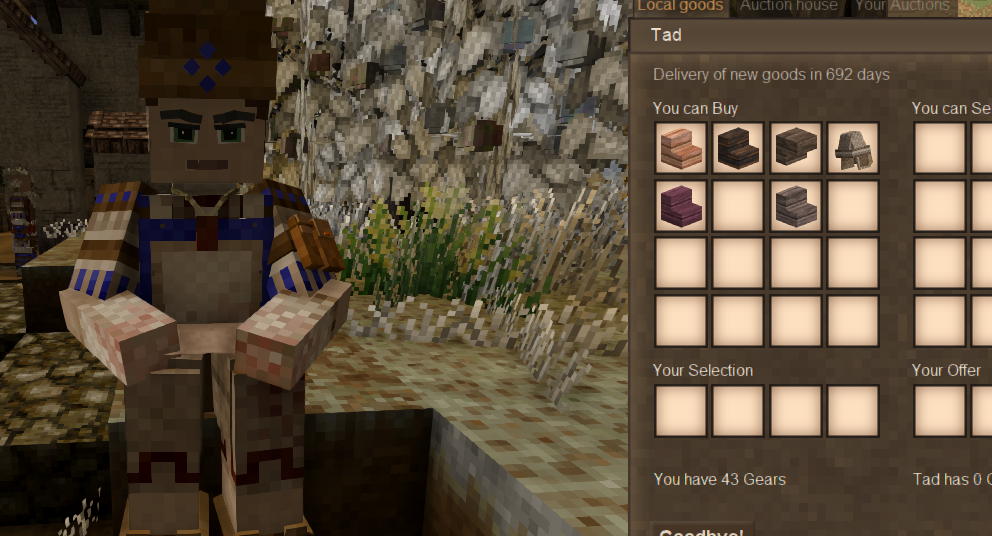
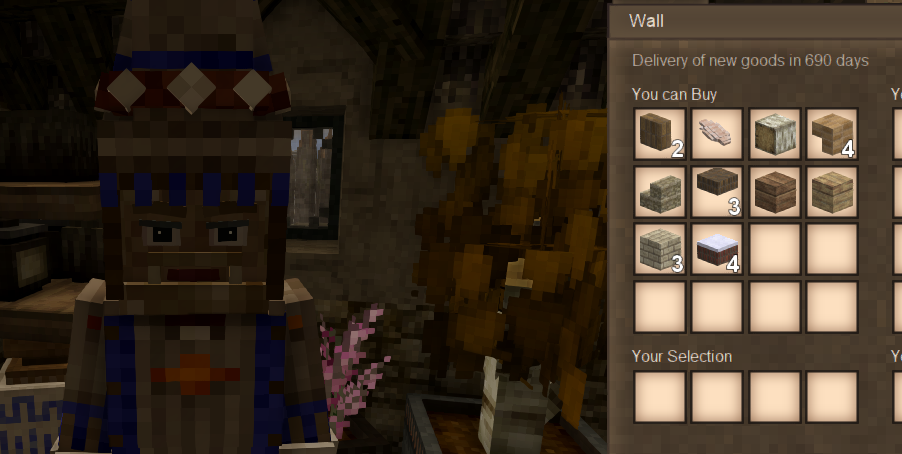
I had to cross an entire ocean to get to the village, which has its own island, or course. Then when I get there, all of the villager's trades are messed up! They sell random things like stairs, snow-covered top half slabs, singular shale stones for 16 gears apiece, and they buy ores. Fortunately, though, the trades should refresh shortly before the heat death of the universe, and I might be able to buy what I'm looking for. An ample reward for freezing my ass off on the way here because it's November and half the trip is above the Arctic Circle.
-
I saw rapids cascading down the mountainside and though it might be nice to get a big drink of that stuff. Maybe the Seraph has a similar idea. Do you think a thirst mechanic would be a good addition to Vintage Story, if done correctly? On one hand, having to balance an extra stat might feel like pushing the survival aspect of the game too far. On the other hand, thirst is an opportunity to add some depth to the game through new mechanics. I think it would be nice if being well-hydrated came with a small but noticeable stat boost, like faster regeneration. Similar to how diversifying nutrient intake increases HP, maybe there could be some extra, above-and-beyond level of hydration that one can achieve by investing in more/better water to drink. Furthermore, there are already drinks in the game. Maybe they can give a small hydration boost on top of the nutrition and serve as a way in the mid to late game to keep hydration up without having to worry about finding water. P.S. Rivers have drinkable-ish water, right? At least depending on how far upstream you are.
-
I often struggle with much lower FPS values when making my way through a forest. I especially noticed this issue on my last save when I built a house overlooking a redwood forest: My frames were basically cut in half every time I looked out of my bedroom window! There is an option to turn off waving foliage, which helps somewhat. I think a bigger issue may be that there is a lack of face culling on leaves (which I understand may be hard to implement because of the variable placement of the blocks). Perhaps there should be a setting which reduces the number of faces that leaf blocks have by, say, deleting the internal faces and just leaving the outside, or replacing all internal faces with something like a billboard GUI. On a similar note, does anyone else find it a little funny when a strong wind makes their crops look completely flat? It's like someone steamrolled my flax field.
-
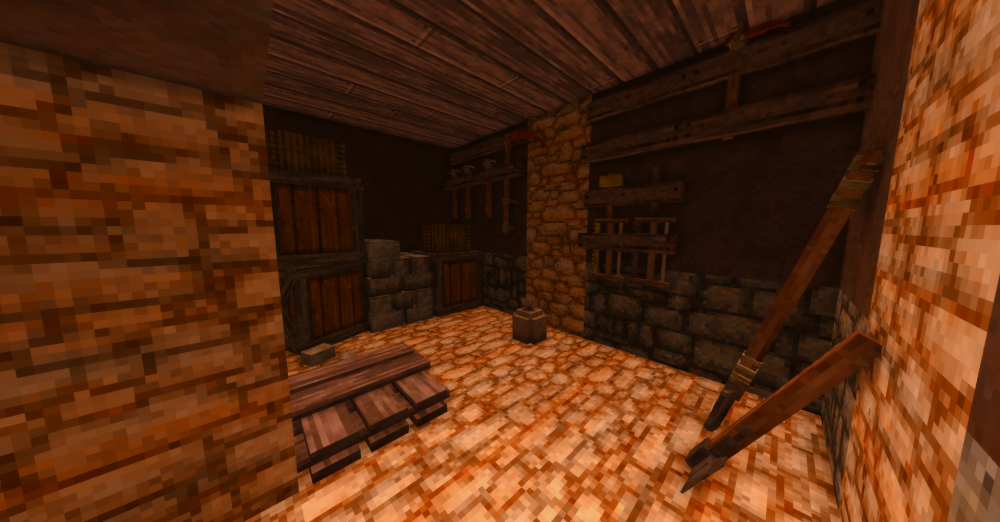
Tired of cluttering up the space next to your nice-looking builds with ground stored resources and random stuff you don't really have room for in your house? Build a shed! It makes your mess less unsightly, at least from the outside. On the inside, store things on the ground to your heart's content.
-
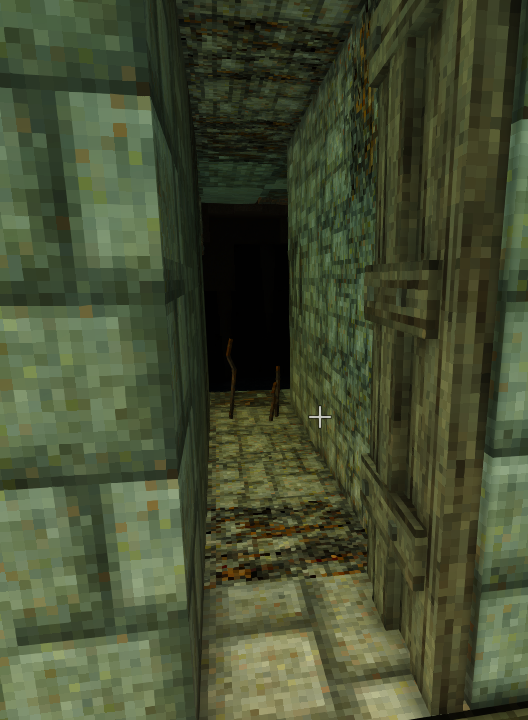
Of course a locust nest would generate down here (Story spoilers)
Jacsmac replied to Jacsmac's topic in Discussion
Yeah, I've kind of been giving myself the liberty of using /giveitem to get things like bandages. Especially after something like this: I also find myself using "/tpwp You died here" and dropping a temporal gear at the site of my death when it feels like something completely out of my control. -
There is a cave opening right next to the entrance, and other things like glow worms are also generating. I didn't think it was possible for things to overlap like that.
-
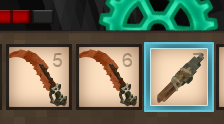
Way better than the wooden club I was using before this. And two, no less!
-
I agree that the combat idea was a bit of a stretch, I was kind of brainstorming with all of the stuff after decoration and it's good to have some feedback. I think a better way to deal area damage would be to throw scrap bombs. I'm surprised that hasn't been added yet.
-
I've had this idea for a while, so I'm putting it out there: One use for fireworks is just for celebration. You can place one on the ground, light it, and watch it fly up. There can be a few different colors, and they can be linked together to go off at about the same time. What if fireworks can be used for combat, and more than just sending them up while in a cave? With a torch in the offhand and a firework rocket in the main hand, you light the rocket and have to let it go. It will fly the direction you look, and you can delay the release to control how far away it explodes. The most difficult thing about crowds of mobs is that you can only damage one at a time unless you walk up to them and place a bomb. Launching fireworks would be a more effective way of damaging multiple monsters. The next part of the idea is using rockets with gliders (Thought exercise mostly, because elytra rockets are overpowered in the other game): Holding a lit rocket will propel you in the direction you look while you hold it, but the force is weak and rockets must explode. Players can risk more speed by holding onto the rocket longer but will be within the explosion radius if they don't let go quickly enough. Rockets would boost flight time but not make it infinite, though players who decide to tank multiple explosions should be rewarded with much more speed. The main thing about rocket boosting is that you shouldn't really be able to use it to take off from a standstill (unless you like exploding).
-
Titanium is very strong for its weight, meaning titanium tools could be the next tier after steel (maybe the same tier as a theoretical alloy steel). Titanium tools could be equally as durable as steel, but mine blocks faster. Since processes to make pure titanium metal were not introduced until the 20th century, perhaps titanium bars could be obtained using Jonas tech or the chemical process can be made a bit more unrealistic. You know what, maybe titanium tools aren't feasible at all, but the idea is cool.
-
I'm so sick of my box houses, full build tutorials?
Jacsmac replied to vinnland's topic in Discussion
Honestly, building tutorials from TOBG apply here as well - you can just add more details. A lot of the voxel building basics are well established by Minecraft and you can use those tutorials to help you get started in Vintage Story. Once you're done with your coarse details, you can whittle it down to the fine stuff by chiseling and adding clutter and support beams. I like this Minecraft video's message about starting with simple shapes when building: ULTIMATE GUIDE To BUILDING in Minecraft - YouTube As for Vintage Story's exclusive chiseling, there are a multitude of chiseling tutorials if you search "Vintage Story chiseling" on YouTube. Installing mods like QP's Chisel Tools also makes chiseling large-scale details way easier, if that's something you're into. This roof tutorial helped me a lot at the start of my chiseling journey: Vintage Story - Improve Your Roof! -
social If your university/high school had a Vintage Story club, would you join?
Jacsmac replied to Jacsmac's topic in Discussion
I like this idea very much. More people would certainly join a Modding club, and club members could mod games they already own without having to buy or download new stuff. Don't worry, I wouldn't intend for people to debate over the current political theater in a club like this. I think it would be more adequate to say that students would potentially simulate a legislative body and practice implementing rules that fuel resource management and the player economy, as well as a judiciary body that would settle disputes in a civil, engaged manner. Politics as a word just means the activities associated with a governing body; most university students I have met are able to keep disagreements civil, especially in a club setting. Left to their own, I think club members might fall into a habit of not taking the academic aspects seriously. This is a valid concern. I think having physical meetings centered on the academic aspects of Vintage Story could reel things back in and give the club more purpose. I'm sorry that your past experiences with clubs haven't been so great. I totally understand what it's like to have high expectations swept away by subpar behavior. Hopefully things are better now at your current chapter in life. And, I didn't mean to give off the impression that a theoretical Vintage Story club would be half-assed. I am very passionate about organizations I am part of and would make sure that other club leaders and members are as passionate as me. Regardless, I feel like it's best to keep this Vintage Story club idea off-the-table for now though. I'll wait and see if the number of sales blows up enough to be as reasonable as a TOBG club. -
social If your university/high school had a Vintage Story club, would you join?
Jacsmac replied to Jacsmac's topic in Discussion
It's not too late to get some people together to play a server once you're out of university, though. Plenty of coworkers at my last internship were avid gamers and they would probably play with me if I provided some game keys. -
social If your university/high school had a Vintage Story club, would you join?
Jacsmac replied to Jacsmac's topic in Discussion
I myself would really enjoy sharing a Vintage Story world with other students, sharing builds, resources, and whatnot. Maybe we could form some kind of government or organize club meetings in-game. -
Had an idea pop in my head about a Vintage Story club at my school. Turns out the founding process is straightforward if you can get a dozen or so people on board with the idea. It's pretty easy to frame this game around the perspective of academics and the arts, no doubt about that. The creative tools available to students, the potential to simulate society (economics, politics, etc.) and survival challenges (metalworking, crop rotation, etc.) leave plenty of opportunity to use Vintage Story as a teaching tool or a mental exercise; at least, we can tell this to the people in charge of funding clubs. Would you join a club whose purpose is to play Vintage Story and examine its gameplay/worldbuilding and use the game as a creative outlet? What would you hope to get out of a Vintage Story club?
-
I placed a grindstone to check out what you meant, and then broke it and the wheel is still there just floating
-
Say something gets pushed by a piston, bounces off of a stretchy trampoline, is launched out of a cannon, whatever. Can a force be applied to a player or entity that makes it accelerate along any given axis? Does Vintage Story already support force/acceleration vectors, or could something similar have to be achieved using velocity vectors? I've been thinking about making a code mod for items or blocks that players can use to push things around dynamically or even move themselves. Will I be in for a hard time trying to implement something like this?
-
Did Moses join your server at some point? Jokes aside, I have been seeing some of this on my new 1.22 world as well; a rare lake or pond will have two different water levels that form a step somewhere. I'd love to know what causes this.
-
Oh, that's what those are! I found a very aged planks block in a crater while mining meteoric iron and thought it was rather strange. No chest though so it wasn't obvious that it was an intentional structure.
-
I Just Downloaded 1.22. What do I need to do right this minute?
Jacsmac replied to Silrana's topic in Discussion
Consider making one of the metal tongs and a set of bellows for your forge. Charcoal will only heat a workpiece up to 750 without bellows and wooden tongs now break quickly. -
Careful when you make a mechanical assembly in the new update! Your seraph may be exposed to geometry beyond their comprehension.