MKMoose Posted February 24 Report Posted February 24 (edited) 3 hours ago, Teh Pizza Lady said: Why does your shatter chance go up with each additional tempering besides the first one? On top of that, I'm not certain about the first quenching done on a brand new item, but the second quenching will start off at 10%. The first quenching is a little odd, but it seems to have no "shatterChance" attribute at that point, so the default value of 5% would be used. By modifying "quenchIteration", I can get it to show up in the tooltip. But after quenching a couple dozen times I haven't gotten it to trigger, so I'm not certain if it can actually shatter on the first time. Edited February 24 by MKMoose
kal_culated Posted February 24 Report Posted February 24 I'd greatly hope the first quench never has a shatter chance, especially since we can't craft with hot items now. Waiting for an item to cool down, on top of the other blacksmithing changes, that really is a lot of extra work and waiting to an existing system 2
LadyWYT Posted February 24 Report Posted February 24 13 minutes ago, williams_482 said: I do worry about what it does to any kind of PvP multiplayer setup, though, where a stronger weapon actually would start to matter. This sounds like it would create a miserable extended gambling minigame of cranking out steel falxes in bulk and quenching them over and over again in an arms race for better and better equipment. Maybe. But it takes quite an investment of time and resources into getting a weapon like that. And once a weapon like that is created, the owner has to actually manage to retain ownership of it; that is, whoever owns it can't afford to die with it on their person, unless keep inventory is turned on(which it likely isn't for PvP servers). Thus it may be more attractive to settle for just a decent weapon, not just for time/resource cost but also the higher potential for becoming an attractive target and losing said item. I'm just speculating here, of course, but I do think it could make things rather interesting. A very powerful weapon would be absolutely nasty to face in combat, but it would also be a very attractive prize to claim from a target as well. It would also give more value to more passive players on PvP servers, since someone has to be sinking in the time and resources to make tools and weapons like that in the first place. For servers in general, it makes the economy a little more interesting too, I think, since high quality items like that could fetch very good prices. 2
MKMoose Posted February 24 Report Posted February 24 17 minutes ago, williams_482 said: It's also not realistic for infinitely more quenches to continue to improve material characteristics. I'm not an expert (although I have some limited blacksmithing experience), but it doesn't look like quenching something more than two or three times is a normal thing for smiths to do. Capping the number of quenches at three cuts down on the slot machine elements and gives you a meaningful maximum damage figure for a triple-quenched steel falx that other stuff can be balanced around. What I especially like about this approach is that it could create a much more approachable and interesting puzzle out of the system. In this case, there would be a real high-level choice behind tempering (which would then probably have to get heavily buffed): do you prefer to reduce the risk of shattering at the cost of slightly reducing the maximum achievable power of your weapon, or do you take the resource loss for a small chance at a perfect weapon? 10 minutes ago, kal_culated said: Especially with a full tool loss when a quench fails, I'd still like to get bits or broken tool heads in vanilla one day instead of tools just disintegrating. Kinda unrelated, but my main gripe with suggestions to return bits or damaged toolheads when a tool breaks is that most of these ideas kind of don't serve a purpose. What's the gameplay reason for it? A tool breaking is ultimately a loss of resources - if some of those resources are given back, then that's still the same kind of loss, just a bit smaller, and you end up having to carry the bits or toolheads back home and repurpose them, which will most likely feel like extra obligation or maintenance. 2 minutes ago, kal_culated said: I'd greatly hope the first quench never has a shatter chance, especially since we can't craft with hot items now. Same, at least when that quenching is done correctly, if they decide to make it a bit more skill-based. Though I still need confirmation on whether there actually is any, because I haven't had anything shatter on the first quench yet. 2
LadyWYT Posted February 24 Report Posted February 24 4 minutes ago, MKMoose said: Though I still need confirmation on whether there actually is any, because I haven't had anything shatter on the first quench yet. I can't find it written anywhere, however, I haven't had anything shatter on first quench either. Though I think that if quenching is what drives up the shatter chance, it's safe to say that the first quench will always be risk-free, since logically the shatter chance starts at zero. I think if it were otherwise, it'd be mentioned in the patch notes somewhere.
kal_culated Posted February 24 Report Posted February 24 9 minutes ago, MKMoose said: Kinda unrelated, but my main gripe with suggestions to return bits or damaged toolheads when a tool breaks is that most of these ideas kind of don't serve a purpose. What's the gameplay reason for it? A tool breaking is ultimately a loss of resources - if some of those resources are given back, then that's still the same kind of loss, just a bit smaller, and you end up having to carry the bits or toolheads back home and repurpose them, which will most likely feel like extra obligation or maintenance. More mileage from each craft, and tool heads quicker to repair than making a new one. Less of a resource loss when using a tool up. Blacksmithing+ mod has it, and you can configure what % of resources are loss with each breakage. It also has repaired tools lose durability each break, so it eventually becomes more expensive to maintain an old tool than just melt it back down. I think it just "feels nice", I feel like a smith when repairing tools for friends in MP, and it gives a sense of history to a tool. Its more involved an interesting than just, tool evaporates on break and you gotta make a new one. 2
Teh Pizza Lady Posted February 24 Report Posted February 24 (edited) 40 minutes ago, MKMoose said: Why does your shatter chance go up with each additional tempering besides the first one? I had my excel formulas wrong. It's not a linear reduction but compounding. have some more data! QQQ...TTT... pattern QTQTQT... pattern Edited February 24 by Teh Pizza Lady 2 1
williams_482 Posted February 24 Report Posted February 24 18 minutes ago, LadyWYT said: Maybe. But it takes quite an investment of time and resources into getting a weapon like that. And once a weapon like that is created, the owner has to actually manage to retain ownership of it; that is, whoever owns it can't afford to die with it on their person, unless keep inventory is turned on(which it likely isn't for PvP servers). Thus it may be more attractive to settle for just a decent weapon, not just for time/resource cost but also the higher potential for becoming an attractive target and losing said item. I'm just speculating here, of course, but I do think it could make things rather interesting. A very powerful weapon would be absolutely nasty to face in combat, but it would also be a very attractive prize to claim from a target as well. It would also give more value to more passive players on PvP servers, since someone has to be sinking in the time and resources to make tools and weapons like that in the first place. For servers in general, it makes the economy a little more interesting too, I think, since high quality items like that could fetch very good prices. I actually had faction/civilization dynamics in mind here. On servers where groups of people expect to fight other groups of people, having as many faction members as possible dumping as much time as possible into the quenching lottery to get the group as well armed as possible would probably be a decisive advantage that few participants are likely to actually enjoy long-term. Even at the individual level, though: If you can get steel at all, you must have a relatively safe place to hide away and do industrial stuff. Provided some reasonable amount of food, you should be able to hide away there playing the quenching lottery for as long as you like, and when you do eventually emerge with the best weapon you could manage you'll have an appreciable advantage in fights against players who decided on a less miserable means to arming themselves. You can certainly decide not to do that and just wing it with "good enough", and other people doing it and beating you up more as a result doesn't force you to try it yourself, but there's definitely pressures in that direction. In short, it's a big "players will optimize the fun out of the game" risk. That danger is there in SP but much worse in any combat-heavy MP situation, where the pressures to be "optimal" are much greater. That's a problem. 1
LadyWYT Posted February 24 Report Posted February 24 11 minutes ago, williams_482 said: In short, it's a big "players will optimize the fun out of the game" risk. That danger is there in SP but much worse in any combat-heavy MP situation, where the pressures to be "optimal" are much greater. That's a problem. Oh there is. However, it's a case where I tend to look at the problem as a self-inflicted one, and those tend to be difficult to fix on the developer end of things, I think. Sometimes adjustments in the code will help, but they can also just as easily end up causing more problems. In this particular scenario, my concern is that putting a cap on the temper/quench benefits either won't stop players from trying to grind the fun out of the process, or otherwise remove the fun from the process itself by removing the high risk/high reward potential. 17 minutes ago, williams_482 said: I actually had faction/civilization dynamics in mind here. On servers where groups of people expect to fight other groups of people, having as many faction members as possible dumping as much time as possible into the quenching lottery to get the group as well armed as possible would probably be a decisive advantage that few participants are likely to actually enjoy long-term. Even at the individual level, though: If you can get steel at all, you must have a relatively safe place to hide away and do industrial stuff. Provided some reasonable amount of food, you should be able to hide away there playing the quenching lottery for as long as you like, and when you do eventually emerge with the best weapon you could manage you'll have an appreciable advantage in fights against players who decided on a less miserable means to arming themselves. You can certainly decide not to do that and just wing it with "good enough", and other people doing it and beating you up more as a result doesn't force you to try it yourself, but there's definitely pressures in that direction. A fair point, but if the players aren't having fun grinding like that, that seems a pretty good way to get the faction's players to leave for other factions where they have more fun. Quality weapons do make fighting easier, but body count can't be ruled out either. A large faction with average weapons will likely triumph over a smaller faction with high quality weapons, just due to sheer numbers alone. There's also the player skill factor, in that the quality weapons are going to be most effective in the hands of the highest skilled players, since those players are better at fighting and less likely to die. Which could also be a real problem when it comes to faction stability, since everyone is going to want the best weapon but only the best players are going to actually get one. From the blacksmith's standpoint, it also seems a prime opportunity to create a faction devoted exclusively to crafting high quality weapons, and then sell to the factions who'd rather fight than craft. Factions who help keep the smiths supplied could potentially receive discounts, and factions who decide to try to take the smiths' work by force could find themselves cut off from the trade entirely and/or having to fight multiple other factions who don't appreciate their convenient trade getting disrupted. 1
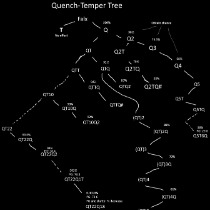
Diregoldleaf Posted February 24 Author Report Posted February 24 1 hour ago, williams_482 said: It's also not realistic for infinitely more quenches to continue to improve material characteristics. I'm not an expert (although I have some limited blacksmithing experience), but it doesn't look like quenching something more than two or three times is a normal thing for smiths to do. Capping the number of quenches at three cuts down on the slot machine elements and gives you a meaningful maximum damage figure for a triple-quenched steel falx that other stuff can be balanced around. The argument against that is the whole mechanic is unrealistic anyways, and it's more fun without the limit. If you had a low, easily-obtainable limit, the meta would be to get to that limit. Regarding the slot element, it's not so much that as there's a time sink, and the cost is so high for such slow rewards (as opposed to big win). 1 hour ago, kal_culated said: I agree with MKMoose's earlier comment that quenching and tempering does allow some pretty ridiculous stats, and I'd rather something more methodical and less RNG. I think that'd be more in line with Vintage Story's ethos, as well, but I can't offer any good ideas, maybe beyond able to spend more resources to slowly quench and temper an item up with minimal loss risk but more time and items. An rng system like Materia overmelding % chance from FFXIV is not something I'd ever like to engage with again, lol Especially with a full tool loss when a quench fails, I'd still like to get bits or broken tool heads in vanilla one day instead of tools just disintegrating. Mixed with the state bellows are in currently, if quenching / tempering becomes expected for future content, blacksmithing could become very tedious. But we're still in preview builds, so I hope for better number and mechanic tweaking. What would be your ideal improvement to the system? I agree that shattered tools should return material, but not with blacksmithing becoming tedious. It's an extremely optional mechanic with slow but firm rewards. 1 hour ago, MKMoose said: The first quenching is a little odd, but it seems to have no "shatterChance" attribute at that point, so the default value of 5% would be used. By modifying "quenchIteration", I can get it to show up in the tooltip. But after quenching a couple dozen times I haven't gotten it to trigger, so I'm not certain if it can actually shatter on the first time. Intradesting. I've quenched hundreds of heads, only a few first quenches, but I haven't had any of those shatter either. 1 hour ago, MKMoose said: What I especially like about this approach is that it could create a much more approachable and interesting puzzle out of the system. In this case, there would be a real high-level choice behind tempering (which would then probably have to get heavily buffed): do you prefer to reduce the risk of shattering at the cost of slightly reducing the maximum achievable power of your weapon, or do you take the resource loss for a small chance at a perfect weapon? I can see where you guys are coming from, but I feel the same logic can be applied for the current complex quench-temper tree. Do you take the risk and quench for a quick risky reward, or do you temper and take your time, allow the tool to go back up the tree for a bigger survival chance? There's also the added benefit of adding rarity and collectibility to tools. 1 hour ago, MKMoose said: Kinda unrelated, but my main gripe with suggestions to return bits or damaged toolheads when a tool breaks is that most of these ideas kind of don't serve a purpose. What's the gameplay reason for it? A tool breaking is ultimately a loss of resources - if some of those resources are given back, then that's still the same kind of loss, just a bit smaller, and you end up having to carry the bits or toolheads back home and repurpose them, which will most likely feel like extra obligation or maintenance. 1. You get the choice of what to do with those returned bits. Just because there isn't a singular purpose for those bits, doesn't mean they shouldn't exist 2. Most players want their resource back regardless of whether or not there's a gameplay reason for it 3. It makes the mechanic feel more complete and polished, among many more other things 53 minutes ago, Teh Pizza Lady said: There's a hard limit on quenches I believe. I couldn't quench more than 12 times consecutively (no tempers). After 1 temper, it was still 12. After 2 tempers however, it was 13. After 22 tempers, it was 18. There seems to be a lot of inconsistencies regarding this. 54 minutes ago, williams_482 said: I actually had faction/civilization dynamics in mind here. On servers where groups of people expect to fight other groups of people, having as many faction members as possible dumping as much time as possible into the quenching lottery to get the group as well armed as possible would probably be a decisive advantage that few participants are likely to actually enjoy long-term. Besides what LadyWYT said about the self inflicting problem, what you are asking is to cap the amount of time spend on this mechanic. Whether you want a cap of 3 or 7, you are essentially introducing a limit to the time spent on toolheads, whereas it should be up to the player to allocate their own time to their own tasks. Also by introducing a cap, that cap becomes the new requirement/ meta and (thinking from a factions perspective) other elements of the game will inevitably have to balance around that. With the current system, as well as the difficulty in obtaining high end quenches, the quenches are more of a bonus rather than a requirement. 1
Teh Pizza Lady Posted February 25 Report Posted February 25 5 hours ago, Diregoldleaf said: There's a hard limit on quenches I believe. I couldn't quench more than 12 times consecutively (no tempers). After 1 temper, it was still 12. After 2 tempers however, it was 13. After 22 tempers, it was 18. There seems to be a lot of inconsistencies regarding this. the game literally wouldn't let you or it would just break?
Diregoldleaf Posted February 25 Author Report Posted February 25 5 hours ago, Teh Pizza Lady said: the game literally wouldn't let you or it would just break? It's let me quench it, but the stats wouldn't change
MKMoose Posted February 25 Report Posted February 25 (edited) On 2/24/2026 at 7:23 PM, Teh Pizza Lady said: There's still the problem of the shatter chance clearly being 10% after the first quenching (and then reduced to 8% when tempering, for more context). I would say that's caused by the default value of the shatterchance attribute being BreakChancePerQuench, that is 0.05 and not 0. Edited February 25 by MKMoose
MKMoose Posted February 25 Report Posted February 25 (edited) 23 hours ago, LadyWYT said: However, it's a case where I tend to look at the problem as a self-inflicted one, and those tend to be difficult to fix on the developer end of things, I think. Sometimes adjustments in the code will help, but they can also just as easily end up causing more problems. In this particular scenario, my concern is that putting a cap on the temper/quench benefits either won't stop players from trying to grind the fun out of the process, or otherwise remove the fun from the process itself by removing the high risk/high reward potential. The current implementation gives the first couple quenchings for nearly free, but then basically gets the player to figure out how much they are willing to slog through for diminishing returns. Choosing whether to temper or not mostly boils down to optimization and not any sort of strategic choice. Whatever you do, you can go further, at the risk of having to do it all over again. I don't personally find much fun in that, and I think that it just doesn't work well even before you start getting into the extremes. You can now make weapons that are by all reasonable metrics outright overpowered (relative to the 1.21 balance, and relative to weapons that can't be quenched), only at the additional expense of a bunch of resources. This also creates a massive jump over bronze and other early-game options - it's easy and still pretty cheap to get an iron spear or falx with some 50% higher damage than a bronze equivalent. I'd argue that adding a stricter ceiling, if done well, would allow to introduce more significant decision-making and more satisfying skill-based mechanics into the process. A highly simplified realistic purpose of quenching and tempering is that ferrous alloys generally start from a soft and often uneven structure, so quenching is done to increase the hardness of the metal as much as possible, which also makes it much more brittle, while tempering is done afterwards (or on its own) to reduce hardness at a benefit to ductility and toughness, which partially reverses the effects of quenching but the benefit is generally much greater than the lost hardness. Right now, quenching has almost no skill expression, odd choice of risks, and only one real benefit. There are a couple quirks of the current implementation I would personally love to see changed: Reduce the repetition. It's tedious and unrealistic. Make the effects of quenching less one-dimensional. Durability buffs and shatter chance go against each other - if the shatter chance is higher than the relative durability increase, then increasing durability is practically worthless, and that threshold currently ends up being crossed very quickly. Consequently, power is the only real use of quenching past a certain point. The easiest way to do amend this would be to just make tempering more realistic by giving it an increase to durability at the cost of power, and throwing the idea of quenching for durability into the trash (quenching an item covered in clay is usually done while only covering part of it, especially the spine of blades, to harden the exposed edge while protecting the spine from becoming brittle, which has almost identical effect on the edge but reduces risk of cracking during quenching as well as preserves durability and flexibility of the spine). Make the risk of shattering during quenching dependent on player skill, knowledge and preparation, and potentially extend that to the beneficial effects of quenching as well. Historically, it was critical to know how to quench while maximizing benefits and minimizing risk of cracking (not outright shattering, though still in many cases rendering the workpiece largely unusable). This incuded normalizing the temperature of the workpiece before final quenching (bringing it up to ~750 C and then cooling in still air), interrupted quenching or appropriate choice of quenching medium (mainly for high-carbon steels), and a couple other things. An additional mechanic could lie in variable effects depending on closeness to "ideal" quenching, which could serve as a way to add a level of uncertainty beyond pure randomness and space for skill expression and mastery of the exact parameters required to achieve the maximum benefits. Whatever is easy enough to implement and fits the game, as long as there are ways to control the effects in some capacity, ideally in a dynamic and engaging way and not just through more complex setup. Tempering doesn't count, at least not in its current implementation, because when power is the only real benefit of quenching then tempering becomes almost exclusively a matter of optimization. Penalize leaving a quenched tool untempered. This is practically never done in real life, because it's where shattering actually happens most easily. Metal which has been quenched but not tempered is brittle and will easily break on strong impact. This could be implemented by adding a shatter chance during usage or just a durability penalty after quenching, which would be removed or heavily reduced with tempering. Make temperature control less forgiving, and especially add a penalty to overheating the workpiece. Heating up the metal up to certain thresholds after quenching or tempering reverses most if not all prior work, and overheating can promote warping as well as increase risk of cracking. While heating above certain temperatures could should only reduce or remove certain effects, heating unnecessarily high could also increase risks during quenching. An extra change which I would love to see would be to remove the exact temperature readouts in the tooltips and require the player to judge the temperature of the workpiece by color, though that would be optional and probably easily circumvented with commands. Try telling me that you wouldn't prefer something in this direction over repetition of the same simplistic process to maximize a single stat against your tolerance for tedium and randomness. Now that I look at it, it's a whole suggestion in itself, so I might end up refining it and posting in a new thread at some point. Edited February 25 by MKMoose 3
LadyWYT Posted February 25 Report Posted February 25 24 minutes ago, MKMoose said: Try telling me that you wouldn't prefer something in this direction over repetition of the same simplistic process to maximize a single stat against your tolerance for tedium and randomness. Now that I look at it, it's a whole suggestion in itself, so I might end up refining it and posting in a new thread at some point. I wouldn't mind seeing more skill-based quenching and tempering like what you've suggested. However, in terms of iron vs bronze I don't think it's a good argument for making bronze temporarily the stronger option(not saying that's what you're arguing for here, just referencing my earlier post). To make the bronze tier feel more meaningful, without players feeling like progress is artificially gated, I think it's better to just give the player more things to do with bronze as a material, as well as give them more things to do in that stage of the game. That is, if the player has more options for pottery, farming, livestock, herbalism, etc., they'll need to think about what goals they want to prioritize rather than just focus on jumping straight to iron every time(though they can still do this if they choose). Likewise, if bronze can be used to create things like bells(decorative, useful, or even the contraption kind) or diving gear(brass and copper could see more use here too) or even more advanced cookware, that gives it a special niche that iron perhaps cannot fill. 2
MKMoose Posted February 25 Report Posted February 25 3 minutes ago, LadyWYT said: referencing my earlier post Earlier, unrelated post from a whole different thread. I'm talking purely quenching here, so while I like the ideas for bronze, I might reference them in more detail in that other thread. 1
LadyWYT Posted February 25 Report Posted February 25 4 minutes ago, MKMoose said: Earlier, unrelated post from a whole different thread. I'm talking purely quenching here, so while I like the ideas for bronze, I might reference them in more detail in that other thread. Sorry, I forgot. It gets hard to track what's been posted where sometimes, especially when threads have similar topics. 1
Diregoldleaf Posted February 25 Author Report Posted February 25 Quote Penalize leaving a quenched tool untempered I really like the idea of a durability penalty (by 30% or smth) and being removed when tempered Quote Make temperature control less forgiving, and especially add a penalty to overheating the workpiece. A good excuse to add annealing and normalising 47 minutes ago, LadyWYT said: Sorry, I forgot. It gets hard to track what's been posted where sometimes, especially when threads have similar topics. 1
williams_482 Posted February 25 Report Posted February 25 When will Vintage Story be brave enough to simulate the pains of leaving the iron in the fire 15 seconds too long and pulling out a warped and bubbly looking sparkler instead of whatever you were trying to make? 3
LadyWYT Posted February 25 Report Posted February 25 Just now, williams_482 said: When will Vintage Story be brave enough to simulate the pains of leaving the iron in the fire 15 seconds too long and pulling out a warped and bubbly looking sparkler instead of whatever you were trying to make? Probably about the same time they let pottery explode in the kiln if the clay wasn't properly conditioned and cured before firing. 1
Bruno Willis Posted February 25 Report Posted February 25 2 hours ago, MKMoose said: Try telling me that you wouldn't prefer something in this direction over repetition of the same simplistic process to maximize a single stat against your tolerance for tedium and randomness. Now that I look at it, it's a whole suggestion in itself, so I might end up refining it and posting in a new thread at some point. Yeah, I think sticking close to realistic smithing mechanics here would help the devs. If there were a wider range of choices involved in working metal, you'll get a small percentage of people getting really obsessive about how to game a complex system, learning how to mitigate different issues, you'd get master smiths, instead of bored people following a spreadsheet. And then you'll also get very thankful customers for those master smiths, instead of people going "I could have done that, but I didn't want to spend the time." To be fair, I'm not sure how complex the system needs to be to get to a point where some people can't be bothered but some can master it and have fun doing it. Maybe the current system is already doing that?
Teh Pizza Lady Posted February 25 Report Posted February 25 1 hour ago, Bruno Willis said: Yeah, I think sticking close to realistic smithing mechanics here would help the devs. If there were a wider range of choices involved in working metal, you'll get a small percentage of people getting really obsessive about how to game a complex system, learning how to mitigate different issues, you'd get master smiths, instead of bored people following a spreadsheet. And then you'll also get very thankful customers for those master smiths, instead of people going "I could have done that, but I didn't want to spend the time." To be fair, I'm not sure how complex the system needs to be to get to a point where some people can't be bothered but some can master it and have fun doing it. Maybe the current system is already doing that? I tend not to read comments that start with the idea that the game should stick to realism because I loses sight of the fact that the game is a game, and as such should be fun, not tedious as real life often is. However, I did keep reading this time and something that struck me was your comment that smiths could get happy customers instead of people going "I could have done that but didn't want to spend the time" and it reminded me of the XSkills mod where smithing gave you experience points in smithing which enabled you to do more and better things. That would be a welcome addition to the game. 1
Bruno Willis Posted February 25 Report Posted February 25 13 minutes ago, Teh Pizza Lady said: However, I did keep reading this time and something that struck me was your comment that smiths could get happy customers instead of people going "I could have done that but didn't want to spend the time" and it reminded me of the XSkills mod where smithing gave you experience points in smithing which enabled you to do more and better things. That would be a welcome addition to the game. Much appreciated. I personally don't like the skill tree approach, I think it's better to design a system which is complex enough that players can actually develop player skills. I don't want to be told that my seraph is good at smithing now, I want to figure out how to respond to a poor tempering from previous experience. It's like smithing sheers - it feels really good when you learn how to make them from one ingot. I wouldn't want to be given that ability just because I'd smithed an arbitrary number of other items. 2
Teh Pizza Lady Posted February 25 Report Posted February 25 (edited) 28 minutes ago, Bruno Willis said: Much appreciated. I personally don't like the skill tree approach, I think it's better to design a system which is complex enough that players can actually develop player skills. I don't want to be told that my seraph is good at smithing now, I want to figure out how to respond to a poor tempering from previous experience. It's like smithing sheers - it feels really good when you learn how to make them from one ingot. I wouldn't want to be given that ability just because I'd smithed an arbitrary number of other items. Oh I didn't mean strictly the skill tree approach, but Xskills did give you the ability to forge better equipment similarly to how quenching and tempering works now. I think the only way I could see this working in the game as it is now is memorizing how to move the metal bits on an anvil to pound out a tool in the quickest way possible and then having the knowledge of the best way to boost the stats on it with quenching and tempering which will just come with experience by itself. I think the system is fine by itself... ... but...... I think it would be cool if you could earn enough exp from quenching and tempering to maybe get a reduction in break chance. maybe. Edited February 25 by Teh Pizza Lady 1
LadyWYT Posted February 26 Report Posted February 26 1 hour ago, Bruno Willis said: It's like smithing sheers - it feels really good when you learn how to make them from one ingot. I wouldn't want to be given that ability just because I'd smithed an arbitrary number of other items. The true test of skill, I think, will be figuring out how to smith a 4-way iron hub from three ingots instead of four. 1

Recommended Posts