Diff
-
Posts
539 -
Joined
-
Last visited
-
Days Won
1
Content Type
Profiles
Forums
Blogs
News
Store
Everything posted by Diff
-
Nitpicking this, you're spot on elsewhere (30% is a large wedge, too many new users too fast can be a problem), but as far as I'm aware there are no requirements for anything like this on Steam. The only DRM mandated by Steam is a Steam account, basically the same DRM we have here. There would have to be changes so that Anego's servers would accept Steam accounts as valid, or some other changes to help turn Steam accounts into game accounts, but those are practical considerations, not orders from above. There are plenty of games on Steam that are more DRM-free than VS.
-
Good news about that then, I revived the mod LadyWYT mentioned earlier and heavily enhanced it: https://mods.vintagestory.at/captions
-
AppData is Windows, but macOS does have a /Users/ folder at the root of the disk. On macOS the correct path is ~/Library/Application Support/VintagestoryData/ The Library folder (and some others) are hidden by default in macOS. Gotta hit Cmd+Shift+G in Finder and then you can paste the path in.
-
Vintage Story doesn't have native controller support. When you launch VS through Steam, are you using the Steam Input API to remap your controller to keyboard and mouse inputs? If you're using a preset community profile, which one?
-
 The server is running, so you need to stop it. Either restart your computer, or open Mint's equivalent of the task manager to kill the server. Or "killall Vintage" in a terminal would probably do the trick.
 -
Patches not working in multiplayer
Diff replied to Slye_Fox's topic in [Legacy] Mods & Mod Development
Long shot, but I believe it may need to be lower case "client". The examples on the wiki and the majority of examples I can scrape together on GitHub are client: "server" rather than client: "Server". The few on GitHub that are client side patches do use a lower case "client". -
Patches not working in multiplayer
Diff replied to Slye_Fox's topic in [Legacy] Mods & Mod Development
It works in single player though? How are you installing the mod? Are you just putting it in your client mod folder? -
For Flatpak, the VintagestoryData folder is inside .var/app/, not .config. What's probably going on is that you copied your clientsettings.json file. Inside that file is the path that the game loads mods from. If you copied it from windows, it's trying to look up your Windows AppData folder on your C drive, which doesn't exist. I would just back up the clientSettings.json file and delete it. The game will regenerate a fresh one for the correct platform. You'll have to sign in again and tweak your settings however you had them, but that's probably the easiest fix.
-
How'd you install the mods on the server? The list in the launcher won't tell you about the server.
-
Yeah that was ambiguous. When I say <instrument> I mean <insert instrument here>, it's a handful of folders inside the survival/sounds/voice/ folder with names like accordian, flute, clarinet, oboe, harpsichord, that each have sound files with numbers like 1.ogg, 2.ogg, up to 7.ogg. Those are the player's voice.
-
My closed captions mod might be able to help you pin down where it is, or at least what it is.
-
They are referenced a few times but as far as I can tell are entirely unused. There may be some obscure way to provoke them into playing, but like you noticed they're very human groaning noises and not instrument sounds. AFAIK, all player sounds are sourced from survival/sounds/voice/<instrument>/. There's also survival/sounds/voice/saxophone.ogg that I believe is the source for the trader's voice.
-
From what I can tell from past research for past mod ideas, this is the code that manages health for entities, and while it has the information necessary to know where damage came from, it always just plays a "hurt" sound and doesn't pass that information along to anyone else. I think a mod that wanted to change that would want to replace that method. It didn't end up being immediately useful for what I wanted to do with it, so I hope it's useful for this instead.
-
Can confirm it is all being played from one sound folder per voice instrument.
-
What do you guys think about the recent Bluesky posts from the devs?
Diff replied to Facethief's topic in Discussion
Oh I saw this post somewhere else besides bsky. It lets blocks be placed on top of gear axles without interfering with them spinning, so you don't have to rip open a hole in your room just to have mechanical power in it I think.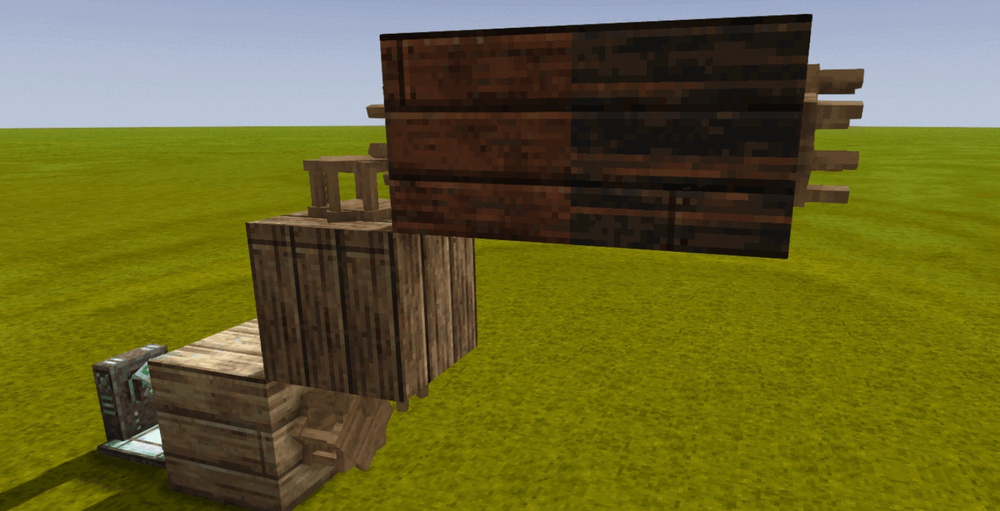
-
Damn you weren't kidding. First time I've personally seen anything like that. I'd start off disabling all mods and creating a new world just to test. If that works, I'd suspect one of your mods. If it doesn't, next I'd try backing up and deleting your clientsettings.json from your VintagestoryData folder and letting the game create a fresh one.
-
Looks like Tobias.
-
I think there's something not quite right with your screenshot. It looks completely transparent, it's much too small for a 4K PNG and file(1) says that it's a 1bit colormapped image.
-
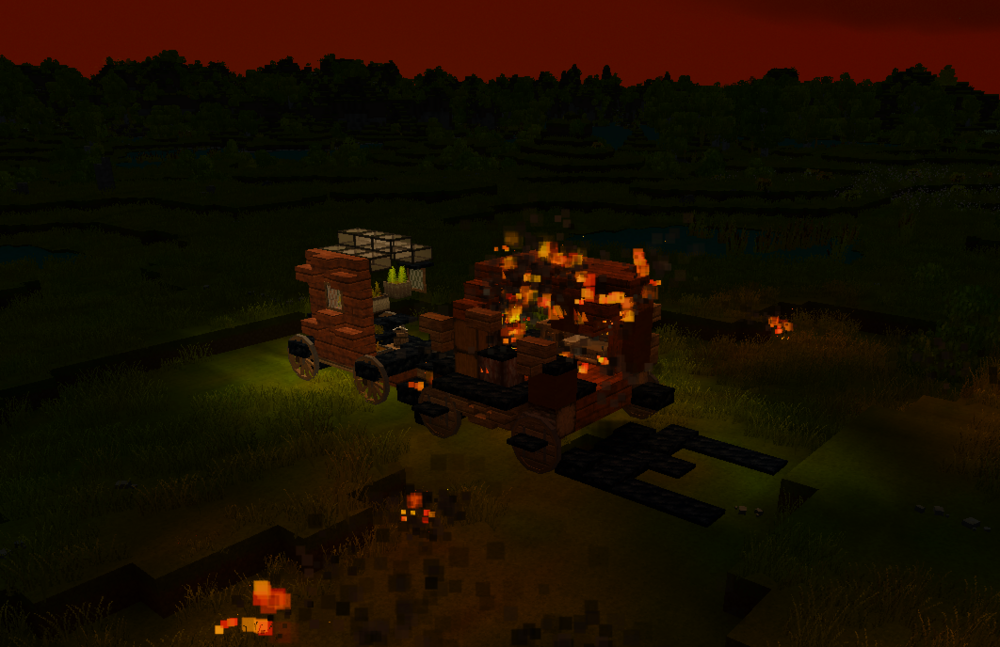
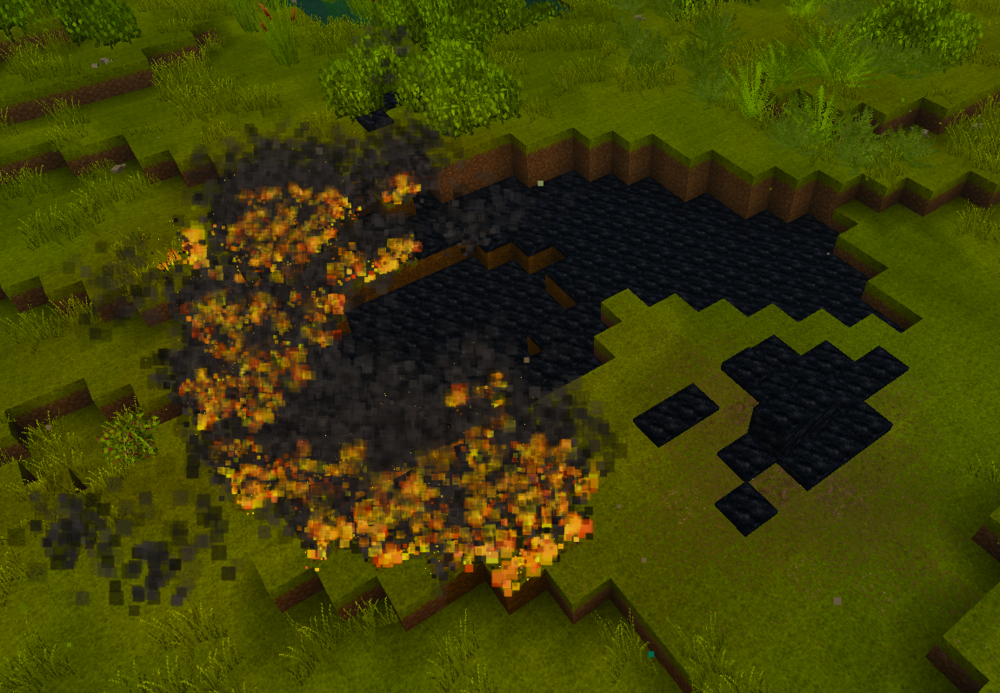
Get it here. This mod adds ashes to Vintage Story. They have no functionality other than falling into little piles. This mod also makes block fires leave behind ashes when they fully burn out. Peat fires now leave behind charred landscape, buildings become blackened debris, and your flower patch turns into a thin layer of ashes when struck by lightning rather than vanishing under mysterious circumstances. Longer-burning blocks produce more layers of ash. Full disclosure: This mod was made to test out Google's new Gemini 3 model, and while it made a ton of mistakes and is suffering from continuous API outages, it also got close enough that I felt it was worth tidying, polishing, and finishing. I'm still relatively new to modding, but at least to my own modding ability I've verified every line of code written in this small mod to be more or less sane. There is one drawback. In the vanilla game, as blocks burn they vanish, opening up other blocks to be available to the fire. With this mod replacing that empty space with ash, fires become more likely to choke themselves out, particularly in flammable but dense structures where the fire has to burn downwards. Peat fires only scorch the top layer with this mod, for instance.
-
- 1
-

-
Leave traces for crafted blocks and items destroyed by fire
Diff replied to TamanduaGirl's topic in Suggestions
Found out the reason. I didn't realize this at first, but apparently fire blocks are their own independent thing. They feed off a fuel block, but they occupy their own separate space adjacent to that. I guess they need that space for oxygen, which is why you can't set fire to a block if it doesn't have a full air block next to it. If a fire block turns its fuel block to ashes, it'll keep itself from spreading any further in that direction. Often a fire block will scooch on over if there's more fresh fuel that way once it consumes its fuel block. If there's not another way around to more fuel, a fire can easily choke itself out on ashes. Peat fires wind up just scorching the top layer rather than burning a new cave into the earth. For some instances, this can be helped by turning the fire block into ash rather than the fuel block it consumed, but this doesn't help the case of peat fires and downwards-burning fires in general, the ash will just fall on top of the newly formed fire and smother it rather than replacing it. I'm sure there's another way around it, but if you want to play around with doing it the wrong way, I made a mod. -
Add a small player buildable area into the Nadiya Village. (Spoiler)
Diff replied to Professor Dragon's topic in Suggestions
One question I don't see asked already is how this factors into a multiplayer world. One player-buildable zone works for one player, but what about when the next player comes along and starts helping out the village? -
0.6.1 and 0.6.2 have been released. Full list of changes: New: Support for The Critters Pack mod. New: Support for the Cats mod. Fix: Support for FoTSA: Pantherinae. New: Support for FotSA: Elephantidae. New: Support for More Animals mod. New: Updated ID algorithm, now trailing and leading - and _ are trimmed. This made adding mod support for The Critters Pack a lot easier. Change: Adjusted Audibility calculations and thresholds for balance. Fix: Bees now reliably generate captions when nearby. New: Caption font can now be optionally bold. Fix: Caption for the hewn fence gate sound effect. New: Additional (experimental) tags and metadata. There are now tags for "weather," "creature", "hostile", "passive", "neutral", and "rust". Change: Made the effect/rockslide description more generic to reflect its actual use in-game. Dev: Changed formatting for language files.
-
Oop, don't know how I missed this, but Andrey is correct. You need to have it installed in order to update it.
-
Not sure what's going on over there, but Dave says hi from 1.21.5 at a view distance of 576. DaveSaysHi.mp4
-
I think Smithing Plus is what you're looking for. https://mods.vintagestory.at/smithingplus "Can recover bits when splitting on an anvil" "Can add bits to ongoing smithing projects (work items)" "Can smith with metal bits and native (copper, gold, silver) nuggets (heat them in a crucible at the workable temperature, do not let them melt)"