Kolyenka
-
Posts
126 -
Joined
-
Last visited
-
Days Won
1
Kolyenka's Achievements

-
Do we really need a combat overhaul? What are your opinions on it?
Kolyenka replied to Josiah Gibbonson's topic in Discussion
Late to the party (at this point so late I might be off topic lol); I can't speak to PVP combat as I've done virtually none of that, and can't even really speak to combat against drifters, bells, or any of them guys. However, I have done a LOT of combat versus prey (pigs, gazelles, goats, etc) and I really like how it works. Once you get half decent with spears or a bow you can take down pretty much whatever you want, but the trade-off is 1) it may take far longer than you planned for to get the animal and get back home and 2) you are, to an extent, at the whims of the terrain. I think that is a pretty winning combination wrt hunting. Sneaking while you pursue them is key, and if you know the area, you can steer clear of big drops that'll crush your prey or areas of dense foliage that'll be a nightmare to flush them back out of. Feels fairly realistic and rewarding to me. I do agree that bleed out for some hit locations would be cool (for example in The Long Dark, you can shoot something and then follow it a while until you find it dead... it is a bit less exciting but more realistic, which feels in keeping with VS). Tl;dr, I don't really care one way or another what gets changed for PVP but for hunting in particular, I think the system is good as is and I enjoy it. If you're trying to get back on Blackguard alone it's not so fun, but there's a reason ranged weapons and traps have historically been used for hunting rather than walking right up to an animal and whaling on it. -
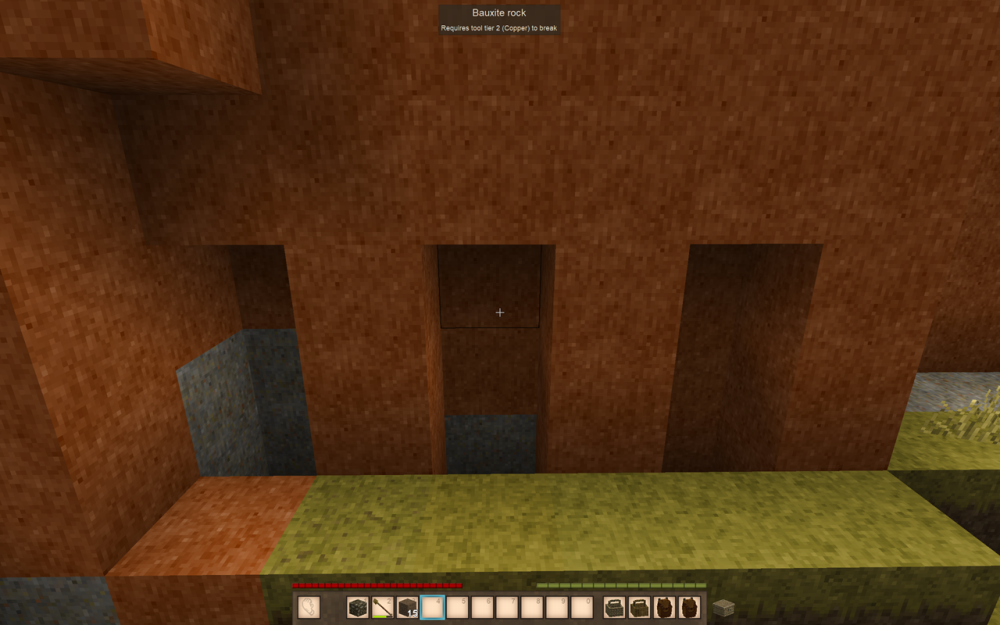
I usually dig into the side of a sheer rock cliff and just make a few alcoves (1 block down, and 1 block at ground level is the minimum, although I play with the Real Smoke mod so 2 blocks minimum). The rock cliff you dug into provides protection from the rain, and it's an unobtrusive design even with no work put in. Usually once I have time I'll dig a little deeper into the cliff and sometime semi-enclose it so that there's a convenient place to store supplies and unfired pottery that's not right out in the open. Later game you can make it be bricks, add different chambers for different kinds of firing (rooms for charcoal pits, bloomeries, beehive kilns, etc). But this is my basic design and I really prefer it.
-
Ok, poeple, let's vote... what is your voice/pitch?
Kolyenka replied to Broccoli Clock's topic in Discussion
I think I choose a different instrument every single time. Usually low or very low pitch though, as it feels kinder to my ears. -
I know the wiki has one potential game (sort of like connect four... connect 5 ?), and it seems like Checkers could also be quite doable, as does Go. But does anyone have any other games they play on the omok board ? And... has anyone figured out a game that can be played with just one color of piece ? In my multiplayer we have only gotten the lead pieces and were trying to figure out a possible game with just one color, but nothing came to mind.
-
As the title says. I've found a spot that seems like it could be rapidly flowing water, but water doesn't show block information so I'm not sure how to tell. Is there any way to know ? Or do you just have to try building a water wheel there ?
-
I agree that finding better soil is obviously preferred over using (and improving) low fertility soil, but sometimes you will starve before you find better soil. Especially if you are playing on a world with lots of oceans. I'm 60 hours into my current game and have spent probably 30 hours exploring (looking for better soil among other things) and I haven't found a single medium fertility block yet. I do however have lots and lots of rot from hides and such. Plus, while medium fertility is good, naturally occurring terra preta is not common, especially not in large enough amounts to replace your whole garden. So farming rot to make terra preta is worthwhile regardless of whether you have medium fert or not.
-
Learning how to use the propick (if playing with propick enabled) will save you many hours of fruitless mining. And when you are using the propick, you pretty much always want to be above ground until you think you're right on top of the ore. If you're struggling for sticks, make a pair of shears (requires an ingot, anvil, hammer, fuel, and tongs). It makes stick harvesting much faster. Rot is valuable. Especially if you only have low fertility soil. You can make terra preta with it but you can also use it as a nitrogen rich fertilizer to beef up any low fertility soil. Collecting food/hides just to rot them can be a good way to improve your farmland. But you'll need a lot of rot ! You can make a lot of nice warm clothes using mostly pelts, which are just hides + rendered fat + time. They'll get you through most winters. You can combine a chest with a sign in your crafting grid and make a chest that can be easily labeled.
-
I don't think this is the case any longer. I have been manually hunting the native goats and sheep and chickens on my island for a full in game year and there are ALWAYS more. They are spawning in (there is nowhere to wander in from) regularly enough that my 300x100ish island always has multiple herds and flocks despite me constantly killing them off.
-
I have mixed feelings on this. On the one hand, i agree that its too easy to get tons of meat and hides this way, but you can also get the exact same result by, for example, digging a trench around a trough with feed. My chicken pit is always swarming with outside chickens, i could put a trench around it have infinite chicken meat. Exact same with goats and sheep. On the other hand, you don't HAVE to do any of these things. I don't want or need infinite chicken meat, so i don't have a trench around the chicken pit.
-
It's been bugged since 1.19 From the post on 1.22.0-pre-1: I'm not sure if goats were included in this bug or not but this is my first time living in a goated area, and the measures I had been taking to keep rabbits out had gotten increasingly lax because they pretty much weren't eating any of my crops no matter what ! I have been trapping lots of animals in the trench and eating them, but that's not going to get me through the winter.
-
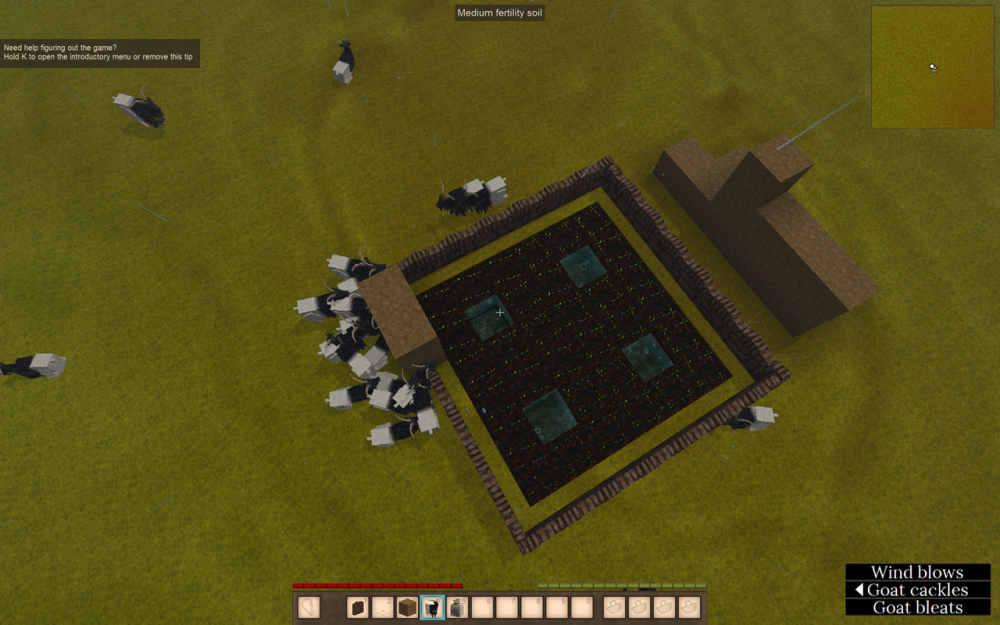
I didn't realize how complacent I'd grown about fencing when the bug that prevented wild animals from going after crops was in affect. But now that it's fixed these goats are decimating my crops, and nothing seems particularly goat-proof, so here I am... in a creative world covered in goats, trying to figure out how the hell they've been getting in. Apparently a fence/wall is enough to stop them even if there is a block at the same height 1 block away (like upper right fence area) but in my actual world I could have sworn I saw one walk right over that, so I'm dubious. I think part of the issue is that they love throwing themselves off mountains, and with enough momentum they can definitely get over. I also have seen them climb 2 blocks up when being hit, in some situations--mostly if they are trying to jump at the same time that you jab them with a spear. But I was doing that in my animal trench around the farm and they only climbed up in certain spots along the trench. I did try going into survival mode here and chasing them around but I don't think I achieved anything doing that. Anyway. Much to think about...
-
Lot of good advice here, just wanted to share what I do, playing with no map (and thus no way to make waypoints, follow markers, etc) and lose inventory on death. Here's what I do: Early game exploration: First, store all valuables (usually including my bags !) at home. Pick a direction I want to head in, and start digging a 1 wide 1 deep path. Replenish shovels and food by foraging sticks, stones, berries. Make outposts along the path using rammed earth (made of dirt but pretty visible) and 2 hay blocks for the doors. That way I don't need to bring anything with me, and if I die, it's optional to go find my corpse since I had nothing good anyway. I do outposts as often as I feel I need them--very often in a forest, maybe 1 each night in plains. When my inventory fills up with dirt I turn around and head home to drop it off (optional--this is for easily making stone paths later. If you prefer wood paths it's not necessary--just place the wood paths directly in the indent and it'll keep you on track). I will usually not do much exploring outside of summer--the nights are short enough that you can sleep through them with a bed roll. Mid-late game refinement: refine all of the existing paths that went past or directly to somewhere I plan to visit regularly. All the other paths can stay, but won't be upgraded. I bring as many stones as I can along with some of the dirt I dug up earlier and make 2 wide paths as they are easier to run on than 1 wide. I often rip out a few outposts at this point because with the added speed boost from running on a stone path, I can outrun danger pretty easily. I bring a saw to upgrade the outposts I do keep, using wood that I gather along the way. I also bring charcoal so I can make signposts, and usually also a bunch of candles (or fat lamps if I don't have honey, but that does get expensive). Then I set up each outpost with a fireplace, a bedroll, a candle right next to a trapdoor window for automatic light (and next to the window so that you can more easily tell you're approaching the outpost at night), a firestarter, a bunch of fuel, fireplace, door, and a sign pointing which way is home. If I have them to spare, I'll bring some berry bushes as well and plant some outside the outpost, so that there's a decent chance there's food when I visit the next time. If it's along a path I plan to travel often, I'll even bring linen beds so that I can sleep longer--this makes it more convenient to travel even when its not summer. That said, once a stone path is in it's really not too hard to run it with a torch at night. Mid-late game exploration: most of this involves branching off of existing paths. Usually by late game I don't have a lot of resources I need to explore for, so it's more to satisfy curiosity, see some sights, and stretch my legs. I explore the same way as in early game, digging 1 wide paths, except it goes faster because I have enough metal for disposable metal tools. I will bring a saw and sometimes some candles to make nicer outposts right off the batt, but like with early game exploration, I dig a lot of paths that I won't walk down a second time, so typically it's just a faster version of early game exploration. If the path ends up leading somewhere useful or beautiful, I will go back and refine it later. Now, if you do use the in game map, then the roads don't really help prevent getting lost since it's pretty hard to get lost with the map, but they do still provide the speed boost, which makes it easier to outrun enemies, and, if you fail to outrun them, to get back to your corpse. They also save time that you would otherwise spend pathfinding (even if you've run the same way a dozen times, unless there is a clear path you will likely take a slightly different route each time, and that may cause slowdowns), and serve as a very clear way to get from outpost 1 to outpost 2. That's just how I do it--I'm sure there's many things you'd want to change if you decided to emulate it--and it works pretty well for me. I really like building roads so I find it fun. If you aren't a huge fan of roadbuilding, then I would stick to only putting roads on routes you OFTEN travel, such as from spawn to your main base, or from your main base to a good mining area. The wooden paths are very good for this because you don't need to dig at all, although they're not quite as good of a speed bonus IIRC and do chew through wood. It's all a trade off. I think it's also important to remember that in real life, exploring the wilderness is very dangerous, and everything you do to make it safer will also make it slower (for example, want to not starve in case the hunting dries up ? Either carry food on your person or on pack animals ! Now you're going slow af, but you'll live longer). You can blaze through the wilderness at top speed, but as you've noted it does shorten your lifespan. If you want to explore without dying you need good gear, which at late copper age you simply don't have. It might work better for this stage of the game to take nothing (including your bags), forage for food, and mark points of interest on your map but leave them otherwise untouched. That way you can go there later, more deliberately, with good gear on you. Or maybe you build a skypath everywhere to keep you out of reach of predators. Maybe you just don't explore until you've got some armor, or at least a lot of healing poultices. There's infinite ways to play the game, but being strategic and deliberate will help you out no matter what !
-
I never would have guessed that Thank you so much ! Now to find some different gravel....
-
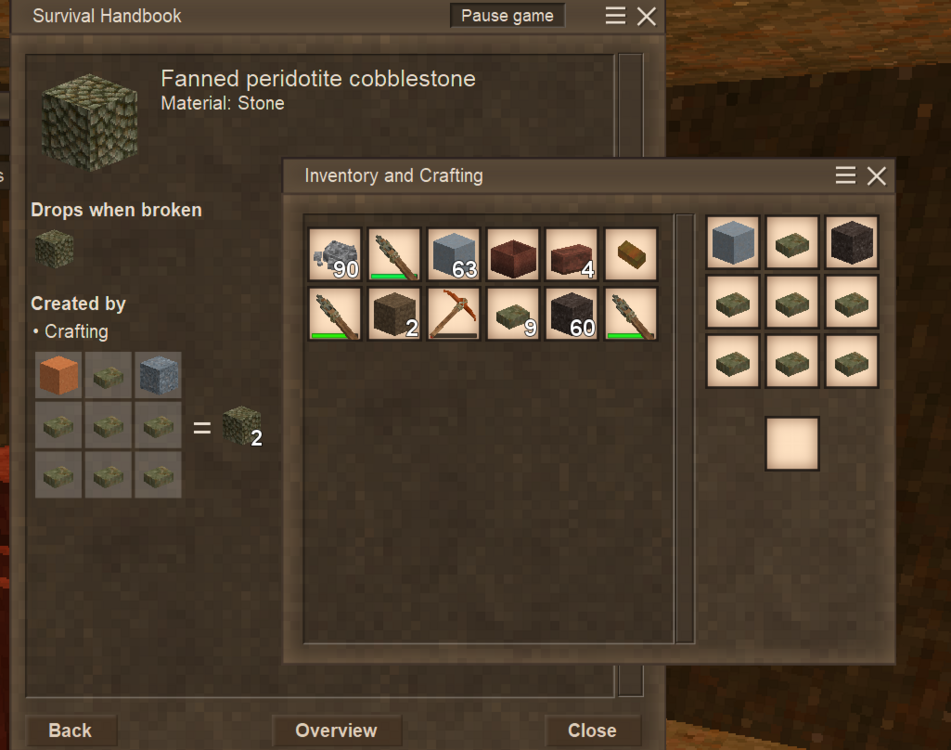
So I'm trying to craft some fanned cobble and it's not working. I don't understand why not... I've got andesite sand on the left, slate gravel on the right, and peridotite stones everywhere else. I checked the handbook and both andesite sand and slate gravel can be used to craft this stuff, and as you can see in the screenshot none of it needs to be a particular kind of sand or gravel. Does anyone know what the problem is ? I am doing a modded playthrough but no mods that affect sand, gravel, stones, or this kind of craftable block. I can post the modlist if needed.
-
This is so cool ! Looks like a beautiful world to live in. Great job
- 1 reply
-
- 1
-