Bruno Willis
-
Posts
364 -
Joined
-
Last visited
Content Type
Profiles
Forums
Blogs
News
Store
Everything posted by Bruno Willis
-
I've played around with some of the rivers mods, but they all made my world feel very unrealistic for me. While the rivers look alright from a distance, up close, running around them, there are just so many broken patches, places where water is flowing weirdly, and just odd generation problems. Algernon's watersheds didn't look good for me, although there are a lot of controls I could fiddle around with to make it better. You still get the issue of rivers running over caves and sort of breaking at that point. I also like to play with soil sideways instability (+ sticky dirt mod), and that quickly and irrevocably messes up the water flow: essentially as soon as you generate a river, a few blocks fall into it and the water starts flowing very strangely. My feeling is that these river mods sort of set up a good looking, static river, but don't have good systems to let it work like a river when it is interacted with. You start out with a good looking world, which breaks down as you interact with it. That's not very vanilla friendly, thats more TOBG style Algernon's worldheight landforms mod: https://mods.vintagestory.at/watershedslandforms is lovely though, and makes a good addition even without their watersheds implemented. I've found worldheight landforms combined with https://mods.vintagestory.at/realisticwater does some interesting things. Realistic water does not make rivers, but it does make water interact more realistically, re-filling lake edges when they're disturbed, allowing waterfalls to produce lakes, etc. I'd like to see some combination of this and Algernon's watersheds: some way to give realistic water the ability to erode, and to start of the world with good looking riverbeds for the realistic water to run into would be great.
-
I've written about this before, but it's nice to put things in lists so: I'd like a fragile mechanical sun which needs to be fed maybe 2 temporal gears each year to keep running properly. It seems like something which would have been very valuable to the cave-bound survivors. The mechanical sun would: Produce a huge amount of light; enough to fully light up one of the larger caverns. Allow crop growing underground within a certain radius. Increase temperature within a certain radius. Provide temporal stability to seraphs within a wide radius. Have a small chance to "degrade," (maybe 5% chance per month) which jumps to a high chance if not fed temporal gears on time (maybe 40% chance per month). If it became degraded, the mechanical sun would bring up a specific Jonas part when moused over (rolled randomly), alongside any temporal gears it needs. Right-clicking those parts into it would return it to normal function. There would be three levels of degradation: The light it produces occasionally flickers and dims. It no longer provides temporal stability. Has an increased chance to degrade further (maybe an additional 15% chance per month). The light it produces flickers and fluctuates constantly. Slightly reduces temporal stability to seraphs within a wide radius. Has an increased chance to degrade further (maybe an additional 20% chance per month). The light is reduced to a pulsing red ember, surrounded by rift-like distortions. Reduces temporal stability as if it were an enormous temporal rift. Increases temperature significantly, with a small chance to set creatures and crops on fire. This would offer an alternative, underground playstyle for late game players, with a built in challenge and potential disaster.
-
I was thinking about this the other day, and I wonder if for specific things like candles, they could have placement similar to support beams (i.e. can be placed anywhere you can right click). Candles would need a few extra restrictions compared to support beams, i.e. They must always point upwards, and must be placed on an upward face of a block, even if it's just on one tiny chiseled notch in an otherwise horizontal wall.
-

What embarrassing "noob" mistakes did you make starting out?
Bruno Willis replied to Vexxvididu's topic in Discussion
RIP my first copper pick, hammer and chisel. By the time I realized what was going on I could only save my misc. chests and my rack of molds. I felt like such an idiot. I did this recently too. -
This is a link to the mod: https://mods.vintagestory.at/ecomachina I really second this recommendation. I hope the devs see this and add it to the game as soon as possible, it makes trees look like the tree on the icon. It's the most beautiful implementation of realistic trees I can imagine. Very very vintage story.
-
Yeah, and it'd make wood feel softer and easier to work with than stone. It'd encourage you to build a carpenter's workshop with your axes, saw, knives and chisel. You'd go there to process wood into planks and such, and also to do some of your wood carving for aesthetics. Anything that encourages dedicated realistically useful builds is good in my book.
- 10 replies
-
- 3
-

-
- suggestion
- wood
- (and 1 more)
-
Welcome to the forums! I don't think there's anything wrong with using recipes to decide what you're making first, like clay forming, but I'd like it if you could ruin a few boards with a miss-click and still get most of the boards at the end anyway, that sort of thing. This bit is really exciting. It'd be interesting if these tools could be toggled between recipy mode and chistling mode (in the way that the pro pick can toggle between states), so that the knife, axe and saw could chisel wooden blocks for aesthetics instead of recipe crafting. It'd be pretty handy to be able to carve beautiful wooden detailing pre-copper with your axe and knife, but still be restricted from any stones.
- 10 replies
-
- 5
-
-
- suggestion
- wood
- (and 1 more)
-
Yeah, what water looks like really helps sell what it is. Waves really made the ocean much more exciting. I've written before about the appearance of water, specifically waterfalls, in the "improving water" thread. For the sake of collecting ideas in the same place, I'm going to throw that idea up here too. (if you've read this before, please excuse me). Waterfalls: At the moment, when water falls, it remains a full block of blue liquid, which looks nothing like a real waterfall. Characters can swim up it too. I would love to see waterfalls changed so that when water drops it gets a different texture, becoming white water, and turning to mist if it falls more than 10 blocks. If possible, it would be nice if falling water could fall in a sheet, rather than as a full block of liquid. It'd be lovely if when falling water hit a solid block at the end of its fall it produced a dramatic water splashing animation too. On top of that, I don't think the swimming up waterfalls mechanic needs to stay. It's not really that useful, and it seems like an emersion breaking hold-over from TOBG, rather than anything realistic or uncompromising.
-
That's a very cool solution that sounds good to me (a luddite with no coding knowledge). For those of you looking for interesting river options to test out right now, this mod: https://mods.vintagestory.at/realisticwater has really excited me because it's looking at making water more realistic/interesting, and sort of accidentally produces water features. It might have slid under the radar cause it's not explicitly about river gen. It feels a bit messy right now, but not as emersion breaking as the river gen mods. I feel like by giving this mod's water: erosion powers the ability to make swamp mud, and flood-fill divots of a certain size then running the water rapidly during world gen (like rapid growing fruit trees) might make some very good water features. Maybe not full navigable rivers, but creeks, swamps and pools, for sure. If you're going to play this mod, just make sure to turn off your ability to place water. That's what makes it really shine.
-
I think this is sort of missing the point. With the addition of dynamic dungeons it is very easy to find many many copies of bits of clutter. Clutter used to feel really special to me, and now most of it is just an obstacle which takes extra long to mine through. I would like it to feel special, and I think making it fragile would make clutter feel more realistically old, and make repairing clutter feel more like archeological preservation than rare collectable collecting. I want to feel like I'm rescuing delicate traces of the past before they're lost forever. This is a good point, clutter fragility would need to be used selectively, probably applying to anything made of wood, cloth, ceramics, etc. It'd also probably need some more distinctive and fun sounds keyed to wood collapse, vs ceramics, etc. The current sound seems like it's designed to make you regret breaking that pile of rotten wood. If clutter were easier to break, and breaking it was somewhat intended behavior, I imagine the devs would make satisfying, not too invasive sounds to add to that feeling of being a heavy, clumsy fighter in a delicate space. This would be excellent too, adding to the experience of dungeon delving. I'd love to see rickety bridges with a slim chance to collapse, every time you use them. I'd also like to see the dynamic dungeons be smaller, but with more hidden areas. My concern here is that the real treasure of dungeons, at least for me, is the blocks they're made out of. They've really opened up building in stone for me. I'd like mechanics which meant either it's just not viable to spend time mining out the floors of dungeons because of a growing threat (so no nice blocks, but more risk vs reward looting gameplay), or mechanics which make mining out sections of dungeon not leave ugly floating ceramic crumbs and wood rubble There are now endless, easily accessible options to collect that sort of clutter. We can afford to accidentally break a bit of it. I think the devs would get the most out of making dynamic dungeons more survival mode friendly, and keeping the curated gameplay and exciting one-off set-pieces to story locations. I'd say this could be tuned well by setting a specific chance for foes to break clutter, somewhere very low but above 0%. What it would do though is add slight time pressure to preserving valuable artifacts once you've cracked open a historical site. That's realistic, and adds a bit of tension to a gameplay experience which is currently static. Not saying it's not fun to mark clutter, leave it for a year or two, then go collect it later, just that it might be more exciting if you felt like you needed to go get it quick or it might be destroyed. Wouldn't be an issue for clutter that's out of your regularly visited areas of course, and probably wouldn't be a real risk most of the time. In my experience, the good stuff is up against the walls, and it's rotten wood, anvil stumps, rusted iron bars and crates at risk of being stepped on by you or the foe.
-
I'll do cover art for you if you want it
-
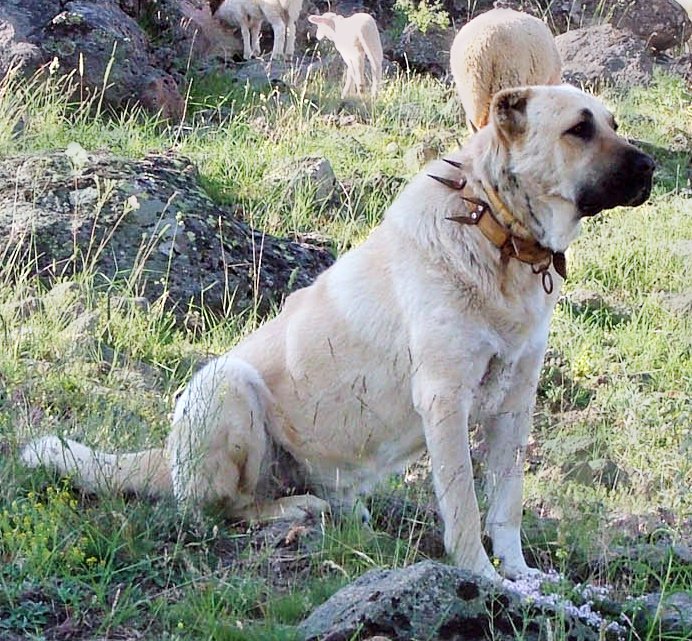
I would say, I think the devs want travel to be a big part of V.S. so it'd be nice if they implemented methods from traditionally mobile cultures to support that gameplay (traveling to far distant story locations). Rather than a crook, (or probably alongside it) I'd love to see herding dogs used. I'd love to see early dog domestication as part of herding. A working dog would circle the herd to keep them bunched while traveling, then leave them alone to have a good sleep if fed meat, (or return to nature and devour a goat if left hungry too long). Working dogs could also frighten off wild wolves, or fight them, and a loyal, highly domesticated one might go up against a bear to protect the flock. You could smith spiked "wolf collars" to give your working dogs better defense and the ability to throw damage back at an attacker. In the other block game, the pets feel awful because they don't really do much and just get left waiting around, begging for pointless interaction. I'd hate V.S. to add dog domestication just because people want dog pets, and herding would be a great real reason to keep dogs.
-
With the new dungeons, clutter is more easily accessed. It looks great, but doesn't feels rare anymore. If Clutter were delicate and likely to break, it could be used all through ruins and still be precious. I've been looting dungeons for aged stone variants, which has caused me to A: have the most fun building I've had so far and B: burn through two pickaxes and a chisel on aesthetics in the very early game. I think both things are great for gameplay, but I've left behind an absolute mess in the looted ruins, (a worse sort of mess than before). I'm too early game to take any clutter, so it's just floating in defiance of time?/gravity. My looted dungeons look horrible now. To solve this, let's make clutter actually fragile: Have clutter disintegrate very quickly when mined without first gluing. (mine speed increased to something like that of haybales). Keep the slow mining speed once clutter is glued (to imply you are being very very careful with the repaired piece). Give clutter a high chance to disintegrate if walked on (10% for rust-foes, 20% for malefactors, 50% blackguards, 30% everyone else). Let clutter be affected by gravity, and be guaranteed to disintegrate if it falls (With something like a 60% chance to survive falls after it's been glued up). Have clutter disintegrate if hit with an attack? (I don't know how attacks interact with the environment so please correct me if that wouldn't work) That way when you enter a ruin and see the clutter you don't just gloss over it thinking, "I'll loot and clear this place out, and come back for the clutter later." You move cautiously around the ancient space, accidentally shattering old tables and rusted iron grates with the smallest touch, and when you see something special you make sure to glue it up quickly, before it gets destroyed on accident. That way you really value the clutter you glue up. It'd let you feel like an archeologist if you're careful, or a barbarian in a ceramics exhibit if you're not. Also, imagine how satisfying it would be to fight a shiver in a dungeon, being nocked onto a crate, which shatters under you. You swing wildly, miss, and destroy a rotten table with a single blow...
-
Sticky dirt. Lets you play with block sideways instability without the hillsides sliding off their bones when a rabbit walks past. Gives you wonderful moments when climbing and a clod of earth breaks free from under you and you've got a second to jump to safety or plumet down with it.
-
I like the idea of simulating the movement of large groups of animals like this: I think, unlike predator animals, you don't want prey animals to have the ability to keep spawning (I don't think you were suggesting they could, I'm just extrapolating from the dens discussion). Having a big group move into an area at the start of each spring seems like a really interesting way to encourage hunting in set areas, getting to know the tricks of the location etc. If animals are not re-spawning until the next spring, the player might choose to hold off on hunting until the summer or autumn when the animals get a bit of weight on them, in which case you'd be more incentivized to wipe out the bears and wolves before they whittle down the prey animal population. You'd feel more like you were competing for protein with the other predators, and for a wee while you'd feel pretty outmatched by the bears.
- 3 replies
-
- 1
-
-
- animal behavior
- hunting
- (and 3 more)
-
All of the above! I love this idea. Sounds like the sort of rust foe that might follow you up out of a dungeon and get you when you least expect it.
-
Geologically accurate caves, karst regions and more geology
Bruno Willis replied to Nicola Belotti's topic in Suggestions
And here's a horrible idea: cave flooding during rain. Would it be crazy if caves with water flowing in them had the chance to gradually fill up during/after rainfall? They'd dry up again after a while. I'm imagining the game noticing when flowing water is under ground, and when that water stops flowing horizontally (becomes blocked), the game uses a temporary flood-fill command, layer by layer, to fill that part of the caves with pooled water. Maybe 1 layer of water for every day after rain starts, with the flooding starting at the end of the first day and ending 2 days after the last rainfall. Using the pre-existing flood fill mechanic means larger spaces can't get flooded out, only contained depressions. If it were flood-filling using a special type of water which knows it's going to dry up again, maybe it wouldn't be too complex? The flooding would also be restricted to areas underground which already have flowing waterfalls going into them, so it would be a risk you can notice as you go in, and wouldn't be overly widespread. Caves seem like a more controllable environment to attempt flooding mechanics than on river banks, and also offer more dramatic flooding because water is getting channeled and condensed, so it can rise really fast (this is one of the big risks of caving, I think, so it'd be exciting to see it in game). It'd also be amazing if water dripped from the ceilings of caves for a good while after rainfall. -
Geologically accurate caves, karst regions and more geology
Bruno Willis replied to Nicola Belotti's topic in Suggestions
With the addition of the new dungeons, I feel like the devs could replace most caves in hard stone regions with old mining cavities. Imagine a straight shaft dropping directly into a maze of obviously hand-dug branches, half flooded, full of cave-ins and rotten support beams. They would be empty of loot, just a replacement for the current caves in those regions, with the same possibility for cave ruins to generate attached (or maybe a slightly increased possibility of generating cave ruins?) To re-cap, that'd mean: - And in the hard stone regions where we wouldn't realistically see caves, instead we get abandoned mine shafts dropping straight into narrow, zig-zagging branches. -
I've started a bunch of new worlds recently and run about them in survival, and as I got used to what the new berry bushes look like, I found it just as easy as before to get a good berry feed in the very early game, just with a bit more variation. I also feel like wild berry bushes in the same group have more variety in when they're going to ripen, which means it's now a lot easier to keep relying on wild berries and harvesting a handful here and there, even in places you've already harvested before.
-
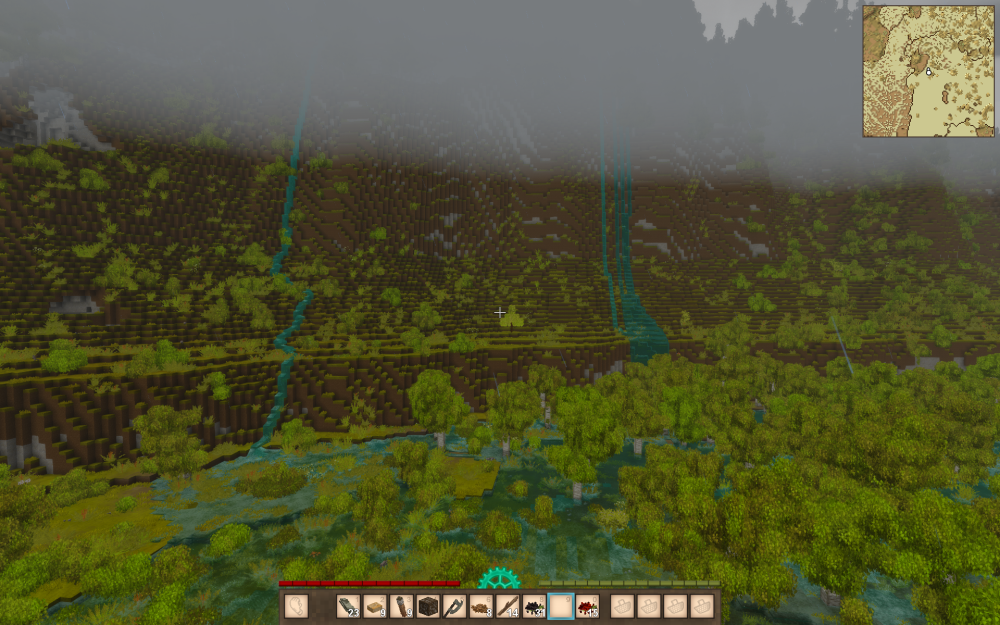
This mod here: https://mods.vintagestory.at/realisticwater is going in a really interesting direction. I've been playing with various river mods, and all the explicit terrain gen mods just can't handle water mechanics. If any other terrain feature interrupts a generated river, you get horrible messy water or hollows carved through hills. By focusing on making water work more realistically, this mod maker has gotten closer to realistic rivers (in my opinion) without changing the terrain at all. By giving water properties which let it work more realistically, and allowing it to alter terrain over time, I think this would get us to rivers in a way which also supports soil instability, aqueducts, and damning rivers. Build realistic water before trying to make shapes that look like realistic rivers: that way the rivers will feel like rivers not just look like them.
-
If bear and wolf spawns were decoupled from fixed spawns in general, and then the individual animals had a new behavior which let them make dens which would then establish their long-term presence, that might get around many of the issues. What if certain structures like ruins and cave entrances had a tag attached to them which said "suitable for den", and then we moved to slightly reduced, randomized wolf and bear spawns. Then those individual animals would get a new behavior which asks them to find the nearest suitable den location and build a den there - lets use the bear dragging a kill home as an example. The game would change the tag to "den". Those mob-built dens would then become an anchor point for that randomly spawned predator, and could generate a new predator after 5-10 days there if the original dies but the den remains intact (yes, that's still farmable, but just worse than farming pigs). An additional way for the danger to grow over time might be that once a randomly spawned bear or wolf makes a den, it doesn't count towards the mob cap? anymore, which lets the game potentially spawn another wandering predator in the nearby area. This might be more realistic for bears, but less realistic for wolves (bears are solitary, wolves are not). Maybe wolf dens would have the ability to multiply by themselves every spring, where bear dens don't? With this change way we keep the chance for predators to just wander close to your base (which I agree is a good feature) but we also get this feeling of tracking threats to their homes and wiping them out for good (game progression not tied to tech tree or story). I also think the current spawn system simulates animals wandering into the area surprisingly well, so we get to keep that effect while adding the feeling that they can set up homes and become a worse issue if left to thrive. And of course this: I'd also like to keep the bears marking their territory with scratch marks: Maybe each bear spawns in with the ability to scratch logs 3 times total, and only starts doing that once its established a den. One of the things I like about tying resin logs to bear scratching is that it means every time you see a resin log you start thinking: "has a bear moved in here? Oh no." And you also start thinking: "Oh, the local brown bear's over there right now! I can sneak into her den and harvest all that resin that seeps out of her warning trees." I.e. this mechanic gives resin an established threat and reward system, which I think would be fun. Another thing we get from dens which is useful is that the game can then give out information about threats. Imagine talking to a trader, and the game flags the presence of a bear den near the trader. "You want to watch out newcomer. There's something dangerous in the woods over yonder" marks on map. Or "A nasty old bear's wandered close and set up a den around here." marks on map "Makes getting supplies in a challenge. You bring me its head and you can have some of my stock, free of charge... within reason." (discount with bear head).
-
Bears are mini-bosses without lairs, and without mechanisms which can be used by the devs to make them into deliberate challenges. Wolves sort of share this issue too. By tying predator spawns to dens, the devs could simultaneously make predators more realistic, and also make them more useful game tools. I've been thinking and posting about them a fair bit. This is how I'd make dens work: Structure: When caves are generated, cave mouths with horizontal floors are assigned a den status: 1:Empty 2:Bear den 3:Wolf den. (the numbers represent approximate likelihood). If a cave mouth is assigned as a den, the game adds a dirty floor to the cave and half covers it with animal skeletons. Rarely, it also generates the remains of a failed camp: cracked vessels, owl chests, soiled bedding and gnawed on human skeletons. Spawning: Each den would generate with a number of animal "beds": 0-2 for bear dens, or 1-8 for wolve dens. These would be 1 block sized dry grass and rubbish nests (not necessarily realistic) which each represent spawn potential. If there was ever no animal assigned to a "bed", the game would wait 1-5 days, then spawn an appropriate replacement animal there. That would mean a built-in grace period before predators spawn at the start of the game. It would also mean that players could clear dens by destroying the beds animals have built there. At the start of every spring, the game would generate 1 "bed" on the dirt floor of each cave that was assigned a den status, maxing out at the top of the spawn score (2 "beds" for a bear den, etc.). In that way, dens would re-generate gradually if cleared, or become worse problems if left unchecked. Behavior: Bears would doze in their beds briefly during the night, and hibernate there if the snow got too bad (tie hibernation to snow presence not season?) Bears would drag any large kills back to their beds to eat, finding the closest free space to leave the bones. This would lead to a growing spread of skeletons around a successful bear's den. A bear attacked while dragging a corpse back would drop the corpse and fight, giving players a way to distract bears and steal their kills. Once a bear had finished eating its meal, it would find the nearest un-scratched log block within reach, and scratch it (mark the log with obvious scratch marks). That behavior would could be interrupted if the bear saw any prey/threats to eat of course. Scratched pine or acacia logs would become resin leaking logs after 90 days or so. Wolves would doze in their "beds" during the day, or stay within 30 blocks of their beds as guards (meaning you're more likely to see wolves during the night and in winter, and bears during the day). How this could be used: Once predator spawns are tied to specific blocks and locations, the devs can use them as realistic guardians for ruins, to justify higher loot in some places (people were too scared to go near...) and to make getting that loot a challenge. The devs might add ruin variants which are set as bear or wolf dens, to give players a nasty surprise when they see a tempting looking tower ruin on the edge of a forest. They might also hide good cave ruins behind bear and wolf dens, implying that no-one has been able to get into that cave and loot those ruins. Gameplay benefits: Players would get an immersive way to reduce bear and wolf spawns. Instead of trapping them in holes, players would be encouraged to follow predators back to their dens, then kill the predator and clear out the den: a challenge with a good reward: no more spawns from there until next spring. Bears would stop feeling like semi-random murder machines, and take up their rightful position as mini-bosses who are potentially guarding valuable mundane loot. Cave mouths would feel more integrated with the surface of the world.
-
This is a great idea. I've found, Irl, animals make really useful paths, for creatures on 4 legs. Which mean the path is all there, but the foliage still smacks you in the face and chest, so you've got to break through that stuff to make it a human suitable path. That is in pretty dense bush though, so it might be easier in more open forests.
-
If the devs want to enable a trader play style, I think the idea of a provider and a consumer is a really important one to work on. At the moment I think the traders are confusing: do they make/find most of what they sell? It seems like they buy in at least some of it, which implies large, distant societies (as do the various trader banners). So maybe the player is best suited to being a finder of rare and special materials, were the traders are more sedentary, with established but boring trade partners elsewhere. I'd like to be the one bringing ebony to furniture traders who can't find it, because I've been brave enough to use translocators which no-one else will risk. On the other side though, It also seems like the traders which currently exist are ill-suited to dealing with, buying, selling, transporting, bulk supplies. But, buying cheep bulk supplies and then delivering them where they're needed would be a very rewarding and possibly profitable type of gameplay for the player. I think that'd ask for a different sort of trader structure: Hamlets. These would be little extended family unit, fortified farms, or charcoal burner camps, the sort of people who could reasonably be producers of bulk goods, and probably need a little bit of everything. That way the player could buy bulk grains from a tiny farming community, and then travel to all the other little hamlets, selling portions of that stock to each other community. Basically, the seraph would take on the risk of traveling in a very dangerous world so that all these little communities could get rid of their excess produce in exchange for a little bit of everyone else's specialized stuff. What if we used clusters like this: The game places down tiny hamlets across the world, very randomly and widely spread out. There are large empty areas and areas where they are a bit closer together. The hamlets have between 3 - 6 people living in them, usually at least one parent and one child to imply human continuity. They have basic concerns, are barely scraping by, but each can easily produce lots of one thing. Hamlets produce basic goods in bulk, and buy basic goods in small amounts, as well as occasionally requesting rarer things. Example hamlets: Farmers. Have a fortified farmhouse, surrounded by small fields. Produce plenty of grain and bread, and don't buy any of it. Will buy a small amount of any other hamlets trades, for fair prices. Grandmother wants to by lapiz. Pig farmers. Large walled yard and refurbished tower. They have domestic pigs in the yard. Sell meat (ideally salami) Will buy a small amount of any other hamlets trades, for fair prices. Daughter wants to buy a wolf pup. Wood-cutters. Wood-palisade and low wattle huts. Sell logs from the local trees in bulk, as well as firewood. Will buy a small amount of any other hamlets trades, for fair prices. Father wants 1 ebony support beam, to make a replacement wooden leg. Surrounding each hamlet the game generates maybe 3-4 traders, at good, varied distances. The traders work as normal, except that each trader will offer only the location of the hamlet, whereas the hamlet people offer the location of every trader that generated around them. Traders sell small, precious items, or things which a master of their craft can make. In areas which are far from a hamlet, the game generates a special ruin, something really exciting to come across, with some extra good loot. It then adds old growth and ups the bear and wolf spawns around that area. (ideally it generates a cluster of bear and wolf cave dens around the ruin, like traders around a hamlet, but wolves and bears don't have homes yet).
-
I think this would be fantastic for realism. I love the idea of generating using clusters so that one area would have a whole lot of traders, each within an easy walk of the other, and in that area the ruins are already mostly looted, and then in another area there are no traders for a good distance, but the ruins are better stocked. It seems like that'd be fine in terms of balance, because spawning without traders means you'll look to looting to solve issues instead of traders. As long as the traders know and can point the way to other traders within 1K of them, and traders cluster, as soon as you find one trader, you've found a bunch of them. It also seems like, regardless of the clustering system, the treasure hunter trader could still get its guaranteed spawn relatively close to you, because if any trader is going to be out in the middle of the treasure stocked wilderness, it'll be the treasure hunter. I think this idea of cluster generation for structures is seriously good. Maybe there could be an underlying structure generation pass, where a number of ruins generate, (approximately half of what currently spawns) and where some traders generate (approximately 1/4 of the current number), using the normal generation system. Then the game lays a checkerboard of clusters across the world and designates "Deep Wilderness" "Wilderness" and "Inhabited," which then determines where it generates a second round of clustered traders for "inhabited", and extra ruins for "wilderness" and "deep wilderness", with improved loot in "deep wilderness", as well as extra dense brush and old growth.