Feltmeow
-
Posts
16 -
Joined
-
Last visited
1 Follower

Feltmeow's Achievements

-
I don't know what the developer intentions regarding the bell pepper were exactly, but IMO tomatoes and peppers would be great for adding variety to crop mechanics with having multiple harvests in one growing season (and probably indefinite production/survival in a warm climate), maybe each successive harvest after the plant is mature takes more nutrients from the soil like a growth stage for balancing? Regarding perennial crops, we already have the berry bushes and fruit trees; in broad strokes, this follows reality pretty well for temperate regions, most crops we consider to be vegetables are grown like annuals (regardless of their ability to survive multiple years in a warmer climate), while most we consider fruits are perennial.
-

How do you setup traps for larger game (pigs, bears)?
Feltmeow replied to grinning_serpent's topic in Discussion
Even if you don't have access to a sling, piles of stones are still viable. I like to throw whatever spears I have on me, then pull from a stack of stones I keep piled up near the pit to finish the job. -
Does deleting attachments from one of your posts permanently remove its visibility on that thread to other users? Or does something else happen to it?
-
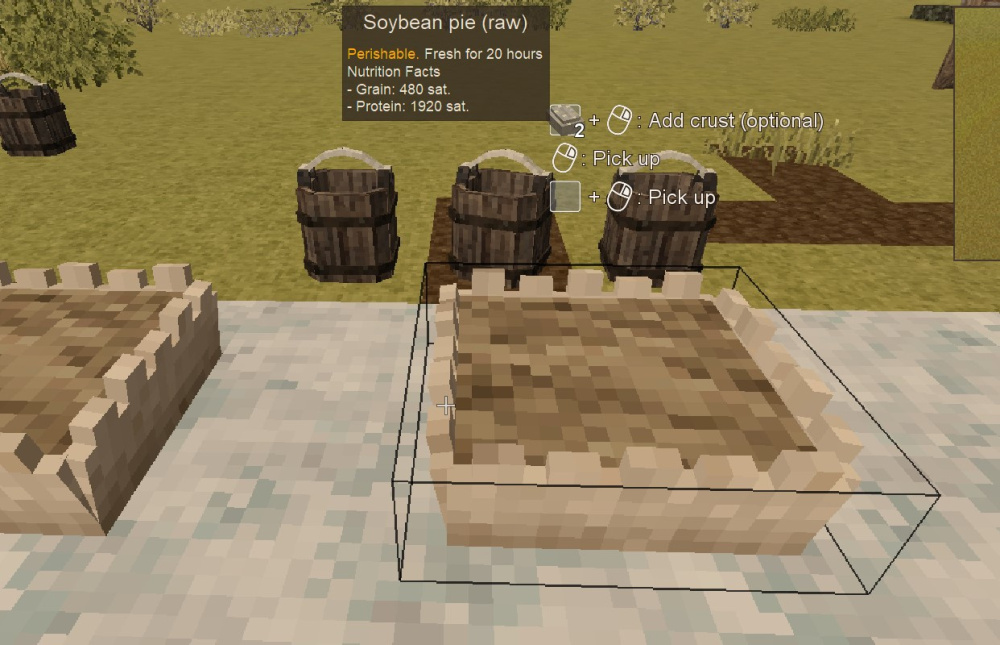
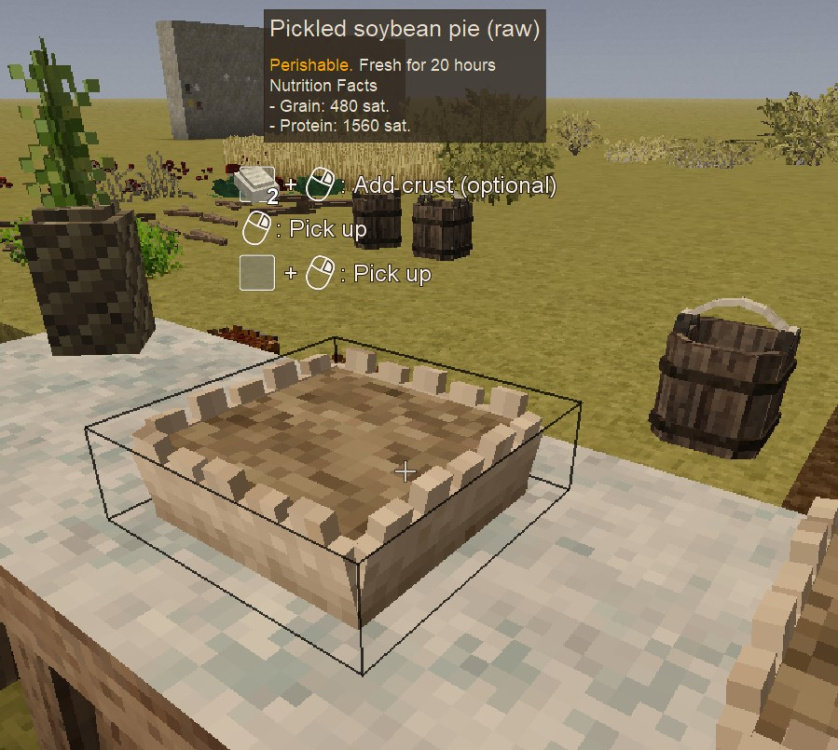
As of 1.22 you can--both regular and pickled soybeans can be made into pies. I don't know when this was added (fish wasn't always able to be put into pies, I believe that was added in 1.22 to complement the fishing mechanics, and as of now mushrooms still can't either), so it might be a recent addition. Since it gives protein nutrition, it can be used with other vegetables to make a veg&protein pie without it becoming a pot pie, but it makes a meat pie into a pot pie if added to it (I guess not very mechanically important, but finding enjoyably odd details like that are why I started this project in the first place).
-
If you distill any alcohol it loses nutrition and only provides satiety, that's the trade-off for having non-perishable food that can be produced in large quantities. If you want a lot of non-perishable foods it's fairly easy to make a huge berry patch and ferment + distill it all, even with the new berry bush mechanics. I just compiled and uploaded information on every food item in the game under the guides forum if you want to see more in depth, but the entire list of currently non-perishable foods are (in descending order of renewability & ease of obtaining, IMO): Food item Satiety Nutrition Unpeeled green/brown bamboo shoots 100 None All once distilled alcohol (1L) 80 None Aqua vitae (worse alcohol for this purpose) (1L) 40 None Lump of rendered fat 200 Protein Honeycomb 300 Fruit Honey (1L) 300 Fruit Walnut seed 40 Protein Uncooked tule/papyrus/cattail roots 80 Vegetable Vintage beef 280 Protein I personally find bamboo to be the most quick and renewable source of non-perishable food, and it's always a staple in the early game in warm climates for me. It's accessible any stage of game, doesn't give the shifting effect of alcohol, stores compactly and without a container in your inventory, and doesn't need a firepit to cook over. When a bamboo sapling grows into a mature cluster of bamboo, several bamboo shoots spawn in the cluster so it's easily renewable too. All-around my most recommended pick for someone looking to alleviate the multiplayer or long-distance travel issues brought up in this thread. It's one downside is that it doesn't provide nutrition, though as long as it's being used as a stop-gap between bouts of regular food consumption that shouldn't be too much of an issue. If you want to build up your nutrition bars with nothing but non-perishables, walnut seeds are a pain to farm up, but they are a renewable source of non-perishable protein nutrition; if you have a lot of domesticated animals lumps of rendered fat is probably more easy to come by. Tule roots aren't good for much else, so having a stash on hand to cook provides vegetable nutrition. Honeycomb of course takes care of fruit, but really if your goal is just to not starve right away when you come back to a multiplayer world bamboo shoots and/or distilled alcohol are your best bets.
-
This is a comprehensive list tracking food satiety across different cooking methods. For the first part of each food category, each entry tracks the satiety of a single starting unit of food transformed through various cooking and preserving methods. This is meant to demonstrate how efficient each method of cooking is at preserving or increasing satiety. The charts labelled “Ratios,” are the quickest way to determine this efficiency, with each satiety value given as a multiplier of the base 1 of the raw ingredient. The second part lists the satiety of a standard unit for each food item, not necessarily the amount that correlates back to the initial starting unit, with the exception of cooked meals and pies which still have the nutrition information that corresponds to the individual starting food item (since most recipes can have multiple different ingredients affecting the end amount). This part is omitted in the vegetable and protein sections, where it would be redundant. All this was done in version 1.22.5. Fruit Part 1: Efficiency Tracking Standard fruits include blueberry, redcurrant, whitecurrant, blackcurrant, pineapple slices, red apple, pink apple, yellow apple, peach, pear, orange, mango, pomegranate, beautyberry, blackberry, cloudberry, raspberry, and strawberry. Lesser fruits include saguaro fruit (which only when consumed raw also grants +1 HP) and cranberry. Minor fruits include cherry and lychee. Fruit Nutrition Raw Porridge Jam Pie Pie (charred) Juice (0.31L) Alcohol (0.31L) Distilled alcohol (0.031L)1 Breadfruit 200 250 250 250 200 62 24.82 2.48 Standard fruits 80 120 120 120 96 62 24.8 2.48 Lesser fruits 60 90 90 90 72 62 24.8 2.48 Minor fruits 40 60 60 60 48 62 24.8 2.48 Honeycomb 300 Honey (0.2L) 60 80 80 1All distilled alcohol provides no nutrition, only satiety. 2Breadfruit changes nutrition from fruit to grain when fermented into alcohol. Ratios: Fruit Nutrition Raw Porridge Jam Pie Pie (charred) Juice (0.31L) Alcohol (0.31L) Distilled alcohol (0.031L) Breadfruit 1 1.25 1.25 1.25 1 0.31 0.124 0.0124 Standard fruits 1 1.5 1.5 1.5 1.2 0.78 0.31 0.031 Lesser fruits 1 1.5 1.5 1.5 1.2 1.03 0.41 0.041 Minor fruits 1 1.5 1.5 1.5 1.2 1.55 0.62 0.062 Honeycomb3 1 Honey (0.2L) 0.2 0.27 0.27 31 honeycomb presses into 0.2 L of honey. To demonstrate this, the base 1 for honey is set as the satiety of 1 honeycomb. Part 2: Measurement per Unit Fruit Nutrition Raw Porridge Jam Pie Pie (charred) Juice (1L) Alcohol (1L) Distilled alcohol (1L) Breadfruit 200 250 250 250 200 200 80 80 Standard fruits 80 120 120 120 96 200 80 80 Lesser fruits 60 90 90 90 72 200 80 80 Minor fruits 40 60 60 60 48 200 80 80 Honeycomb 300 Honey (0.2L) 60 80 80 3004 804 804 4These measure 1L of honey, mead, and distilled mead, while the raw, porridge and jam entries are measuring 0.2L of honey. Jam specifically has its own table as it is a bit more confusing with the two different ways honey and other fruits have their satiety multiplied in cooking pot meals; this should demonstrate which ingredients are contributing what satiety into the final product. Raw Porridge Fruit cont. Jam Honey cont. Jam Jam total Breadfruit 200 250 250 x 2 = 500 80 x 2 = 160 250 + 160 = 660 Standard fruits 80 120 120 x 2 = 240 80 x 2 = 160 240 + 160 = 400 Lesser fruits 60 90 90 x 2 = 180 80 x 2 = 160 180 + 160 = 340 Minor fruits 40 60 60 x 2 = 120 80 x 2 = 160 120 + 160 = 280 Honey (0.2L) 60 80 80 x 2 = 160 For some reason, honey’s standard multiplier is x1.33 instead of x1.5. Vegetable Part 1: Efficiency Tracking Standard vegetables include carrot, onion, turnip, parsnip, olives, cassava, the unobtainable bell pepper, and cooked wild rhizomes (which can only be consumed raw, and not made into meals). Standard pickled vegetables include pickled versions of carrot, onion, turnip, parsnip, olives, pumpkin, and the unobtainable pickled pepper. Mushrooms include all mushrooms in the game, more information on their mechanics below. Vegetable Nutrition Raw Pickled Vegetable Stew Pie Pie (charred) Standard vegetables 100 80 150 150 120 Standard pickled vegetables 80 104 104 83.25 Cabbage 300 250 450 450 360 Pickled cabbage 250 325 325 260 Pumpkin slice 140 80 180 180 144 Fennel 50 40 60 60 48 Pickled fennel 40 52 52 41.63 Mushrooms 80 120 Ratios: Vegetable Nutrition Raw Pickled Vegetable Stew Pie Pie (charred) Standard vegetables 1 0.8 1.5 1.5 1.2 Standard pickled vegetables 1 1.3 1.3 1.04 Cabbage 1 0.83 1.5 1.5 1.2 Pickled cabbage 1 1.3 1.3 1.04 Pumpkin slice 1 0.57 1.29 1.29 1.03 Fennel 1 0.8 1.2 1.2 0.96 Pickled fennel 1 1.3 1.3 1.04 Mushrooms 1 1.5 Mushroom list Safe mushrooms: bearded tooth, chicken of the woods, dryad saddle, pink oyster, tinder hoof, white oyster, reishi, deer ear, tapir’s liver, shiitake, field mushroom, almond mushroom, black trumpet, chanterelle, common morel, green cracked russula, indigo milkcap, king bolete, lobster, orange oak bolete, paddy straw, puffball, red wine cap, saffron milkcap, violet web cap, witch’s hat, blue meanie*, gold cap*, honey mushroom, liberty cap*, and wavy cap*. Poisonous mushrooms, in ascending order of hazard: bitter bolete (-1), devil’s tooth (-2), gold-drop milkcap (-2.5), jack o’lantern (-6), fly agaric (-6.5), elfin saddle (-7), sickener (-7), earth ball (-8), pink bonnet (-10), laughing jim* (-10), devil’s bolete (-10), fool’s conecap (-20), funeral bell (-40), and death cap (-50). All mushrooms have raw 80 satiety; mushrooms marked with an * induce a wavy visual effect when consumed. This effect persists in cooked meals. Mushrooms cannot be added to pies as of now. Poison damage also persists in cooked meals, being the sum of all poisonous ingredients. Grains Part 1: Efficiency Tracking Standard grains include spelt, rye, cassava5, amaranth, and sunflower, except where noted. Grain Nutrition Raw Porridge Bread Bread (charred) Pie Pie (charred) Alcohol (0.2L)6 Distilled alcohol (0.2L)7 Standard 60 240 300 210 240 192 16 0.8 Flax 30 120 160 100 120 96 Rice 75 280 330 220 280 224 16 0.8 Breadfruit 2008 24.8 (0.31L) 2.48 (0.31L) 5Cassava is only available as flour for grain nutrition and so cannot be eaten raw or as porridge. 6Only spelt, rice, rye, amaranth, cassava and breadfruit can be fermented into alcohol, with breadfruit only providing grain nutrition if fermented. 7Distilled alcohol provides no nutrition. 8Raw consumption and other usage of breadfruit yields fruit nutrition. Ratios: Grain Nutrition Raw Porridge Bread Bread (charred) Pie Pie (charred) Alcohol (0.2L) Distilled alcohol (0.2L) Standard 1 4 5 3.5 4 3.2 0.27 0.01333 Flax 1 4 5.33 3.33 4 3.2 Rice 1 3.73 4.4 2.93 3.73 2.98 0.21 0.01067 Breadfruit 1 0.124 (0.31L) 0.0124 (0.31L) Part 2: Measurement per Unit Grain Nutrition Raw Porridge Bread Bread (charred) Pie Pie (charred) Alcohol (1L) Distilled alcohol (1L) Standard 60 240 300 210 240 192 80 80 Flax 30 120 160 100 120 96 Rice 75 280 330 220 280 224 80 80 Breadfruit 200 80 80 Protein Part 1: Efficiency Tracking Animal based protein Nutrition Inferred raw data Raw Cured Cooked Meat Stew9 Pie Pie (charred) Raw bushmeat 60 90 120 Raw fish fillet 50 75 100 375 375 300 Raw poultry 100 150 200 375 375 300 Raw redmeat 140 200 280 420 420 336 Lump of fat10 200 Vintage beef11 280 Grubs 60 Termites12 60 Small cooked fish 200 Medium cooked fish 400 Large cooked fish 700 Huge cooked fish 900 Egg 200 9Cured meats can only be processed further into stews, where they give the same cooked satiety as regular cooked raw meat. 10Both raw and rendered. 11Vintage beef also grants +2 HP. 12Termites on a stick is available in the creative menu, but does not appear to be available in survival. It has the same satiety as regular termites. Plant based protein Nutrition Raw Pickled Vegetable Stew Pie Pie (charred) Peanuts 160 210 210 168 Soybean 150 240 240 192 Pickled soybean 150 195 195 156 Walnut seed 40 Ratios Animal based protein Nutrition Inferred raw data Raw Cured Cooked Meat Stew9 Pie Pie (charred) Raw bushmeat 1 1.5 2 Raw fish fillet 1 1.5 2 7.5 7.5 6 Raw poultry 1 1.5 2 3.75 3.75 3 Raw redmeat 1 1.43 2 3 3 2.4 Plant based protein Nutrition Raw Pickled Vegetable Stew Pie Pie (charred) Peanuts 1 1.31 1.31 1.05 Soybean 1 (inferred as 160) 0.94 1.5 1.5 1.2 Pickled soybean 1 1.3 1.3 1.04 Dairy Part 1: Efficiency Tracking 25 L of milk converts into 25 L of cottage cheese, which converts into 4 slices of either cheddar or blue cheese. Here are two charts with the data presented in equivalent quantities: Based on 1 L of milk (0.16 slices of cheese): Dairy Nutrition Milk Cottage cheese Slice Scrambled eggs Pie Pie (charred) 150 140 Cheddar cheese 38.4 57.6 57.6 46.08 150 140 Blue cheese 32 48 48 38.4 Based on 1 slice of cheese (6.25 L of milk): Dairy Nutrition Milk Cottage cheese Slice Scrambled eggs Pie Pie (charred) 937.5 875 Cheddar cheese 240 360 360 288 937.5 875 Blue cheese 200 300 300 240 Ratios: Dairy Nutrition Milk Cottage cheese Slice Scrambled eggs Pie Pie (charred) 1 0.93 Cheddar cheese 0.26 0.38 0.38 0.31 1 0.93 Blue cheese 0.21 0.32 0.32 0.26 Part 2: Measurement per Unit Dairy Nutrition Liquid (1L) Slice Scrambled eggs Pie Pie (charred) Milk 150 Cottage cheese 140 Cheddar cheese 240 360 360 288 Blue cheese 200 300 300 240 Non-nutrition category Non-nutrition food items Satiety Edible bamboo shoots 100 All distilled alcohols (1L) 80 Aqua vitae (1L) 40 Miscellaneous notes/trivia The only food items that are not perishable are: walnut seeds, lumps of rendered fat, honeycomb, honey, distilled mead (not regular mead) and all other distilled alcohols such as brandies, vodkas, and ales, vintage beef, cattail/papyrus/tule roots that have not yet been cooked into cooked wild rhizomes, and green/brown bamboo shoots that have not yet been peeled into edible bamboo shoots. These together can provide fruit, vegetable and protein nutrition that will never perish. The two food items which heal HP are saguaro fruit (+1 HP) and vintage beef (+2 HP). Note that saguaro fruit only has this effect when eaten raw—any kind of processing will remove the unique effect. Since the health damage effect from eating stew made with poisonous mushrooms is the sum of all the effects of the ingredients, the amusing -200 HP Hefty Death cap stew is the most poisonous food item in the game. Due to the quirk of all fruit juices and alcohols having the same satiety, not only is it more efficient to convert lower value fruits into alcohol than higher value ones, but cherry and lychee have the highest satiety ratio of any fruit specifically when pressed into juice. It’s not significant enough to really bother with, but technically this is the most optimal way to consume them. The highest multiplier on any raw food item is raw fish fillets, becoming a whopping 7.5 times more nutritious when cooked into a stew or pie. Ironically, it is also the only meat to be consumable raw, which means eating raw fish fillets is the least optimal way to consume protein, being 0.1333 times the value of fish stew. The lowest multiplier on any raw food item is aqua vitae made from rice whiskey; rice whiskey is already 0.01067 times less nutritious than raw rice, around 1%, which is then halved in volume and halved in satiety when converted into aqua vitae, resulting in a multiplier of 0.0026675, or around 0.2%. I did not measure part-baked bread and pies, as that quickly became tedious and most players won’t be aiming for those products anyway. Besides that, I have probably made errors somewhere in all this, so if anyone sees something they think is incorrect, unclear, or incomplete please let me know and I will update the chart accordingly.
- 4 replies
-
- 10
-

-

-

-
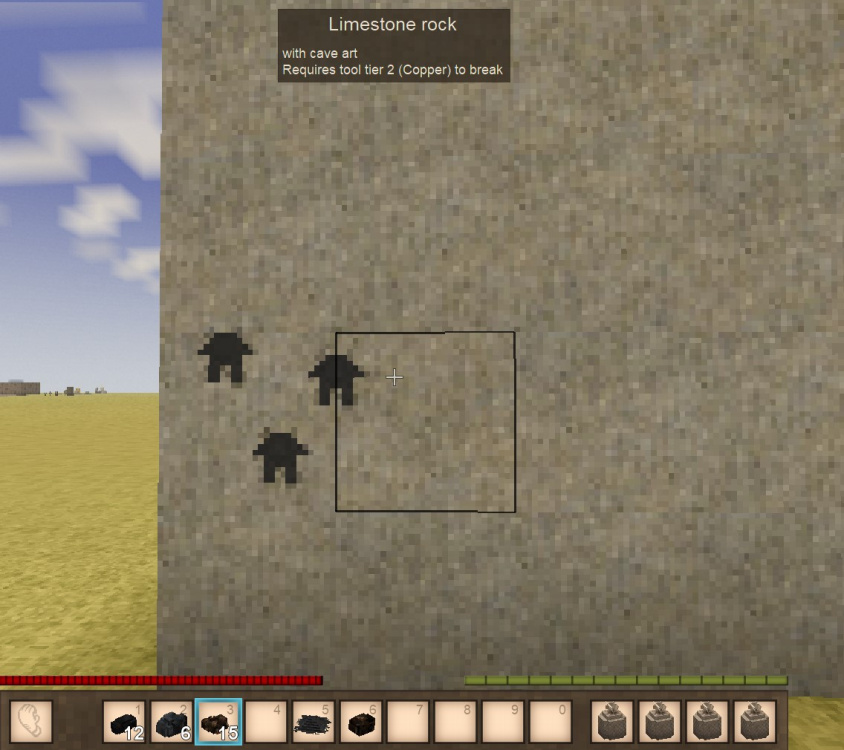
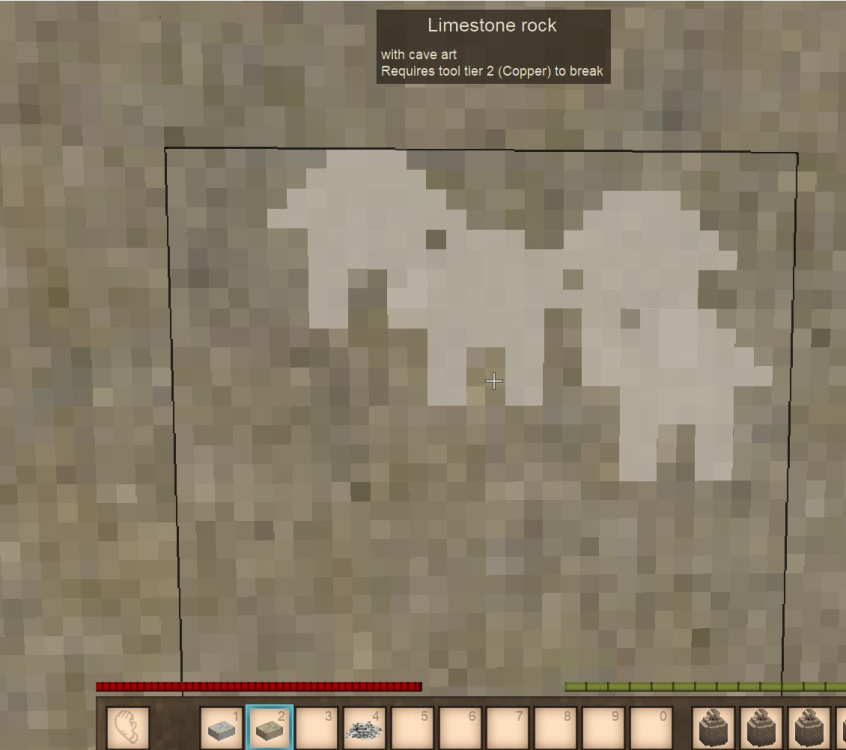
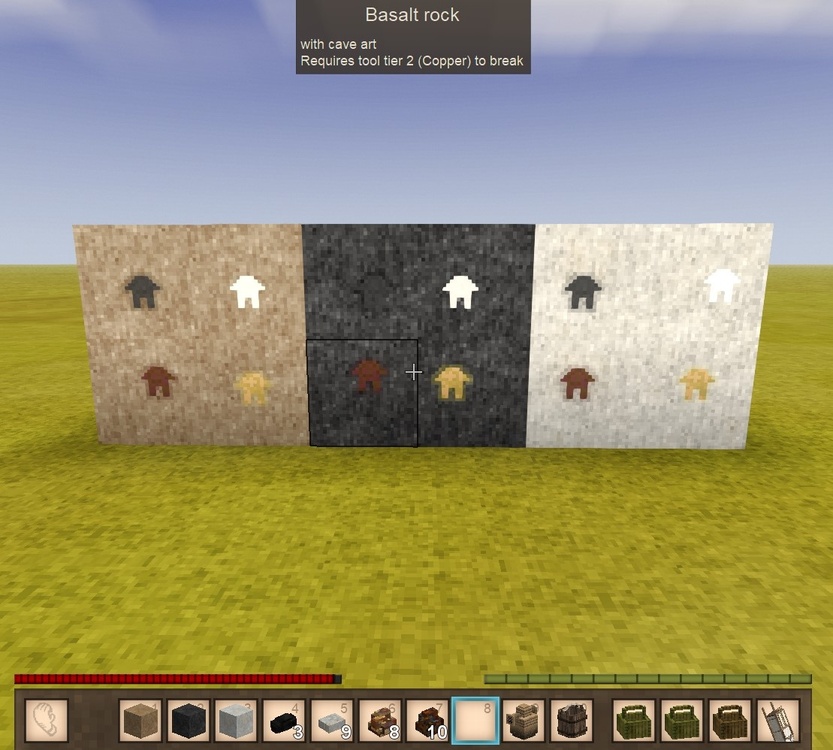
For cave writing in version 1.22.4: Carbon black: charcoal, black coal, and contaminated coal. Chalk white/lime white: chalk stone and limestone stone. Yellow ochre: rich and bountiful limonite chunks, and limonite nuggets. Red ochre: rich and bountiful hematite chunks, and hematite nuggets. No functionality with cinnabar, lapis lazuli, or malachite unfortunately.
-
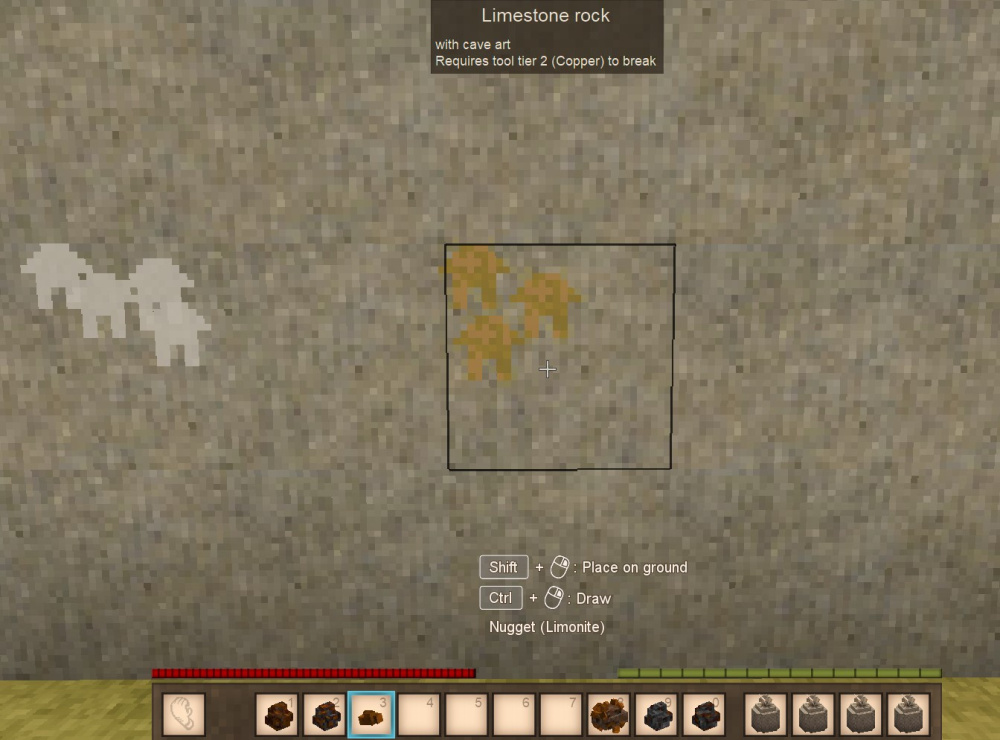
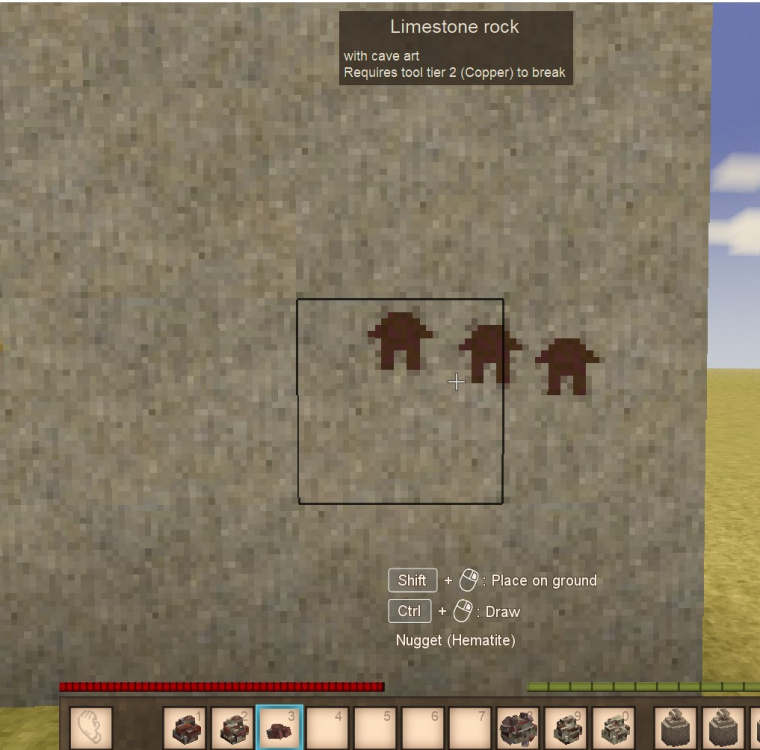
Update for version 1.22.4: TLDR: black coal, contaminated coal, limestone stone, limonite nuggets and hematite nuggets have been added to the list of items usable for cave painting their appropriate colors, making especially the red and yellow a little more accessible. No new colors added so far though. Edit: I forgot to mention that any cave painting can be removed by watering the spot with a watering can. Carbon black: charcoal, black coal, and contaminated coal provide this color, notably powdered charcoal, brown coal, and coke do not. Chalk white/lime white: chalk stone and limestone stone provide this color, lime does not. For some reason, the color on each item's description is different, but the color output appears to be identical. Also worth noting that it is very easy to accidentally throw these while trying to draw, and setting down a stack in ground storage on top of a rock block will leave a mark on the ground under the stack. Yellow ochre: rich and bountiful limonite chunks, as well as now limonite nuggets provide this color, while medium, poor, and any grade of crystallized chunks still do not. Great to see that the nuggets now work! Red ochre: same as for yellow ochre, just with hematite instead. Sadly, still nothing for malachite chunks and nuggets, all forms of lapis lazuli, and all forms of cinnabar.
-
I think you guys might appreciate this
-
"There is a Time" & "The Whole World Round" by the Dillards always remind me of vintage story
-
Feltmeow changed their profile photo
-
Thanks to Bumber for pointing out hematite and limonite can be used! Hematite also makes for some good blood splatters for creative builds, if that's interesting to you; I think it makes any animal carcasses look more realistic in my creative world, instead of just a well organized, pristine pile of bones, though I don't know if sharing screenshots of that kind of build is frowned upon here. (Limonite also makes for comedically saturated urine puddles if the environmental storytelling clues are of someone taking care of a new puppy .)
-
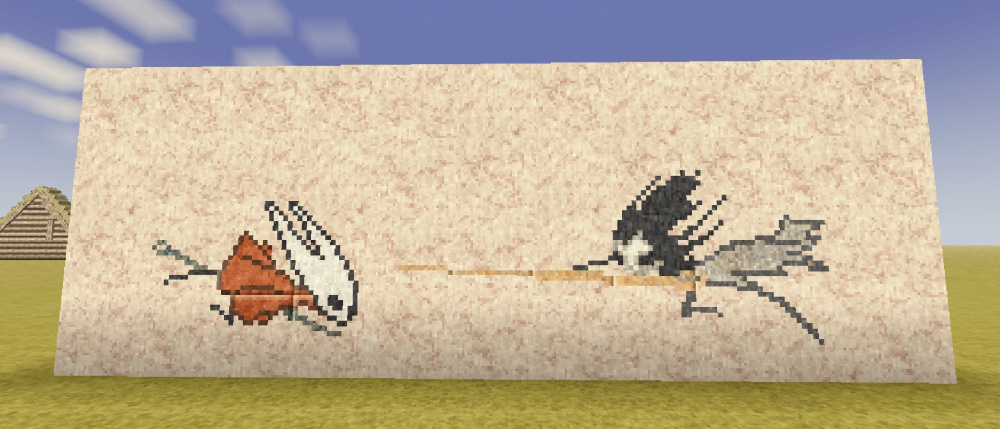
Wow! Those are amazing! There's also hematite and limonite chunks that give reddish and yellow cave paintings, respectively (but only the rich and bountiful chunks), though you'll probably find those much later if you're playing in survival (since they're both iron ores). I put this photo in your other cave painting thread, but I'll put it here too:
-
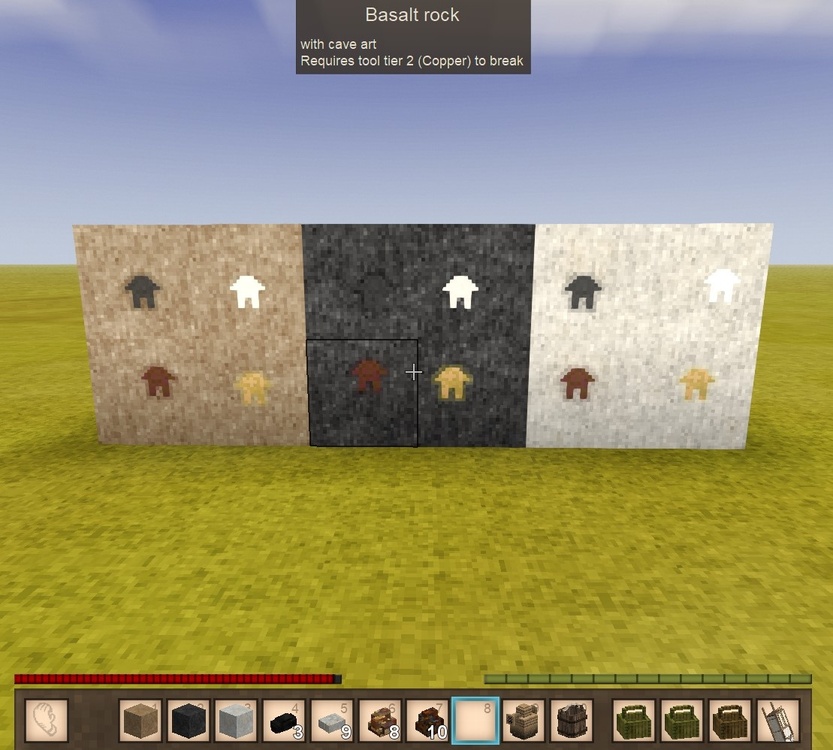
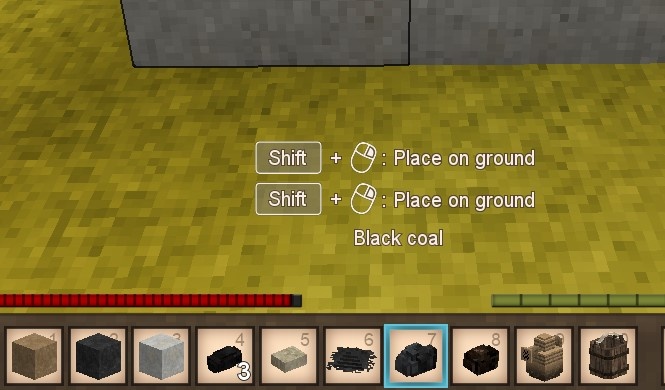
This is done in version v1.21.6: Charcoal, chalk stones, chunks of hematite, and chunks of limonite (both have to be rich or bountiful, medium chunks don't work) give black, white, reddish brown and yellow respectively. Chunks of malachite, cinnabar and lapis lazuli, alongside their crushed and powdered variants, do nothing. Same for limestone, coke, powdered charcoal, and black and brown coal. Black and brown coal, however, have a weird tool tip where the shift + right click to place on ground appears twice, so maybe it's a glitch or something that might get implemented later? I would definitely love to see more options for cave paintings, especially a bright red or blue from cinnabar and lapis lazuli.
-
As far as I have found just charcoal for black and chalk stones for white; I tried everything in creative that had "pigment" in it's description, but sadly nothing else worked