MKMoose
-
Posts
686 -
Joined
-
Last visited
-
Days Won
2
Content Type
Profiles
Forums
Blogs
News
Store
Everything posted by MKMoose
-
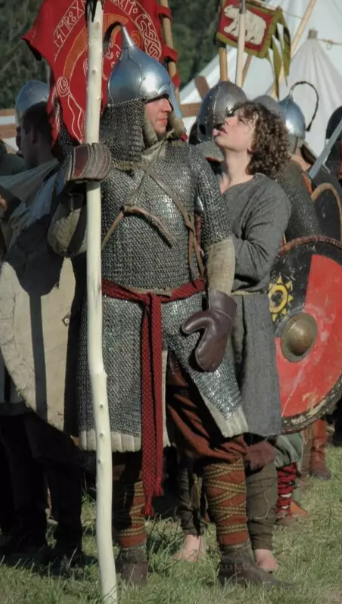
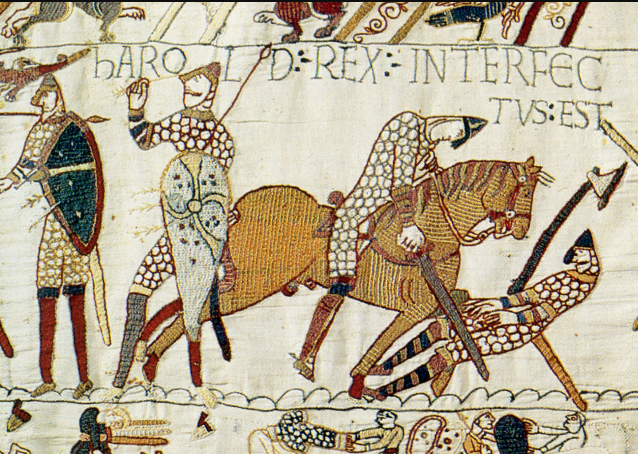
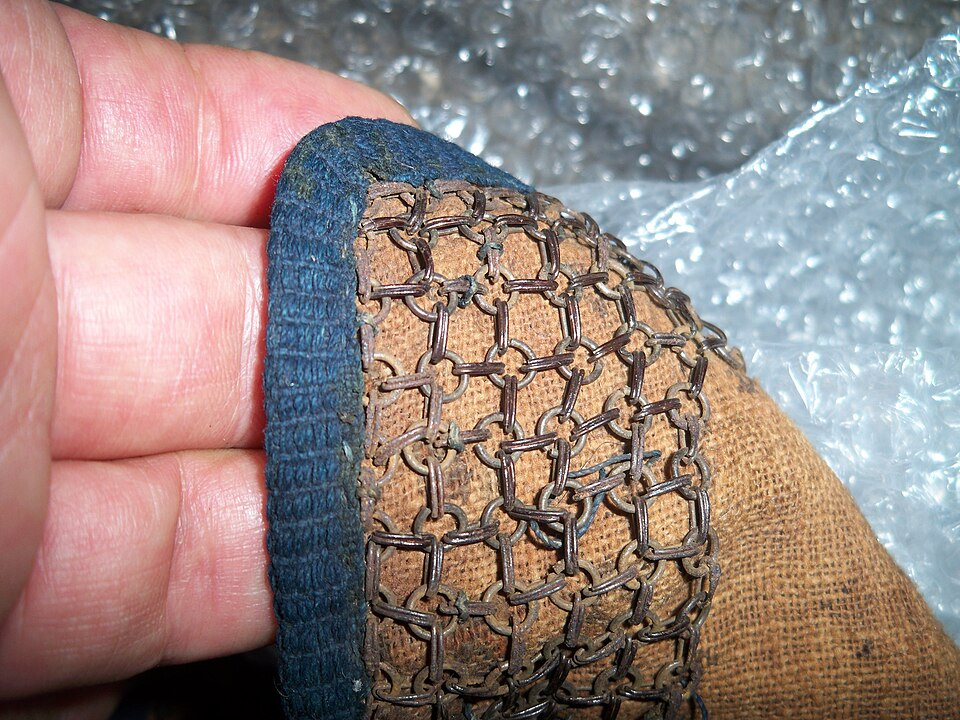
I do want to note that this one is, as far as I can tell, pretty much fictional, at least with rings of this size. And at this size of individual rings, it would also be ineffective against most types of attacks. Some examples of Japanese mail are visually kind of close, but it's much smaller scale, and its actual chain instead of individual rings attached to a backing. It is likely that "ringmail" comes from a Victorian misinterpretation of simplified depictions of mail as large adjoining rings like in the Bayeux Tapestry. Left - piece of Japanese twisted mail sewn to cloth backing; middle - Bayeaux Tapestry fragment (11th century); right - photo from a reenactment of an 11th century battle in Poland. I feel like this would only make sense if different types of mail are unlocked at different points of progression or have in some way notably different characteristics (presumably riveted mail would be better), because otherwise I'm not sure that the granularity is worth it for products so similar both visually and practically. I'm not sure that the devs would want to split chain into further subtypes, but it is an interesting possibility, and one of the many occasions for making progression more technology-oriented than metal-oriented.
-

Combat is too shallow for it to be so integral to the game.
MKMoose replied to Tabulius's topic in Suggestions
Do note that there seems to be some kind of combat rework and new weapons planned for 1.23 (links are to some more or less vague Discord messages by the devs). Details are naturally scarce as of now, but it does seem like the devs are attempting to address several of the larger long-running complaints about armor, weapons and combat in general. I've myself argued for various kinds of block, shove, and other secondary actions (likely involving the off-hand), so I do very much support both of these ideas. I think what this comes down to is that "games are a series of interesting choices", and at a low, moment-to-moment scale in combat, the player needs to be able at any given decision point to perform multiple actions that result in different outcomes in order for combat to be engaging. As it stands currently, the player can both move and attack at the same time, and attacking at best boils down to a distinction between melee and ranged attacks. Even between melee and ranged combat, there is really not that much meaningful distinction, and many people tend to use just choose one and use it whenever possible (especially if they choose melee and don't take any ranged weapon), which seems to be largely caused by very high, unrestricted player mobility. I personally think that making monsters in isolation more dangerous and fragile, while giving the player reliable ways to protect themselves and making attacks more risky in various ways, would create a more dynamic combat system where the player could remain potentially near-invulnerable as long as they're vigilant, but any attack would come with risk and have to be more carefully timed and aimed rather than spammed. While it could inevitably end up being a somewhat more difficult, high-skill system in certain contexts, I personally tend to enjoy combat significantly more in cases where careful defense is the default and attacking is a risky extension, over situations where continuous attacking is the optimal solution. Variety in these systems comes not just from different ways to deal damage and various ways to balance resistance with debuffs, but also from fundamentally distinct combat styles that prioritize different methods of avoiding damage, each of which should have clear flaws and strengths, for example with stuff like: mobility - natural high-risk style reliant on avoiding attacks by staying out of range, reliable against enemies which are mobile themselves, but struggling against some difficult-to-avoid attacks and particularly durable enemies, range - spears, pikes and bows primarily, dependent on maintaining distance to the enemy and dispatching them without close-combat danger, but very risky when fighting larger groups or more mobile enemies that can catch the player without a close-range melee weapon in hand, as well as producing a distinct type of ranged-on-ranged combat, shield blocking - reliable and much lighter than dedicated armor, but needs directional awareness (fundamentally most useful for enclosed spaces), and takes up the off-hand, parrying - high-risk, high-reward, where failing to block an attack can have heavy consequences, favoring controlled, single-target fights, but with almost no drawbacks, using stunning weapons, e.g. maces - a natural safe option, trading damage and potentially some up-front risk for greatly reduced long-term danger in a fight, as well as allowing more breathing room when facing larger groups (needs to be effective at weakening multiple enemies, but should not allow excessively easy stunlocking on single targets), using utility or incapacitating tools, e.g. traps, pocket sand, mobility options, and other kinds of devices - frequently single-use items, extremely effective as a method of escaping an encounter or exposing an enemy for an easy kill when used well but taking more creativity and adaptation to specific situations and various enemies' vulnerabilities, using some kind of deterrents to keep enemies from approaching or at least make them less immediately aggressive, e.g. a torch - some more engaging options to avoid combat for players who simply don't wish to engage with it, which are also important to accomodate in a system like this in some capacity, face-tanking in heavy armor regardless - expensive, more debuff-heavy, potentially countered by some weapons and attacks and not sustainable in long-term combat due to exhaustion and chip damage. Now, you could justifiably say that mobility, range, shields, hiding and heavy armor are already in the game, which means that we do already have most options from these. That's partially true, and I want to point out what I think holds back the current options: mobility is universal and available at all times, even midway through attacks, so you can't choose between running and attacking an enemy to keep them back - you can just do both at the same time with almost no drawbacks, so there's no actual separate options (even the ranged accuracy penalty isn't actually all that large, and still allows to hit relatively close-by targets while running or walking or to stop for a split second to hit a more distant enemy - I'm not saying that archery on the move should be impossible, as it should absolutely be viable in some capacity, but ranged weapons as a whole should make the player significantly vulnerable in some way to present a tradeoff and risk), range matters much less when both the player and the enemies tend to be highly mobile, and actual ranged weapons are by far the most effective when used at very close range while being sometimes very difficult to use effectively beyond ~10 blocks, shield blocking is possible and viable, but the requirement to crouch to make it actually effective makes it often just worse than running to avoid attacks - shields would be much better if it wasn't possible to run and attack concurrently, creating a distinction between staying in range with a shield or more risky weaving in and out without a shield, as well as they could be more interesting if two-handed weapons or parrying created some alternatives to them (and also, having light in the off-hand shouldn't be as ubiquitous as it is now if any off-hand items are to see significant use), hiding is technically possible, but it's boring, mostly just blocking the enemies off, not actually evading them and certainly not scaring them off, and there is seemingly nothing besides sneaking to reduce the likelihood of roaming threats aggroing onto the player, heavy armor doesn't actually provide all that amazing protection (you will survive something like 10 attacks from late-game enemies in steel plate, whereas gambeson with almost no debuffs allows you to survive some 3 attacks), while not having really meaningful downsides or other differences (heavily reduced movement speed, hunger and ranged penalties are very inconvenient, but it's just an annoying numbers game - how about limited visibility, heat exhaustion to disincentivize extended combat as a counterbalance to being otherwise just better than other armor and maybe even serve as something akin to short-term god-mode, slower movement start-up to make dodging more difficult without affecting travel as much, fistfighting/grappling options, vulnerability to some kind of unconventional risks from some special enemies or environmental threats to reorient the focus of combat). True variety can be achieved with, among other methods, a number of significantly different options that can't be mathematically balanced, but all appear strong to different player types with varied preferences and motivations (an insight I got from a recent video by a great fighting game designer, which is not exactly related to Vintage Story, but I think as an observation on gameplay variety it generalizes extremely well). There is a variety of players that a game can account for which might want something easy or difficult, safe or risky, slow or fast, or just cool and stylish, and it's important for the sake of variety to make sure that different options actually appeal to different players, instead of producing a superficially varied system that only a narrow subset of players will actually be interested in. -
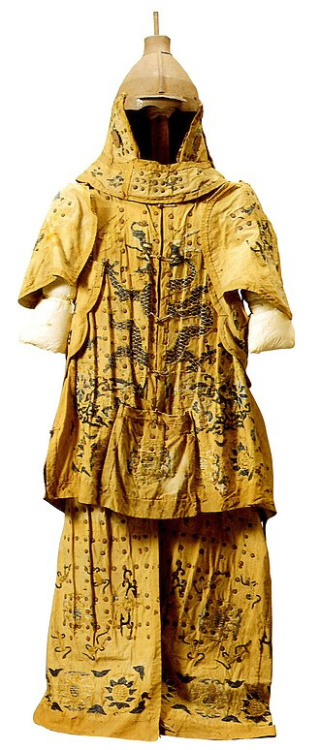
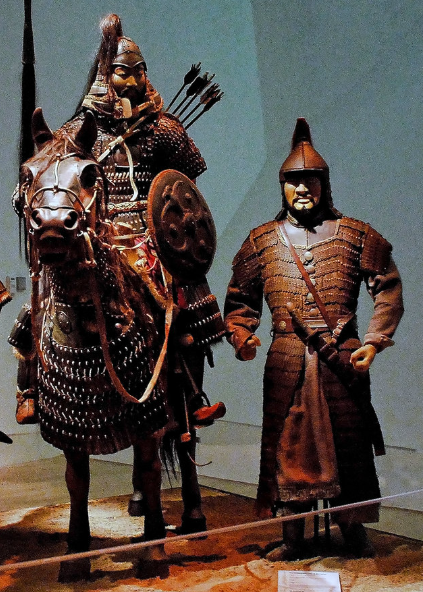
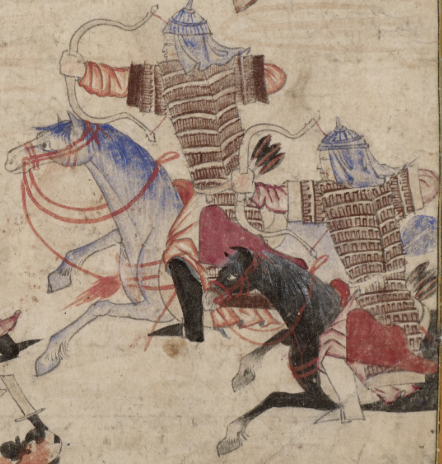
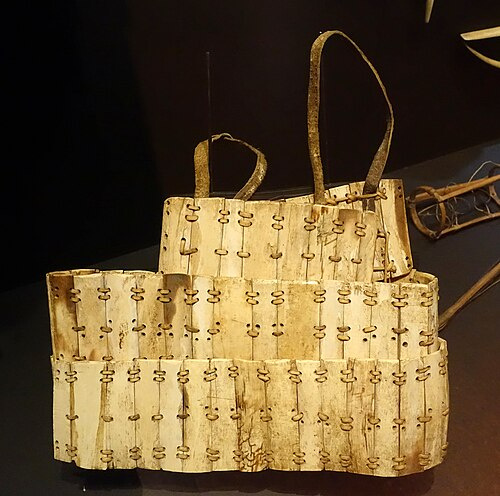
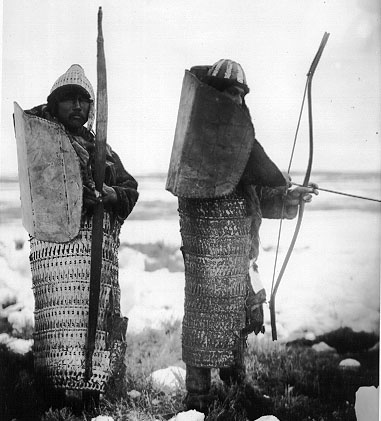
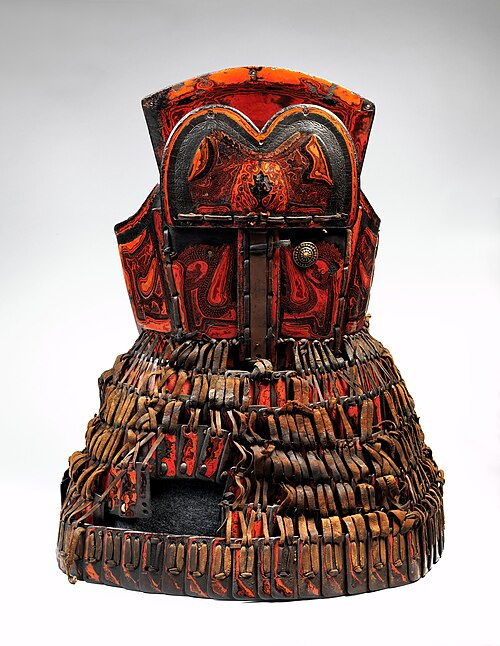
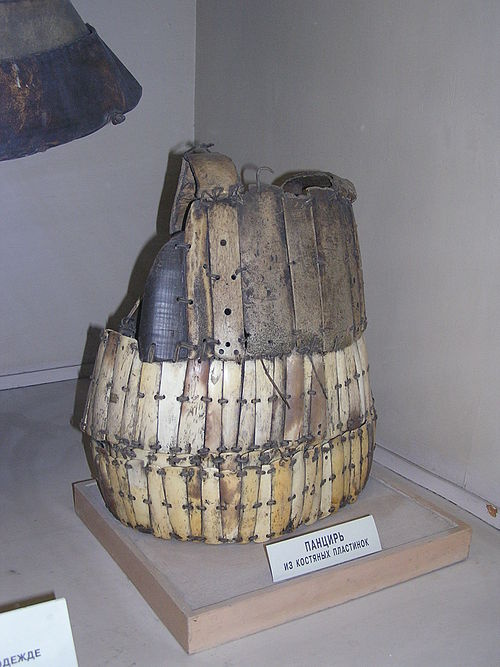
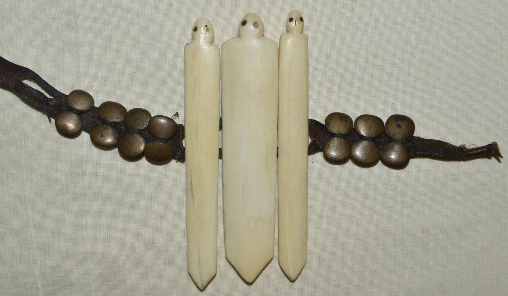
The thing with wood is that it is actually reasonably well-documented as having been deliberately used for improvised protection, alongside hides, wicker, rope, and some other materials. And also alongside various cloth and fabric. Part of the reason for this is that improvised protection really can be made of almost anything that seems like it could work, and some of the thicker clothes that we have in the game could quite adequately qualify as improvised armor, because it turns out that layered fabric, hides, fur and other stuff can provide protection from some attacks and from the cold at the same time. The difference between improvised armor and clothing made of hide, fur and textile can be blurry due to their other, more important purposes, whereas wood, wicker, cane and rope at least have the advantage of being a deliberate, distinct improvised armor material which wasn't worn regularly. And to leather that also applies well. Tanned leather is flexible and durable, which makes it a great structural component, so it was used very frequently for various straps, belts, lacing and suspension, or as backing for scale, splinted or similar armor. Hardened leather is more tough and rigid but can be shaped easily, which makes it useful for helmets, shields, outer layers to plate armor, and horse armor, rarely breastplates or cuirasses, but it was actually also very common for various cases, containers and scabbards. Both tanned and hardened leather saw significant use in clothing and protective equipment, because leather can easily handle scratches, light cuts, scraping, friction, and other relatively light damage, making it great for stuff like hunting gear, which could also serve some protective role in more dangerous encounters with boars, bears or wolves. But with all that said, dedicated hide or leather armor, beyond relatively rare examples of helmets, cuirasses and lamellar? Largely fictional in Europe, but with at least three important regional caveats that I would actually love to see VS explore if there are significant plans for armor from outside of Europe. 1. Steppe cultures' leather lamellar. Their armor quite frequently used both leather and metal. The leather, apparently, "was first softened by boiling and then coated in a crude lacquer made from pitch, which rendered it waterproof." Here's the problem: leather decays easily and was used in more significant capacity by poorer troops, while metal was favored by elites which were more likely to have their armor preserved better and was generally more sought-after by archaeologists and museums. Because of this, surviving armor is heavily biased towards metal, even in cultures where there is evidence that leather was likely a relatively common armor material. But, we can still infer quite a lot to end up with leather lamellar. Of the concepts, I frankly don't feel like anything can be considered to adequately represent this type of armor, mainly because of the "pieces, not complete sets" issue I've been talking about - in this case, the vast majority of armor is just on the torso, some extending down below the hips or onto the shoulders and arms, helmet may sometimes be leather or rigid metal instead of lamellar, and limbs are much less protected to preserve mobility. Left/top - recreation of Mongol warriors' armor at the Art Science Museum in Singapore (kinda bad lighting), here also the one on horseback in maybe better lighting and angle (notice that it's basically just a coat-like torso armor extending onto the shoulders and arms as well as well below the hips, sitting on top of silk or other textile padding; the one on horseback has metal lamellar, while the one on foot seems to have leather lamellar); two middle images - illustration of Mongol warriors in pursuit and another illustration of Mongol cavalry (what they are wearing in the second illustration may be a simple tunic, but it may also be a simplified representation of lamellar or other armor which could also be worn with a fabric layer on top, be it integrated structurally, for wear protection, to keep the armor from snagging on anything, or maybe just for aesthetics; in both illustrations, the red or black blobby shape covering the lower part of the armor is just a bowcase or whatever that might be called); right/bottom - Mongolian brigandine-like armor from the invasion of Japan (very similar to some Chinese pieces; a potential heavier alternative to metal lamellar, though the line between lamellar and brigandine is slightly more blurry in this case). 2. Traditional lacquered rawhide/leather lamellar in Asian armor, especially China, Japan and some related regions that developed armor tradition quite distinct from European systems, producing very sophisticated and durable lamellar despite being fairly often made with seemingly "basic" hide or leather. The references to rawhide and leather are inconsistent, and I suspect that many actually refer to the same thing. But the caveat is that producing this armor was hardly just "tie some leather scales together to make lamellar" - it was a large amount of manual labor, advanced lacquer technology to make that hide last (which in-game would likely have to be some kind of more advanced mid-to-late-game unlock), and common use of plate breastplates, helmets, mixed metal-hide lamellar and other iron components alongside leather (and naturally, leather or rawhide scales would gradually be replaced with iron for protection, with leather remaining mostly structural). Obviously, all armor could be very advanced, but especially Japanese traditions seem to have been quite exceptional in their craft - seeing some of that complexity reflected in-game could be really cool. Of the concepts, #49, #62 and #63, and potentially some others, are visually notably close to these armors, though they seem to kind of misinterpret lamellar as laminar-like horizontal plates (unless they're actually referencing laminar, but it was rather uncommon compared to lamellar). Left/top - diagram of (likely 16th century or later) Japanese armor, with the numbers explained here (some details may be slightly anachronistic for VS, but otherwise this is a very good reference for the main components of Japanese armor); middle-left/top - 12th century Japanese armor; middle-right/bottom - 16th century dou-maru (the style is similar to what started appearing in the 14th century as far as I can tell; notice that in this style there is so much cord, largely for structural reasons, that the lamellar scales underneath are almost entirely covered); right/bottom - Chinese lacquered leather cuirass with lamellar skirt, or something of the sort. 3. Arctic or sub-arctic cultures' hide and bone armor, combining warmth with protection made with locally available resources. Historically, this is likely the most significant source for armor made of hides, fur and bones. Do keep in mind that Some of these cultures interacted and blended with Steppe cultures, and there is no simple dividing line, so I'm presenting what is basically the two extremes. Of the concepts, #53, #56, #91 (I guess also #99 and #101) have some ideas, but nothing really gets all the way there. Left/top - lamellar-adjacent armor made of bone or ivory, apparently Chukchi; middle and right/bottom - 19th century Koryak or Chukchi armor on the heavier side, in a museum and worn as demonstration (note that the armor in the middle picture is the same as the one on the left side of the right/bottom picture; it is relatively modern chronologically, but exchanging the metal lamellar for a bone or hardened hide lamellar would yield armor quite plausible for the time period of VS; these odd wing-like plates are apparently an actually historical part of the armor, and they could probably be made of hardened leather, reinforced with bone or ivory if needed).

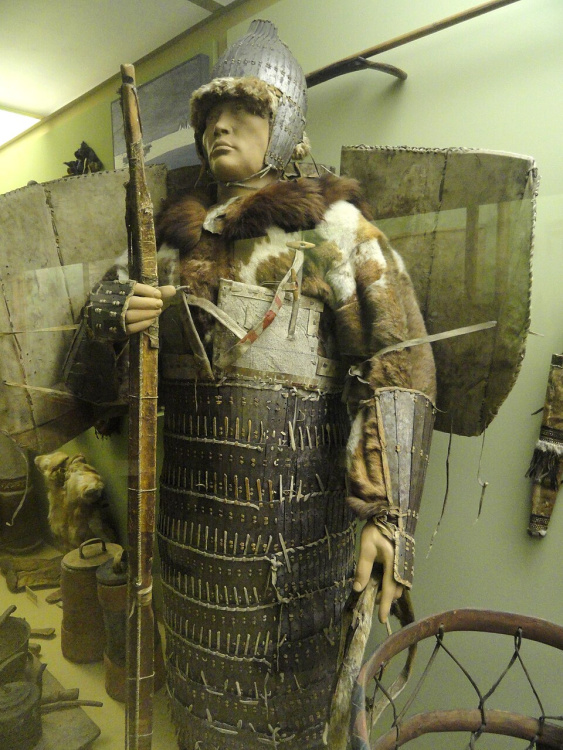
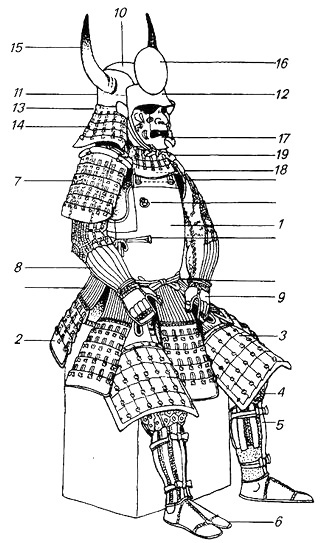
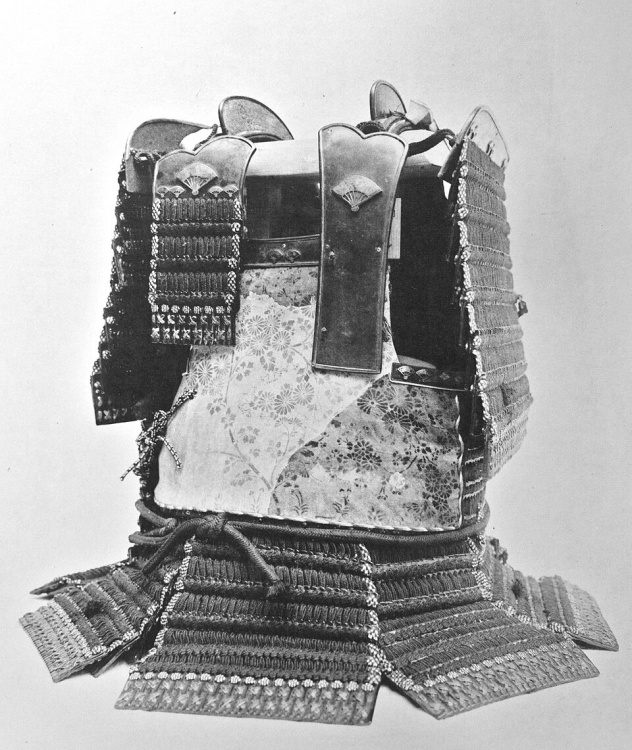
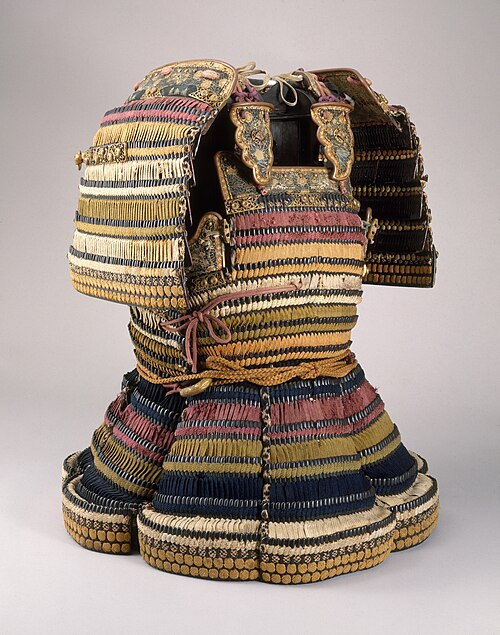
-
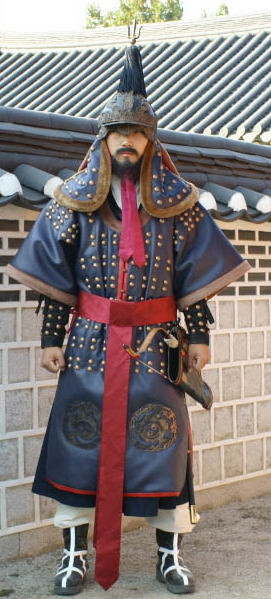
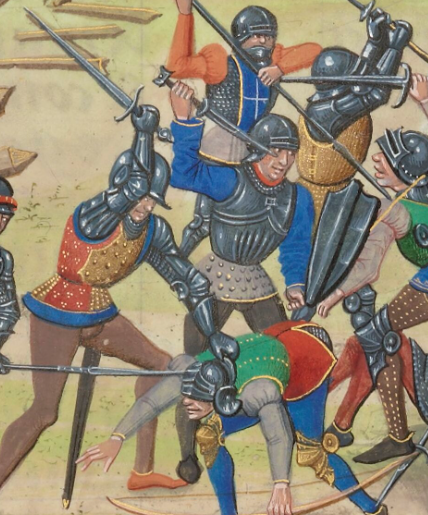
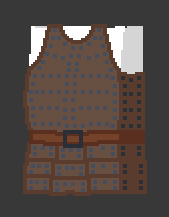
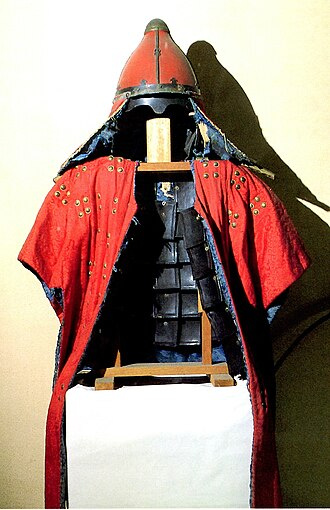
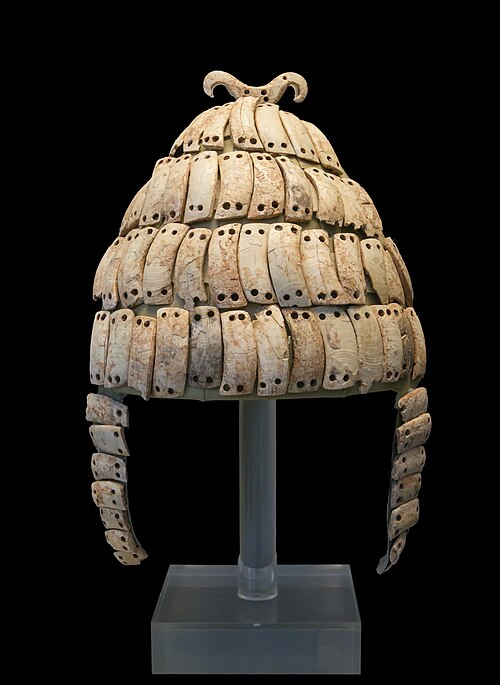
I'm not aware of "bonepipe armor" being a thing outside of certain indigenous groups (e.g. Native American) where it was apparently used predominantly for ceremonial purposes or as a status symbol and not for combat, and surprisingly often dating back to the 19th century and not ancient armor. Using bones in actual armor was a real thing, for example in lamellar armor or as something like splints (kind of like #59 in the concept, but bone instead of metal), but it was more common in sub-Arctic cultures like the Inuit who lived in environments where metal was scarce and large bones plentiful. There's also the relatively well-documented example of Mycenaean boar's tusk helmets, though that's also largely symbolic, expensive, and probably wouldn't work as well with bone. There is evidence for bones being used in armor in some capacity, so I've probably somewhat overstated when saying that it doesn't make sense, but evidence for anything which could really be named "bone armor" is very scarce and regional. Keep in mind that I was mostly criticizing #130, which presents full-body bone coverage, while something like #53 or #56 is a bit more reasonable (though still arguably excessive and possibly weak structurally). I think limiting bones to the decoration layer would be quite reasonable, since that's where people seem to want to see them most either way (especially antlers), but if use bones in actual armor either way, then bone lamellar and some kind of shin or arm guards is the most that really makes realistic or historical sense. And if you want to go fictional, then by all means, though you're largely losing my interest then. I tend to appreciate the historical stuff. Balduranne has said about as much in the original post, but the problem is that these were anywhere from rare to virtually nonexistent in the Middle Ages in most of Europe and Asia, and not exactly popular otherwise either. Leather has seen plenty of use for backing (base material to attach scales, splints or other metal components), various belts and straps (to attach armor to the body), structural reinforcement, or as the outer layer to some armor, but rarely as padding. Fur and hides have seen plenty of use for warmth, but rarely as padding. Reeds and grass I don't think are suitable for padding at all - they might allow you to make something, though even when turned into some cordage or wicker it's not gonna make for particularly usable padding. For a large part of human history, the overwhelmingly dominant material for padding has been textile, be it wool, linen, hemp, cotton or anything of the sort (partially depending on climate), because it's simply the single best kind of material for the role. And in fact, quilted textile was also the dominant primary armor for much of history, especially for poorer troops. There certainly were some possible alternatives, including leather and hides among the more notable options, so again I've probably slightly overstated the "doesn't make much realistic sense", but still, I just don't personally see good reason to create half a dozen extra options where in reality all of them were simply worse and vastly less common than textile padding. Do with that what you will. And for early-game improvised armor, I do want to mention that the stuff in the padding category could end up visually very similar to some of the existing clothing. If that is the case, then why is it called a brigandine? I don't see a defensible explanation for it other than a simple mistake or oversight. Which is fine, it's just concept art, but I just don't want to see it in a finished product. Generally, a brigandine is torso armor, because that's what the term refers to - a specific type of coat of armor (and having looked into it a bit further, this also largely applies to gambeson, which should probably be called something like quilted armor, or gamboised armor as VS does currently, when applied to the full body, as well as a whole number of other terms). Applying it to full-body armor, even if it was constructed like a brigandine all over, would be in most contexts considered a misnomer in a somewhat similar way to describing a complete suit of plate armor as a breastplate, or describing a complete formal suit as a jacket. There are some examples of less historical usage like in the current VS armor, where "brigandine" can refer to a complete set composed of a brigandine with other pieces, but that doesn't call for the other pieces to be constructed similarly to the brigandine. Similar construction methods can be applied to armor worn on the head or limbs, but actual brigandine is fairly bulky and heavy, so similar limb armor would typically be more accurately classified as some type of lamellar, splint, segmented or composite armor, or something of the sort. And to keep this post remotely related to the topic, I would like to bring up some examples of brigandine or similar armor: Left/top - Italian armor featuring a brigandine (typical example of the combination of a brigandine with a rigid plate helmet and limb armor); middle two images - Korean dujeong-gap, showing internal plates and a slightly ahistorical one worn by a reenactor (you can see that where rivets are on the outside, plates tend to be on the inside; red is the more conventional color); right/bottom - part of the Miniature of the Battle of Chiset with various examples of armor, of which at least the red-yellow one on the left side seems to include a brigandine, notably with very little leg protection. Didn't say anything about lamellar being restricted to iron and later - that one should be available in bronze or maybe even copper with no issues. But on the topic of antiquity, the only set of clothes in the game (that I know of) which can clearly be considered to come from that period is part of the "theater" group, which includes clothing used in plays that can only be looted. Almost all craftable clothing that I've looked into (though I haven't checked out everything in detail) seems to fall under either relatively generic, roughly medieval clothing, or sets themed after specific cultures, occupations and social positions which would have existed around the time that the game takes place in. If that pattern is maintained, then Roman, Greek or similar armor will probably not be added. Naturally, I don't want to say anything with certainty unless there is an official dev stance, but I'm personally not expecting it. If it's just the visuals that you're looking for, then you can get practically the exact look with a brigandine, coat-of-plates or similar riveted armor. Example historical reference and a rough mockup that I've made in a few minutes (probably kinda overdetailed, the exact arrangement of rivets probably makes no sense, and there are a few other issues, it's just a quick draft):
_(802254989).jpg.8b742e714e415c375a7361c88a07b16b.jpg)
.jpg.48260139c6beaf521d5b5b06cf973731.jpg)
-
It is unavoidable that you're largely correct on herding not being a particularly great fit for the current game mechanics, but the issue that I have with the current mechanics is not that they make hypothetical herding suboptimal - it's that they make remotely efficient herding quite literally impossible even if you really try. There is absolutely no way to reliably keep an animal from wandering off besides a fence, whereas realistically just having perceived safety and a source of food will often make animals stay and return. There is quite a few things that could be considered as in need of some changes before herding and especially a more proper nomadic lifestyle gets introduced, but in quite a few cases I think those are mechanics which can be considered quite outdated either way, especially animal AI and domestication, or features that probably should be eventually implemented on their own either way, e.g. mobile storage. I think a lot just depends on balancing. If farming and animal husbandry are made somewhat more demanding (with a corresponding yield increase, presumably), then you could be presented with two (quite realistic) options: maintain a large farm (or something like a hay meadow) to regularly feed the fenced-in animals to keep them producing, manage a mobile herd that would graze on natural pasture, requiring little to no food input if moved between summer and winter pastures approptiately. You might notice that the latter option would allow managing herds of (within reason) near-arbitrary size with greatly reduced maintenance, which could be a very attractive possibility relative to a more maintenance-heavy conventional husbandry system. At that point, the bigger issue is "what are you gonna do with so many animals", which is where traders are probably the only singleplayer-friendly solution, though larger multiplayer servers like TOPS may also see some proper nomads. Very fair criticism overall, and I appreciate it. Though given that there is this section on the roadmap: I do hope that herding is on the table for the future.
-
Thank you for clarifying the mechanical side of it! My thought is that it seems impossible to fully disentangle the gameplay design direction from visuals, but either way, really appreciate you chiming in. I'll stop myself from commenting on the mechanics, beyond a small note: I have to say, it does seem like the system aligns very well with my expectations, and I'm glad you're aiming for something more manageable than CO's 3x8 slots. And hearing this makes me very happy, thank you. Just to clarify, though, the reason why I was saying to think about armor pieces and not sets is that real armor was often mixed and developed unevenly due to a variety of factors, for example: even poor early-medieval troops who couldn't afford mail would often wear metal helmets due to the importance of head protection, many centuries before proper plate armor became a thing, more mobile and layered armor on the torso like lamellar or scale was frequently worn together with rigid metal greaves, vambraces and similar pieces, because they were comparatively small, easy to shape and unobstructive, both before and after the advent of full plate harness, armor worn on the torso tends to have the largest variety of designs and distinct types, because it's the largest, central area of the body that can be easily protected with a mostly rigid structure and can bear most of the armor weight without sacrificing mobility. I'm mentioning this simply because I'm not seeing it reflected as much as I'd personally deem appropriate in the concept art. The biggest offender, as I've mentioned, is probably the brigandine layer, which realistically should be just a jacket worn typically on gambeson and mail, and together with partial or full rigid plate on limbs and a helmet, much like in this image: Part of it is just a stylistic choice, and it's probably fair to say that a more set-oriented approach might be more intuitive to someone unfamiliar with historical armor, so I'm not expecting full historical accuracy, but I'm kind of at least expecting armor terms which have a very specific meaning to be used more appropriately. The current iron brigandine set in the game has a quite spot-on torso, an appropriate rigid helmet (which is not part of the actual brigandine - it's just a generic metal helmet, almost the same as in the chain and scale sets), and pretty odd limbs which largely evade my classification but look kind of like they're splinted. Transferring that to the new system would realistically require to keep torso armor as the only piece in the brigandine "set", which could then be supplemented with a helmet (almost always rigid plate) and limb armor (rigid, splinted, or some other types, or nothing at all except for the gambeson and mail layers). Or at least a helmet and leg armor, if the three current slots are kept exactly as they are.

-
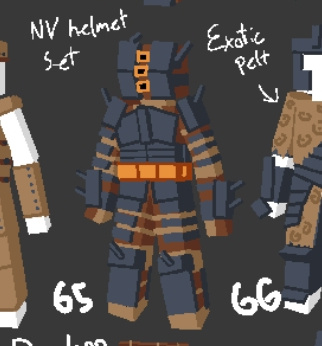
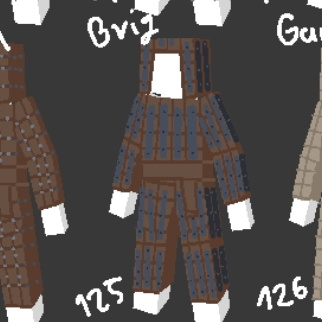
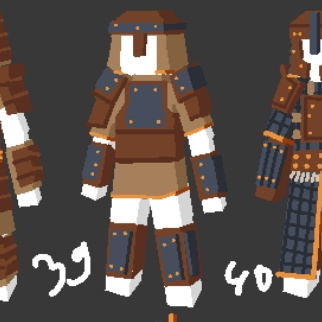
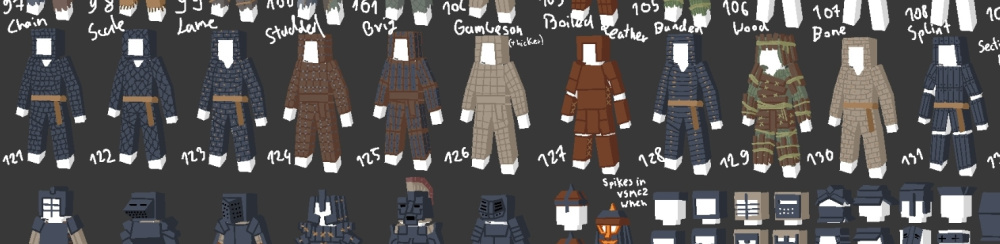
One thing I'd like to mention as well is that I would like to see less armor sets, and more armor pieces. Something like instead of "iron plate armor", instead do "iron helmet", "iron breastplate", "iron brigandine" and "iron greaves". Thinking of armor as individual components and not self-contained sets allows to create a much richer and arguably intuitive system that better reflects realistic and historical armor. So for example, I really don't like this "brigandine": simply because brigandine is not some sort of generic material that can be applied to the whole body (certainly not the helmet), and instead it's only a jacket which can be worn with various limb armor and any helmet of choice. And this concept is also probably not what brigandine should look like, because it often wouldn't have any metal on the outer side. Similar nuances apply to almost all other types of armor, but this "brigandine" strikes me as the worst by far, while the majority of other stuff is acceptable even if not ideal. And maybe I'm just misinterpreting something, but of all of these middle layers: only really the mail and gambeson make perfect sense as an underlayer to plate (usually all three worn together - gambeson, then chain, then plate), while the rest should be the top layer for the most part. And lastly, grass, fur, hide, pelt, leather, studded leather and bone (and maybe also something else) don't seem to make much realistic sense at all [more appropriately, they could be used, but were rarely used as the primary armor material], except fur as decoration [or rather for warmth], hides in certain cases but almost always as the top layer, and leather mostly as backing for scale, structural component, or decoration, only very rarely as the primary component of armor and even then more commonly probably in the form of leather lamellar. Some were probably used sometimes, but they were certainly not common. If this is purely just concept work, then fair enough, but I would prefer only a couple streamlined, meaningfully distinct and historically common choices, rather than a dozen options that serve more to overwhelm a new player than offer meaningful depth. Serious gameplay variety should be reserved for iron and steel in the late game, while visual variety is ultimately the purpose of decorations. But, I quite like stuff like these: because although they can be considered a bit odd with these individual plates, specific shapes (especially the second one looks kinda fictional or modern) and potentially some overuse of leather, they do use clearly identifiable armor components with purpose - the shirt ends below the hips, the chestpiece ends around the waist, limbs and head are protected separately, rigid elements don't impede anything, it all just makes sense and looks good. This one is also really fun: and the couple small caveats are that it seems somewhat anachronistic, could use different greaves and vambraces, and should have some neck protection. Something very similar with earlier lamellar armor would be absolutely perfect. There's this set, among the concepts, possibly hinting at something that at least matches Jonas tech visually, even if it doesn't end up having significant special functionality:
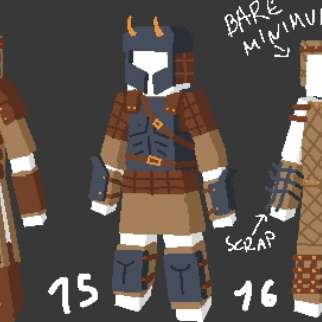
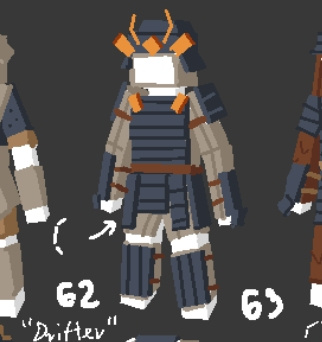
-
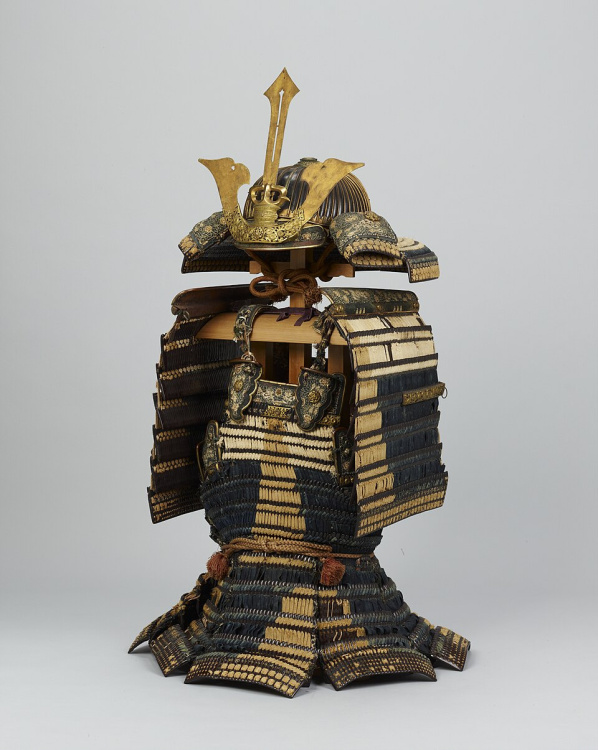
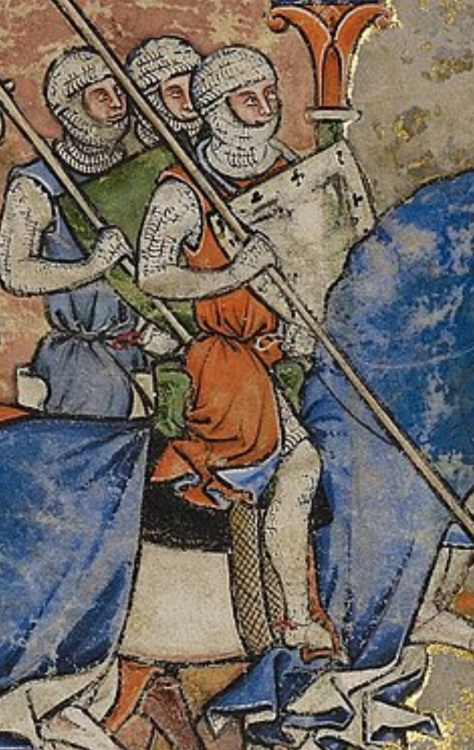
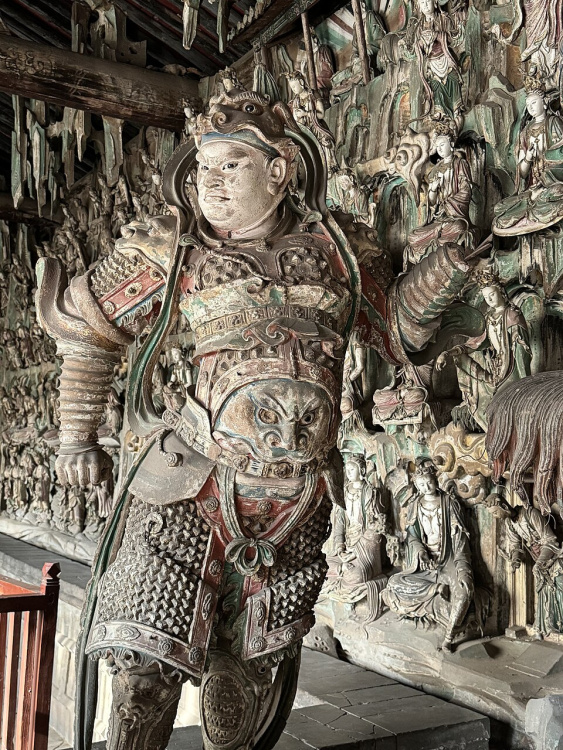
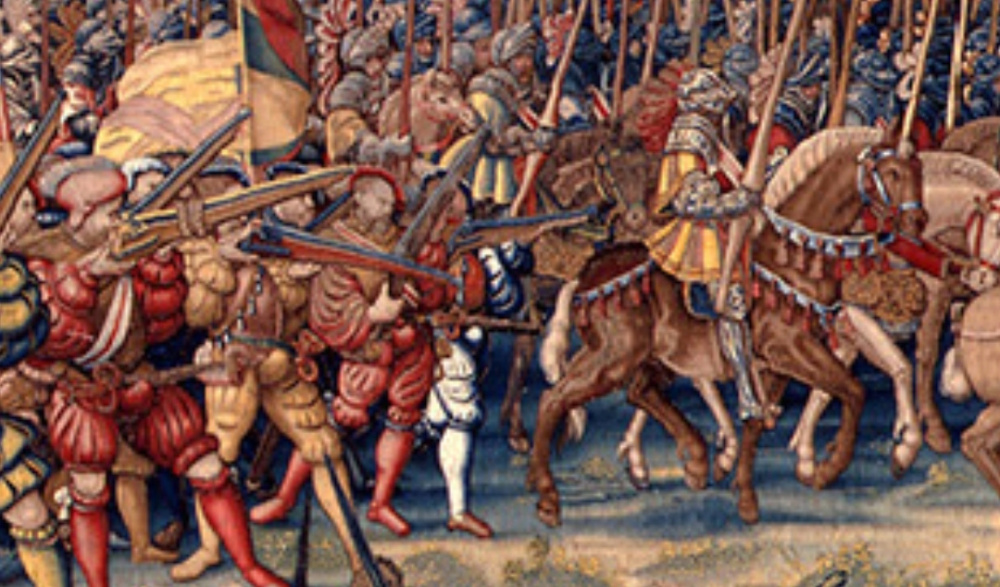
I'm gonna start off by saying that I really like having a dedicated post for a community wishlist, because especially for a rework as significant as armor, it does seem great to have something that the devs will presumably read with a clear purpose in mind instead of small ideas scattered across a multitude of other conversations that almost never get any dev interaction. If I were to point to one thing that I would love to see in the armor rework, it's in-world crafting, possibly on an armor stand instead of the crafting grid, which I originally saw mentioned in this Discord suggestion. Regardless of what exactly gets implemented, I have pretty high hopes for an engaging in-world crafting system. On the progression side, which also impacts visuals quite strongly, I would like to see more historically accurate types of armor with improvements that don't boil down to better metals. Many important milestones in historical armor came from weaving, quilting, leather crafting, fitting, and other aspects of armor design that focused on iterating on the basics, and many of these improvements were largely independent of the metal used in armor - if only because they often dealt with elements of armor that didn't have metal in the first place or served as the backing, padding or attachment system to metal components. Granted, this could be tricky to implement in a satisfying way without first integrating new crafting processes into the broader game, but I do think it would produce a much deeper system with meaningful progression, where improvement doesn't devolve into just getting the next metal tier. Additionally, I think that several armor types like chain, brigandine and plate should be only available starting from iron, maybe even only in steel in the case of plate - besides better historical accuracy, it would mainly serve to streamline early-game armor and avoid overwhelming new players, and only in the mid to late game naturally expand the variety. And in terms of visuals, echoing what @LadyWYT has mentioned, colors and decorations! Arguably much more important for visuals than the underlying armor in many cases, although typically influenced strongly by it. Alwite armor (plate with nothing on top) is cool, but it's just one style of armor, only seriously popular once full articulated plate became common in the 15th century. There's way too many options to comprehensively list for visual variety and decoration in armor, but it's the general direction that counts. Left/top - brigandine with decorated (but also functional) fabric and rivets; middle - mail with a surcoat on top; right/bottom - Ming dynasty statue with highly decorated mountain pattern armour (very extravagant, mostly just to show the high end of what decorated lamellar could look like). Left/top - landsknechte and cavalry in a tapestry of the battle of Pavia, quite suitable for late Steel Age; right/bottom - Japanese doumaru (made of a type of lamellar for the most part, which was dominant in Japan for a long time). You know some nice blogs, I have to say. The Armor in Order post seems to be arguably the most important one from a design perspective, because (as discussed recently in this topic, for example), the current armor system kind of has its priorities backwards, with the helmet favoring as light armor as possible. Some of the realistic priorities could shift due to the supernatural threats that we have in the game, but either way, the importance of different armor segments should be a valuable consideration when balancing their protection and downsides.
-
forging Quenching and tempering are overly gamified
MKMoose replied to MKMoose's topic in Suggestions
It has always been 5% on the first quenching, but most people (including myself) initially assumed it was 0% because of the tooltip, which only starting from 1.22.0 stable finally communicates the risk properly. The thing that I've never liked in RNG-based mechanics is that even a very small chance, multiplied by a large number of players, can produce a significant number of unhappy players. Shattering your first two pieces only has a tiny 0.25% chance, but give this to, say, 10k people, and on average 25 of them will shatter their first two pieces. Some of those 25 people will leave with a sour taste only to be told "well, you were really unlucky". And while it's ultimately not particularly meaningful in the long run, because you're usually gonna have much more iron on hand, I personally don't particularly like mechanics which allow such an obvious risk in the first place (which, by the way, is also why I'm not really a fan of scarcity balancing which is used extensively for things like resin, bees, or fire clay, or even seemingly common cattails - I've watched a new player search for them for almost two hours trying to complete the tutorial, and they just got a really bad world). One thing that has become quite clear based on the community sentiment that I've been seeing is that tempering is kind of a flop. A bit too many people for my taste don't understand what it does and don't know how many times it should be done, some people have complained that it takes too long even in spite of the greatly increased cooling rates, and it's not been uncommon to see people ignore tempering altogether. The benefits that optimal tempering brings over quenching are quite minimal anyways. And people also seem to quite often mix power and durability quenching on the same tool, which is strictly detrimental past the second quenching unless repeatedly tempered in just the same way that excessive durability quenching is an effective durability loss. Even if not rework the system completely, I really hope that they will actually keep improving it rather than leave it as is. Though frankly, I feel like any significant work on it might not make much sense until the fabled heating rework is finally in place. -
I feel like it's pretty odd to say that herding would be primarily for people who don't want to enagage with half the game. Historically, even nomadic lifestyles didn't involve continuous movement, as movement was not the goal. Many communities would move between seasonal camps that would be visited annually, so I see no reason not to reflect that in-game. Efficient herding would necessarily require some travel, but it shouldn't be so time-consuming as to prevent the player from engaging with other features in a significant way - it would just require more planning, or a lot of work to set up multiple well-equipped outposts instead of just a single home, and could be adequately done without greatly impeding other activities. Though I could have probably mentioned them more explicitly, secondary goals of a herding mechanic also include improvements to baseline animal husbandry to make managing animals more intuitive and less annoying. With some experience, I can gather a few goats within the first couple days, but I've seen so many newer players confused about the mechanics and struggling to contain the animals, and ultimately most people default to ugly, crammed enclosures. I would want herding to actually serve a meaningful gameplay function and not be limited to roleplay, and I think that would be actually very easy to achieve with the herding staff and grazing once a few broad AI improvements are in place. The exact implementation can vary greatly, but it may be worth mentioning that realistically, herding has likely originated from more or less subtly managing already existing wild herds. The process naturally wasn't as simple as "walk up to the animal and touch it with a stick", so perhaps there's space for some more complex domestication mechanisms (which have been on the roadmap for a while). Also, some animals are known to have historically approached humans first - mainly cats and dogs, but possibly also some other animals in certain cases. The idea of trapping wild animals and shoving them into a fenced-off area is arguably extremely simplistic and unimmersive, at least in the context of early domestication, so I do like the idea to make it more gradual. Buying young animals seems like a good idea, though I'll mention that realistically it often worked and other way around - herders were often highly reliant on a trade network, while static settlements benefitted greatly from the animals. They would trade their livestock and related products for tools, grain, pottery and a variety of other goods, so I think it would be great to reflect that in the game and make sure that more dedicated herders can reliably supply themselves from traders, instead of just becoming independent, especially since herding would naturally involve traveling which would make visiting traders more convenient. That would primarily involve increased trader throughput and increased demand for meat, dairy, fat and hides or related products, because as far as I can find redmeat can only be sold to one trader type, fat can be sold to two (one as part of the longbow), while dairy and hides can't be sold at all (leather can be sold, but making it reliable may require some alternative method of leathermaking).
-
I greatly appreciate the suggestions regarding predators, and I'm just not a fan of preventing a tile from growing grass permanently. Grass already regrows at a limited rate, so a given area would be naturally only able to feed so many animals sustainably, and no further complications seem necessary to me, especially not permanent consequences. Though it might be fine to just greatly reduce regrowth rates for overgrazed areas, achieving a similar effect while still allowing them to recover slowly. Or if any further complications are still desired either way, then I would initially aim in three possible directions: with the goal of creating a seasonal cycle, just more proper seasonal growth - either something simple implemented as preventing regrowth until the next spring rather than indefinitely, or a more comprehensive rework, with the goal of making the effects of overgrazing more predictable and consistent, something like a large-scale depletion system - managed efficiently under the hood and not on the basis of individual plants, with long-term effects spread out over larger areas rather than concentrated on what the animals happen to eat, with the goal of incentivizing longer-distance travel, some mechanics which would make good grazing areas or pastures much less common and more valuable - keeping the herd constantly fed for the full benefits would require more carefully planned travel between somewhat distant outposts or settlements, not just moving the animals a hundred blocks away to another part of the same expansive grasslands.
-
There's only one hitbox, and the hit location is purely chance-based. It's 20% head, 50% torso and 30% legs, verified in current game code.
-
The crafting grid recipe for sealing a crock was removed in favor of the in-world method. You should be able to place the crock somewhere and right-click it with fat in hand to seal it.
-
Motivation There have been numerous cultures all over the world, like the Sami or the Scythians, which often lived a more mobile lifestyle, moving seasonally between different pastures and relied heavily on a herd of animals for sustenance, resources and trade. Some tradition of shepherds and similar roles also appears in many other cultures which were otherwise less mobile. As of now, anything remotely resembling this kind of gameplay style is borderline impossible in Vintage Story, as animal husbandry practically requires a secure enclosure. But, there are mechanics in place which can be developed to implement a more flexible system relatively easily. Goal Create a simple system that allows safely and reliably herding a group of animals, even while traveling over long distances. Implement mechanics to enable the player to subsist primarily if not only on the herded animals, and ideally also reward seasonal travel with the herd. Mechanics 1. Animal herds - a number of animals which is recognized by the game as belonging to one group. A simple form of herds is already in the game, and some new functionality around it would have to be added. The primary realistically herded animals from among those that we already have in the game include goats, sheep and reindeer. For the purpose of increasing meaningful distinctions between animals, it would make sense to include goats, sheep and reindeer in the more complex herding mechanics, while restricting pigs to enclosed pens. 2. Herding staff (or herding crook, alternatively abstracted to just a walking stick, potentially alongside some related items) - allows to group animals into a herd assigned to this staff (e.g. assign by clicking on an animal with RMB, remove from the herd with Shift + RMB; a staff without an assigned herd could automatically take on an existing herd on the first RMB). The simplest possible implementation would have all animals assigned to the same herd loosely follow the person holding the staff and stay in the vicinity of the last position where the staff was held in hand. Some features could then be added or adjusted (especially some way to force a herd stay in a location and to call back lost animals would be useful) to allow more intuitive or more complex herd management and avoid mistakes like accidentally holding the staff for a moment and causing the herd to move. The staff (especially if named a crook) may also allow to "pick up" and move animals in a way similar to the entity mover tool available in the creative mode, although it would likely be less effective and potentially restricted to baby animals. 3. Grazing and pasture - the herded animals, in part to naturally reward travel and avoid some of the maintenance normally associated with animal husbandry, should be able to graze on most terrain with vegetation, especially natural meadows - this would mean that they would not have to be fed to multiply, and thereby could effectively serve as a mobile food source. The only restriction is that there would likely have to be some mechanism similar in some aspects to the fish depletion mechanic, potentially based on the travelled distance, which would limit the amount of food that a herd can obtain from an area and incentivize the player to travel with the herd instead of staying stationary. Additionally, making different biomes optimal for grazing at different times of year would incentivize seasonal movement. Important considerations 1. Reliability - for a herding system to be remotely worthwhile, it has to be safe, reliable and practical, and frankly it would probably be the biggest implementation challenge here: no unannounced and nearly unstoppable predator attacks decimating half the herd or running off with it into the sunset, no random jumping into pits or drowning in water, no sprinting off the moment the player approaches, no having to individually bring back animals that move too far away, no having to babysit the animals to make sure that they don't hurt themselves or run off. Some level of risk and complication is fine, but it has to be low enough to avoid making herding, which already starts off on the back foot by leaning into a mobile gameplay style, into a tedious, annoying and unfun gimmick that nobody wants to interact with. The goal really should be the opposite - something simple and reliable that the player can do without an excess of maintenance and worry. 2. Early-game accessibility - while it might be more realistic to require animals to be domesticated for a few generations before they can be herded, it would also render herding largely useless. It has to be relatively easy and quick in the early game, because (1) why move to herding when the player has already domesticated the animals for an extended period of time, and (2) late-game features like ironmaking and steelmaking require a more stationary gameplay style, so herding has to be introduced early to avoid a conflict of incentives. Additional or future features Chickens could use a related mechanic to make them stay near henboxes without the need for a fence, though that could be easily done without any herd mechanics. Several new species of animals could make for excellent herds, especially some kind of cattle or yaks, which may also see use in transport, farming and mechanical power. Additional seasonal mechanics that would make the player want to visit different regions at different times of year regardless of whether they are managing a herd or not would make herding fit more naturally with the regular gameplay cycle. Mobile storage, portable shelters, less restrictive progression gating, less restrictive respawning mechanics and other changes to enable more nomadic playstyles would go a long way to make herding less one-dimensional, into something that actually functions within the broader range of mechanics instead of fighting against them.
-
Bronze actually unlocks quite a lot of things, but most of them are either an efficiency upgrade, or a prerequisite for iron and steel, or both - almost none actually unlock properly new things the way copper unlocks stuff like the fruit press, the bucket and many tools: tool tier 3, allowing to mine: quartz - not particularly important for most players unless using a lot of glass for building; some quartz can be obtained from panning and loose ore chunks before that, bituminous coal and anthracite - mostly irrelevant before iron processing, at least for my playstyle, gold and silver - purely optional or endgame uses, borax - mostly just an alternative to lime, only required later for steel processing, helve hammer - just an efficiency upgrade, pulverizer, and by extension: cloth mordant and crushed cinnabar - specific dyes are required for certain warm clothes, otherwise it's purely cosmetic, bombs - optional, refractory bricks - mostly irrelevant before iron, shields better than crude - not particularly meaningful, mining bag - just a storage space upgrade, reinforced wooden crate trap - mostly irrelevant, just doesn't have almost any meaningful uses, elk medallions - you need bronze to progress the story in the first place, and most people will have iron by the time they get around to it either way, so this is mostly irrelevant. But that said, I think we generally also want bronze to not be too impactful, no? Too many things being locked behing copper has been, as mentioned here already, a fairly common complaint. Progression gating should generally be limited to the early game, while higher metal tiers doing the same would feel very provibitive - locking important features can easily make the player feel like they have to rush through progression just for basic quality of life. The benefits of bronze, iron and steel involve improved tools, improved combat effectiveness, automated or more scalable production or processing of certain resources, and general efficiency improvements, so experiencing all that can already make the player rush to it on subsequent playthroughs. I'd imagine that adding sawmills (supposed to come in 1.23), elevators (seemingly put on hold indefinitely for now), steam engines (eventually), rail transport (eventually) and stuff like cast iron stoves, cookware and cauldrons (I don't remember if it was even teased, but it really should be added at some point) will not contribute positively to community sentiment on the early game, especially pre-Copper Age which has always been quite underdeveloped. I think this is a very good thing to do where it makes sense. Restricting torch holders to brass is completely arbitrary and has no reasonable justification that I can think of other than that it's just an old feature that was never updated. The bug net being copper-only is pretty odd, and so are chutes, though the latter can at least serve as a copper sink in the late game where copper is often nearly useless unless for lanterns or something. Some things that are restricted to bronze or iron and not copper (e.g. the crate trap or the mining bag) can also be confusing due to how arbitrary they are. But there is a number of applications where copper, bronze, brass and some similar metals are often simply superior to iron and steel, primarily stuff like: bells and musical instruments, bearings and some other mechanical parts, some precision devices and tools, e.g. astrolabes, certain boat/ship components (or generally anything exposed to saltwater), cannons and firearms, cookware, roofs, statues and ornamentation, and maybe something that I've missed. Those arguably should be only craftable from copper, bronze, brass or adjacent metals where appropriate, or at the very least there is a strong realistic argument to be made for most if not all of them, due to corrosion and wear resistance, easy casting of complex shapes, and some other properties. Iron and steel were the dominant metals for weapons, tools, armor and machinery, but copper and bronze have retained several applications well after iron and steel became relatively cheap and widely available. Some things like more advanced armor (brigandine, chain and plate) could also justifiably be restricted to iron and steel only, and it might even end up changing nothing about how the majority of people play the game. Personally, I really hope that we get some more meaningful means of progression outside of simplistic metal tiers. Carving, woodworking, pottery, textile production and weaving (maybe also wickerwork), glassmaking, leather crafting, agriculture (including herbalism), pastoralism, trapping and hunting, and more - there's so many systems which could be developed greatly and provide alternative means of progression, and I think that just focusing on the metals tends to neglect a lot of potential depth that the game could have. Many of those other progression chains would naturally benefit from or occasionally require some metals, but equally, the power and durability of tools, weapons, armor and other stuff shouldn't be just based on which metal you put on a stick. As it stands, the game also heavily favors having a single base location, which I think partially contribures to people feeling kind of pressured into fast vertical progression. No mobile storage, no portable food preservation methods remotely competitive with cellars, no tents or other portable shelters, restrictive respawning system, and a couple related factors - the game really feels like it loses out on a lot of variety that it could have. Some features like steelmaking being restricted to stationary locations makes sense, but something like animal husbandry ideally really should be perfectly viable with a more mobile lifestyle as well.
-
Running mixed armor can be argued to be a very realistic incentive. Granted, helmet being lighter is a bit questionable, and it can look odd and arguably ugly with what we currently have in the game, so we would need to get more historical armor with more deliberate balancing to reach what I would consider a decently historically accurate armor system, and I don't know if the devs have any interest in that. If you go by real, historical armor, then you get something like this: early medieval (not later than around the 10th century) - typically just wool, sometimes padded textile with a metal helmet at best; more expensive armor could involve a mail shirt, in certain regions lamellar, scale or something of the sort (antiquity also saw some interesting metal breastplates, greaves and the like, but we're generally in the medieval period in VS), high medieval (~11th-13th century) - more mail in sleeves, leggings and a hood, and some small plate components, though poorer troops still often relied primarily on gambeson (other regions of the world saw some similar and some different developments, but we don't really have armor of those other regions in the game either way, except for lamellar which is arbitrarily unavailable in iron and steel), late medieval (starting in the 14th century and more properly in the 15th century) - high-coverage rigid plate armor actually appearing in meaningful quantity; some metal pieces often put on elbows, forearms, shins and knees, but full articulated plate still quite rare and expensive, so most common soldiers would rely at best on brigandine or mail and mixed, often partial limb armor. Compared to the actual historical armor development, VS armor is really strange in that almost all improvement comes from the metal progression, and almost none comes from iterating on the basics, improving the technological processes, designing new armor, and a whole lot of physical labor required to make that armor to higher and higher standards. Real lamellar and brigandine was often superior to simple chainmail and scale, but in-game they are just worse but cheaper - scale especially tends to be given too much credit in media, where in reality it was often the cheap alternative to lamellar or mail. In most historical contexts, the type of armor worn by a soldier was dictated by their status and wealth as much as by balancing practicality with survivability, if not more, and level of protection for more influenced by the armor's general quality and layering of different components than by the selection of armor type and metal tier. VS, as a game, inherently doesn't have the same balance levers as real life, the progression has its quirks, some things have to be simplified, and you can't just tell the player that they're too poor to ever afford plate armor, but I do think that there's a lot that can be gained by designing a system that actually tries to emulate real armor in some capacity, instead of taking a few terms for types of armor, repeating them across the metal tiers with no respect to historical acuracy, and assigning almost arbitrary stats to them. As much as I agree with this, I would say that the current system does already introduce too much complexity despite being actually rather shallow - it's very wide and may seem deep at first glance, but within the at least ~27 armor sets (more if you count same-tier metal variants and stuff) there is very little in the way of meaningful differences. Everything can be pretty much boiled down to three debuff tiers - armor with few or no downsides to wear at all times, small penalties for regular usage without sacrificing mobility, and heavy debuffs for maximum protection in combat-heavy situations. Add on the matter of time and cost to craft, which is what gives lamellar a small niche, and that's basically all there is to it. You could easily achieve nearly the same level of depth with about a third of the armor options, while ideally also making sure that none of the options end up practically useless like now happens with pretty much all copper and bronze armor except situationally lamellar.
-
You have a residue-covered pot on the firepit. You need to use a clean one to make food. Granted, the game should probably be clearer about what the issue is.
-
It's a known issue. It's nothing unique to berry bushes, but they exacerbate the issue much more than other plants due to a large number of partially transparent textures.
- 1 reply
-
- 1
-

-
Does the resulting tool have a Buffable behavior? If not, then you need to add it for the buffs to apply.
-
When a henbox says that a brooding hen is required, it means that you need to feed the chickens to have the hens incubate the eggs over several days. You can see this post for which animals can be caught with each type of trap - it is quite restrictive, and unfortunately there's no easy in-game way to figure that out. Chickens should get caught in a basket trap quite reliably, with a 50% chance, while in the case of goats it is impossible to catch adults - only baby goats can be caught in a trap. If you want to get goats for the purpose of husbandry, you'll often have to either chase them or get them to chase you into a pen, pit, or whatever you prepare for them.
-
Modern statistics for deer hunting using bows place the kill-to-hit ratio at around 80% (see this study). For traditional equipment it may be less, but data is more sparse (this study reported 65% at 20 hits, but cited a few reports that indicated a much more favorable ratio). Spears and javelins are a bit different, because they were less frequently used for hunting deer-sized game in the "conventional" way. Their accuracy and effective range are much lower than for bows unless you're using a very light spear or specialized throwing devices (certainly not what we have in the game), which points to the actual reason why spear hunting was often done in groups - to reduce risk and maximize the chance of a successful hit on a driven animal. Their goal was often to wound and weaken the animal (including groups of animals and game many times larger than deer, where group hunting becomes actually important), which would allow to get up close and finish it off. Experimental archaeology has demonstrated that many primitive weapons can quite easily reach over 20 cm of penetration in animals or animal analogues, which is considered lethal depth for large mammals (mostly taken from this study, where the "Background" section contains a lot of references to other works). The primary killing mechanism of a bow, as well as a spear or javelin, is exsanguination. Its effectiveness primarily depends on hit location, most favorably a pierced heart, lungs or important blood vessels, which can quite often cause collapse due to blood loss within less than 30 s, while other locations don't tend to produce nearly as deadly bleeding. And that applies to rifles as well - if you're struggling to hit a vital organ, then I can see why you'd hit something multiple times and not kill it, but you really should be hitting vital organs - if you're missing, then I think that counts as user error and not weapon inefficiency. And that's completely separate from cars, which kill primarily through bone fractures and other blunt trauma. As I see it, the primary balancing lever here is bleedout time. If a crude arrow requires you to track the animal over several hundred blocks but a steel arrow causes it to drop within 10 s, then I think you'd have plenty of reason to invest in better gear - it would just need to be adequately communicated in-game to make the benefit clear. Or if you don't hit a vital organ, then a better weapon would likely weaken the animal more effectively, probably further reducing mobility, making it easier to chase or track to finish off.
-
FYI, a moose has 21 health and will die in 6 melee hits or 4 ranged hits with an iron spear. Which, oddly enough, is actually the same as most deer, and less than the elk which has 30 health - if we were to take the deer as a reference, then the moose should have its health roughly doubled. But I do think that the point seems to be also about lack of reaction to wounds and blood loss, not just about immediate damage. As of 1.22, the hare had its health reduced to 3, making it possible to one-shot it using a longbow with any arrows or a crude bow with 0+ damage arrows. I would not expect the status effect system to introduce any significant changes, at least not within the same major update in which the system is added. Both because it is more sensible to introduce a large system step-by-step, and because it doesn't seem to me that the devs even have any significant interest in overhauling large parts of the game. That said, killing animals with a single shot, which in isolation would absolutely trivialize parts of the game, can be easily balanced with two main factors: better animal AI - more aware of the player, fleeing easily, requiring skill to approach, tracking after the shot - a one-hit-kill doesn't have to make the animal drop on the spot, and having to track the animal could easily take the same amount of time that chasing it frantically through the bushes takes currently - realistically, larger animals like deer will nearly always run at least a couple dozen meters after getting their lungs pierced (even with modern compound bows), while a suboptimal hit, if it's even fatal, often leaves them running for hundreds of meters before collapsing. This would also mean that animal husbandry would retain its benefits, because you naturally wouldn't need to carefully approach a domesticated animal and then track it after a difficult shot - just walk up to it with a knife and kill nearly on the spot (which shouldn't be done with a cleaver, but that's another matter). In order to make hunting take up a more appropriate amount of time, it would be easy enough to increase animal yields to be more realistic - and doubly so if harvesting and preserving animals is made more time-consuming, instead of a simplistic "pick up, throw in the cellar". If there are any concerns about it being too complex or anything of that sort, then I offer you: trapping. Primarily snare and deadfall traps, for rabbits, squirrels and birds, to provide the player with an accessible source of meat and small hides in the early game. Trapping pits for larger animals are an option and improvised solutions will always be possible, but keeping hunting as the primary method for killing the larger animals is desirable from a design standpoint. To create a natural progression system - as the player acquires better gear, they would become increasingly better suited at hunting large game - and to facilitate a greater level of satisfaction from a successful hunt, which could be easily lost if trapping pits are too efficient.
-
I'll always say that glue will not be a complete mechanic until it's possible to tap trees for relatively large-scale resin extraction (with an intermediate step if need be; sap could also could be used for some kinds of syrup) or make bone glue as a simpler alternative, or ideally both. But as it stands, as long as almost all clutter items are purely decorative, I do think that the current repair cost is excessive, because there's no shot a small decorative item is reasonably worth 6 resin and 6 charcoal. Some of the larger ones, maybe, but a few candlestubs, a pile of scraps, a small toy, a couple bottles, a stack of books? And it's trivially easy to modify by adjusting reparability in the assets.
-
I do think that, ideally, both casual and combat-oriented players should be able to have plenty of fun during storms on default settings. Painting a safe hideout as "the least fun option" kind of neglects the fact that one of the biggest reasons why a player might be disinterested in fighting through the storm is just that they don't find intense combat enjoyable, so only allowing the player to remain in safety in a way that is seemingly deliberately ensured to be less fun is exactly what makes people turn the storms off. It can easily end up feeling like combat is the only "correct" way to engage with them. Focusing on "how to make it better without making it easier" seems like an odd way to approach it to me, because making it easier is inherently nearly the only way to make it more fun for the people who find that it's too difficult. Doesn't mean that the peak difficulty has to be lowered (special, extreme challenges could even be added for experienced players), but more interesting low-risk routes should be viable as well. A level of risk should be retained, naturally, but getting chased around by T3+ monsters is not just risky - it's downright oppressive when the player doesn't have late-game equipment and ample supplies. I would argue that the best way to go about this would be to focus on temporal storms being an atmospheric environmental anomaly first, then combat challenge second - not the other way around. I think that the storms should be safe for the most part, and only dangerous within more localized, brief phenomena that the player could seek out and take on for some sort of reward (or sometimes, but rarely, be surprised by), instead of it being a "monsters are now everywhere and you can't do anything about it" event. Simply give the player a couple varied options for what they want to do, and if they want to just chill while admiring the temporal disturbances, then why not let them? I would expect this to backfire very easily. As it stands, the players who stay in hiding tend to already be on the back foot - those who don't have the equipment or skill for it, or just don't feel like fighting at the moment - so I don't think it's a good idea to further push those players to engage with the storms. Granted, something of this manner could potentially be a good way to encourage the player to try fighitng bit-by-bit and see that it's not too bad instead of avoiding combat altogether, but I'd personally anticipate more problems than solutions to come out of this specific idea. It could be much more worthwhile to give the player any reason to venture out into the storm besides combat, so that monsters would be an obstacle and not the goal.
-
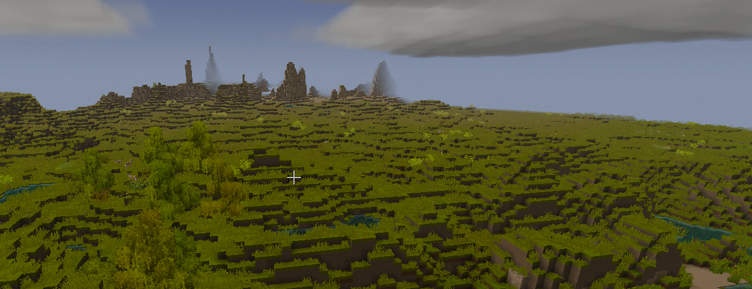
New species do a lot to offset the yield and fruiting cycle changes, because they've been added on top without reducing the frequency of other bushes. Ultimately, food is fairly plentiful, and even if bushes are now a bit less viable, it's still fairly easy to collect a couple dozen to a hundred berries over a fairly short run and subsist on them for much longer than they took to collect. I've personally found that while it can be more difficult to tell whether a bush is ripe, it tends to be very easy to notice bushes from a distance due to some sort of graphical issue that causes them to become oddly bright from farther away - I'm not sure whether that's a common experience or whether the old bushes used to be similar, but it looks kind of wrong and kind of trivializes finding berries. Each of the bright green spots (more yellow near the desert) is a berry bush or a couple of them - there's at least ~50 of them visible here. Do keep in mind that this is caused by their initial state being randomized. They will start ripening at much more similar times after the first winter when they get synchronized by going into the dormant state.


_(802254989).jpg.8b742e714e415c375a7361c88a07b16b.jpg)
.jpg.48260139c6beaf521d5b5b06cf973731.jpg)