LadyWYT
-
Posts
6030 -
Joined
-
Last visited
-
Days Won
279
Content Type
Profiles
Forums
Blogs
News
Store
Everything posted by LadyWYT
-

Can I still get raw "huge hide" from bears in the 1.21.0 update
LadyWYT replied to labtop 215's topic in Questions
Welcome to the forums! While you may not be able to make a fur coat from bear hides, the bear hide armor you can make offers warmth as well as protection, so it's an upgrade in that sense. Plus you can equip a fur coat under the armor for even more warmth. -
One thing I had forgotten to mention in my initial response--Combat Overhaul was mentioned, and that's a mod that changes vanilla combat significantly. I've not played with that mod myself, but judging by the mod page, it seems to turn the combat system into something more similar to what Mount & Blade has, in that it now matters exactly where you hit the target, when/how/where you block, etc. Which in all fairness, I'm betting ranged combat is actually easier in that mod(assuming you can hit the target) due to the locational damage mechanic, in addition to just the general rule of killing something before it can reach you is a good idea(when it's possible to do so). Melee looks to be significantly more difficult in that mod since you need to actively block/parry attacks aimed at specific parts of your body in order to mitigate the damage--ie, it's trying to be much more realistic. That being said, I was speaking in terms of vanilla, since that's going to be the most useful information for the widest player variety. Mods are very fun and useful, but often change the game in very specific ways, so advice that applies to a modded game may or may not apply to a vanilla game at all. That last sentence though... Eh, I dunno, I would say that monster loot in general is mediocre...for now. The reason I chalk it up to being underwhelming is that late game tech really has been developed for Vintage Story yet, so there's really not much you can do with things like Jonas parts and temporal gears. I think late game tech is the next thing slated to be worked on though, and once more options are added I'd wager that the loot will become much more valuable. As to whether or not one enjoys temporal storms...I do agree, that is subjective. Personally, they do get on my nerves, but I still enjoy the way they are implemented since they make the world and associated lore actually feel real. The storms are intermittent looming disasters that you can't prevent; they won't destroy your base or otherwise wipe progress, but you will have to figure out how to deal with them in order to accomplish your goals. One can either play it safe and hide when a storm hits(but get no loot), or take a risk and go fight monsters to get a bit of loot for the trouble(loot that will be more valuable once more tech is added). Of course, for players who don't enjoy them, there is the option to sleep through the storms, or just disable them entirely.
-
Sure. Basically, the falx has a chance to loot the monster when you hit it--I'm not sure what the percentage is though. You're not getting extra loot when this occurs, as the falx is simply extracting whatever goodies the monster had to drop in the first place. The looted goodies will drop to the ground, in which case you can just pick them up...provided you have inventory space. After you kill the monster, you can loot whatever goodies the falx didn't extract; in the event there are no more goodies to loot, it will just open an empty loot window and the corpse will disappear like normal when you exit the loot window.
-
Welcome to the forums! My first thought is that it's probably a mod issue, since I've not really seen anyone reporting that kind of issue with vanilla. However, there's nothing on you list there that really looks suspect. Have you tested this list in single player to see if you can reproduce the issue? If you can reproduce it in singleplayer, then it's just a matter of turning off all the mods and adding them back in one by one, testing as you go, to see which one causes the issue.
-
By dungeon, do you mean the underground ruins? I think there's a ruin or two that have bugged lore books, in that you can try to read the book but will get no lore entry. Otherwise, it's likely because you've already unlocked whatever lore that book had to offer, so it won't give you anything when you try to read it.
-
Okay, no, this is absolutely not true. Blackguard is the fighter class, and for players who love melee and just being an absolute bruiser in general this class is the obvious pick. The health boost can keep you alive in situations that would kill other classes, they move faster in armor(never discount movement speed), the melee bonus lets you shred most things in close quarters combat. When it comes to the weaknesses, the ranged penalty equates to an extra shot on average to kill a target, if you rely only on range. This can be a problem early in the game for hunting, if you are a bad shot, however...you don't need to hunt at range either. Boar are quite easy to find and offer a lot of meat; they're also very easy to walk right up too and goad into a fight. If they try to flee, just chuck a spear at them to finish them off, and then enjoy the meal. Wolves you can soften up with a spear or two at range, before either goading them into a fight and finishing them off. Bears are the only ones to really worry about, but that rule applies to all classes, really, not just Blackguards. The hunger and forage penalties aren't really a problem either if you're at least halfway decent at finding food. Berries and mushrooms will keep you going easily enough, as will foxes, raccoons, boar, wolves, and whatever else isn't able to escape your hunting prowess. And of course, by the time you get a base established, with a farm and livestock, you don't really need to hunt or forage anymore. Blackguard is probably the toughest class for a new player to pick up and start playing with since they won't have the experience required to fully utilize the class strengths while mitigating the weaknesses, but it's not impossible for a new player to play a Blackguard either. They might struggle a bit more, but if that's the class they really want to play, they should play it(this is essentially how I cut my teeth in the game). Have to disagree here as well. Deserts/gravel fields are useful since surface ore is easier to spot, and there's little vegetation to obscure your vision of threats or points of interest. Oceans and large lakes allow you to utilize the sailboat, which is very useful for easy traveling or hauling lots of cargo. Swampy wetlands can have different tree types, depending on climate, and are generally a good place to find cattails and fish. Glaciers themselves even serve a purpose, since glacier ice can function like glass when building greenhouses(unless something changed in that regard). In any case, there's something useful to be found pretty much everywhere, in regards to resources. If you're judging a biome based on how pretty/good it is to settle in, that's subject to individual preferences. You can skip improvised armor entirely, provided you have the skill. Iron chain is okay, but expensive. The only reason I can think of to craft iron chain, aside from looks or collecting all the armors, is to preserve a bit of extra accuracy. Otherwise, brigandine is a better option for this tier--it's a bit less protective, but it also costs less. If you just need something to tide you over until steel, brigandine will do just fine for your heavier fighting. Gambeson is the best general purpose armor; ideal for exploring the surface or wearing around your base, but it won't hold up very well for heavier fighting. For the steel tier, chain is one of the better choices, but again, it boils down to personal preference and the demands of your situation. Plate armor is generally the most ideal for base defense, since you'll have ready access to plenty of food, as well as safe spots to take a respite and heal. I will also note that plate armor tends to be a more attractive choice for Blackguards, since it doesn't slow them down as much. Falx has an autoloot feature, when it comes to fighting monsters. Likewise, there will be situations where melee is stronger than ranged, especially if you're exploring underground or run out of ammunition. For more dangerous enemies, a solid general strategy is to soften them up a bit at range, and then finish them off in melee should they close the gap. Shields are good at soaking up a lot of incoming damage...provided that you're actually facing the attacker and blocking properly. The passive block feature is most useful against incoming projectiles, but won't do much against melee hits. Active blocking will mitigate both ranged and melee attacks significantly, but unlike passive blocking you need to actually crouch in order to raise your shield and actively block. The better the shield, the more damage that gets mitigated. Even crude shields have their place, since they can mitigate enough damage to allow you to survive a fight that might have killed you otherwise. As for the off-hand hunger penalty...you only need to equip your shield when you expect trouble, so the hunger penalty isn't an issue.
-
You don't need to stand still to apply bandages; you can do so while moving. What will interrupt bandaging, aside from switching slots, is falling for longer than a second. I made some notes on the new mechanic, which you can find here(the only thing I didn't/haven't covered there is armor penalties): That's not to say that the Resonance Archive won't need a little tuning. Judging from what I've seen lurking around Github, it seems the devs are looking into the balancing and may tweak some of the changes, but there's no promises that the mechanic will be rebalanced either. I wouldn't say never, so much as I would rarely. Sometimes you can go toe-to-toe, trade blows, and survive, but doing so hinges heavily on game settings, player skill, and sheer luck. Generally, it's a better idea to avoid what damage you can, and mitigate the damage you can't avoid as much as possible. Healing should really be a last resort, and with the new healing mechanics you'll probably want to apply bandages a little earlier, when they're needed, instead of waiting until the last moment.
-
.charsel or /player yourname allowcharselonce should allow you to switch your class, as well as your appearance. /worldconfig playerHealthPoints should allow you to adjust your base health amount--just enter an appropriate number in that command and then reload, the changes should apply. It's worth noting that by default, the base health is 15 hp. Filling your nutrition bars will add +2.5 hp for each bar you fill. I will note that class health penalties(or penalties in general) aren't enough to really stop the class from playing the game normally. Generally, the penalties usually end up meaning you might die where others might live, might miss the occasion drops, or might need an extra hit to kill something. Of course, how detrimental a penalty is also depends on one's playstyle. To be fair, you can go caving without a lot of gear, but you really have to know what you're doing since it's incredibly risky to do so. Generally it's better to wait until you have a bit of gear and healing supplies before venturing in--the deeper you delve the better equipped you'll need to be. As for why things get more dangerous the deeper you go...there are lore reasons, that are currently not fully explained, but there are enough tidbits for players to discover and draw their own conclusions from. It's very likely, yes. If you have a bronze pick and a bronze anvil, you have the equipment needed to mine and work iron(which is more involved than copper or bronze working). Of course, there's nothing wrong with making bronze armor either; it depends entirely on one's preferred playstyle and the current game conditions. For earlier armors, bear armor is a solid choice, if you're brave enough to hunt them. Gambeson takes a lot of flax to make, but offers some of the best protection and utility in terms of general use armor. Lamellar is probably the best choice for early metal armor; while not as protective as other metal armors, it's much cheaper in terms of cost. The good news is that tin isn't particularly hard to find, as it's a more common ore spawn, so checking lower prospecting readings is more worth it. You can also combine bismuth and zinc ore with copper to make bismuth bronze, or silver and gold with copper to get black bronze. If you're having trouble locating an ore deposit, tin, bismuth, and zinc are also sold by commodities traders, and survival goods traders as well(I think). It'll cost you a few gears, but you can earn gears easily enough by just selling some things to the local traders when you can.
-
Not really. While story locations do seem to have set stability parameters(ie, some locations are stable, while others aren't), all you really miss by turning the stability mechanic off is a little extra flavor. You won't miss any actual story bits themselves. Temporal stability is mostly just there to help flavor the setting and provide additional challenge.
-
Welcome to the forums! Not to knock the class choice, but part of the difficulty here could be due to picking Malefactor, as it's perhaps the weakest in combat(penalties to health, melee damage, and range of fire). That doesn't mean that Malefactor can't succeed in combat at all, just that combat is where that particular class is going to struggle the most since it's optimized for stealth and gathering. Tin bronze chainmail is tier 2 equipment, so it will keep you fairly safe from bears, wolves, and other tier 2 enemies, but you won't be entirely immune either as they can still kill you if they attack you long enough. Keep in mind too that armor is only effective as long as it has durability remaining--if it's broken it will need to be repaired before it can offer protection. Likewise, armor only protects the portion of the body relevant to its particular armor slot, so if you only have bronze chainmail in the body slot, it will mitigate incoming hits to your body but not your head or legs. Granted, your body is the easiest part of you to hit, so if you need to mix armor types its best to equip your strongest armor in this slot. If you picked Malefactor just for easier ranged options, you might try Hunter instead. Hunters have a boost to ranged damage, as well as more options for early ranged weaponry(spears are still pretty much king though) that are easily crafted. Or you could turn off class-exclusive recipes and just craft all the things. It sounds like you're approaching Vintage Story mining like the other block game's mining; the two don't work the same. In Vintage Story, you want to stay out of the caves unless you're prepared, since the underground is dangerous. For mining, it's better to find a good mineral reading with your prospecting pick, and then dig a shaft straight down until you hit ore. Node search on the pro-pick will alert you to any ore veins nearby, and using ladders will ensure that you can navigate the shaft safely(not possible to fall off ladders unless you move off the ladder block). For enemy spawns underground, the deeper you go the higher the tier. Tier 3 tends to start showing up around Y level 40-50, I think, while Tier 4 shows up around Y level 30ish and below. Essentially, you need to be REALLY deep to find the really nasty stuff, but the lower tiers can kill just as easily if you get too complacent. I'll also note that more enemies spawn underground when rift activity is higher, so save your caving trips for days of calm or low activity when possible. Metal tiers are one thing you cannot skip, in regards to progression. You'll need a bronze anvil to work iron, and an iron anvil to work meteoric iron and steel.
-
I don't see this working as a world generation feature...partly because it strips some of the creative freedom from the player if done automatically, and partly because you can already name things yourself with map markers, assuming that you play with the map enabled. As a feature of land claiming for multiplayer though? Sure, why not. That's an extra layer of customization that also makes sense.
-
I think this would be better suited for a proper tutorial scenario, rather than any kind of specific world gen rules. A relatively small area, 200 x 200 blocks, that has all the basics for the first tier of progression. It would be a more hand-holding tutorial than the one we currently have, and only teach the player the bare basics of survival, pottery, and how to acquire copper items. That's it. I figure a scenario like that would be a nice option to have for new players that really need/want the extra help, without spoiling the game's challenge too much. And for veteran players, or new players that would rather just jump right into it, the standard world generation and associated challenges are left untouched.
-
Lovely, interesting or just plain bizarre landscapes
LadyWYT replied to Maelstrom's topic in Videos, Art or Screenshots
Since when were UFOs added to the game?!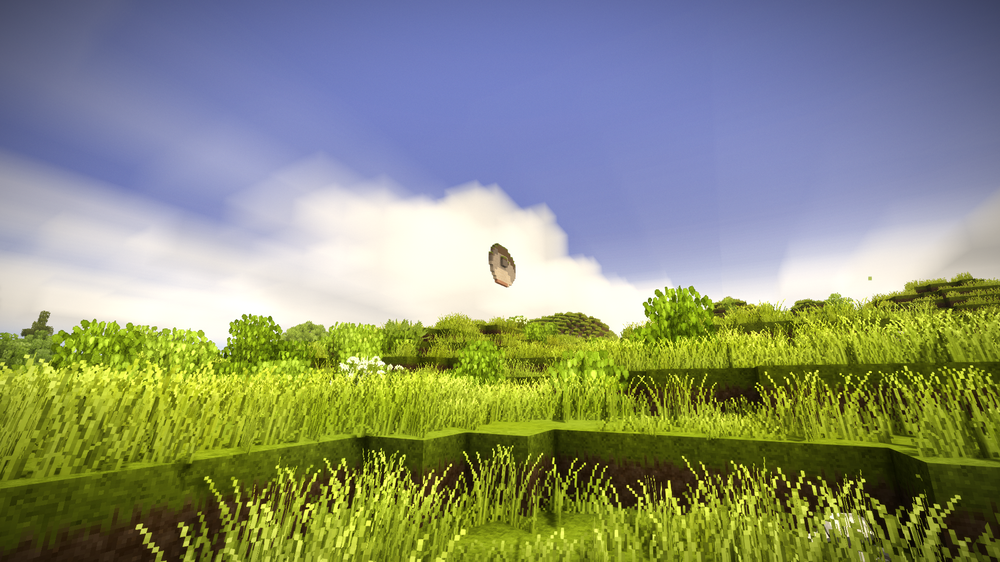
-
This is why you don't use lava to cook chicken.
-
This is the way. It's a struggle, but once you get that first initial breakthrough, the rest of the game begins to look less like an insurmountable wall, and more of a challenging mountain that you need to think carefully about in order to find a good path to scale it. I would also say that part of the initial challenge of Vintage Story is just learning how to approach the game, since it requires a very different thought process to succeed compared to other titles in the genre. Most games, in my opinion, have the player focused on what's presently important; the player doesn't need to worry about future tiers of progression and challenges until they actually get to those points. Vintage Story is similar, in some ways, in that you don't need to worry about things like steel at the very start of the game. However, the better you can anticipate future challenges and plan accordingly, the easier the game will be. A player's first winter is a decent example of this in practice: one needs food daily to survive, yes, and one can survive the winter without food stored. But winter will be much easier to survive if one plans ahead and preserves a good store of food. The learning curve can be an issue, though I think it really depends on player personality. Vintage Story does have a tutorial, yes, but the tutorial is just enough to teach the player basic controls and help them acquire their first set of basic tools that they'll need to achieve pretty much everything else in the game. After that, the game quits hand-holding and lets the player decide for themselves the best way to proceed with the game. If the player needs further information, the handbook contains pretty much everything they'll want/need to know about the game and its mechanics, but if that's not enough there are other sources of information as well(forums, YouTube, the wiki, etc). The benefit of such design is that the player is free to make their own choices and reap whatever consequences follow...good or bad. The drawback, of course, is that so much information can be overwhelming(at least at first), and it's easier for the player to make bad decisions due to a lack of experience. Crop rotation really isn't as difficult as it might sound, and there are also workarounds that you may or may not end up using later, depending on your playstyle. For now though, just keep focusing on the more simple goals, and take it one step at a time. You're on the right track!
-
If it's just one voxel missing, this is one of those times I would just whip the appropriate base out of the creative menu and ditch the old one.
-
If it functions anything like the basket trap, you may need to try a few times before you successfully catch something.
-
Oh, yeah, that would be a bit of an obstacle, haha! Hopefully support will have a better answer for you--it takes a couple of days on average for them to answer tickets, but the response time varies according to their present workload.
-
New world with imported base, but playerdata is messed up
LadyWYT replied to Grelf's topic in Discussion
@Diff It could have been me, I have no idea. I've kind of lost track over which issues I've tried to help answer the past couple of days. Dumping things into chests and using world edit to save builds as schematics and port them to a new world might work, but best to make backups just in case, and write down a list of essential items so you can replace them via creative if needed. As for what's going on here though...I honestly have no idea. -
It depends...for equipment better than bronze, smithing isn't optional unless you're using mods. For early tools, I cast my picks and hammers with molds, and smith the rest from ingots. The reasoning for that, is I don't use low tier metal tools except for rare occasion, since I jump straight to iron with relative ease. So instead of making a cast that I'll likely never use but once, I just use the ingot mold instead and sacrifice some hammer durability to smith out a particular tool if I really need it. Otherwise, I would say it's more efficient to use molds when possible. You'll save some hammer life and fuel that way.
-
Welcome to the forums! I'm not sure of the answer to this question...you might try opening a support ticket about it, as the support team would likely have a better answer. However, if your friend lives nearby, you could use your account to install the game on his laptop and see if the laptop can handle it. If it can, then you can gift him the key, but if not then you don't have to worry about trying to get a refund on the key, since there was no need to use it in the first place.
-
I HAVE INADVERTENTLY CHOPPED A TREE WITH A WILD BEEHIVE
LadyWYT replied to lampyridae's topic in Discussion
There there. If it makes you feel better, a friend of mine did that on our server once...and that was after I had marked that particular tree with the Bee icon. -
Edibles aren't that rare(except in deserts), but if you're not familiar with what's edible you're probably missing a lot of things that could be foraged for food. As someone else noted earlier, cattails and tule are a good source of emergency food, since you can cook the roots. To get the roots, you will need to dig up the plant with a knife after harvesting--bare hands won't work here, as that will destroy the roots. Berries are another good early food source--there are no poisonous ones, and you can mark large berry patches on your map so you can return later and harvest any that have ripened. You also get a handful of berries per bush. Mushrooms are fairly easy to forage, and are most commonly found in forests, or in grassland with good rainfall. You don't need anything special to harvest these, but they only drop one mushroom per harvest, and some are poisonous. Before you eat it, check the handbook to make sure it's good to eat--a quick way to check is to target the mushroom in your crosshair and press shift + H to bring up the appropriate handbook entry. Fish generally aren't worth harvesting, unless there are several in a pond that are easy to catch. There's not yet a good fishing system in place, so you'll probably spend more energy catching them than you'll get from eating them. Hunting is probably the most reliable method of keeping yourself fed early in the game, since meat is filling when cooked and animals are fairly quick to respawn(depending on the creature type). Rabbits and chickens are easy to find, and very safe to hunt since they're easy to kill and don't fight back(roosters will fight, but do negligible damage if they even get the chance to fight back). Foxes and raccoons are also pretty easy to hunt and drop meat, as well as have a chance to drop fat, which is filling in an emergency and doesn't spoil or need cooking. Foxes will fight back though if you hurt them, so be prepared. Boar are probably the best overall hunting target, though they can be dangerous since they will fight back and will do decent damage. They're safer and easier to hunt than larger creatures though, and they drop a decent amount of meat, hides, and fat for the effort. When hunting, you'll want to make a few spears and throw them instead of stab. Spears do much more damage at range than they do in melee, though it does require good aim. Make sure you're accounting for gravity(aim higher to throw farther), and release the shot when the square rectangle is touching the crosshairs(ie, release when the square is smaller for more accuracy). You can make a set of improvised armor to help soak up hits(it won't make you a tank but it might keep you alive), and crafting horsetail poultices will allow you to heal damage sustained. Also keep in mind that holding Ctrl while moving will allow you to sprint, which can help you chase down prey or kite enemies. Mushrooms can be cooked in a cookpot when making meals, but otherwise can't be cooked. Which, they don't need cooking, but do make sure it's an edible shroom first. For inventory, there are other bag types available than reeds, but the first bag options you have(handbasket and hunter's backpack) both require reeds to construct. Keep looking around water for reeds, if you don't see any near spawn--they generally aren't too hard to find somewhere within walking distance. Until you have handbaskets, consider marking a temporary base, and store things on the ground as needed. If night falls, find somewhere to hole up for the night, or make a torch and continue exploring/working if you're feeling brave. You can craft a hay bed from 24 grass(3 hay bales, 8 grass per bale) and sleep through the night, but that will cost you some hunger, so you may or may not opt to do that. If you are playing with lore content disabled, you don't need to worry about monster spawns at all, so finding a hiding spot isn't necessary for survival. Just keep an eye and ear out for wolves and bears; wolves like to howl, but bears are often quite sneaky. Also, as a side note--if you find yourself getting frustrated, I recommend taking a break from the game and doing something else for a bit to unwind. Vintage Story is a very meaty game, with a very steep learning curve, and pretty much everyone who's played it has been frustrated in similar fashions when learning to play. In my case, I chewed through several worlds and ending up turning down a handful of difficulty settings when I was learning to play, and then added the difficulty back in as I got better at the game. In any case, taking a break will help clear your mind, and you might think of things to try that weren't coming to mind before.
-
It doesn't really matter what you eat, so long as you're eating enough to stay alive. If you have a choice of foods, you can hit C to bring up your character information window, and check your nutrition. If possible, eat foods that will fill up meters that are lower(though you can ignore dairy until later, as that one isn't achievable in the early game). Clay you will want to search for either in grassland areas, or near water. It won't spawn in deserts(sand/gravel dominant with low rainfall), and will be difficult to see in forests if it spawns there. Once you have clay, you'll be able to make a cookpot, crocks, and bowls, which will allow you to make proper meals that are more filling than basic foodstuffs. Pressing the M key will bring up the full map view; in this window you can right-click a spot on the map to place markers. It's a good idea to place markers whenever you run across something interesting, or that you think might be useful later. It seems like you're off to a decent start here. Yes, it's a bit tedious at times, but we've all been there, and it gets easier as you become more experienced at figuring out what to do. Aside from keeping yourself fed and looking for clay, keep an eye out for bits of copper on the ground, as these will come in handy later. You don't need to pick them up until you're ready to use them, or otherwise have a place to store them(they can be stored on the ground in addition to storage containers). However, you'll want to visit those locations later since bits of ore on the surface indicate there's a deposit of that ore underneath. Once you've found clay, you'll be able to make a crucible and various molds that will allow you to start metalworking. A pickaxe and a hammer will be your first priority in that regard--the pickaxe will let you dig up rocks and ore, but you'll need the hammer in order to process the ore into smeltable bits.
-
This is already a thing--you need to destroy the mold in order to retrieve the anvil itself. It drops as an item when the mold is destroyed, so you can then place it down wherever you'd like. It's a neat idea, but I'm guessing it's not coded this way in order to avoid causing unfortunate accidents with reed chests that are used as storage containers.