Bumber
-
Posts
355 -
Joined
-
Last visited
Content Type
Profiles
Forums
Blogs
News
Store
Everything posted by Bumber
-
Have we been cracking them on our chests like otters this entire time? Swedish fish?
-
Except when it slows your computer down, and then connects to the internet to nag you to buy their product, downloading 1MB of temporary data after you just ran the app to clean temporary data. The registry "fixes" it offers are at best unnecessary. It won't help you update drivers unless you have the paid version, but collects the data anyway. (I personally wouldn't trust the drivers provided to be correct.) It easily lets you remove context menu options added by other programs, I guess? IDK if the professional version is better, but CCleaner free has really gone downhill. I've considered writing my own batch script that just cleans the correct directories. I'm with Broccoli on this. Win+R "powershell" Enter.
-
How else were we to power helve hammers consistently, though? (I at least built my windmill large enough so that the blades wouldn't clip through each other.) A single rotor even at high altitude just isn't enough.
-
It's coarse and rough and irritating and it gets everywhere.
-
Getting a TLS error trying to access the site on my iPhone. DuckDuckGo browser. Also noticing broken emojis on posts, showing as links like //media.invisioncic.com/r268468/emoticons/biggrin.png
-

This game NEEDS birds (and maybe squirrels but whatever)
Bumber replied to DuckyPiee's topic in Suggestions
They can add birds to get rid of the grasshoppers. Then cats to get rid of the bird problem. Then the wolves will take care of all the yowling cats. -
For funsies... what has been your worst base decision?
Bumber replied to Broccoli Clock's topic in Discussion
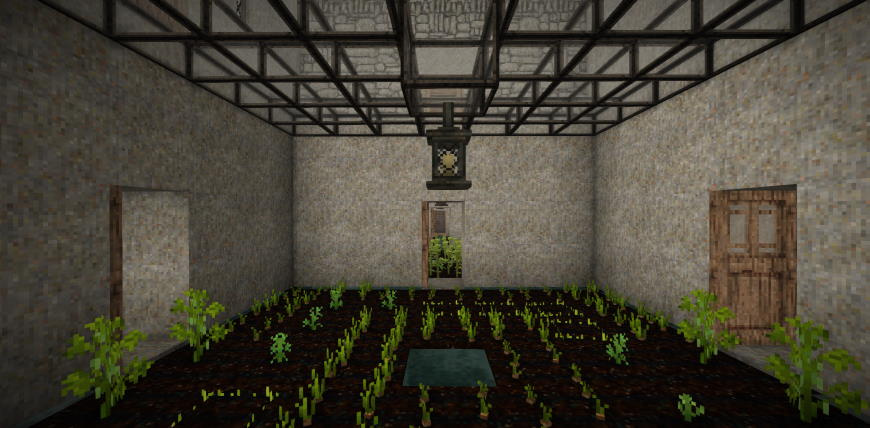
I've built one base, and it's inside a mountain with a valley as the entrance. I'm probably in for a rude awakening once I start playing again. (At least it's only fruit trees and berry bushes outside. Livestock were moved into the mountain as soon as all the rooms were carved out.) I guess my one regret is that I didn't just put my farms near the top of the mountain. Creating the skylights took quite a few pick axes...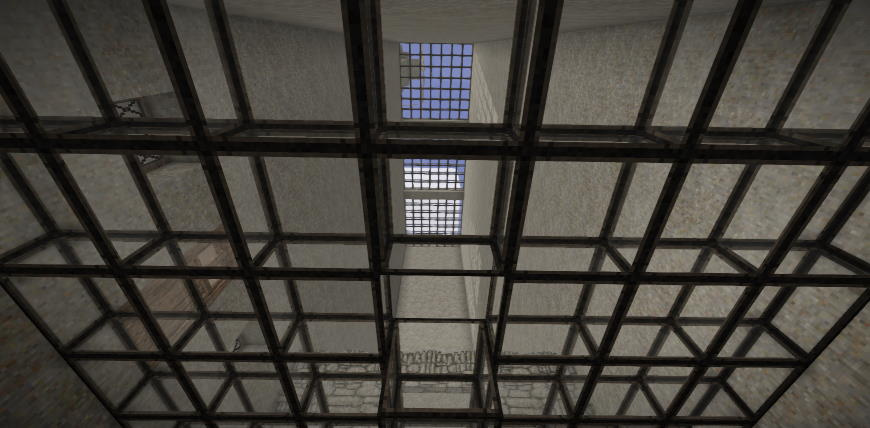
-
I think I recall that drunk people get injured somewhat less than normal because their muscles are relaxed? It could increase your defense a bit, or reduce falling/impact damage.
-
Temporal Instability Region-variable in the world creation settings
Bumber replied to EmperorPingu's topic in Suggestions
Of course, the setting shouldn't effect story locations (e.g., the devastation). (I'd prefer it if there could be a bunch of mini-devastations generated around the world to replace the surface mechanic, personally.) -
Being a cube, the complexity increases n^3 with respect to dimension. To make up some numbers, it's possible 20^3 (8000 blocks) causes old hardware to struggle, 30^3 (27000) causes new hardware to struggle, and 40^3 (64000) is non-viable at present. 7^3 (343) was probably chosen for having no noticeable impact in the worst case (breaking a shared wall) and being reasonable in concept (heat insulation).
-
steam Are the developers ready to launch Vintage Story on Steam?
Bumber replied to Yappi Door's topic in Questions
Notch also said he'd open-source Minecraft when he stopped development. What actually happened is that he handed over development to Jeb, before ultimately selling rights to Microsoft to be rid of responsibility for the game. (I don't think Notch ever intended to go back on his word, but the game's popularity was clearly a major source of stress for him. It's not like we didn't end up with a bunch of Minecraft clones anyway.) -
steam Are the developers ready to launch Vintage Story on Steam?
Bumber replied to Yappi Door's topic in Questions
The problem is that you can't say that VS's download servers will outlive Steam's, nor that Anego couldn't similarly decline after Tyron retires. Will GOG.com still exist in 50 years? (VS isn't even on GOG, of course. You're forced to use Anego's platform in actuality, with the same indefinite rights.) It's not like you've got a finished Vintage Story CD-ROM sitting in your room. You don't still don't own VS, because it's not how software law works. Your ability to play is strictly limited by all obstacles to installing and running the software, and VS isn't FOSS. Your only means of playing any given game in at an arbitrary future date may be a legally dubious one*. Having the game available on more than one platforms is at least an improvement. *Due to copyright law, running previously installed software you no longer have the license to use is basically indistinguishable from just pirating it. Only difference is the additional unauthorized transmission of data. -
I think "/worldconfig lungCapacity 40000" might be case-sensitive, and would need a server restart. The one for entities is "/player [playername] entity maxoxygen 20000". (Wiki gives different defaults for these two. Not sure which number is accurate.)
-
I'm unconvinced of the benefits in telling someone exactly how you feel about, e.g., all their annoying habits if you're actually upset at something else. There's a certain amount of tact required for society to function, and we're already seen what social media has delivered thus far. Emotions are habit-forming, and catharsis is bunk.
-
IIRC, hematite and limonite ores work for cave painting. IDK about malachite, lapis lazuli, and cinnabar. Limestone and coke give slightly different colors from their counterparts.
-
Asking the developer to change their game to suit you, making bold assumptions from ignorance, being refuted with facts, then doubling down and defiantly proclaiming you were right all along is cringe to watch. Your next move will be to claim it was actually your immutable opinion, and you aren't interested in discussing it further. The game with temporal storms is the game that was sold to us. If anyone doesn't like them and isn't satisfied with modding or turning them off in settings, the developer has been clear: If you don't enjoy the game, they don't want your money and will gladly refund your purchase. Saying they could be better is fine, but suggesting they should just get rid of them is unreasonable.
-
Do we really need a combat overhaul? What are your opinions on it?
Bumber replied to Josiah Gibbonson's topic in Discussion
Seraph Space Program -
It doesn't have to be sunlight, but they will despawn if left in insufficient light for too long. Do they stay contained when leaving the area and returning later? I've always assumed unloading chunks was an aggravating factor.
-
Days since last peat accident: 0
-
Possibly an extra mouse button, or mouse wheel scrolling. If you don't know what it is, you should probably just rebind it.
-
Since we're on the topic of lore: Are drifters, et al, canonically referred to as "rotbeasts", or is that a player assumption? Haven't played since RA, but the lore from tapestries and books seemed to imply that the rot was an unstoppable spreading affliction, resulting in the host rotting away into black goo. Imagine a wolf with blackened, tar-like ooze dripping off its decaying bones, aggressively spreading super rabies before it eventually succumbs and becomes an unrecognizable puddle. It really captures the horror of an eldritch plague. Drifters are rusty, not so much "rotting". I don't presume they're contagious, even to non-seraphs. It seems like they should be considered something different, e.g., "rust monsters". From what I've read on the forums:
-
One of the ideas of all time, in fact.
-
One Block at a Time
-
Is TOBG really an offender of that? It didn't even have a in-game guide on crafting recipes until much later in its development. You're left to discover how to cure villagers and make nether portals based on hints from structures that were also added later. Wither summoning is based on an in-game painting. Potions are still just complete guesswork without a wiki. IIRC, using dripstone and a cauldron to duplicate magma was explained in a patch note. Meanwhile, VS has a detailed handbook that mostly replaces the wiki.
-
You mean like generative AI? Dall-E can give us its impression of a pig.