


MKMoose
-
Posts
686 -
Joined
-
Last visited
-
Days Won
2
Content Type
Profiles
Forums
Blogs
News
Store
Everything posted by MKMoose
-
The amusing quirk of the fish fillet is that it gives: raw, 50 satiety, cooked, 100 satiety, in meals, 375 satiety. Their value in meals skyrockets so high that I''ve been questioning whether that's even intentional, since most food items only give 1.5x satiety in meals compared to the best alternative, not 3.75x. Until you have a cooking pot, you can cook the fish whole on the fire and might even come out slightly net positive over fillets. But, once you have a cooking pot, it is absolutely crucial to use all of your fish as fillets in meals, if you care at all about maximizing the satiety you obtain from them.
-
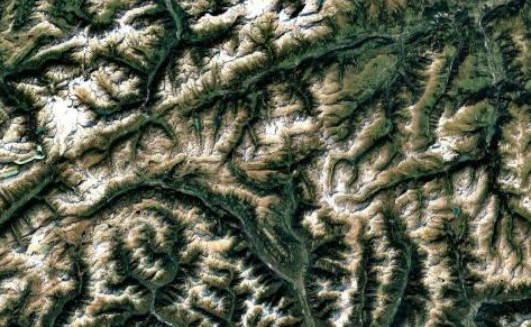
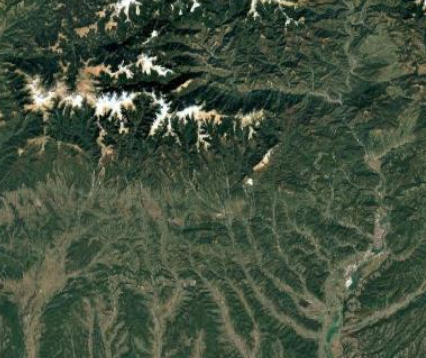
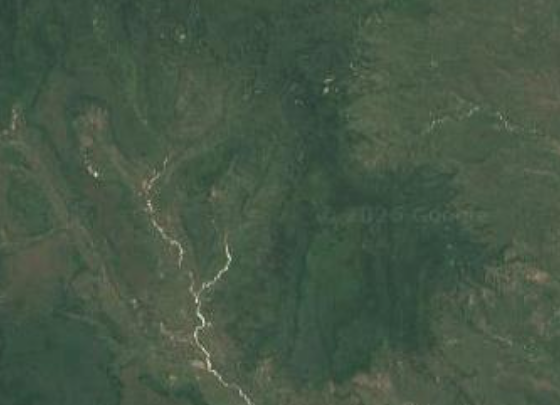
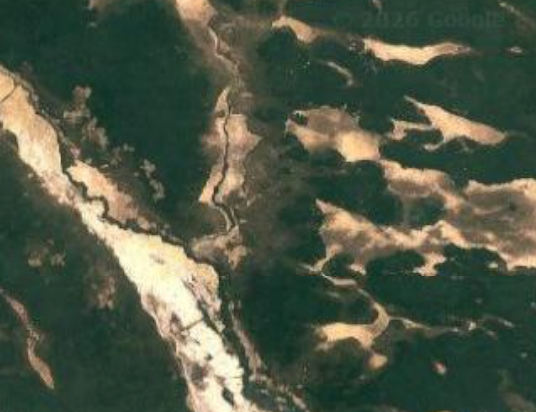
I think this screenshot is a good example of where a terrain feature in the game just doesn't make any sense. It's too large and too repetitive, and doesn't even have a good real-life analogue. I genuinely don't know what this is supposed to represent, and the closest I can think of is either a marsh or prairie potholes, but it's just not even close to anything, mainly due to excessive vertical terrain variation and way too small scale. I would take a completely flat grassland with a lake in the middle over whatever this is, and it would at least be easier to traverse. My thought is to an extent the opposite - many areas of the VS world feel too small to me. While I wouldn't want to necessarily call for plain realism here because improper application of it can easily end up unfun, the VS world is already really, really small-scale compared to the real world, while also missing many details from the real world which would arguably help it greatly, including more natural altitude variation and large-scale highlands and mountains. This could also alleviate some of your issues regarding navigation despite increasing the scale of some elements of the world, because instead of navigating based on distinct, smaller landmarks, you could still navigate along large landforms, even those that stretch across a dozen kilometers or more. Just as a quick example, "travel until you see a mountain range and continue through the montane plains while keeping a swamp to your right". While I don't think making any of these even close to to-scale is a good idea, I think there is a lot of real places to be inspired from, instead of making "realistic" devolve into "boring". I also don't want realistic scale, but I think everybody can agree that realistic features would naturally improve the game a lot. Of course, in the case of mountains, we probably wouldn't want any massive ranges like these Alps (on the left/top), but something more like these mountains in the Southern Carpathians (right/bottom) could make a lot more sense than anything we currently have in the game. Both images taken from Google Maps, about 50 km or so in height. The Southern Carpathian ones in that image are roughly 1400 m in height from the base at 600 m, so even scaling those down 20x to easily fit within the default height limit would leave you with a ~2 km long range - normally you won't get even close to that in-game, and you're more likely to find a massive potato, 250 m in diameter, in the middle of flatlands. Flat areas are a bit more difficult to improve, because a lot of them are inherently large, expansive and samey like this savanna in Tanzania (left/top), but I think there's still a lot we could do with some mosaics and other ways to break up the landscape like in this other savanna in Angola (middle) with mixed woodlands, grasslands, shrubbery and barren riverbanks in varied proportions, or these deserts of Saudi Arabia (right/bottom) eroded by wind and water. All three images about 10 km in height. Overall, I think there's a lot that could be improved about world generation while remaining "inspired by the natural processes of the real world", as the VS home page puts it, with logical regionality, large-scale features like drainage basins and tectonics, improved noise algorithms, climate condition and world parameter interaction, smoother layer transitions, smoother slopes, vegetation mosaics and paths, and a whole lot of stuff like that. World generation is a serious undertaking that a person could feasibly spend their life perfecting, so I wouldn't expect the devs to just keep working on it forever, but I think there's few things that would benefit the game more in the long term.

-

Hunting Should Be Tied to Progression and Adding Butchery
MKMoose replied to moderngamer327's topic in Suggestions
Head and heart are in most contexts not practical targets. It would be an arguably much better and more realistic gameplay incentive to only add a weakspot for lungs, because that is what hunters typically aim for. I do think that bows should be reworked as well. I don't think a damage threshold is a good idea here. Bleeding has two primary purposes: tracking, ensuring a kill through bleeding out. For the purpose of tracking, bleeding should apply on every single hit, but by itself be unlikely to kill the animal unless the initial hit leaves it only on a sliver of health. For the purpose of bleedout, hitting lungs or other key areas should apply a much stronger bleeding effect which could kill the animal within ~10 s or less on a good hit, and up to around a minute if not more for weaker hits. Even when two weapons both can kill the animal in one hit consistently, a better weapon would have the advantage of faster bleedout and thereby shorter tracking distance. I do generally like the suggestion here, but keep in mind that the contents of the Butchering mod are not likely to be directly implemented due to concerns around gore. If we get anything, it will almost certainly be a simpler and less gory system. I personally think that most mods and suggestions tend to overcomplicate it, as it would be pretty simple to add multistage harvesting, alongside animal carry and a butchering table, in a highly flexible way with very little added complexity over the current system. Feel free to take a look at this post of mine, among others, for both an explanation of the reasons to avoid gore, and more details of my take on how butchering could be implemented. Also, extra mention: snares for small game and pit traps for medium game could be great, especially as a easier alternative to hunting. A lot of these changes would require serious improvements to animal AI, though. While I find the balance of taking a couple days to process and lasting several days to be somewhat questionable, this is absolutely the key design idea that current hunting is missing. It just isn't involved and rewarding enough.- 4 replies
-
- 4
-

-
- suggestion
- mechanics
- (and 3 more)
-
The most likely option is that you happened to be in a place where there are no fish, as fish follow fish distributions similar to ores, although they're binary and not based on density - either there is fish, or there is no fish. More specifically, there's 10 groups of fish, each with a shared animal map, I think randomly assigned to different species, so you'll find some different species in different spots. Worms should generally work as bait in any region, since juvenile fish bite worms. Then, once you fish out a juvenile of a larger species, then you can try meat for a chance at adults, or you can use small and tiny fish to specifically target larger adults. Stinkmeat and meat are generally the most universal type of bait, but they can be expensive, so it can be better to first check for fish with worms or stinkdough, and then target the larger ones (if present at all) with meat or with the small fish fished out in the process. That said, I could be wrong, but there's also a chance that juvenile fish don't currently spawn at all, based on what I'm seeing in the assets. If you do find any juvenile fish, I would be greatly interested. Here's the fishing guide text, for your convenience, since it's bugged in-game:
-
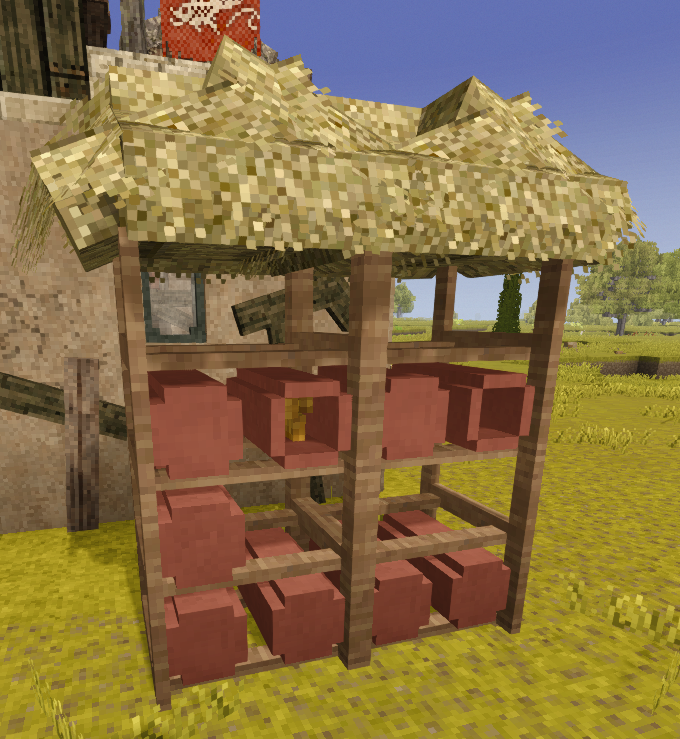
I think it can be said, though, that there is quite a lot of interest in improvements to beekeeping, as evidenced by the popularity of From Golden Combs if nothing else. And you could even say that the fact that FGC leads to some disagreements also works well with the fact that mods generally don't get integrated straight into the game, and instead the devs tend to work out their own implementation of similar functionality. It gives the devs a lot more interesting feedback to work with than just "this should be vanilla". Frankly, I think a lot of discussion on mods focuses too much on a sort of "is this suitable for vanilla" back-and-forth and not enough on "how can we make this more suitable for vanilla". What I would mention is that Langstroth hives are relatively modern designs which are multiple steps ahead of skeps, and FGC's clay hives are really weird and I can't seem to find anything similar in neither historical or modern sources. While going straight to the 19th century or fictional designs might not be a great idea, there are some interesting historical beehives which could at least function as an alternative to skeps, if not an upgrade, and the single best option for that lies in cylindrical clay hives. There's a lot of complexities which may or may not be realized in-game, but the short of it is (skipping some factors which aren't really relevant to gameplay): higher up-front cost, clay cylinders are reusable, more difficult harvesting, though I'm not sure if there's a good way to reflect that in-game, higher chance of colony survival after harvesting (though that depends heavily on specific type of beehive, harvesting method, and harvesting skill), which could significantly reduce the delay between harvests, clay is a poor insulator, which makes it inadequate in areas with too cold winters, which is why it was most popular in regions like North Africa, especially Egypt or Levant - entire colonies of bees can easily just die in cold temperatures in a poorly insulated hive, so this is pretty important (even if we don't want to kill colonies, further reducing their efficiency in cold weather relative to the penalty suffered by skeps would make a lot of sense), easily scalable through stacking on racks or just on top of each other. Quick mockup of how that could roughly look in practice: Or if we're looking for improvements, then a direct improvement over the skep is the addition of a cap or eke (FGC's clay hives seem to be inspired by this), which is basically a secondary removable container serving as an extension of the hive connected with the main skep through a small hole (cap is on the top, eke is on the bottom, though not both at the same time), which allows partial honey harvesting without destroying the hive. Similarly, the cylindrical clay hives could be split into two tiers, one simplistic with nothing but clay closed on both ends except a small entry hole (kind of a clay skep, for all practical purposes), and a more advanced clay beehive made with a slightly tapered cylinder, internal supports and a removable rear end cap for non-destructive harvesting. And even if we were to go for more modern wooden box hives, there were intermediate designs as early as a century before Langstroth hives which were already much better than skeps. There's also a lot of improvements which could be made to the harvesting mechanics (including the usage of smoke, which could be very important for cylindrical clay hives), the pollination, scouting and swarming mechanics, and a lot of other stuff, some of which FGC implements quite well.
-
Didn't miss anything. Linseed oil currently doesn't have any use.
-
You're gonna be amused when you find, if you haven't already, that fish provide 3.75x the satiety when in meals compared to when cooked. Borderline absurd compared to other foods which tend to provide 1.5x in meals, and while I don't know whether it's intentional, I think it's already been like this for a long time before 1.22. It does feel pretty odd to me as well. While there are some fishing methods that don't use hooks, they aren't nearly as universal and they tend to use something instead of a hook rather than just tie a piece of bait at the end of the string. Flint hooks are actually not much of a thing from what I can find, but other options include wood, bone and some plants with thorns. I'm not sure whether that wouldn't be too much upfront complexity for newer player, but I feel like it would be fine enough to just include the hook or some alternative in the fishing pole crafting recipe. If we're talking about the same thing, then you have to right-click first to get the rod back from the cast position (sticking out in front) to the default position (on the side). I also feel like there should be a way to put the bait on the rod without opening the inventory. By default I think you can get almost 1 fish per day per 8x8 area, on average. The effect seems to be binary as far as I can find, i.e. either fish bite normally, or an area is overfished, with no in-between. If that is correct, then you may be able to get potentially upwards of a hundred fish per week from a larger lake. It does feel to me that they've set a pretty nice foundation in place, but a lot of work is still needed to make it actually good. To avoid overcomplicating things, maybe just require to press RMB multiple times per fish, each time bringing the bobber with the fish a bit closer, where pressing too fast would cause you to lose the fish. Then actually pulling the fish out of water and having it hang on the pole in front, or something of the sort, instead of it just materializing in inventory. I don't think that making a pond impossible to replenish is a good idea, though, at least as long as there is no clear warning that you're approaching depletion.
-
A few creatures got changed, but the only significant speed tweaks I can find are: pig - slightly (~14%) higher seeking speed (when they chase the player, that is), slower movement speed when passive, fox - significantly faster when seeking (~33%) and fleeing (50%). There were also quite a few behavioral changes, especially to sheep, and also to pigs and raccoons. Additionally, bears have had their attack range reduced, which I think made it a bit easier to escape them.
-
I'm getting some issues there as well, though it seems to be less that they don't eat at all and more that they eat rarely and the number of portions that they've eaten displays inconsistently. My male goat also seems to have a similar problem, though the female goat is eating normally, it would seem. Probably a good candidate for a bug report. Seems to be a 1.21.2 change. Absolutely nothing was changed about the loose ores in 1.22. Nothing that I can find changed in game files and code at least.
-
One thing that I think people don't appreciate nearly enough is the word "detailed". Redram has said at least on three separate occasions (this one on Discord is the most recent) that they aren't going to be implementing detailed butchering and skinning, but it doesn't mean that more involved mechanics and gameplay are off the table as well. I've argued before that the existing system could be improved with very little time investment while adding nearly zero gore over the current visuals, while leaving components of the system easily modifiable to allow modders to easily add detailed visuals themselves: If I were to point to any mods that the vanilla game would benefit from greatly which haven't been mentioned already, first and foremost I would have to pick and choose from some world generation mods like Watersheds and some of the Floral Zones mods, and maybe even Terrain Slabs. As much as the current world generation has its charms, it produces often extremely repetitive landscapes with samey vegetation and easily noticeable noise octaves, and even putting realism aside I think it kind of just looks bad and boring in too many cases. There's also smaller mods, even something like Sun Gaze, though there's way too many to reasonably remember and list out. What I don't like is that many mods tend to hyperfocus on specific features and add minor details and variations that don't mesh well with existing vanilla features. It's often very difficult to keep the game feeling cohesive as a whole when using them. For example, take something like the the Adventurer's Walking Stick mod - it would be a cool thing to add to the base game, but do we really need 14 variants of a walking stick? Two, maybe three, would be absolutely sufficient to get the neat functionality in without creating a large imbalance between the level of detail and depth of different features. The same goes for the Butchering mod to some extent - the mechanic itself is neat, but I can't help but feel like we could do with less than 5 variants of a butchering hook, 3 variants of a butchering table, and 4 different butchering bags, not even counting all the new food items which would arguably also need some streamlining for vanilla integration. A lot of mods are created because they are cool, not because they have a specific gameplay goal to accomplish, and while that's not inherently wrong, it often leads to mods being simply infitting for vanilla integration without cutting a lot of their features back out.
-
Based on the code, it should be storyStructuresDistScaling. If it's not in serverconfig.json, then you'd need to add it to WorldConfiguration in that file: "WorldConfiguration": { "gameMode": "survival", "startingClimate": "temperate", ... "storyStructuresDistScaling": "0.5", ... } Keep in mind that this value can't be changed after the world has been created. The value is just a multiplier, e.g. 0.5 gives you 50% of the default distance, and the normally available options are in the range of 0.15 to 3.
-
That's... not really true, though (though they indeed don't need fertilizer). Wild bushes might not be too much worse, but they're definitely significantly different. The average yield is ~6% lower, variance is much higher, and the fruiting cycle changes mean that the total ripe time for a single bush in much shorter, as well as that in most climates it's only possible to harvest one or two times per year, with the minimum temperature for two harvests landing somewhere in the temperate zone (variable due to multiple sources of randomness). There are more species of berries, which brings the average yield per unit of area back up a fair bit, though the availability time is still short. I think this is roughly the right direction and is actually surprisingly close to a proper seasonal fruiting system, and proper seasonal fruiting could actually allow to fix some issues with the current system, e.g. bushes being initially completely random and then synchronized after the first winter. Pizza has said that seasonal fruiting can't be added due to berries being one of the primary foraging foods, though I personally don't see how that is an issue, as the current changes are arguably much more detrimental for early-game foraging than a seasonal cycle would be. What many people including the person you're replying to seem to be taking issue with is that the bushes require fertilizer at all, not how much they require exactly. This gets mixed in with people who are overreacting or misinterpreting the changes, and it makes a right mess out of the average discussion on the rework. While communicating the changes a bit better would have helped with the initial partially unwarranted pushback, there is still a large portion of more reasonable criticism which is essentially impossible to significantly address without just redesigning the bush health system, because what is being criticized is in many cases the design and not the balance. Keep in mind that the largest portion of pushback is specifically about the fertilizer requirement and bush health in general, as shown by my poll if nothing else. Other parts of the rework are generally welcome, even if not exactly what some people including myself would like. New visuals, new species and cuttings are especially well-received and seem to be quite clearly net positive for the game. There's been a lot of discussion on it, though I wouldn't blame you if you're not intimately familiar with all of them, especially the almost 17k message long thread.
-
This really feels like it should be updated, and not just copied from when the rework was initially revealed. Most notably to add more complete information about traits and the fruiting cycle, which have already been implemented. Also, it could be nice to explicitly mention that replanted/cultivated bushes require fertilizer, to avoid the confusion with wild bushes which don't. It feels quite appropriate to plug my poll on the berry bush rework, with a detailed description of the changes and some feedback as well: Absolute unit, this update. Really enjoyed the unstable cycle.
-
Now that we have the stable 1.22 release, I wanted to kind of summarize this poll, with 85 votes up until this point. I’ll be defining the score for each part of the rework as the average of the votes on a topic, interpreting the first (positive) option as 100%, the middle (mixed) option as 50%, and the last (negative) option as 0%. Funnily enough, the middle category could be completely ignored and it would make very little difference. I’ve considered tweaking the scores in a couple ways, but ultimately I think that simpler metrics with the appropriate caveats will work better. Keep in mind that the absolute value of the score doesn’t say that much about the mechanic, mainly due to a fairly small sample size of largely unknown origin. What I think is most important here are the relations between different scores. If one mechanic gets 60% and another gets 80%, then the meaning of those scores is really pretty nebulous. What we can say quite confidently, though, is that people like the second mechanic more than the first one. Interestingly, if we define participation as the number of votes on a topic as a percentage of total votes, then we will notice that participation ended up being quite closely correlated with the score (r^2 = 0.69 despite certain outliers). Combined with the caveat that it's possible to vote multiple times on the same mechanic, it is nearly useless as a metric in this case, but also it may suggest that people who like the changes are significantly more likely to vote on them. The only really notable exception is the fertilizer requirement, which got quite high participation for reasons which I think are fairly obvious. 1. Reworked visuals. Score: 78%. Some complaints here seem to focus on the visibility of berries and the clarity of which stage the bush is in. My personal take is that the lack of visual consistency with other parts of the game should be addressed in some way, and it could also help with the visibility issues. I was personally really surprised that berry clusters are not implemented as 3D models the way the fruit on fruit trees are. 2. New species. Score: 96%. By far the single most unanimously praised change. I don’t think there’s much to comment on here, beyond a note on variety and inventory clutter: as it stands currently, the species barely differ between each other in anything besides visuals, there is great overlap in their temperature ranges, and you can find 8 out of 10 currently available species in temperate climates. It could be nice to reduce the overlap between the temperature ranges a bit (both in terms of spawning and growing) to enhance the distinction between different climates and to avoid cluttering the inventory with too many functionally identical but visually different berries. 3. Cuttings. Score: 83%. I think most of the negative sentiment on cuttings seems to be related to the limitations on taking cuttings (just once per year, although can be largely circumvented by taking cuttings from newly grown young bushes) and to the very long growth time of new bushes (currently 8.5 months on average and paused when it’s too cold, which in some contexts makes them arguably just worse than fruit trees). Alongside reworked visuals and new species, cuttings belong to the trio of most supported changes which are getting very little pushback. 4. Adjusted growth cycle. Score: 57%. The first option here which can be considered quite mixed in terms of community sentiment, though frankly I’m unsure what the cause for it is. There’s a range of issues that I could point to, but those will be my own opinion much more than a summary of community opinion in this case: berries start off in a random state in new chunks, and effectively also when planted due to high randomness, which can make them ripen unpredictably, however, once the bushes get "reset" by becoming dormant, they follow a strict fruiting cycle which is almost identical for all species - pretty unimmersive and unrealistic by itself, balance notwithstanding, as it stands, in warmer temperate regions (closer to ~10 C yearly average), berries can ripen twice per year (around July and October), meaning a bush is available during two out of 12 months, and that’s assuming the ripe state doesn’t get cut short by the bush going dormant; there is some variation and some randomness, so ~3 months will be a pretty good (and fairly optimistic) estimate, but it’s still not nearly enough for a beginner to feed themselves reliably, in slightly colder temperate regions (closer to 0 C yearly average) berries will generally only ripen once (around August), at least if not harvested immediately as they ripen, which halves their availability, being on this edge between one and two harvests causes a “ripening” bush with just a few days until ripe to suddenly go dormant, which just feels bad (and it’s kind of realistic, but works out poorly in practice), the most that you'll usually get over a larger area is around 4-5 months total availability (not considering a greenhouse in the context of early-game foraging), a proper seasonal fruiting system would make it easy to stagger different species between each other in a controlled way, to ripen as early as in May, more likely in June (e.g. strawberries, currants), through July, August and September (e.g. blueberries, blackberries), and the last berries ending around October or even extending into November (e.g. cranberries); the ripening times would be much more natural with a good seasonal system, and the player would be encouraged to find and plant multiple species to cover a longer time period (a similar effect can be achieved by adjusting dormancy temperatures, but it could still have several of the other flaws like random initial state). 5. Bush health and fertilizer usage. Score: 45%. As expected, this part of the rework does not get much appreciation. Many people will actually be largely unaffected by this change, but I think the low score really speaks for itself either way. Seemingly the most common argument from the start has been that it would be fine if fertilizer was just a purely optional boost to yield, and in certain regards that’s very close to what we effectively got after they very quickly implemented slow decay in nutrient uptake over time. I don’t know if I can recommend any concrete changes here, but the least that I can recommend is to be more intentional in design and communication: if continuous maintenance was not the intent, then I genuinely don’t know why the initial implementation and description of the changes made it seem like that was the case, only back off quickly (though it's still not difficult to make that assumption based on the changelog) - the majority of the initial reaction after the rework was first revealed was caused by the initial state being seen by many people as practically abandoning the existing design philosophy of Vintage Story, and that kind of irreversibly tainted many people’s impression of the rework, merely phrasing the change as “requiring fertilizer” is an easy trigger for backlash, and anyone with a decent idea of how game communities work could have predicted the reaction just based on a few words of the changelog, the current state is more like up-front cost, but it’s spread-out over a few years, so instead of actually being an effective up-front cost, it can instead incentivize breaking and replanting bushes repeatedly, there is also the whole fiasco with people thinking that wild bushes require fertilizer, which was not an unreasonable inference from the prerelease changelog and yet it wasn’t made clearer since then besides some unofficial clarifications, lastly, as it stands, bush health is so far removed from fertilizing crops that sharing the nutrient system with it can genuinely be more confusing than helpful for understanding it, especially if the player is going by with what realistic bush health actually requires. 6. Fertilizer requirement specifically (the “barren” state). Score: 32%. While I’m not sure how much of this is a knee-jerk reaction more than anything, this is the lowest-scoring part of the rework, justifiably and unsurprisingly. The simplest argument against it is just that it’s unrealistic. A lot of people have said that it would be fine if the bushes stayed as they are, just with the “barren” state removed so that a bush will always keep producing some berries. I think that removing the “barren” state and changing nothing else would make for a rather inelegant system, and I think it would need a few more concurrent adjustments if it were to have the “barren” state removed, though frankly it arguably needs rebalancing even if the “barren” state is to stay. High fertility soil and terra preta are virtually useless for berry bushes, since the difference between medium fertility and terra preta is equivalent to roughly two portions of fertilizer, which is massively less than terra preta costs to make. 7. Medium soil fertility requirement. Score: 43%. Since it was removed, I don’t think there’s much to be discussed here. The score was low, and I'd argue it’s a good thing that it was removed, though I wonder how people would now vote on something like “fertilizer requirement in low-quality soils”. 8. Traits. Score: 75%. Traits are roughly in the middle in terms of score, with the dominant feedback about them being seemingly that there should be a way to crossbreed bushes or in some other way produce new traits instead of just having to find wild bushes with them. It’s also been quite common to see the idea that fruit trees should get traits as well, which kind of just comes back to the issue of berry bushes being inconsistent with the rest of the game. I also stand by my arguments that cuttings with different traits being unstackable is a sacrilege against the player’s inventory space and that the traits introduce unnecessary clutter for what is arguably the most basic and accessible food source, but other than that I think there is not much to say - a pretty good system with a lot of potential which is currently rather shallow. 9. General balance as a food source. Score: 57%. A mixed score again. To this day I don’t think we have seen any official stance on what the intended balance of the bushes is, but as it stands they have been kind of butchered in the early game, with fewer ripe wild bushes that have slightly reduced yield, inconvenient transport, extremely long growth time, short availability window, and the fertilizer requirement. Cultivated bushes can be in certain regards more efficient than the old bushes, especially when considering traits, but it takes much more time and effort to get them up to that state in the long term. Seemingly the most common argument in favor of the rework is that changes were necessary due to berries being OP, but that is actually quite debatable and clearly isn’t the only reason for the changes. They were easy to replant, but many people didn’t bother after the first or second year anyways due to other options being plainly better, both as a food source and also for rot production. Cuttings have now made them more time-consuming to replant and too slow to benefit from in Year 0, but they’ve also made it possible to propagate the bushes at an exponential rate without decimating wild bushes. I’ve personally argued that berries should be much more common in the wild, but take more time to harvest, to lean into them being a reliable food source for the early game and for emergencies, but not viable late-game due to inefficiency more than scarcity - cultivated bushes, then, could be made several times more efficient than wild ones with a bit of maintenance.
-
Leaving a corpse can be quite easily argued to be more lore-accurate based on the "Ghosts" story excerpt, primarily the penultimate paragraph: I genuinely don't know where you're getting the notion that the old body should disappear. And even if we assume that the old body should disappear, the game isn't consistent with itself in terms of what gets dropped and what remains on the player after death. Keep inventory would then likely be the more logical, lore-accurate and internally consistent option.
-
The short of it is that bronze is for the most part a stepping stone to iron. It's easier to obtain and process than iron, but past that it's superseded by it in practically every way. It can have its uses, especially when modded, but you won't lose out by switching to iron as fast as possible. Keep in mind that at least a small amount of bronze is necessary in order to process iron in the first place - most notably for an anvil. Many people don't even make a copper anvil - just cast a hammer, pickaxe and prospecting pick, then beeline for bronze to get set up with higher-quality tools right out of the gate. It's permille, not percentile. Cassiterite readings are bugged - the actual density should be up to ~12 times higher than the permille number would suggest. If I did the math right, the game's internal estimate gives ~81 ingots from a typical cassiterite deposit, more in granite, and the actual average should be even higher. That number has a lot of variance, so you've likely just got one on the lower side despite getting a bountiful deposit in granite. If you had found a couple more deposits near the first one, then your impression would be less skewed. At 0.2 permille, you're generally guaranteed 3 deposits per chunk (under an especially thick layer of sedimentary rock, which is what you seem to have gotten, it will be more random). Also, assuming you switch to iron reasonably fast and unless you're using bronze for armor or some other large project, even 40 ingots of bronze is quite likely more than you're ever gonna need in a typical game. Bismuth bronze should generally be treated as an alternative option for when you don't have any cassiterite but happen to find sphalerite and bismuthinite. Black bronze is generally only useful in small quantities for when you want a small extra edge in combat before you find iron, but it's generally not very worthwhile. Keep in mind, also, that bismuth bronze is not weaker than tin bronze, and it's more of a less common sidegrade. It has lower mining speed and damage, but it also has higher durability on everything besides armor if I recall correctly. For tools like hammers, chisels or saws, bismuth bronze is in isolation strictly better than tin bronze due to mining speed and damage being practically irrelevant.
-
If you want to be extra certain and don't mind using commands, you can also toggle liquid block targeting with .debug liquidselectable or through the World Edit menu, which will allow you to see the name of the block easily.
-
forging Quenching and tempering are overly gamified
MKMoose replied to MKMoose's topic in Suggestions
Technically, this is what the game kind of already does, because the power and durability effects applied by quenching don't do anything by themselves and are only used to then apply damage and other buffs which actually affect the tool's stats. At a basic level, this change could boil down to just renaming a few things, not necessarily significant changes to the underlying functionality. "Power" and "durability" have one advantage over "hardness" and "brittleness" or "toughness", and it is that they more directly tell the player what they actually do in-game. That said, even for players completely unfamiliar with material properties, I think it shouldn't be difficult to remember the rough meaning and in-game effects of two or three words, and it might actually be more of a cool learning opportunity of sorts. One thing I would be careful to avoid is excessive imbalance between the complexity of different areas of gameplay. If crafting with metal is given a bunch of constraints regarding hardness or toughness, then it would seem natural that crafting with wood, bone, stone, sand, leather or other materials should also be given some constraints to prevent the player from using materials which wouldn't realistically be suitable for a given purpose. Certain mechanical parts technically already require harder wood types, but the current implementation doesn't make that requirement very clear. But that said, I think it would at the very least make a lot of sense to apply the bonuses of heat treatment to anything that can benefit from them. If an item or something crafted from it has durability, then it should likely be possible to increase that durability by increasing toughness. While currently very few items can benefit from this, I think it could be possible to treat plates to craft them into better armor. Item stackability concerns would have to be addressed for this to work well, though. Aye, I like both of those. Would help a lot to make the effects clearer and nudge the player towards the optimal treatment order. -
Behavioral responses for animals, inspired by real wildlife
MKMoose replied to MKMoose's topic in Suggestions
This is practically already implemented in the form of seeking ranges. The one thing we don't have is proper LoS, but LoS is far from necessary to implement everything else, and we also seem to have a decent MVP implemented for the bowtorn. Animals already have a stressLevel attribute which can do a lot of work and would likely be more informative. Otherwise, small additions to EntityBehaviorEmotionStates (especially the aggressivearoundentities code) would more than likely be sufficient to create varied state triggers depending on the threat level of nearby entities. Already implemented, alongside some related functionality. My suggestion didn't even mention this. There is a myriad ways to implement retreat and flight. Unless we somehow decide to rework a large portion of animal movement, we basically already have both - one is practically just wandering biased away from nearby entities, the other can be done with the PoI system or without pathfinding at all and just with better obstacle and pit/water avoidance. One thing that could be iffy is retreating while still looking at the threat. Considering that we don't really have procedural animations in the game as far as I remember, just reusing the regular look task would be quite sufficient, and it's trivial to effectively give it higher priority when the animal is alert. We already have a lot of logic related to emotion states and tasks which would cover this easily with few if any new features. Doesn't seem to me that this is necessary for any reason, unless we somehow decide to rework a large portion of entity emotion state and task logic. The actual constraints are caused primarily by animation and sound requirements as well as systemic extent of changes, to the best of my knowledge. -
I'm aware, I read through most of the gameplay changes in JSON and code. They have a 70% chance to become aggressive after taking damage from the player. The possible causes for them to cease aggression and go back to fleeing are as follows: the player getting out of their seeking range (equal to bears' seeking range), finding the target (i.e. touching the player, I think, but it doesn't seem to normally get triggered if the player is moving away from the raccoon), getting stopped by an obstacle, the maximum follow time of 60 s being exceeded (I'd need to verify this, actually, cause it's a really long time to be chased by an animal). Heatseeking missiles are one of the most comedically dumb mechanics in the game, and it seems to me that they are not really brought up too often just because they're sometimes just amusing and annoying more than they are harmful. They're simply caused by aggressive animals lacking proper limits to how long they can chase the target. What I honestly don't get is that, if the cheer is simply about raccoons not being defenseless anymore, then how do we feel about them being randomly borderline suicidal now? I don't think that's much of an improvement. What I personally am quite happy about, which was not mentioned in the changelog, is that the distance at which raccoons flee players, wolves and bears is now 33% higher. This still isn't always enough to avoid bears (and I think it's bears that should be slightly adjusted now to be more similar to wolves), but it's an improvement. And here's the fun part: the devs have quite literally solved the "capable of protecting themselves" problem with the bowtorn already, which will flee, but retaliate if the player gets too close. It shouldn't be difficult to do the same for raccoons, and several other animals as well. An even simpler solution, though possibly a bit less practical, probably lies in just reducing the maximum follow time (which for some reason isn't adjusted from the default 60 s on any animals except foxes chasing chickens and hares). The changes to foxes and pigs, as a side note, are arguably actually really quite good, now that I've looked at them in more detail. The seeking range for pigs actually got reduced, and what was increased is just the range at which they flee the player after being hit, if I'm reading it correctly. Both now also flee quite a lot faster, not just chase the player faster, which might actually cause some difficulties when hunting.
-
Animal husbandry as a mechanic doesn't strictly require the animal to be fenced-in, however, you'll generally want to have a contiguous fence to protect the animals from predators and prevent them from wandering away (or jumping off the cliff), especially for when they start running from you or from a predator. Fish can keep respawning even if you completely deplete an lake.
-
Behavioral responses for animals, inspired by real wildlife
MKMoose replied to MKMoose's topic in Suggestions
The purpose of defensive threat display is less to warn the player not to attack, and more to warn the player before the animal attacks. But if the player attacks the animal or just approaches too quickly, then they will still be met with a fast and dangerous response, especially from animals like boars, moose or bears. Even a raccoon or a deer might sometimes defend themselves with an opportune attack first before fleeing if you manage to run straight into it (though especially deer would practically always run away before you can do that). Being able to avoid dangerous creatures is, in large part, exactly the point, though they will easily still give you a scare or outright attack if you don't make distance quickly enough after initially getting too close. With the exception of wolves and hyenas in certain regards, I would argue that animals should be easy to avoid, but more dangerous when not respected. Even if the player is confident in their skill, they would still be easily put in their place once they get too cocky and disregard one warning too many or forget to keep their guard up. As things stand, the best way to cross a forest is just to keep running since animals are for the most part just too slow, and I think it would be much better if instead it was preferable to move more carefully to avoid disturbing the wildlife. And at the same time, moving slowly should be greatly rewarded when hunting with the ability to get much closer to the target for a better chance at an accurate hit with arrows or spears. Wolves, hyenas, and to some extent brown and polar bears, are exceptions from the above, because they can function as more active predators and would be much more tricky to avoid completely unless the player simply doesn't even approach their territory. Fair enough, I do certainly agree that there's a lot of things that would require a bunch of new mechanics to be introduced. That said, there's good reason I've put injuries and bleeding in "additional notes". I think that even just very basic gradation of reactions to the player (simply one extra state between calm and scared/aggressive), ideally with vocal warnings where appropriate and some adjustments to animal stats, could do wonders for the animals' behavior in practially all contexts - exploring, hunting and husbandry - all while almost exclusively using already existing mechanics. -
The problem is that if the player backs off, the raccoon will keep chasing them. That is the single part which I took issue with, even if I didn't initially word it particularly well. There you go. Behavioral responses for animals, inspired by real wildlife. Nothing like getting hit by a bit of inspiration on a weekend.
-
Motivation Animal behavior in Vintage Story is largely unimmersive and unintuitive, because animals respond in gamified and highly simplified ways. Most animals exhibit survival strategies which could realistically be easily considered pathological, i.e. caused by disease or injury. Goals Improve animal behavior to be more engaging when hunting. Make animal behavior more believable and realistic. Give the player fair warning before an animal attacks. Reduce early-game frustration with overly aggressive wildlife. Improve the behavior of domesticated animals to be less erratic. Stay reasonably close to the vanilla experience and mechanical constraints. Primary behavioral patterns In science it's not uncommon to distinguish many different kinds of distinct behavioral responses that animals exhibit when approached or threatened. I'm going to simplify the system into three generalized patterns which, with some variation within each group, can cover every single animal in the game and provide plenty of gameplay depth. The borders between categories are naturally fluid and some animals may exhibit behaviors typical of more than one group (especially since behavior can vary due to various factors), but this is intended more as general guideline than rigid categorization. Evasive animals, prey and small game. Relevant animals include smaller species like foxes, raccoons, hares, as well as several larger herbivores like deer, sheep and goats. The primary response for these animals is flight - fast escape, preferably to pre-selected advantageous terrain, like high ground in the case of goats or trees in the case of raccoons. Some animals like raccoons often employ threat display - hissing, bluffing, fur standing up, and many animals like deer, sheep or again raccoons, especially if cornered or immobilized in some way, may engage in more defensive combat - ramming, kicking and thrashing, clawing and biting. It is important to remember that for these animals even more so than others, combat is about survival - if they engage in it at all, they generally only do it opportunistically to protect themselves and their young or to create an escape opportunity. They are not aggressive and their first response is almost always retreat. Those are also the animals which a hunter will often focus on for meat and pelts. Defensive and territorial animals, large game. This category includes boars, bears, moose and similar large animals. Due to their size, they can be unexpectedly dangerous even if they don't seem immediately threatening. Typical response often involves territorial defense and threat display - repeated approach and retreat, vocal warnings, guarding boundaries. Under some circumstances like guarding their territory or food, protecting offspring, or getting surprised at close distance, they may resort to managed but decisive aggression to neutralize a perceived threat, though they still remain defensive above all else - deliberately seeking out a target or pursuing a threat is rare. Some species like black bears may be more avoidant and prefer to disengage as quickly as possible. Simply avoiding approaching too close and leaving the area once warned is generally sufficient to avoid danger. This category, from a gameplay perspective, should include animals balanced as "hunting challenges" - large game that will fiercely fight back when hunted, but may provide relatively lucrative rewards in the form of heavy hides, fat and large bones. Predators. In the current state of the game, this only includes wolves and hyenas. Predators are generally much less aggressive than many people seem to think, and their behavior is driven by well-developed risk assessment abilities. Wolves and hyenas often move in packs or small groups, though many other predators hunt individually. Their typical response when threatened is keeping distance, careful observation, tracking and similar behaviors. If they encounter larger animals or groups, then the decision-making process is simple: high risk => retreat. If they deem that the target is worth the risk - primarily when a pack of predators locates lone prey - they will circle the target and close in, then attack. In part to protect lone players from somewhat unfair attacks, larger packs of predators should arguably only target large enough groups of targets. They don't just outright attack anything that comes into their vicinity, and instead they choose their prey carefully. Implementation details Animal awareness. Each animal should have certain distances (much as they do currently, though it's pretty shallow as of now) at which they enter specific behavioral states. Ideally, this would be done not with strict distances, but based on some simulated aspects of hearing, sight and maybe even smell. Some delays, lingering states and other details would make them more believable. Keep in mind that distances may vary greatly between different animals, and the examples I'm giving are very rough and generally much lower than realistic for the sake of gameplay. The primary states which should be generally shared by almost all animals are: calm (no threat in vicinity, resting, eating, drinking), alert (~20-50 m or closer, prey animals will raise their head and start scanning for threats, while territorial or predatory animals may move to investigate the potential threat or target), cautious (~10-20 m, all relevant animals may engage in defensive threat display at this distance, prey animals will freeze or retreat depending on species, while other animals will either retreat cautiously or turn towards the threat depending on intention), threatened (~2-10 m, prey animals flee quickly, defensive and territorial animals may attack, predators retreat unless confident), attacked (after getting hit, behavior is more erratic and unpredictable, for most species the primary reaction is flight, especially if hit at range and not from up-close, while defensive behaviour similar to when threatened is less common, though more aggressive if present). Animal speed. Flight (escape) and pursuit speed should generally be higher than the player's sprinting speed, unless injured. I believe that hunting should be about strategy, element of surprise, careful shot placement, and fast action, not about pumping half a dozen arrows into a single target. The best way to do this is to make sure that prey animals escape quickly when hunted carelessly, while larger animals should be avoidable if warnings are respected, but extraordinarily dangerous when aggressive (it's genuinely kind of pathetic that a Seraph can outrun a bear in many contexts, even a brown or polar bear with effective use of terrain). Defensive attacks. When threatened or attacked, many animals will attempt a quick and decisive attack, and then disengage and retreat if unsuccessful - largely the same as the current "attack and pursue", except switched back to "flee" after the first attack, whether successful or not. If the threat pursues the animal in turn, they may opportunistically attack again. Exceptions may include boars as well as brown or polar bears, especially when protecting their offspring, but even those should often relent after a short sprint - if they don't manage to catch the threat within that time, they should retreat back to roughly where they started (especially if the initial reason for the aggression was protecting their young). Predator attacks. When travelling through the wilderness, predators shouldn't generally be a jumpscare, or at least it should be the presence of the predator or vocal warning that jumpscares the player, not immediately taking damage. Animals like wolves practically never attack right the moment they notice a target. The default wolf encounter should be noticing them some two dozen blocks away, looking at the player and following them. In many cases, they would disengage naturally. In some cases, if the risk is not too high, they would circle the target, close in gradually (often with vocal warnings) and then attack suddenly. Domesticated animals. The "threatened" radius in which animals initiate flight or attack should be very quickly reduced to zero for domesticated animals, and the thresholds for other states should also be relaxed fairly quickly. The key here is gradation (important everywhere, but here especially) - it's only natural for a domesticated animal to be hesitant and careful around humans if it's not habituated, but the current behavior of either being completely oblivious or full-speed sprinting away with nothing in-between is exceptionally unimmersive and annoying. Additional factors affecting behavior. The most relevant factor is likely having offspring to protect, and the mating season also causes increased aggression in many species. These could be implemented in various, simple or complex ways, but the most important detail is that when an animal is protecting their young, they should actually protect them, not forget about their existence once out of range. Animals that don't generally fit these categories Animals like aurochs, elephants or horses, as herd animals, would ideally need more complex herd behavior to be simulated or at least approximated. They are in many regards similar to other larger animals like moose or boars, but herd dynamics shape their behaviors is very distinct ways. Some predators, though we don't have them currently in the game, may silently ambush the target. A big cat or two could really spice up the tropics. Additional notes AI improvements are borderline necessary to really bring a rework like this to a more complete state. The least that should be eventually done is: prevent animals from constantly falling down pits or into water, introduce more variation to animals' direction of movement, instead of having them always move either directly towards or directly away from the target or threat. Injuries, bleeding and similar effects would allow to make hunting (and being hunted) much more dynamic, engaging and realistic in a whole range of ways, mainly by greatly reducing the number of hits required to bring down a target but increasing their threat level and adding on additional complexity of tracking injured animals. Animal yields would have to be increased if animals are made more difficult to kill. Arguably, animal yields should be adjusted regardless by implementing simple butchering. It would require more effort per animal while retaining a similar level of effort for the same yields, changing very little about balance while greatly increasing mechanical depth and reducing the need to kill dozens or hundreds of animals over a single playthrough.
- 10 replies
-
- 12
-
-

-

-
If you want to bring up realism, then I regret to inform you that raccoons are, in fact, not aggressive. Their typical response is a defensive threat display, with bluffing, hissing, fur standing up, and all that. Neglecting diseased or highly stressed individuals, any sort of aggression is generally limited to last-resort attacks when protecting young or cornered. When attacked, flight is generally the first response, then defensive combat if grabbed or cornered. Compared to animals' real-life behavior, the thing that VS and many other games tend to default to of "pursue the attacker" is borderline absurd for almost all animals, but especially for small ones like raccoons, just because it would be a largely pathological survival strategy. It can make some sense for megafauna and large predators, but even in those cases defensive behaviors tend to be more common than aggression and pursuit. In an open field or forest, they have all the escape routes in the world. They can run some 20 km/h over short distances and climb trees. But even disregarding that, my point is about aggression and pursuing the player, which they simply should not do. Raccoons being capable of protecting themselves and being aggressive when attacked are two entirely different things.
