MKMoose
-
Posts
686 -
Joined
-
Last visited
-
Days Won
2
Content Type
Profiles
Forums
Blogs
News
Store
Everything posted by MKMoose
-
Realistically, metal doors with heat-resistant glass viewports seem to have only started appearing in the 19th century. But regardless of the exact temperature ratings for different types of glass, I think it would be fine enough to add a metal door with a viewport, even using regular glass. There's plenty of minor historical and realistic inaccuracies in VS already, and adding one with an actual purpose would be quite fine. You can also just use glass in the wall of the charcoal pit, and a solid door for the entrance. Granted, in your specific example that glass would have to be somewhere on the side since it wouldn't fit on the front (or the door would have to be moved and glass left on the front, or the pit could be made taller), but to me that still seems much better than having to break the glass to go into the room.
-
Whenever you're wondering about recent TOPS news, the #tops-news Discord channel is probably the best place to check. The server was brought offline due to the griefing event, but there is currently no ETA for when TOPS will be back online.
-
 Kind of, though I was thinking that the commoner is more akin to a farmer (which would constitute potentially upwards of 90% of medieval society), whereas a "laborer" is a person who does manual labor, mostly seen in larger cities and often associated with construction work. They would move goods, load and unload ships or carts, work at construction sites and do the the physical work in workshops, kilns, furnaces, landscaping, this sort of jobs. Granted, though, it could potentially be argued that it falls under the same broad bucket as the commoner. Seems like a very good way to differentiate the doctor. Doesn't even necessarily need to be particularly realistic, as there is a lot of shenanigans that could revolve around the unique flavors of the game with ingredients sourced from drifters or other stuff related to rot, rust and whatnot. Overall could be interesting to let the doctor use a couple of their own unique medical cures, and repurpose poisons as healing items or vice versa - all classes could heal all injuries or diseases at a basic level, but a doctor could be more flexible and may use nonstandard ingredients (poisons, leeches, rot, rust) in potent but risky treatments.
 -
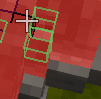
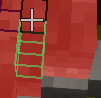
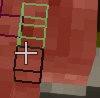
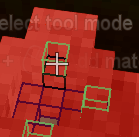
Personally, I see the hub as four 3x3x3 cubes with holes on the sides, one empty 3x3x3 cube in the middle, and the corner parts which connect the cubes, so I will use that description. The way I do it is as follows: Place three ingots or a plate and an ingot on the anvil - it's fine to just place them all at the same time for simplicity's sake. You can rotate the workpiece three times with RMB before placing the third ingot, if you're using ingots. First build as much of the four outer 3x3x3 cubes as possible, which should probably be the easy part (just treat them as solid 3x3x3 for now): If you're using ingots, start by moving the material from layers above the third layer down into the cubes. You can use heavy hit to make it faster, but you might then have to pick up some material from the sides and move it back up. If you do so, you can leave one voxel of material in the corners which aren't part of the cubes, and it may also be useful as a staircase for other voxels. If you're using a plate, start by moving all the material from around the hub inwards and upwards. Leave one voxel of material in the corners which aren't part of the cubes, and use them as a staircase for other voxels. Then you'll need to move the material from the top layer of the central 3x3x3 cube to finish the outer cubes. You will be missing five voxels if you're using a plate or have left one voxel each in the corners below - don't worry about that at the moment. Once you have the four outer 3x3x3 cubes (optionally with a few missing voxels), you need to fill out the corners - looking from the side, it's: down > down > right > down > down the five first images show which voxel I'm targeting for that move, and the last one is the finished result. Repeat for each corner. If the first voxel is in the corner already, then you just skip the first step, and you might need to move the third in from somewhere else if you're missing something on that side. You should now have a cross with five voxels in the second layer of the central cube, and two voxels missing from each outer cube for a total of 8 missing voxels (or three voxels missing from one of them for a total of 9 missing voxels if you're using a plate). Move the voxels from each arm of that cross in the second layer of the central cube clockwise or counterclockwise to have an X, and then bump them up to the third layer of the outer cubes to fill out the voxels which you've just used for the corners. You can also move the central voxel to fill out whatever your're missing. You should now have at most one voxel missing from each cube. You have to now destroy the middle voxel from the lower layer of the central cube to access the other ones. Then, you need to move the missing voxels from the bottom layer to the top layer: Make sure that your missing voxel is centered like this, at least for the first side, since you can only access four voxels adjacent to the one removed from the center at the moment: Then you need to make space by temporarily moving a voxel to the fourth layer, and bring the voxel from the bottom layer up: up > up > up > down > down the five first images show which voxel I'm targeting for that move, and the last one is the finished result. You can account for this step by leaving one voxel on the fourth layer earlier, but I skipped that for simplicity's sake, in part also to show that you can do it on the fly as well. If you accidentally break some voxels, you can use the other voxels at the bottom in a similar way to make up for any losses. Remove excess voxels in the middle, and remove the excess voxels from the sides of the outer cubes (make a 2-voxel deep hole in each cube). For the voxels in the middle, you can just jump on top of the anvil to reduce the risk that you look at something wrong and break something. I strongly recommend to sit using G when removing the voxels from the sides, and rotate the workpiece with RMB. Figuring out whether you need to break another voxel in the hole can be a bit tricky here due to the black and purple wireframe being very similar, so you have to be kinda careful here. Feel free to tell me if anything is unclear.





-
Updating to 1.22.5 should fix it.
-
An inversion in monster distribution philosphy
MKMoose replied to Rainbow Fresh's topic in Discussion
I've also found this kind of progression very satisfying, though I think the current system can easily fall flat in a lot of ways. To me, the progression from a couple torches out in the open to a large number of lanterns in a fenced-off area feels almost like an unintentional consequence of a few unrelated design choices, which isn't really reinforced in any way (and many players just never seem to experience it, if they just make some different choices as they progress). Games like Don't Starve Together or The Long Dark tend to really make a point that darkness being dangerous, and they make sure that fire is critical to survival. But in VS, there is little intentionality - monsters don't spawn in lit-up areas, sure, but then they aren't in any way repelled by fire or even interact with it in any way besides sometimes burning, and temporal storms ignore the spawning restriction either way. Fire is basically a non-issue, it is almost entirely free, and has little purpose besides lighting up firepits and pit kilns. I've been thinking that it could be interesting to make fire more crucial to the game by at least implementing some sort of fear of fire into monsters, and possibly some other changes like making most if not all light sources expendable, increasing the utility of fire, adding better firestarters and various long-lasting sources of fire. Imagine how unnerving it could be to see monsters moving into the light of a torch or brazier then cover their eyes and recoil, clearly trying to get to the player but kept at bay by the fire. Or even how cool it could be to maintain a huge fire in something almost akin to a ritual in the center of a settlement through the duration of a temporal storm. Frankly, I've never seen the point of rift wards, and as I see it there's already practically no reason to bother building them: they are pretty expensive to make compared to simple light sources - three Jonas parts, iron plate, electrum ingot, and some miscellaneous stuff. they require maintenance with temporal gears, whereas light sources are infinite, they aren't fully reliable, unlike light sources - they occasionally still allow a rift to spawn, plus rifts can spawn monsters in a 20 block radius which can sometimes greatly reduce the apparent range of the rift ward. I think I would like it if light and rift wards served two distinct purposes - light could be used to deter or repel monsters in some capacity, especially once they've already spawned (serving as a protective tool in some sense), whereas the rift ward could be used primarily to increase the stability of an area and reduce spawns in a large radius (as the primary method for large-scale prevention). Regardless of how it's done exactly, I think that it would be better if they complement each other rather than compete for almost the same function. Yeah, very much so. I would imagine that some storm-related effects could start upwards of around ten minutes before any threats start appearing. The point is to make the start of a storm (and then the storm itself) into an immersive atmospheric event, not unlike how real-life storms might start with strong winds, birds flying low, rain clouds closing in from the distance, and so on. I've been saying somewhere around here that anything which can be made more immersive by moving it from the UI to the in-game world should be given these diegetic tells, and I think all the temporal mechanics would especially benefit from it given their otherworldly nature. I would argue that storms should be an environmental effect first, and a combat challenge could even be almost entirely optional. Naturally, low stability should be risky and inadvisable over prolonged periods of time, if storms are to remain notably threatening, but a storm just dumping a dozen monsters on the player like they owe something to it is not great - it would be ideal to find a good balance there, not swing the pendulum between extremes. It seems to me that the maximum light level for spawns is there largely just to prevent annoying spawns inside of the player's home - while it is pretty gamey, it is also pretty important, and removing it would require that some other way to prevent random spawns in player-owned spaces is added (and the simplest solution of preventing spawns in rooms is probably not enough, plus it could be finnicky and frustrating to make sure that everything is a room to prevent all spawns). There are options, naturally, and they would just have to be implemented, while light level is right there, free to use, and it's a quite simple and intuitive solution, even if somewhat flawed. Fun fact: many animals also don't spawn at high light levels, specifically (as indicated by comments in the assets) to prevent them from spawning straight inside farms or animal pens and eating all the crops (in the case of herbivores) or killing the domesticated animals (in the case of predators). -
Yeah, that's the easy and immersive solution. Alternatively, you can just wait for the nutrients to replenish, though that still leaves the problem of how long to wait if the nutrients are not visible. The recovery rate should be 0.25% every 3.5 in-game hours on average, so ~1.7% every in-game day or a little less than 6 days for every 10%. Nutrient consumption falls off to just ~20% of the base value after 10 years, so the bush will have consumed ~80% of all nutrients it will ever consume by that point (neglecting variation due to differing health states) and further uptake is almost negligible in most cases. As I see it, extending their lifetime is significantly easier than dealing with breaking and replanting, unless maybe when you're mass-producing rot. At least, that is when you have sufficient fertilizer - I always have an excess of bones, but I don't know about your playstyle. Frankly, for me it's a hard no. If apples didn't last well over a year in a cellar and ripen faster than bushes in Year 1, then I would be a bit more willing to bother with berries after Year 0.
-
An inversion in monster distribution philosphy
MKMoose replied to Rainbow Fresh's topic in Discussion
Assuming good player stability and no temporal storm active, they can't spawn at all in areas which have an artificial light level of 8 or more even while in range of rifts (technically "OnlyBlockLight", so only light emitted by blocks, but that's synonymous with artificial light for most purposes). It can be annoying to light up a large area sufficiently, and having some small spots with lower light level can sometimes make it seem like they occasionally spawn in lit areas regardless. It is also true, though, that rifts can occasionally spawn monsters in broad daylight - at just ~0.63% of the standard spawn rate, or slightly higher when multiple rifts are close together. Somewhat reminds me of Project Zomboid, which has a relatively high initial density of zombies with a low respawn rate. For that game it works very well, retaining the danger of exploring and looting new locations while reducing pressure on the player in already-cleared areas, though it is a quite different game. I think it could be nice to have something like this implemented for monster spawns in VS, and it could be done in many ways, though I have some doubts about the specifics of your suggestion. Currently rifts last 24 hours if I recall correctly, and new rifts would still bring with them new monsters (unless the maximum is tied to chunks or whatnot, instead of directly to rifts). Having a maximum number spawned per rift could still be useful, as it would prevent a single stray rift spawned close to home from potentially ruining a whole night, though it solves a somewhat different issue from what you've described. Also, "random nighttime spawns" are not exactly a thing, as those either come from rifts or crawl out from caves or other dark areas. At least a small quantity of respawning monsters would probably be desirable - I feel like it could be cool to allow reliably blocking or exhausting rifts, but also to let drifters drift through the world, stumbling upon the player occasionally. Overall I would appreciate something like this being implemented as long as it's not completely endless spawns, as that would defeat the point of clearing the place of monsters in the first place. It could be implemented via closable rifts. Or a sort of depletion mechanic, where monsters would be more plentiful initially, but after being killed they would replenish very slowly, perhaps over several months if not longer. Personally, though, I don't think it's really debatable that some changes to temporal stability, rifts and storms on the whole are overdue, so I feel like reworking monster spawns as part of a larger overhaul would be more worthwhile than just reworking monster spawns themselves. Spoiler-marked just because it's long. Broadly speaking, the way I see it, this tends to boil down to a couple simple design rules which aren't respected by VS particularly well: Especially at the start of the game, any monster spawns should be finite, periodic or just very slow to give the player breathing room - this is partially already achieved by the fact that monsters for the most part spawn at night only, but it is also not achieved particularly well because sometimes monsters just spawn in forests or in caves and can keep harassing the player almost 24/7. At least there's the grace period in world configuration, but a new player often won't think to deliberately make the game easier for themselves. In an area that the player treats as home, monster spawns should be greatly limited or entirely absent, especially if the intent is to facilitate a feeling of ownership over the homestead and allow creating a safe zone in which the player can prepare for a trip into more dangerous areas - lighting up the area already somewhat protects against spawns, but temporal storms break it, the rift ward doesn't help, and there is basically no hostile regions or locations that the player could prepare for anyways. Respawning threats, especially those that harass the player periodically even in a home location, should be designed in such a way that even a new player is expected to fight them, and can learn to do so organically - rifts and temporal storms are almost a complete failure in this regard. They should also ideally offer some sort of reward for dealing with them efficiently and let off in the late game once the pressure they apply risks becoming tedious, cheesing becomes more appealing, and voluntary challenges are more desirable. In special locations that are designed to be looted like ruins or story locations, respawning should only occur if some loot respawns as well, or at least the enemies can be looted. Ideally, though, don't make it into a regular farming spot. If there is no loot to respawn, then I see no reason to respawn enemies as well. Overwhelming, high-frequency monster spawns should be used almost exclusively as a means of communicating that head-on combat is not the optimal option, plus in extreme optional challenges - while temporal storms do kind of seem like they are supposed to be avoided so they could fit the bill, the devs have also said that they want to encourage interacting with storms more. Plus, I think it goes largely without saying that hiding during storms as it is now just isn't really fun. The fix to all of the above is pretty much just to create dedicated high-risk areas and challenging dungeons, while limiting random harassing spawns from rifts and storms to be less disruptive. Also as a side note, respawning or persistent threats out in the world are useful to make travel more challenging and engaging, while fast travel options and non-respawning threats are useful to facilitate a sense of progression for exploring and clearing out an area - both are generally optional and are currently done in some capacity. I see no need for any big changes here (or if any changes were to be done here, I would focus on world generation and animals, not monsters). Thing is, though, that when people are complaining about rifts or storms or whatnot, they aren't always complaining about combat. Sure, better combat would make things more manageable and less frustrating, but I think a lot of the issues that people have stem from a feeling that the game doesn't respect their space and time, which seems closely related to when and where monster spawns occur. While some level of pressure on the player is only natural in a survival game, it just gets frustrating and tedius when I want to do one thing, but the game basically goes "nuh uh" and makes it impossible to do anything except sit about until the night ends or the storm wanes. In this context, how good combat mechanics are starts to more properly matter only when combat is unavoidable - and the funny thing is that combat is almost 100% avoidable, but the way to do so is just sit about and do nothing, which is not exactly the definition of fun either, and if a player doesn't feel prepared to fight then they will just have to sit it through. Well, combat also matters when I specifically want to try my hand at combat and take on something difficult, though there are currently almost no interesting challenges, and a huge portion of combat in the game boils down to either out-damaging a crowd of basic enemies while wearing heavy armor or cheesing them with ranged weapons. Improving hitboxes or animations is important but it won't meaningfully change the basic combat loop or provide difficult challenges and new ways of player expression. -
It seems to me that the best way to make these three concepts stand out while avoiding excessive overlap would be to have each of them focus on a fundamentally different worldview in a sense and only secondarily derive gameplay functions from there, as that would serve as a sufficient differentiation even if all three were to have some relation with alchemy and science. Any kind of perfect lore accuracy isn't really necessary, in the same vein that it makes sense in gameplay even though there's no real lore reason to, for example, make every single tailor invariably weak and kind, or every single Blackguard invariably clumsy and heavyhanded. Doctor - Rot and shady experiments. Managing the dying and the dead would have been quite high on their list of responsibilities, and rather than focus on something akin to first aid (which could be the domain of the tailor) they seem like they would be similar to real plague doctors. "Plague doctors rarely cured patients, instead serving to record death tolls and the number of infected people for demographic purposes." False cures and experimental treatments wouldn't have been out of place, which in gameplay could translate to double-edged healing or buffing items and dangerous or questionable brewing and alchemical ingredients. Where malefactors forage to survive and tend to stick to what's safe and reliable, where tailors stitch up regular wounds and care for the patients, doctors experiment, record, and move on indifferently to the next victim of the Rot. Forlorn Hope - religion and faith. Prayers, rituals and magical symbols would have been common, be they effective in some capacity or just a superstition. Blackguards are practical, efficient and driven by necessity, whereas the Order is proud, self-righteous or downright fanatical. In gameplay, this would easily translate to pseudo-magical trinkets or symbols, and classical alchemy in the pursuit of prima materia - perhaps allowing to interact with temporal stability and storms, protecting a seraph from harm or incapacitating a drifter. Implementing something like this wouldn't be unreasonable even if all of their pre-Machine symbols and baubles were utterly ineffective in practice. Noble - science and history. Educated and travelled, they know the world, are familiar with relatively recent events, and quite notably, they are well literate - which can't be said for most people in the Middle Ages. Contrary to the Order of the Forlorn Hope, nobility wouldn't have placed as much weight on religion, and instead they could focus more on grounded, rational science. They can make use of ruins, but while malefactors are more likely to loot them, nobles are better equipped to find information. They could read notes and books to discover recipes, locations of other ruins or of some biomes and resources, and they could potentially discover exclusive lore. As a side note, these classes could very neatly flesh out the roster of city dwellers - nobility, more or less clergy, plus a merchant we've mentioned before. The clockmaker is probably an artisan, the tailor is something like an apprentice or journeyman, and we could maybe use some kind of a laborer and a servant to have a practically complete set of social classes. Less "prevent them from using flax at all", and more "make them use other (foraged or looted) resources in place of flax to make the same products". Give malefactors an alternative way of obtaining some things within a gameplay loop more centered on exploring, foraging and looting. Change the means, but don't significantly change the end result - so there's almost none of the problems that class-exclusive recipes cause, real or imagined. My general though process is that it is largely well-known and proven in game design that some of the best methods to achieve meaningful distinctions between classes (or between characters, weapons, skill trees and so on) rely on significantly changing the gameplay style between them to match different player preferences and means of player expression. This is done fairly well on the side of lore and theming for the existing classes, but actual gameplay differences are currently quite minimal. Being slightly better at some things and slightly worse at others changes borderline nothing about a player's playstyle if there's still just one way to do each thing, which different classes just make a bit more or less time-consuming. It also makes it easy to compare classes directly and determine which of them is strictly better, which can produce a clear meta. One difficult part of it is that a focus on realistic survival mechanics can make it tricky to introduce meaningful changes to core gameplay, since it's not straightforward to properly justify other characters being unable to use relatively basic mechanics - this is in part already visible in class-exclusive recipes. Many differences are virtually impossible to realize, and it is easier to rely on efficiency differences and not completely new mechanics to direct the player to alternatives, but this doesn't prevent people from sticking to the generic mechanics. And that is why I was wondering if it would work to make it entirely impossible for the malefactor to use flax for some things - unless you force people to search for the alternative, they might just keep farming flax and complain that it's less efficient. Another difficult part is that almost everything in the game is currently only made in one specific way (potentially with minor variations like borax instead of lime in leatherworking), so there are almost no existing alternatives to make use of to differentiate classes. But, there's a plethora of alternatives that could fit right in: Wood carving, bark containers, gourds, glassmaking and metalworking <=> various pottery items. Bone carving and cold working native metals <=> early metalworking. Wool and wild bast fibers <=> linen. Drifter skin, felt, waxed textiles and bark <=> leather and paper in certain contexts. Wickerwork <=> wood in certain applications. Scavenging ruins <=> prospecting and mining for metal - that's the part of the discussion about finding metal scraps in ruins. Foraging could provide alternative means to obtain a whole host of things. Brain tanning could offer a different method of obtaining leather. Rawhide (actual rawhide, not fresh skin named "raw hide") could be an alternative to leather for several purposes. And if we had some of these, then it wouldn't be difficult to introduce big distinctions between classes. Some might do well with relatively "primitive" mechanics, others would depend on quick technological progress. Some might favor exploration and scavenging, others would prefer a stationary lifestyle. Some might deal efficiently with heavy labor, others would excel at finer crafts. Do keep in mind that the primary goal here is to provide the means for diverse player expression, not to apply arbitrary restrictions or whatnot. Additionally: A tilt hammer could be added to accomodate weak characters unable to forge efficiently, placing more emphasis on quick tech progression when playing those classes. Similarly, a lathe, a sawmill, a pottery wheel, a loom and other machines could bring some mechanics to classes which aren't adept at them normally. Some classes might get significantly increased (hunter) or reduced (tailor) loot from animals, and at the same time likely opposite effects on some agricultural processes. Some classes could favor certain food types and potentially know some special food recipes, be it in a systemic way or more explicitly - most notably, any class leaning towards a hunter-gatherer should prefer meat and possibly fruit as well as may be able to eat bone marrow and know ways to prepare tree fruits and foraged plants, whereas classes that focus on a more stationary lifestyle should probably prefer grain and dairy and may get a greater satiety bonus from proper cooked meals. And the final big problem is the question of "why not just allow the player to choose themselves what they do without making some things better or worse based on the class?" But at that point, I don't see why the existing classes shouldn't face the same question and perhaps be limited to just cosmetic clothing and lore background. The whole point is to make the basic gameplay loop (especially the early game) play out differently and fulfill a different fantasy for each class. I have yet to see a single survival game with a medical system developed enough to be a meaningful factor in class selection, especially since (1) most basic health mechanics are inherently shared by all classes, and (2) a lot can be easily achieved with maximum health, regeneration rate and one or two special damage types like poison (all of which are pretty much already implemented). Also, if your disease is dangerous enough that resistance to it is a valuable class advantage, then that sounds to me like a pretty good reason to either just never implement that disease in the first place, or to make it part of the core focus of the game (in which case it would arguably be better implemented as Rot or some temporal shenanigans, not some malaria or cholera).
-
I'm not sure that this is supported in lore. Example flavor text from item descriptions: There is quite a lot of interesting things that could be done with Forlorn Hope which may tread on completely new gameplay territory. Example flavor text from item descriptions: Overall, my thought on these classes is that: A doctor is extremely straightforward to support from a lore perspective, and it's a safe yet interesting pick. But, it can be tricky to implement in a satisfying way - herbalism, brewing and possibly some kind of alchemy could offer a lot of options, though we don't really know anything about how that will look like as of now, and at this rate we may not even get any of it in 1.23. I would find it most interesting if the devs decided to go to the lengths of implementing diseases (possibly actual Rot) and letting the doctor more efficiently delay or treat their effects. I do also think that it has to focus on more than just healing - poisons and stimulants of some sort could be interesting. A Forlorn Hope knight feels to me like it aims the wrong way - how about a servant, scholar or alchemist? Regardless of which way it goes, I think it would be worthwhile to make this class focus on the more scholarly and religious side, allowing some less immediately explicable interaction with temporal mechanics and the rust world through improvised trinkets and alchemical symbols or tinctures or other adjacent means, possibly ritualized in some way. Maybe even try going in the direction of something like astrology, geomancy, divination?. A noble may be somewhat questionable from a gameplay perspective, but it could be very interesting from a lore perspective. If I were to choose a gameplay direction to go for with a noble, then I would consider giving them some benefits to exploring ruins and reading books, like special recipes, revealing locations of other ruins, biomes or resources, and exclusive lore. A noble might not be the most adept at survival, but in the Middle Ages there was a pretty huge education gap between social classes, so it seems quite adequate to show that education gap through gameplay. On a multiplayer server, the noble could then end up being a sort of guide, unironically. A merchant seems pretty simplistic, and switching it to something more like a smuggler could make them stand out more, with a stronger lore hook and easier integration of mechanics that don't just boil down to better trading. Similar to the doctor, though, I feel like it's not really possible to implement a good merchant or smuggler without having some more mechanics in place, and that would likely require a pretty large overhaul of trading. I think it's also important to keep in mind that a merchant or smuggler should ideally be implemented in such a way that they don't just end up as the dedicated delivery guy on servers, always sent to buy and sell stuff because they have better prices. I think each of these both makes quite a lot of sense in lore and could provide a pretty unique gameplay focus, and are overall arguably the strongest candidates for new classes for the vanilla game. Yeah, largely the same here. The only class I've ever played besides the commoner is the tailor, because it seemed fun as a sort of challenge class which can also provide cool items for other people on the server. Though there is the caveat that reducing debuffs could contribute to classes feeling more homogenous. Arguably the best way to make classes more unique is to introduce meaningful differences into their gameplay that don't devolve to buffs and debuffs and instead change how these classes are played on a fundamental level, though that can be very difficult and time-consuming to implement in a satisfying way, especially with the large amount of content which is already in the game. Mostly spitballing here, just to show the kind of ideas that could be considered, on the example of the malefactor: make them less skilled at using the bow and further debuff their melee combat, but give them more options for slings and sling projectiles (and maybe some other unique weapon), and possibly make slings a skill-based weapon that requires practice and timing; likely also specifically buff the malefactor's efficacy with these weapons to keep them from being excessively good when used by other classes, outright prevent malefactors from doing certain things like perhaps weaving and sewing (or at least make them very inefficient), but also add some special forageable or lootable resources (from the wild, from ruins, or from rust monsters) that only they can use (or at least they can use massively more efficiently) as replacement for the resources like linen which they would be unable to obtain normally - it could be borderline anything, like stinging nettle fibers as replacement for flax in some recipes, drifter skin as replacement for paper, some moss or spiderwebs as healing items, make malefactors spawn directly in ruins on their first spawn, in some way reduce the reliability or efficiency of obtaining metal or using metal tools for malefactors, but add more scrap tools and enhance their ability to find and craft these tools or restore ruined clutter. Changes like these which introduce large differences between the way that different classes are played could greatly increase the game's replayability and variety in ways that simple buffs and debuffs can't really achieve, and give players more distinct reasons to try different classes - a much stronger fantasy and a tweaked progression system, not just "they're better at this thing and worse at that thing".
-
Bear Hide Armor repair with bones instead of bear hides
MKMoose replied to DeanF's topic in Suggestions
Repairing bear hide armor takes much more resources than it should, and it's a quirk of the way that repaired durability is calculated - there is a bug report on it (#9771). I would say addressing that should be the priority. Making it repairable with bones and possibly also rope is very reasonable either way, though it may conflict with the apparent intent of it being the wild, scavenged armor of sorts. You'd just need to obtain bear hides for the first time, whereas repairs could be easily done with bones from other animals, and I don't know whether that's exactly fitting thematically. One of the advantages of bear hide armor is that it has very light penalties, similar to gambeson and only worse than improvised and leather armor. It also provides some warmth, which may give it ever so slightly more value in cold climates. -
Ok, poeple, let's vote... what is your voice/pitch?
MKMoose replied to Broccoli Clock's topic in Discussion
For precise control over individual sounds, it seems you can use a mod like Accessibility Tweaks. In the vanilla game, the closest you'll get is "Settings > Sound > Effects Sound level". It will affect a bunch of other sound effects as well, but may be better than nothing if you can't or don't want to use mods. -
I'm not aware of any significant changes, but there have been some bugs and bugfixes. There is still a bug which allows you to just retry almost immediately, so you can even milk a wild animal if you're willing to try 20 times on average. It should have always been this way as far as I know, so I'm not sure how you were supposedly able to do it more easily before. The aggro chance drops to zero at generation 3, and before that it's 95% at 0, 67% at 1, 33% at 2. I wouldn't consider it a waste of time starting from generation 1 already, especially as long as it's possible to retry almost immediately since you will only need to try three times on average.
-
Throw the pot into water. It works for all other containers as well, and will also get rid of meals, although seemingly not liquids. You can teleport with an elk starting from 1.22, provided that you are sitting on it. It works for all teleporters as well as the /tp command. Prior to that, people had been pushing the elk into the translocator before going through it themselves. Gold and silver do occasionally appear on density search, but it's less reliable than for other ores - prospecting in the same spot produces different readings depending on how much quartz (or galena for silver, but quartz is much more reliable) happens to be generated in the dummy chunk. If you find a reading for gold or silver, it effectively means "if there is quartz in this area, there is a high chance for gold/silver" - but if there's no quartz, then that reading is meaningless. Similarly, areas rich in gold or silver sometimes don't return any readings for them. I don't generally recommend digging through quartz veins before you know that you've seen some ore in the area, though it can be worthwhile to try if you have no other option (and, as mentioned by @DarkGold below, it can be worthwhile to also use node search - probing just a couple times will easily tell you if a quartz deposit is worth mining).
-
I don't recall anything changing, so I see no reason why it shouldn't still be possible, but it's a very slim chance. The expected amount of gears spent for a single albino elk, if you buy them for full price, is 5000, though keep in mind that it's just random and there is no guarantee that you will get it within a certain number of purchases.
-
They are quite expensive, but if you have the resources, they can be very fast. One bomb can clear something like ~72 soil blocks, or (if it's a stone blasting bomb) ~56 rock blocks when placed deep enough. The exact cost comparison isn't straightforward at all, though, since ore blasting bombs don't cost any iron so they are almost entirely independent from tool costs. Stone blasting bombs' iron cost is significantly higher than the cost of iron pickaxes for the number of blocks mined, but they can make up for it in speed. If you do decide to use them, keep in mind that: both ore blasting bombs and stone blasting bombs seem to have the same effect on soil despite the latter being more expensive, so if your channel is mostly soil then you can save a lot of iron when using ore blasting bombs, the explosion seems to be centered around the top south-eastern (positive on each axis) corner of the block that the bomb is placed in, for some reason, it's quite advisable to experiment in creative mode before committing to any demolition on your survival world. Similarly, if you end up using World Edit, I strongly recommend to familiarize yourself with it in a new world first, and remember that you can use Ctrl + Z to undo (also accessible in the top left corner of the '~' World Edit menu). For quick landscaping, I've found the Grow/Shrink tool to be most useful. There is the Moat Bombs mod which might save you a lot of time filling the canal with water - haven't tried it myself, but it seems tailor-made for the job. There are some other mods which add faster tools or stronger bombs, but I don't seem to recall anything that specifically focuses on landscaping.
-
See if this works - the same command, just implemented through a mod: https://mods.vintagestory.at/loredebugcommands. Do keep in mind that since those are technically debug commands and I haven't tested them extensively, there's no guarantee that they will cause no issues - /debug alllore clear should be safe since it just clears all data, but I'm not as confident about /debug alllore.
-
Oh. That's probably because I've compiled a Debug configuration, and for some reason the command isn't available normally. That's my bad. I'll see if I can whip up a mod that will do the same.
-
Try this one, and reload the server after you do so to reload the now-empty data: /debug alllore clear Note that this command was added two years ago in January 2024, so it wasn't a thing when that Reddit post was made. FYI, you can search for commands in the command handbook accessible from the pause menu while in creative mode. Searching for "lore" or "journal" would have allowed you to find it quickly.
-
Fun fact: If you plant a fruiting bush and a fruit tree at the start of the game in May in a temperate climate, the fruit tree will generally be the first to bear fruit. I genuinely have no idea where this sentiment comes from. From what I've seen across the Forums and Discord, many people have already seen fruit trees as better than berry bushes, especially those who play on multiplayer servers or multi-year singleplayer worlds. The pimary advantage of pre-1.22 berries was that they could fruit before the first winter, and the 1.22 rework took that away, leaving fruiting bushes largely just worse than fruit trees for cultivation.
-
Muskox aren't generally considered to be suitable for domestication as pack animals or mounts, since they tend to retain herd behaviors and aggressive instincts - size is not the only factor that matters here. According to Wikipedia, "muskoxen are occasionally semi-domesticated for wool, and rarely for meat and milk", but I can't find any mention of pack animals or mounts anywhere. Admittedly, the elk that we have in the game don't tend to make particularly good mounts either. Though at least it seems like there are some documented examples, whereas for the muskox I haven't found any. Granted, that can also be influenced by the climate that muskox live in - whether an animal would make a good pack animal or mount can be difficult to predict for animals which have never seen large-scale domestication attempts. The game doesn't even allow average yearly temperatures to go this low, as they are clamped to [-20, 40] °C. Muskox spawn at -10 °C and lower. Muskox are native to the Arctic and they actually tend to live in colder areas than polar bears (which in-game spawn at -9 °C and colder), so I think it's pretty reasonable that they only spawn at or below -10 °C. Elk spawn at Y = 139 and higher on standard settings, so it's not particularly crazy (it's less than several goat species which start at Y = 168, for example), although world generation can admittedly make them really annoying to look for since the game doesn't really know the word "highlands". Moose spawn at temperatures [-19, -4] °C, whereas elk at [-14, -2] °C, so I'm not sure where you're getting the "moose are found in warmer areas than elk" part. Frankly, I feel like a lot of the interesting animals spawning in cold regions would be easier to appreciate if these cold regions had anything really going for them. Warmer climates have a bunch of new things, whereas colder climates are largely just a self-imposed challenge of the "spend hours searching for extremely basic resources that you'd normally find in a couple minutes" variety, only made better by more aggressive animals.
-
Game keeps fatally crashing, I've tried everything! Apple Silicon M4
MKMoose replied to whateverever's topic in Questions
I'm still seeing the same OpenGL error in client-main.log - OpenGL is supposed to be deprecated on Mac, so maybe it's got something to do with that, although I thought it should still work here. Not sure if that's the actual cause of the crashes, but I can't find anything suspicious in the other logs, and without a proper crash log (which is apparently caused by some issue in the actual crash reporter) it's mostly shooting in the dark - it could also be something with your mouse, with your screen resolution, or a host of other things. Unfortunately, I don't think I'm familiar enough with Mac to do much more other than direct you to a seemingly related GitHub issue which mentions some of this, and a Discord thread which has at least two different builds of the game that maybe won't crash. -
Aside from "because lore that hasn't been explained yet" [...] One thing that really frustrates me about the lore side of it is that, sure, there is technically a vague suggestion that there might be something that makes animals agitated which the Seraph isn't aware of, but at the same time their behavior is completely unaffected by temporal stability, storms and any of the related mechanics (not even by realistic weather, for that matter). This can make it seem like the lore explanation actually has nothing to do with the most important established lore and instead references something else, which could be basically anything that we know nothing about. I could see the vague one-sentence suggestion as remotely acceptable if it had any mechanical reinforcement. And that's not even mentioning how unlikely the average player is to find that lore in the first place, so as it stands the player has practically no reason to believe that the animals aren't just aggressive like that in the wild for no reason. Wolves and bears become saturated for some time after killing a target, including the player, making them stop seeking entities for a short amount of time (though they will still attack when the player comes too close, and they will chase when attacked). In many cases, though, whether the animal is aggressive or not matters less once the player has already died, especially if it happens to be just one of multiple wolves. And this still changes little about their typical behavior in the wild - finding a saturated animal is certainly not common enough to make me risk walking up to one to find out unless I'm specifically looking to kill it. I would personally be rather cautious about the benefits that status effects can bring to the game, because it can be pretty difficult to integrate them into an existing ecosystem - I wouldn't personally expect status effects to be anything more than a way of reimplementing and standardizing existing effects like hunger, freezing, alcohol or poisoning for at least one or two major updates. But that said, I couldn't agree more with the general idea.
-
Partially based on what Tyron has said in the June 2026 dev update, I would expect that we will only see these features in 1.23. Red Ram has also said that "container shapes and textures have been hugely revised and upgraded already for 1.23" (here on GitHub). I was unable to find any prereleases for minor versions, but release candidates have very much been a thing, even as recently as v1.21.6-rc.1. Version 1.21 overall had 6 RC releases over the course of 1.21.X.
-
I've looked at it, and it turns out that the tooltip for the duration bonus is misleading. It has to be treated as a multiplier and not a bonus (which is what it is under the hood, e.g. 150% duration multiplier rather than +150% bonus), or you can just subtract 100% from the value in the tooltip to get the actual bonus (e.g. +50% bonus when the tooltip says +150%). The baseline duration is two in-game hours. There is also one type of fuel that I'm gonna mention which has the temperature and duration properties for fuel in a forge, but doesn't meet the condition that allows it to actually be used there currently, and that is contaminated coal (found in high quantities in the refinery). Barring those caveats, it goes as follows: contaminated coal - 1.4 h duration, 500 °C - if it was actually usable, it could be used for tin and bismuth bronze even without bellows; also sufficient for forging brass, silver, molybdochalkos and of course all low melting point metals like bismuth, lignite - 2.4 h duration, 600 °C - suitable for copper and all types of bronze without bellows; can reach the tempering range without bellows; also sufficient for forging gold, electrum and cupronickel, bituminous coal - 3.0 h duration, 700 °C - highest temperature safe for tempering, i.e. an item left in the forge will not exceed maximum tempering temperature, anthracite - 4.0 h duration, 700 °C - honestly quite disappointing, anthracite is much rarer than black coal and has double its duration in the firepit, charcoal - 2.0 h duration, 750 °C - the first fuel which can handle iron without bellows (although it's not sufficient for welding an iron anvil), coke - 2.0 h duration, 800 °C - the highest temperature, but still doesn't allow quenching without bellows (probably a good design decision, but it certainly devalues coke). And keep in mind that all types of fuel (even contaminated coal, if it was usable) can actually reach the quenching temperature (albeit for contaminated coal it requires to use bellows a lot), so frankly I don't see much purpose for coke in vanilla forging. If you're curious, if only for the sake of your Improved Quenching mod, brown coal reaches at most 985.7 °C with bellows, whereas black coal and anthracite reach 1150 °C. The general formula is MaxTemperature * 1150 / 700.