LadyWYT
-
Posts
5699 -
Joined
-
Last visited
-
Days Won
260
Content Type
Profiles
Forums
Blogs
News
Store
Everything posted by LadyWYT
-
 I think this would be better suited for a proper tutorial scenario, rather than any kind of specific world gen rules. A relatively small area, 200 x 200 blocks, that has all the basics for the first tier of progression. It would be a more hand-holding tutorial than the one we currently have, and only teach the player the bare basics of survival, pottery, and how to acquire copper items. That's it. I figure a scenario like that would be a nice option to have for new players that really need/want the extra help, without spoiling the game's challenge too much. And for veteran players, or new players that would rather just jump right into it, the standard world generation and associated challenges are left untouched.
 -
Lovely, interesting or just plain bizarre landscapes
LadyWYT replied to Maelstrom's topic in Videos, Art or Screenshots
Since when were UFOs added to the game?!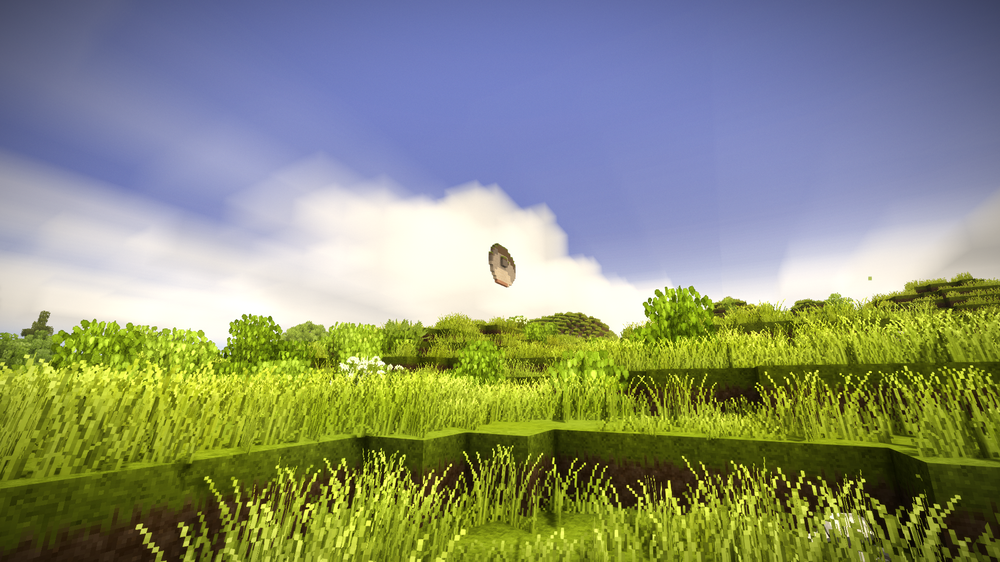
-
This is why you don't use lava to cook chicken.
-
This is the way. It's a struggle, but once you get that first initial breakthrough, the rest of the game begins to look less like an insurmountable wall, and more of a challenging mountain that you need to think carefully about in order to find a good path to scale it. I would also say that part of the initial challenge of Vintage Story is just learning how to approach the game, since it requires a very different thought process to succeed compared to other titles in the genre. Most games, in my opinion, have the player focused on what's presently important; the player doesn't need to worry about future tiers of progression and challenges until they actually get to those points. Vintage Story is similar, in some ways, in that you don't need to worry about things like steel at the very start of the game. However, the better you can anticipate future challenges and plan accordingly, the easier the game will be. A player's first winter is a decent example of this in practice: one needs food daily to survive, yes, and one can survive the winter without food stored. But winter will be much easier to survive if one plans ahead and preserves a good store of food. The learning curve can be an issue, though I think it really depends on player personality. Vintage Story does have a tutorial, yes, but the tutorial is just enough to teach the player basic controls and help them acquire their first set of basic tools that they'll need to achieve pretty much everything else in the game. After that, the game quits hand-holding and lets the player decide for themselves the best way to proceed with the game. If the player needs further information, the handbook contains pretty much everything they'll want/need to know about the game and its mechanics, but if that's not enough there are other sources of information as well(forums, YouTube, the wiki, etc). The benefit of such design is that the player is free to make their own choices and reap whatever consequences follow...good or bad. The drawback, of course, is that so much information can be overwhelming(at least at first), and it's easier for the player to make bad decisions due to a lack of experience. Crop rotation really isn't as difficult as it might sound, and there are also workarounds that you may or may not end up using later, depending on your playstyle. For now though, just keep focusing on the more simple goals, and take it one step at a time. You're on the right track!
-
If it's just one voxel missing, this is one of those times I would just whip the appropriate base out of the creative menu and ditch the old one.
-
If it functions anything like the basket trap, you may need to try a few times before you successfully catch something.
-
Oh, yeah, that would be a bit of an obstacle, haha! Hopefully support will have a better answer for you--it takes a couple of days on average for them to answer tickets, but the response time varies according to their present workload.
-
New world with imported base, but playerdata is messed up
LadyWYT replied to Grelf's topic in Discussion
@Diff It could have been me, I have no idea. I've kind of lost track over which issues I've tried to help answer the past couple of days. Dumping things into chests and using world edit to save builds as schematics and port them to a new world might work, but best to make backups just in case, and write down a list of essential items so you can replace them via creative if needed. As for what's going on here though...I honestly have no idea. -
It depends...for equipment better than bronze, smithing isn't optional unless you're using mods. For early tools, I cast my picks and hammers with molds, and smith the rest from ingots. The reasoning for that, is I don't use low tier metal tools except for rare occasion, since I jump straight to iron with relative ease. So instead of making a cast that I'll likely never use but once, I just use the ingot mold instead and sacrifice some hammer durability to smith out a particular tool if I really need it. Otherwise, I would say it's more efficient to use molds when possible. You'll save some hammer life and fuel that way.
-
Welcome to the forums! I'm not sure of the answer to this question...you might try opening a support ticket about it, as the support team would likely have a better answer. However, if your friend lives nearby, you could use your account to install the game on his laptop and see if the laptop can handle it. If it can, then you can gift him the key, but if not then you don't have to worry about trying to get a refund on the key, since there was no need to use it in the first place.
-
I HAVE INADVERTENTLY CHOPPED A TREE WITH A WILD BEEHIVE
LadyWYT replied to lampyridae's topic in Discussion
There there. If it makes you feel better, a friend of mine did that on our server once...and that was after I had marked that particular tree with the Bee icon. -
Edibles aren't that rare(except in deserts), but if you're not familiar with what's edible you're probably missing a lot of things that could be foraged for food. As someone else noted earlier, cattails and tule are a good source of emergency food, since you can cook the roots. To get the roots, you will need to dig up the plant with a knife after harvesting--bare hands won't work here, as that will destroy the roots. Berries are another good early food source--there are no poisonous ones, and you can mark large berry patches on your map so you can return later and harvest any that have ripened. You also get a handful of berries per bush. Mushrooms are fairly easy to forage, and are most commonly found in forests, or in grassland with good rainfall. You don't need anything special to harvest these, but they only drop one mushroom per harvest, and some are poisonous. Before you eat it, check the handbook to make sure it's good to eat--a quick way to check is to target the mushroom in your crosshair and press shift + H to bring up the appropriate handbook entry. Fish generally aren't worth harvesting, unless there are several in a pond that are easy to catch. There's not yet a good fishing system in place, so you'll probably spend more energy catching them than you'll get from eating them. Hunting is probably the most reliable method of keeping yourself fed early in the game, since meat is filling when cooked and animals are fairly quick to respawn(depending on the creature type). Rabbits and chickens are easy to find, and very safe to hunt since they're easy to kill and don't fight back(roosters will fight, but do negligible damage if they even get the chance to fight back). Foxes and raccoons are also pretty easy to hunt and drop meat, as well as have a chance to drop fat, which is filling in an emergency and doesn't spoil or need cooking. Foxes will fight back though if you hurt them, so be prepared. Boar are probably the best overall hunting target, though they can be dangerous since they will fight back and will do decent damage. They're safer and easier to hunt than larger creatures though, and they drop a decent amount of meat, hides, and fat for the effort. When hunting, you'll want to make a few spears and throw them instead of stab. Spears do much more damage at range than they do in melee, though it does require good aim. Make sure you're accounting for gravity(aim higher to throw farther), and release the shot when the square rectangle is touching the crosshairs(ie, release when the square is smaller for more accuracy). You can make a set of improvised armor to help soak up hits(it won't make you a tank but it might keep you alive), and crafting horsetail poultices will allow you to heal damage sustained. Also keep in mind that holding Ctrl while moving will allow you to sprint, which can help you chase down prey or kite enemies. Mushrooms can be cooked in a cookpot when making meals, but otherwise can't be cooked. Which, they don't need cooking, but do make sure it's an edible shroom first. For inventory, there are other bag types available than reeds, but the first bag options you have(handbasket and hunter's backpack) both require reeds to construct. Keep looking around water for reeds, if you don't see any near spawn--they generally aren't too hard to find somewhere within walking distance. Until you have handbaskets, consider marking a temporary base, and store things on the ground as needed. If night falls, find somewhere to hole up for the night, or make a torch and continue exploring/working if you're feeling brave. You can craft a hay bed from 24 grass(3 hay bales, 8 grass per bale) and sleep through the night, but that will cost you some hunger, so you may or may not opt to do that. If you are playing with lore content disabled, you don't need to worry about monster spawns at all, so finding a hiding spot isn't necessary for survival. Just keep an eye and ear out for wolves and bears; wolves like to howl, but bears are often quite sneaky. Also, as a side note--if you find yourself getting frustrated, I recommend taking a break from the game and doing something else for a bit to unwind. Vintage Story is a very meaty game, with a very steep learning curve, and pretty much everyone who's played it has been frustrated in similar fashions when learning to play. In my case, I chewed through several worlds and ending up turning down a handful of difficulty settings when I was learning to play, and then added the difficulty back in as I got better at the game. In any case, taking a break will help clear your mind, and you might think of things to try that weren't coming to mind before.
-
It doesn't really matter what you eat, so long as you're eating enough to stay alive. If you have a choice of foods, you can hit C to bring up your character information window, and check your nutrition. If possible, eat foods that will fill up meters that are lower(though you can ignore dairy until later, as that one isn't achievable in the early game). Clay you will want to search for either in grassland areas, or near water. It won't spawn in deserts(sand/gravel dominant with low rainfall), and will be difficult to see in forests if it spawns there. Once you have clay, you'll be able to make a cookpot, crocks, and bowls, which will allow you to make proper meals that are more filling than basic foodstuffs. Pressing the M key will bring up the full map view; in this window you can right-click a spot on the map to place markers. It's a good idea to place markers whenever you run across something interesting, or that you think might be useful later. It seems like you're off to a decent start here. Yes, it's a bit tedious at times, but we've all been there, and it gets easier as you become more experienced at figuring out what to do. Aside from keeping yourself fed and looking for clay, keep an eye out for bits of copper on the ground, as these will come in handy later. You don't need to pick them up until you're ready to use them, or otherwise have a place to store them(they can be stored on the ground in addition to storage containers). However, you'll want to visit those locations later since bits of ore on the surface indicate there's a deposit of that ore underneath. Once you've found clay, you'll be able to make a crucible and various molds that will allow you to start metalworking. A pickaxe and a hammer will be your first priority in that regard--the pickaxe will let you dig up rocks and ore, but you'll need the hammer in order to process the ore into smeltable bits.
-
This is already a thing--you need to destroy the mold in order to retrieve the anvil itself. It drops as an item when the mold is destroyed, so you can then place it down wherever you'd like. It's a neat idea, but I'm guessing it's not coded this way in order to avoid causing unfortunate accidents with reed chests that are used as storage containers.
-
Welcome to the forums! Sounds like you're having the same issue that was solved in this thread:
-
Welcome to the forums! You don't need to sell the pickaxe to progress the quest. You just need to have the tin bronze pick in your inventory(brand new, or at least above 95% durability), and then select the "Know of any interesting places around here?" dialogue, or the "I brought you the pickaxe..." dialogue if you've already asked the treasure hunter about the former. Bear in mind that you need to talk to the same treasure hunter each time for these quests, as story progression isn't shared between treasure hunters(to my knowledge). In any case, once you select the "I brought you the pickaxe..." dialogue, the tin bronze pickaxe should be removed from your inventory automatically, and the treasure hunter should tell you about the location along with giving you a map to the approximate location of the entrance.
-
I gotcha. In that case I'd recommend picking Standard or Exploration as the base game mode, and then turn off all lore content, as well as adjust the other settings to your liking. For extra challenges and content, browsing the mod database and picking out a handful that look interesting is probably the best way to go.
-
Welcome to the forums! Overall it's a decent idea, and I've seen enough players lamenting the lack of option of removing monsters(outside of mods), so it potentially has a place. However... These two go hand-in-hand; you can't really have one without having the other. You can find story locations without talking to traders, yes, but you're going to be in for a very difficult time. Likewise, it's difficult to have traders without including story content, since...well, traders are part of the story and talk about specific locations and facets of the lore. You could just disable all that dialogue, I suppose, and restrict the traders to just the trade dialogue, but that begs the question...well, why are they there(especially when there's no other civilization at all due to story content being disabled)? And why do they sell things clearly related to some sort of civilization? I will also note that Homo Sapiens mode was added to the game to give players the option to have a purely realistic survival experience, and is more of an "extra" game mode compared to the standard game modes that development is balanced for. To really flesh out Homo Sapiens, you will probably want to look into adding some mods that adds extra features and challenges. Yes and no...there are mods that change monster spawn rules/disable them entirely, but otherwise I'm not sure there's specific mods to control each listed feature individually. The best advice I have here is to go browse the mod database to see what's available and try out a few that catch your eye. For some extra challenge in Homo Sapiens, I'd recommend either looking at the dinosaur mods or Fauna of the Stone Age; both mod sets add plenty of new creatures of varying difficulties, that will fit nicely into a more "real world" survival playthrough.
-
Bowtorn hit hard if you don't have a shield/aren't wearing armor, and can be difficult to deal with if you don't see or hear them approaching, or otherwise have issues closing the gap with them or have multiple bowtorn to deal with. Bowtorn have a particular screech noise they make when they've spotted you and are winding up for a shot, and they aren't especially accurate, or smart about making sure they have a clear line of fire. Once you learn what to listen for, it's pretty easy to react and dodge/block the incoming shot. They also flee once you get too close, and aren't fast runners, so it's easy to chase them down(or dive into a pack and scatter them, in the case of multiple).
-
First off, welcome to the forums! I would recommend trying one of the other modes with content enabled, just because it offers quite a different experience. The lore stuff isn't nearly as intrusive as you might think, and the story locations have some puzzles and challenges that are quite fun to solve(this includes boss fights, by the way). If you want to tone down the lore content, you can turn temporal storms and other temporal mechanics off to cut down on the amount of "oddities" you'll run across on a daily basis. Homo Sapiens mode was added to the game so that players who wanted a purely realistic survival experience could have it, but it cuts out a lot of content and like others here have already mentioned--feels thin as a result. Also... A critical point here--Homo Sapiens, to my knowledge, is the same difficulty as Wilderness Survival. That is, it's very easy to die while being very difficult to survive, and many quality-of-life tools have been disabled(like the map feature). While it's possible to start playing the game at that level of difficulty...it's not for the faint of heart and you're going to be in for a really rough time. Standard mode is the way to go for a more balanced approach; if you really don't want the lore stuff at all, you can also disable that feature in the settings at world creation. Bear in mind though, that by disabling the lore you will be cutting quite a bit of content from the game. There might be fewer challenges overall, but what challenges remain have been made much more difficult to compensate. I think most deaths in Vintage Story aren't particularly heroic, because they usually come about as a result of lack of experience, lack of vigilance, poor planning, or sometimes straight bad luck. Case in point with the starvation--you won't starve to death immediately if you run out of food, but starvation death pressures you to find and secure a food source. That is, you'll need to learn to hunt, since it takes a while for berries and other foraged items to grow back. You'll need to be good at hunting and foraging, since farming is lucrative but takes a while for your crops to actually mature. And since food spoils, you can't do all of your food collecting in one day and expect to be set for the next in-game week or so; you'll need to learn how to preserve food to keep it from spoiling. In short, Vintage Story has a very steep learning curve, and can be overwhelming to downright frustrating at first as a result due to the sheer amount of information you need to learn. Once you learn how to counter a particular challenge, the game gets a lot easier, and it rewards creative thinking in particular(for example, building traps or figuring out how to avoid unneeded fights). Ironically, I would say the opposite; Valheim, as much as I enjoy it on occasion, is the picture of drudgery for me, due to all the grinding it demands for gear. Battling the monsters is fun and all, but the resource collection is fairly simple and upgrading the gear fully just becomes a matter of "kill a ton of these things, collect a ton of that". Sure, equipment never breaks fully so you'll never really lose the stuff you craft, but anyways...different flavor of game. Vintage Story has a lot of grinding, yes, but each tier of equipment actually feels like a great improvement. For example, copper tier opens up mining and pretty much all other basic resource gathering/processing, but copper tools still break pretty fast in comparison to bronze. Farming takes a bit of extra effort to reap the rewards, but means you'll have plenty of food/flax at harvest time without needing to rely on foraging. Each gameplay system intertwines and builds off of others, and stuff you learned early in the game will still be relevant later. The handbook is a handful, yes, but given the sheer amount of information you need to know to thrive in the game, I'm not sure there's any way around this. I'd recommend looking at the "Guides" portion of the handbook and using that as a list of goals to pursue. There should also be a guide in that section that lists the basic steps of progression to pursue; ie, stone age tools, pottery, copper casting, etc. For new players, the general advice I have there is to focus on each individual step in the progression guide; it's easier to handle if you take it one step at a time. The first main overall goal should just be surviving the first winter--if a player can manage that, they can handle anything else the game has to throw at them. One other note here--if reading through the handbook isn't your thing, you might try looking up some video guides, or even just asking questions about specific things here on the forums. There are several good video guides out there on pretty much everything the game has to offer, and there are plenty of players here on the forums happy to help with questions. I think overall the main issue is that you picked one of the hardest difficulties to start playing on, in a game that already has a very steep learning curve. As mentioned myself previously, and by others in this thread, I would start a new world on Standard or even Exploration difficulty, and just turn off the lore content if you really don't want the lore(though keep in mind this will remove a significant chunk of the game). Using the guides section of the handbook(or a guide here on the forums/on YouTube), take the game one step at a time, and just focus on securing a food supply and surviving your first winter. Also, once you have a better grasp on gameplay mechanics, it doesn't hurt to browse the mod database and pick up a few mods to flavor the game to your own personal tastes. The game settings offer a wide variety of customization up front, but sometimes the vanilla options just aren't quite enough either.
-
Generally, if you're looking for warmer climate chunks, best to head south. You're less likely to find them up north. Technically, you can get to the tropics by heading north, due to how world gen works with its climate bands(climates are layered in realistic bands, giving the illusion of a round world), but it's not worth that kind of travel distance.
-
There was a mod for the other block game that implemented this concept--Minecraft Comes Alive. That being said...no, I don't think I'd want to see this implemented in the game, for many different reasons. The prime argument I would use against it though, is that seraphs are immortal, according to the lore. Even if they're able, I don't think it's a good idea for them to be reproducing. Permadeath/limited lives exist as an option on world creation, yes, but that is to offer additional challenge for those who want that kind of game, and isn't supported by the lore. Now this idea as a mod? Sure.
- 4 replies
-
- 1
-

-
- permadeath
- permadeath lite
- (and 2 more)
-
I'm not sure you need a mod for that...dang thing is cursed. I swear, whenever I'm the one touching it, it breaks. At least we have real doors now so that doesn't happen anymore!
-
Yet another take on hot climates and overheating (No thirst!)
LadyWYT replied to Ben Velveeta's topic in Suggestions
Yes, but there's a reason that falling into a body of water and getting yourself soaking wet while it's freezing out is a near death sentence in a survival situation. It is--higher temperatures will make things spoil faster. I play with Hydrate or Diedrate frequently, as I generally enjoy the extra challenge layer. But that's the beauty of mods...I get to choose that kind of challenge for myself, without affecting the base game for everyone else. I don't think a lot of players would really enjoy a thirst mechanic like that due to the extra micromanagement, especially since there are places in the game you need to go for the story, that don't really have water sources(and each jug you fill takes precious inventory space). Likewise, a thirst mechanic is similar to the hunger bar, in that it's a more in-depth mechanic...having it toggled on/off on a whim doesn't feel right for something like that.